Showing posts with label Beulah Bondi. Show all posts

Wednesday, December 29, 2021

Zachary Scott is “The Southerner” in Jean Renoir’s American classic

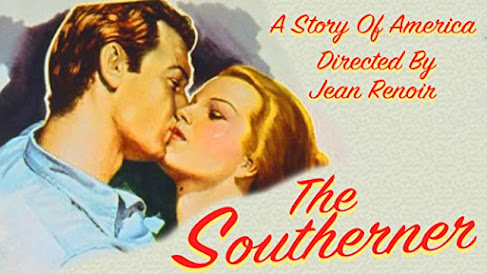
The Southerner (1945) is an American drama directed by Jean Renoir and starring Zachary Scott and Betty Field. The movie is based on the novel Hold Autumn in Your Hand (1941). Others in the cast include Beulah Bondi, J. Carrol Naish, and Percy Kilbride.

Sam Tucker (Scott) is a sharecropper who heads his dying uncle’s advice to “Work for yourself; grow your own crops.” Sam, his wife Nona (Field), their two children, and Grandma Tucker (Bondi) head to a 68-acre farm that hasn’t been worked in years. The work ahead of them is tough, but they’re excited to be working for themselves.

Along the way, Sam discovers that not everyone is happy about him working the land. His closest neighbor, Henry Devers (Naish) is downright hostile. Sam does his best to cultivate a good relationship with his neighbor, but it’s tough-going.

It isn’t just unfriendly neighbors that Sam and Nona have to deal with. The weather can be unpredictable and threatens to ruin their cotton crop. Will Sam and Tucker make a success of their farm or will they be forced to go back to being sharecroppers once again?
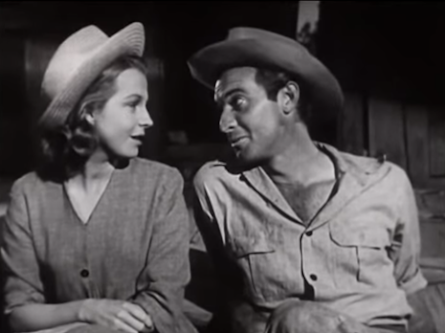
Betty Field and Zachary Scott


Jean Renoir (1894 - 1979) was a French film director, writer, and producer. He directed more than forty films. Renoir worked during the silent era until the end of the 1960s. Two of his films La Grande Illusion (1937) and The Rules of the Game (1939) are considered among the greatest films ever made. Renoir fled to the United States when Germany invaded France in 1940. He came to Hollywood and directed Swamp Water (1941) starring Dana Andrews, This Land is Mine (1943) starring Maureen O’Hara and Charles Laughton. The Southerner is considered Renoir’s best American film. Other films he made in America include Diary of a Chambermaid (1946) and Woman on the Beach (1947). He is the son of the renowned artist, Pierre-Auguste Renoir.

Zachary Scott (1914 - 1965) was an American actor on stage and most notably in film. He made his film debut in the film noir The Mask of Dimitrios (1944). As a contract player at Warner Bros.Scott was the perfect slick, film noir villain. Before his career in film noir took off, he starred in The Southerner (1945) directed by Jean Renoir. It would be his role as Monty Beragon in Mildred Pierce (1945) that would be his most enduring role with film fans. Scott worked in film, stage, and television until 1963. He died of a malignant brain tumor.

Betty Field (1916 - 1973) was an American stage and film actress. Field began her acting career on the London stage. She made her film debut in 1939 as Mae in  Of Mice and Men. During the 1940s, she had significant film roles, including playing Daisy Buchanan in the 1949 production of The Great Gatsby. Field preferred theater over film work. She worked in film in mostly supporting roles during the 1950s and beyond. Some of the films she made later in her career include Picnic (1955), Bus Stop (1956), and Peyton Place (1957). Her last film role was in Cooogan’s Bluff (1968) starring Clint Eastwood.

To watch the film on YouTube, click the link below.


Why watch this film?
  • It is considered the best American film directed by the French director Jean Renoir.
  • Zachary Scott got to show he could do more than play bad guys in this early starring role.
  • It also features great performances from Betty Field and Beulah Bondi.
  • The film created some controversy when it was first released. Some people in the South took offense at the portrayal of the poor.

To join the discussion on January 3, 2022, at 6:30 p.m. Central Time, click here. Once you RSVP, you will receive an invitation to and a link to the discussion on Zoom.

The Southerner trivia
  • The film was nominated for three Academy Awards: Best Director, Best Sound, Recording, and Best Music, Scoring of a Dramatic or Comedy Picture.
  • Jean Renoir was voted the Best Director of the year by the National Board of Review.
  • I was the Best Feature Film winner at the 1946 Venice Film Festival.
  • The film was originally going to star Joel McCrea and Frances Dee.
  • Zachary Scott was borrowed from Warner Bros. for this film.
  • Beulah Bondi was 57 years old when the film was released.

Discussion questions:
Do you think the film portrays Southerners in a negative light?
What did you think of the performances of Scott and Field?
How realistic did you think the film portrayed the lives of poor farmers in the South?
Did you have a favorite supporting character?
Did anything about the film surprise you?


Friday, December 11, 2020

Irene Dunne recalls her marriage to Cary Grant in “Penny Serenade”

Penny Serenade (1941) is an American melodrama directed by George Stevens and starring Irene Dunne and Cary Grant. The film is based on a story by Martha Cheavens that appeared in McCall’s magazine.

Dunne and Grant at the beach in Penny Serenade

Dunne and Grant star as a couple on the brink of divorce after a tragic event in their lives. While preparing to leave her husband, Julie Adams (Dunne) listens to old records that take her back to the early days of her relationship with Roger (Grant). Balancing laughter with tragedy, director Stevens (A Place in the Sun, Giant, Shane) strikes all the right notes with this sentimental classic. 

The excellent supporting cast includes Beulah Bondi and Edgar Buchanan. Grant earned his first Academy Award nomination for Best Actor in a truly moving performance.

P.S. You may need tissues while watching!


George Stevens (1904 – 1975) was an American film director and producer. He was nominated for five Best Director Academy Awards, winning one for Giant (1956). Stevens got his start in the movies as a cameraman working on many Laurel and Hardy films. Stevens directed many of the top stars of Hollywood’s Golden Age, including Barbara Stanwyck, Katharine Hepburn, Ronald Colman, Ginger Rogers, James Stewart, Jean Arthur, Carole Lombard, Fred Astaire, Joel McCrea, Alan Ladd, Spencer Tracy, and Elizabeth Taylor. Other popular films directed by Stevens include Annie Oakley (1935), Gunga Din (1939), Woman of the Year (1942), The More the Merrier (1943), I Remember Mama (1948), Shane (1953), and The Diary of Anne Frank (1959).

Irene Dunne (1898 –1990) was an American actress and singer who was one of the most popular movie stars during Hollywood’s Golden Age. She is probably best remembered for her comedic roles, though she first became famous playing in melodramas like Back Street (1932) and Magnificent Obsession (1935). In fact, Dunne was so popular as a star of melodramas that she was dubbed “The Queen of the Weepies” by the press. Her comedic breakout performance was in Theodora Goes Wild (1936), which earned her an Academy Award nomination for Best Actress. She would go on to make other comedy classics like The Awful Truth (1937), where she earned another Best Actress nod, and My Favorite Wife (1940). Dunne and Grant were one of the most popular screen teams in movie history. All three of their films were critical and box office successes. Dunne earned a total of five Academy Award nominations for Best Actress but never won a competitive Oscar. The fact that the Motion Picture Academy never awarded her an Honorary Academy Award for her body of work is a travesty to me.

Cary Grant (1904 – 1986) was an English-born American actor who became one of the most popular leading men in film history. Grant started his career in vaudeville before heading to Hollywood. He became a superstar in the late 1930s in a series of screwball comedies, including The Awful Truth (1937) with Irene Dunne. He was a memorable C. K. Dexter Haven in The Philadelphia Story (1940) opposite Katharine Hepburn and James Stewart. He received two Best Actor nominations: Penny Serenade (1941) and None but the Lonely Hearts (1944). Other classic Grant films include Gunga Din (1939), Only Angels Have Wings (1939), and Arsenic and Old Lace (1944). He made four popular films with Alfred Hitchcock: Suspicion (1941), Notorious (1946), To Catch a Thief (1955), and North by Northwest (1959). He was presented with an Honorary Oscar at the 42nd Academy Awards in 1970.


Penny Serenade trivia

  • Irene Dunne said this was one of her favorite films because it reminded her of her adopted daughter.
  • This was the third and final film that Dunne and Grant made together.
  • Dunne and Grant share the same bed, which was against the Production Code.
  • This was the first of Grant’s two Best Actor nominations; the other was for None but the Lonely Heart (1944).
  • To get around the laws restricting the time infants could be on camera, director Stevens hired two sets of identical twins.

Director Stevens hired identical twins to get around the laws restricting the 
time infants could spend on camera.


To watch the film on YouTube, click on the link below.


To join us on Zoom for a discussion on December 15, at 6:30 p.m. Central Time, click the link for details and invitation. When you RSVP, you will receive an email and a link to the discussion.


Questions for discussion:

  1. Were Grant and Dunne believable as first-time parents?
  2. What do you think about how the adoption process was portrayed?
  3. Did you like the film’s narrative flashbacks?
  4. What did you think of the character roles played by Beulah Bondi (Miss Oliver) and Edgar Buchanan (Applejack Carney)?


Friday, September 1, 2017

Screening of “The Snake Pit” at Daystar Center September 12

“Classic Movie Man Favorites” Series: The Snake Pit (1948)
Where: Daystar Center, 1550 S. State Street
When: September 12, 2017
Time: 6:30 p.m.
Hosted by Stephen Reginald

The Snake Pit (1948) stars two-time Best Actress winner Olivia de Havilland, who turned 101 on July 1st!

De Havilland is Virginia Cunningham, an aspiring writer and newlywed. Early in their marriage, she begins to wonder about her husband’s love for her. She becomes confused and disorientated, necessitating her commitment to a state mental institution. Her experiences in the institution are harrowing. The movie had such an impact on the public that many states reevaluated and changed their treatment of mental patients.

De Havilland heads an impressive cast that also includes Leo Genn as a sympathetic psychiatrist and Mark Stevens as her long-suffering husband. The cast is populated by some of the best-known character actresses of the era, including Beulah Bondi, Ruth Donnelly, and Natalie Schafer. The Snake Pit was nominated for six Academy Awards, including Best Picture, Best Actress (de Havilland), and Best Director (Anatole Litvak).

The movie is based on the semi-autobiographical novel of the same name by Mary Jane Ward. Ward had a nervous breakdown and spent eight months at Rockland State Hospital in Orangeburg, New York. During her care, she was subjected to scalding baths and electroshock therapy, similar to what the Virginia Cunningham character experiences in the film.

Backstory
Director Litvak made sure that all the character actresses in the film were seasoned professionals. He wanted to make sure that they could stand up to a talent like de Havilland. There are dozens of recognizable faces in The Snake Pit, making it a classic movie buff’s delight.

This is part of the “Classic Movie Man Favorites” series.

Celeste Holm and Olivia de Havilland in The Snake Pit
Have some Joe and Enjoy the Show!
You can bring food and beverages into the auditorium; we even have small tables set up next to some of the seats. General Admission: $5 Students and Senior Citizens: $3.

Join the Chicago Film club; join the discussion
Twice a month we screen classic films and have a brief discussion afterward. For more information, including how to join (it’s free), click here. The Venue 1550 is easily accessible by the CTA. Please visit Transit Chicago for more information on transportation options.


Stephen Reginald is a freelance writer and editor. He has worked at various positions within the publishing industry for over 25 years. Most recently he was executive editor for McGraw-Hill’s The Learning Group Division. A long-time amateur student of film, Reginald hosts “Chicago Film Club,” a monthly movie event held in the South Loop, for the past two years. Reginald has also taught several adult education film classes at Facets Film School, Chicago.


Related Posts Plugin for WordPress, Blogger...