Showing posts with label Betty Field. Show all posts

Tuesday, October 28, 2025

An all-star cast discovers the difference between “Flesh and Fantasy”

Flesh and Fantasy is a 1943 American anthology film that weaves together three distinct, supernatural-tinged stories, all framed by a philosophical conversation between two club members about the nature of destiny and the reality of fortune-telling. The movie explores the central theme of whether human lives are dictated by fate or free will, and the profound impact that predictions and dreams can have on an individual's psychology and subsequent actions. This approach blends romance, suspense, and the eerie, making it an early, atmospheric example of the episodic storytelling format in cinema.

The three segments each showcase a unique encounter with the uncanny. The first story, set during Mardi Gras in New Orleans, follows a lonely, self-conscious young woman who yearns for a better life. She receives a mysterious, beautiful mask from a strange shopkeeper and is allowed to experience the evening as someone transformed, but with a strict condition that must be met by midnight. The second segment features a skeptical, wealthy man who attends a party where a prominent palmist is making uncannily accurate predictions for the guests. When the man insists on a private reading, he receives a shocking prophecy that forces him to confront his own sense of morality and control over his future.

The final tale centers on a high-wire circus aerialist known for his dangerous, death-defying act. He becomes deeply unsettled after a terrifying dream where he falls during his performance, the scene of his doom forever imprinted with the image of a screaming, beautiful woman he's never met. This premonition begins to erode his nerve until he unexpectedly encounters the woman from his dream in real life, prompting him to try and understand the connection between his inner fears and the external world, and whether he can truly defy the fate he believes has been foretold.


The all-star cast directed by Julien Duvivier (1896 – 1967) includes Charles Boyer, Barbara Stanwyck, Edward G. Robinson, Robert Cummings, and Betty Field.

There was a fourth segment that was to star John Garfield, but he dropped out and was replaced by Alan Curtis. The segment was well received by preview audiences, but was cut from the film and expanded to a full-length feature, Destiny 1944.


Betty Field and Robert Cummings

Click HERE to watch the movie on the Internet Archive.

Click HERE to join the online discussion on Monday, November 3, 2025, at 6:30 p.m. Central Time.


Discussion questions

  1. Free Will vs. Destiny: The film repeatedly raises the question of whether a person is master of their own fate or merely a puppet of destiny. In the second story, where Marshall Tyler is told he will commit murder, does the prophecy cause him to act, or does his reaction to the prophecy reveal an inherent flaw in his character?
  2. The Nature of Reality and Perception: Both the first story (Henrietta and the mask) and the third story (Paul Gaspar and the dream woman) explore how an individual’s perception of self influences the way the world treats them. How do the masks and dreams in these segments serve as a psychological tool for transformation, and to what extent is the supernatural aspect merely a catalyst for a change that was always possible?
  3. The Role of the Anthology Format: Flesh and Fantasy is an anthology film tied together by a brief framing device. Do you feel the three distinct stories collectively strengthen the film's central philosophical theme, or do they feel too disparate? Which story best explores the balance between "flesh" (human experience/desire) and "fantasy" (the supernatural/occult)?
  4. Influence of the Occult on Psychology: The film suggests that preoccupation with predictions—whether from a palm reader or a dream—can have a paralyzing or maddening effect on the characters. Compare Marshall Tyler's reaction to the murder prophecy with Paul Gaspar's reaction to his premonition of death. How do their psychological responses to the occult drive the plot in their respective stories?


Tuesday, September 12, 2023

William Holden romances Kim Novak in “Picnic”

Picnic (1955) is an American drama film directed by Joshua Logan and starring William Holden, Kim Novak, and Rosalind Russell. The film is based on the Broadway play of the same name by William Inge. The movie features Susan Strasberg, Cliff Robertson, Betty Field, Arthur O’Connell, and Reta Shaw.

Hal Carter (Holden) arrives by freight train in a small Kansas town on Labor Day morning to visit a fraternity friend, Alan Benson (Robertson). While staying with Helen Potts (Verna Felton), he meets Alan’s girlfriend Madge Owens (Novak), Madge’s younger sister Millie, and their mother Flo (Field). Alan promises Hal a job at his family’s grain elevator operations.

Things don't go well at the Labor Day picnic for Hal. An intoxicated Rosemary Sydney (Russell) forces herself on Hal and creates a scene that makes him look bad in front of Alan and the picnic crowd. Hal flees the party and is followed by Madge. Will Madge trade rich boy Alan for an uncertain life with Hal?


Joshua Logan (1908 – 1988) was an American theater and film director, playwright, and screenwriter. He was also an actor. He shared a Pulitzer Prize for co-writing the musical South Pacific. During his college years, he was involved with the University Players (an intercollegiate summer stock company) with James Stewart, Henry Fonda, and Margaret Sullavan. During the late-1930s, Logan went to Hollywood where he wrote some of the dialogue for The Garden of Allah (1936), History is Made at Night (1937), and Suez (1938). Logan’s film directing career included Picnic (1955) and Fanny (1961), both were film adaptations of Broadway plays that he directed for the theater. He also directed Bus Stop (1956), Sayonara (1957), Tall Story (1960), Camelot (1967), and Paint Your Wagon (1969).

William Holden (1918 - 1981) was an American actor and major movie star. He was one of the most bankable stars of the 1950s. Holden starred in some of the most popular and beloved films, including Sunset Boulevard, Sabrina, Picnic (1955), The Bridge on the River Kwai (1957), and Stalag 17, for which he won the Academy Award for Best Actor. Holden became a star with his first role in Golden Boy (1939). He had lead roles in other popular films like Our Town (1940), and I Wanted Wings (1941). World War II interrupted his career. Holden was a first lieutenant in the United States Army Air Force. After the war, he made some popular but forgettable films. It wasn’t after he collaborated with director Wilder on Sunset Boulevard that Holden’s popularity and stature in Hollywood grew to superstar status.

Kim Novak (1933 - ) is an American film and television actress. She retired in 1991. Novak was one of the last “studio-created” stars during a time when the studio system was in decline. Born Marilyn Pauline Novak in Chicago, her name was changed to Kim after she signed a long-term contract with Columbia Pictures in 1954. By the next year, Novak was a major star working opposite the likes of Frank Sinatra and William Holden. Some of her significant films include Picnic (1955), The Man with the Golden Arm (1955), The Eddy Duchin Story (1956), Pal Joey (1957), and Bell, Book and Candle (1958). Perhaps her most celebrated film is her dual role in Vertigo (1958) co-starring James Stewart and directed by Alfred Hitchcock. In 2012, the British Film Institute’s Sight & Sound critic’s poll voted Vertigo as the best film of all time. After retiring from film, Novak has devoted herself to painting and has exhibited her work publicly.

Rosalind Russell and Arthur O'Connelll


Rosalind Russell (1907 - 1976) was an American film and stage actress. She was nominated for four Best Actress Academy Awards throughout her career. She won five Golden Globe Awards and a Tony for Best Actress in a Musical for her performance as Ruth in Wonderful Town. Russell was a versatile actress who excelled at both comedy and drama. She was also one of the few actresses of her day to portray lawyers, judges, and psychiatrists. Some of her famous films include The Women (1939), My Sister Eileen (1942), Sister Kenny (1946), Picnic (1955), Auntie Mame (1958), Gypsy (1962), and The Trouble with Angels (1966).

Picnic trivia

  • William Holden almost turned down the film role, thinking at 37, he was too old.
  • Holden didn’t want to do the dance scene with Kim Novak. “I just don’t know how to dance,” he told co-star Cliff Robertson. To get over his fear, he did the scene intoxicated. Holden danced in only three other movies: Dear Ruth (1947), Sunset Boulevard (1950), and Sabrina (1954).
  • Columbia Pictures wanted to promote Rosalind Russell for an Academy Award for Best Supporting Actress. Russell refused because she didn’t want to be considered a supporting actress.
  • Arthur O’Connell, Reta Shaw, and Elizabeth Wilson recreated their Broadway roles for the film version.
  • Kim Novak’s hair was dyed a reddish auburn color, rather than her usual platinum-blonde look, to give her a more innocent and youthful look.

To watch the film on YouTube, click here.


To join the discussion on September 18, 2023, at 6 p.m. Central Time, click here. Once you RSVP, you will receive an invitation along with a link to join the discussion on Zoom.

Discussion questions

1.      1. William Holden thought he was too old for the role of Hal Carter. Do you agree?

2. This film made Kim Novak a superstar. Was she believable as Madge Owens?

3. Do you think Rosalind Russell would have won a Best Supporting Actress Oscar if she allowed Columbia Pictures to campaign on her behalf? What did you think of her performance as Rosemary?

4. The film’s supporting cast is impressive; do you have a favorite?

5. Was the film relatable?

6. Do you think Hal and Made have a chance at happiness?

7. Does the film hold up in 2023 or is it a relic of its time?

Wednesday, December 29, 2021

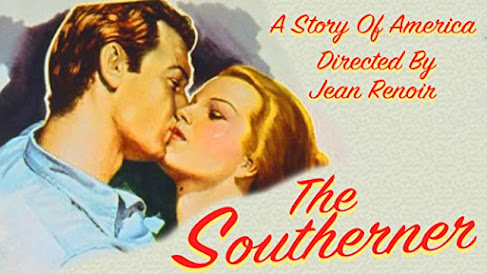
Zachary Scott is “The Southerner” in Jean Renoir’s American classic

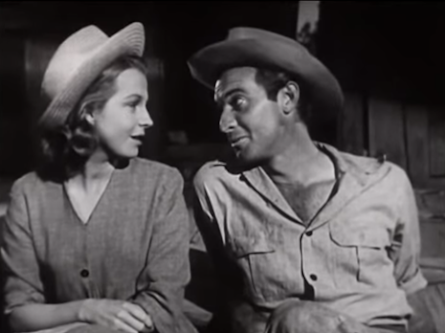
The Southerner (1945) is an American drama directed by Jean Renoir and starring Zachary Scott and Betty Field. The movie is based on the novel Hold Autumn in Your Hand (1941). Others in the cast include Beulah Bondi, J. Carrol Naish, and Percy Kilbride.

Sam Tucker (Scott) is a sharecropper who heads his dying uncle’s advice to “Work for yourself; grow your own crops.” Sam, his wife Nona (Field), their two children, and Grandma Tucker (Bondi) head to a 68-acre farm that hasn’t been worked in years. The work ahead of them is tough, but they’re excited to be working for themselves.

Along the way, Sam discovers that not everyone is happy about him working the land. His closest neighbor, Henry Devers (Naish) is downright hostile. Sam does his best to cultivate a good relationship with his neighbor, but it’s tough-going.

It isn’t just unfriendly neighbors that Sam and Nona have to deal with. The weather can be unpredictable and threatens to ruin their cotton crop. Will Sam and Tucker make a success of their farm or will they be forced to go back to being sharecroppers once again?

Betty Field and Zachary Scott


Jean Renoir (1894 - 1979) was a French film director, writer, and producer. He directed more than forty films. Renoir worked during the silent era until the end of the 1960s. Two of his films La Grande Illusion (1937) and The Rules of the Game (1939) are considered among the greatest films ever made. Renoir fled to the United States when Germany invaded France in 1940. He came to Hollywood and directed Swamp Water (1941) starring Dana Andrews, This Land is Mine (1943) starring Maureen O’Hara and Charles Laughton. The Southerner is considered Renoir’s best American film. Other films he made in America include Diary of a Chambermaid (1946) and Woman on the Beach (1947). He is the son of the renowned artist, Pierre-Auguste Renoir.

Zachary Scott (1914 - 1965) was an American actor on stage and most notably in film. He made his film debut in the film noir The Mask of Dimitrios (1944). As a contract player at Warner Bros.Scott was the perfect slick, film noir villain. Before his career in film noir took off, he starred in The Southerner (1945) directed by Jean Renoir. It would be his role as Monty Beragon in Mildred Pierce (1945) that would be his most enduring role with film fans. Scott worked in film, stage, and television until 1963. He died of a malignant brain tumor.

Betty Field (1916 - 1973) was an American stage and film actress. Field began her acting career on the London stage. She made her film debut in 1939 as Mae in  Of Mice and Men. During the 1940s, she had significant film roles, including playing Daisy Buchanan in the 1949 production of The Great Gatsby. Field preferred theater over film work. She worked in film in mostly supporting roles during the 1950s and beyond. Some of the films she made later in her career include Picnic (1955), Bus Stop (1956), and Peyton Place (1957). Her last film role was in Cooogan’s Bluff (1968) starring Clint Eastwood.

To watch the film on YouTube, click the link below.


Why watch this film?
  • It is considered the best American film directed by the French director Jean Renoir.
  • Zachary Scott got to show he could do more than play bad guys in this early starring role.
  • It also features great performances from Betty Field and Beulah Bondi.
  • The film created some controversy when it was first released. Some people in the South took offense at the portrayal of the poor.

To join the discussion on January 3, 2022, at 6:30 p.m. Central Time, click here. Once you RSVP, you will receive an invitation to and a link to the discussion on Zoom.

The Southerner trivia
  • The film was nominated for three Academy Awards: Best Director, Best Sound, Recording, and Best Music, Scoring of a Dramatic or Comedy Picture.
  • Jean Renoir was voted the Best Director of the year by the National Board of Review.
  • I was the Best Feature Film winner at the 1946 Venice Film Festival.
  • The film was originally going to star Joel McCrea and Frances Dee.
  • Zachary Scott was borrowed from Warner Bros. for this film.
  • Beulah Bondi was 57 years old when the film was released.

Discussion questions:
Do you think the film portrays Southerners in a negative light?
What did you think of the performances of Scott and Field?
How realistic did you think the film portrayed the lives of poor farmers in the South?
Did you have a favorite supporting character?
Did anything about the film surprise you?


Related Posts Plugin for WordPress, Blogger...