Showing posts with label Charles Coburn. Show all posts

Tuesday, May 14, 2024

George Sanders and Lucille Ball are “Lured” into danger and intrigue

Lured (1947) is an American film noir directed by Douglas Sirk and starring George Sanders, Lucille Ball, Charles Coburn, and Boris Karloff. Lured is a remake of a French film directed by Robert Siodmak (The Killers, The Spiral Staircase). It was titled Personal Column in the United States.

Sandra Carpenter (Ball) is an American in London. She came to the U.K. with a show that closed. To make ends meet in the meantime, she works as a taxi dancer. One of her colleagues was a victim of the “Poet Killer” who lures women through newspaper ads in the personal columns. Sandra meets with the Scotland Yard Inspector Harley Temple (Coburn) about her fellow dancer’s disappearance. Temple, appealing to Sandra’s concern for her friend, convinces her to work with the Yard as an undercover agent. She will be used to lure the killer out in the open.

During her undercover work, Sandra comes in contact with Robert Fleming (Sanders), a stage producer who is attracted to her. Fleming shares his home with his business partner and friend Julian Wilde (Sir Cedric Hardwicke).

Sandra responds to several personal ads but none seem to be the “Poet Killer.” Will Sandra find the killer or will she become his latest victim?

Lucille Ball, Charles Coburn, and George Sanders


Douglas Sirk (1897 – 1987) was a German film director best known for his Hollywood melodramas of the 1950s. Sirk is identified with melodramas but he worked in many genres including comedies, westerns, film noir, and war films. Sirk came to Hollywood in 1937 because of his Jewish wife who was being persecuted by the Nazis. Sirk’s first American film was Hitler’s Madman (1943). Sirk hit his stride with a series of popular Technicolor melodramas’ including Magnificent Obession (1954), All That Heaven Allows (1955), Written on the Wind (1956), and Imitation of Life (1959).

George Sanders (1906 – 1972) was a British film and stage actor who also had a fine singing voice. Hollywood was looking for a villain to star opposite a young Tyrone Power in Lloyd’s of London (1936) and Sanders more than fit the bill. His performance in that film would forever stamp him as a sophisticated bad guy. Before his acting career, he worked in the textile industry, which must have helped him with his role in The Strange Affair of Uncle Harry. In the 1960s, Sanders played Mr. Freeze in the Batman (1966) television series.

Lucille Ball (1911 – 1989) was an American actress. Ball started her career as a model and later appeared in films while under contract to RKO Radio Pictures during the 1930s and 1940s. At RKO, she starred in B-pictures and had supporting roles in A-pictures like Stage Door (1937) co-starring Katharine Hepburn and Ginger Rogers. Ball left RKO for M-G-M in the mid-40s but major stardom eluded her. Ball had a hit radio show, My Favorite Husband. CBS wanted her to develop the show for television but Ball insisted on having her real-life husband Desi Arnaz co-star with her. The studio wanted her to star with her radio husband, Richard Denning, but Ball held out for Arnaz and I Love Lucy was born. During her television career, Ball was nominated for 13 Primetime Emmy Awards, winning five times. Ball’s reputation as one of the world’s great comedians has never been disputed.

Charles Coburn (1877 – 1961) was an Academy-Award-winning character actor. Coburn was one of the most popular character actors in film during the 1940s. He was nominated for three Best Support Actor Academy Awards for The Devil and Miss Jones (1941), for The More the Merrier (1943)—won, and The Green Years (1946). Other classic films featuring Coburn include The Lady Eve (1941), Kings Row (1942), The Constant Nymph (1943), Monkey Business (1952), and Gentlemen Prefer Blondes (1953).

Boris Karloff (1887 – 1969) was an English actor famous for playing Frankenstein’s monster in Frankenstein (1931). The film and its sequels Bride of Frankenstein (1935) and Son of Frankenstein (1939) established him as a horror movie icon. Karloff starred in many silent films before successfully transitioning to talkies. He also had success on Broadway, most notably with the original production of Arsenic and Old Lace (1941). Karloff also won a Grammy Award for his narration of Dr. Seuss’s How the Grinch Stole Christmas (1966).


Lured trivia

  • The title was changed to Personal Column during its initial release because the Production Code Administration thought the word lured sounded like lurid. Douglas Sirk thought the name change was confusing the theater goers and contributed to its failure at the box office.
  • Boris Karloff, George Zucco, and Sir Cedric Hardwicke all starred in classic Universal horror movies.
  • Alan Napier who played Alfred the Butler on the TV show Batman, which also had Neil Hamilton playing Neil Hamilton Commissioner Gordon, plays a police inspector named Gordon in Lured.
  • The voice of the blonde nightclub singer is that of Annette Warren. Warren dubbed the singing for Lucille Ball in Sorrowful Jones (1949) and Fancy Pants (1950). She was also the singing voice of Ava Gardner in Show Boat (1951). Warren is still with us as of this writing. She’s 101.
  • Charles Coburn and George Sanders were both Best Supporting Actor Academy Award winners.


Click HERE to watch the movie on YouTube.


Click HERE to join the discussion online on May 20, 2024 at 6:30 p.m. Central Time. Once you RSVP, you will receive an invitation and a link to join the discussion on Zoom.


Discussion questions

  1. Did Lured fell like a film noir to you? If yes, what characteristics did you find fit the genre?
  2. This was a serious role for Lucille Ball; what did you think of her performance?
  3. Was the plot of the film believable to you?
  4. This was an early film by director Douglas Sirk. Do you see any touches in this film that showed up later in his more popular movies?
  5. Did anything about this film surprise you?
  6. Was the ending satisfying and believable?


Lobby card with the “new” title


Wednesday, June 23, 2021

Gregory Peck tops the cast in Alfred Hitchcock’s “The Paradine Case”

The Paradine Case (1947) is an American courtroom drama directed by Alfred Hitchcock and starring Gregory Peck, Ann Todd, Charles Laughton, Charles Coburn, and Ethel Barrymore. The film introduced Alida Valli (billed as Valli on screen) and Louis Jourdan. The film was the last movie Hitchcock directed while under contract to David O. Selznick.

In London, Anna Paradine (Valli), a beautiful young Italian woman is accused of murdering her older, blind husband. The fact that her husband, a wealthy retired colonel cast suspicion on the enigmatic Anna. Anna’s personal lawyer, Sir Simon Flaquer (Coburn), hires Anthony Keane (Peck), a young, successful lawyer to defend her. Keane has been happily married to Gay (Todd) but he is instantly fascinated by his new client. 

Is Anna a murderer? Did she poison her husband on her own or did someone else do it? Was it the colonel’s valet (Jourdan)? Will Keane’s infatuation with Anna keep him from finding the truth and destroy his marriage in the process?

Gregory Peck and Alida Valli

Alfred Hitchcock (1899 – 1980) was an English film director, producer, and screenwriter. He is one of the most influential filmmakers of the 20th century. Hitchcock directed over 50 feature films, many are classics that have been honored and studied for years. Some of Hitchcock’s classic films include The 39 Steps (1939), Rebecca (1940), Suspicion (1941), Shadow of a Doubt (1943), Notorious (1946), Rear Window (1954), Vertigo (1958), North by Northwest (1959), and Psycho (1960).

Gregory Peck (1916 – 2002) was one of the biggest stars in Hollywood. He was nominated three times for Best Actor finally winning for his role as Atticus Finch in To Kill a Mockingbird (1962). Peck had non-exclusive contracts with David O. Selznick and Twentieth Century-Fox which gave him great flexibility in the roles he chose to play. Peck first gained prominence in The Keys of the Kingdom (1944) and he remained a major movie star through the 1960s. Some of his iconic films include Spellbound (1944), Captain Horatio Hornblower (1951), Roman Holiday (1953), and The Guns of Navarone (1961).

Ann Todd, Charles Coburn, and Gregory Peck


Ann Todd (1907 - 1993) was an English actress and singer. She started out on the London stage but ended up appearing in films, becoming a star opposite James Mason in The Seventh Veil (1945). Due to the success of that film, she was signed by producer David O. Selznick. It was reported to be the most “lucrative”film contract signed by an English actress. However, she found limited success in America. Todd was married three times. Her third husband was to film director David Lean. Together they collaborated on three films produced in England.

Charles Laughton (1899 – 1962) had a long career on the stage and in Hollywood. He won an Academy Award for Best Actor for his portrayal of Henry VIII in The Private Life of Henry VIII (1933) and was nominated for two other Best Actor Oscars for his performances in Mutiny on the Bounty (1933) and Witness for the Prosecution (1957). His performance in The Suspect is considered one of Laughton’s most natural screen performances, which is credited to director Siodmak, a close personal friend of the actor.

Charles Coburn (1877 – 1961) was an Academy-Award-winning character actor. Coburn was one of the most popular character actors in film during the 1940s. He was nominated for three Best Supporting Actor Academy Awards for The Devil and Miss Jones (1941), for The More the Merrier (1943)—won, and The Green Years (1946). Other classic films featuring Coburn include The Lady Eve (1941), Kings Row (1942), The Constant Nymph (1943), Monkey Business (1952), and Gentlemen Prefer Blondes (1953).

Ethel Barrymore (1879 - 1959) was an American stage and film actress and part of the famous Barrymore family of actors. Her equally famous brothers were Lionel and John Barrymore. Barrymore got her start on the stage and she was among its brightest stars for many years. Barrymore also had a successful career on the other side of the Atlantic in London where she starred in Peter the Great. She achieved one of her biggest Broadway successes in W. Somerset Maugham’s comedy, The Constant Wife (1926). Barrymore was a popular character actress in film during the 1940s. She won the Academy Award for Best Supporting Actress for her performance in None but the Lonely Heart (1944) opposite Cary Grant who played her son. Other film roles include The Spiral Staircase (1946), The Paradine Case (1947), and Pinky (1949).

Alida Valli (1921 - 2006) was an Italian actress who made films in Europe and the United States. She came to America under contract to David O. Selznick who considered her another Ingrid Bergman. Introduced as “Valli” in Alfred Hitchcock’ The Paradine Case, she never lived up to the promise Selznick had for her. Her next two films The Miracle of the Bells (1948) co-starring Fred MacMurray and Frank Sinatra and Walk Softly Stranger (1950) co-starring Joseph Cotten were box office failures. The latter film was completed in 1948 but its release was held up for two years with the hope that it would capitalize on the popularity of The Third Man (1949). Valli had much greater success in Europe where she starred in films until 2002.

Louis Jourdan (1921 - 2015) was a French film and television actor. Jourdan worked on the stage in Europe and even began working in films as early as 1939, but his film work was interrupted due to World War II. After the war, Jourdan was brought to Hollywood by producer David O. Selznick. His first film in Hollowood was Alfred Hitchcock’s The Paradine Case (1947). The next year he made Letter from an Unknown Woman, one of his most famous roles during his long career. Jourdan made movies in Europe and Hollywood and starred on Broadway in The Immoralist in 1954 co-starring with Geraldine Page and James Dean. Jourdan’s most famous and successful American film was Gigi (1958). The film cos-starred Leslie Caron and Maurice Chevalier and won nine Academy Awards, including Best Picture.


The Paradine Case trivia
  • Alfred Hitchcock didn’t think Gregory Peck, Alida Valli, and Louis Jourdan were right for their roles and wanted Laurence Olivier or Ronald Colman as Anthony Keane, Greta Garbo as Mrs. Paradine, and Robert Newton instead of Jourdan.
  • The film cost as much as Gone with the Wind (1939) due to Selznick’s insistence that Hitchcock due reshoots and his constant interference on the set.
  • A replica of the Old Bailey courtroom was constructed at a cost of $400,000.
  • Hitchcock makes his cameo appearance almost 40 minutes into the film.

Why watch this film?
  • Watching any Alfred Hitchcock movie is always interesting.
  • This is probably the largest cast of stars the director worked with at one time; Laughton, Coburn, and Barrymore were all Oscar winners at the time of the film’s release.
  • The film introduced two European stars to American audiences in Louis Jourdan and Alida Valli.
  • The attention to detail as far as the film’s production goes is staggering.


To watch the film on YouTube, click on the link below.


To join the discussion on June 28, 2021, at 6:30 p.m. Central Time, click here. Once you RSVP, you will be sent an invitation with links to the discussion on Zoom.


Discussion questions:
  1. Did this seem like an Alfred Hitchcock movie to you? 
  2. Do you think this movie deserves more attention from Hitchcock critics?
  3. The film introduced Jourdan and Valli to American movie goers. What did you think of them?
  4. Was Valli a good choice for Mrs. Paradine? Could you see another actress in the role?
  5. When the film was released, Ann Todd and Joan Tetzel (Judy Flaquer and Gay’s best friend, received the best reviews. Do you think they were justified?


Thursday, March 18, 2021

Carole Lombard and James Stewart are “Made for Each Other”

 Made for Each Other (1939) is an American romantic comedy directed by John Cromwell and starring Carole Lombard, James Stewart, and Charles Coburn. The film was produced by David O. Selznick and the film was photographed by Leon Shamroy.

The film concerns John Mason (Steward), a young attorney in New York City, and his new bride Jane (Lombard). Mason is mild-mannered and a bit timid for a lawyer. When he is overlooked for a promotion, Jane encourages him to demand a raise and a promotion. Due to the Depression, instead of a raise, Judge Doolittle (Coburn) the head of the firm, requires all employees to take a pay cut. To make things more complicated, John’s mother Harriet (Lucile Watson) comes to live with the young couple. When Jane has a baby and the bills pile up, John is discouraged and feels like he is a failure.

Will things turn around for John and Jane?


John Cromwell (1886 – 1979) was an American film and stage director. Cromwell started his career as an actor on the stage and in the early days of talking pictures. He was under contract to Paramount where he directed many pre-Code films. Some of the stars he directed during this time included Kay Francis, William Powell, and Jean Arthur. In 1933, he moved to RKO and directed Irene Dunne in Ann Vickers (1933), Spitfire (1934) with Katharine Hepburn, and Of Human Bondage (1934) with Leslie Howard and Bette Davis. Of Human Bondage was a tremendous box office success and made Cromwell a top director in Hollywood. Other films he directed include Little Lord Fauntleroy (1936) The Prisoner of Zenda (1937), Since You Went Away (1944), Anna and the Kind of Siam (1946), and Dead Reckoning. He is the father of actor James Cromwell.

James Steward and Carole Lombard

Carole Lombard (1908 – 1942) was an American actress, well regarded for her many screwball comedy film roles. During the late 1930s, she was the highest-paid star in Hollywood. Lombard got her start in silent films as a child and set her mind on making movie acting her career. She was one of Mack Sennett’s bathing beauties, appearing in 15 of his comedy shorts before moving on to feature films. Her breakout performance came in 1934’s Twentieth Century co-starring John Barrymore. After that film, Lombard’s career soared. She starred in many successful comedies including Hands Across the Table (1935), My Man Godfrey (1936), which brought her a Best Actress Academy Award nomination, Mr. & Mrs. Smith (1941), and To Be or Not to Be (1942), her final film.

James Stewart (1908 - 1997) was an American actor whose career spanned almost five decades and 80 films. Stewart often portrayed the ideal of the average American who was decent and honest. Stewart signed a seven-year contract with Metro-Goldwyn-Mayer where he appeared in a variety of supporting roles in B and A pictures. It wasn’t until he was loaned out to Columbia Pictures to costar in Frank Capra’s You Can’t Take It With You (1938) that his home studio began to take notice. Still, his best roles were on loan to other studios including Mr. Smith Goes to Washinton (1939) at Columbia again and Destry Rides Again (1939) at Universal. M-G-M eventually cast him in The Philadelphia Story (1940) where he won the Academy Award for Best Actor which cemented his reputation as a leading man and star. From there he went on to make The Shop Around the Corner (1940) and The Mortal Storm (1940). After serving in the United States Army from 1941 - 1945, Stewart returned to Hollywood where he continued as a popular leading man. During the 1950s, Steward made two films with director Alfred Hitchcock which are considered two of the director’s best films: Rear Window (1954) and Vertigo (1958). Vertigo was voted the greatest film ever made by Sight & Sound in 2012.

Charles Coburn (1877 – 1961) was an Academy-Award-winning character actor. Coburn was one of the most popular character actors in film during the 1940s. He was nominated for three Best Support Actor Academy Awards for The Devil and Miss Jones (1941), for The More the Merrier (1943)—won, and The Green Years (1946). Other classic films featuring Coburn include The Lady Eve (1941), Kings Row (1942), The Constant Nymph (1943), Monkey Business (1952), and Gentlemen Prefer Blondes (1953).


Lombard and Stewart with the director and crew; ya gotta love Lombard’s movie star fur coat!


Made for Each Other trivia:

  • The film was well-received by the critics but the film was a box office failure.
  • The ocean liner pictured in the film is the SS Normandie.
  • Some of the film’s dramatic moments were based on events in producer David O. Selznick’s life.
  • A special effects technician died when he fell from a catwalk while he was releasing balloons for the New Year’s Eve party scenes.
  • Lombard praised co-star Stewart’s performance in several media interviews at the time of the film’s release.


To watch the film on YouTube, click on the link below.


To join the discussion on Zoom, March 23, 2021, at 6:30 p.m. click here. Once you RSVP, you will receive an invitation to the discussion with a link to the Zoom meeting.


Questions for discussion:

  1. What did you think of the pairing of Lombard and Stewart? Was it a good fit?
  2. Do you think the film has any relevance to audiences today? Can we relate to the characters?
  3. Did you have a favorite performance from any of the character actors?
  4. Do you think the relationship between Watson and Lombard’s characters was realistic?
  5. Why do you think the film wasn’t a bigger hit with audiences in 1939?

Friday, January 1, 2021

Jean Arthur, Joel McCrea, and Charles Coburn believe “The More the Merrier”

The More the Merrier (1943) is an American romantic comedy directed by George Stevens and starring Jean Arthur, Joel McCrea, and Charles Coburn. This was director Steven’s last feature film before he joined the Army as chief of the combat photographic unit. It was also the last comedy he ever directed.

Jean Arthur, Charles Coburn, and Joel McCrea

The housing shortage in Washington D. C. during World War II brings Connie Milligan (Arthur) an engaged-to-be-married young woman, Sergeant Joe Carter (McCrea), and Benjamin Dingle a retired millionaire (Coburn) together in Connie’s apartment. Connie reluctantly rented a room in her apartment to Dingle, only to have him sublet it to Joe. Connie is very organized and businesslike in the way she starts her day, much to the dismay of Joe and Dingle who never seem to be on schedule.

Eight women to every man

Connie and Joe are both attracted to each other from the start, but Connie tries to ignore her feelings and remind herself that she’s engaged to Charles J. Pendergast (Richard Gaines), a Washington bureaucrat. Will Connie choose security with Pendergast or the uncertainty of life with Sergeant Joe Carter?

The New York Times critic Bosley Crowther called the film “as warm and refreshing a ray of sunshine as we’ve had in a very late spring.”


George Stevens (1904 – 1975) was an American film director and producer. He was nominated for five Best Director Academy Awards, winning one for Giant (1956). Stevens got his start in the movies as a cameraman working on many Laurel and Hardy films. Stevens directed many of the top stars of Hollywood’s Golden age including Barbara Stanwyck, Katharine Hepburn, Ronald Colman, Ginger Rogers, James Stewart, Jean Arthur, Carole Lombard, Fed Astaire, Joel McCrea, Alan Ladd, Spencer Tracy, and Elizabeth Taylor. Other popular films directed by Stevens include Annie Oakley (1935), Gunga Din (1939), Woman of the Year (1942), The More the Merrier (1943), I Remember Mama (1948), Shane (1953), and The Diary of Anne Frank (1959).

Jean Arthur (1900 – 1991) was an American stage and film actress whose career spanned three decades. Arthur got her start in silent films but became a major star with the advent of sound. Her unique speaking voice made her a natural for comedy. She came to prominence having major roles in a series of films directed by Frank Capra: Mr. Deeds Goes to Town (1936), You Can’t Take it With You (1938), and Mr. Smith Goes to Washington (1939). Other popular films Arthur starred in included Only Angels Have Wings (1939), The Talk of the Town (1942), The More the Merrier (1943). For her work in The More the Merrier, she was nominated for an Academy Award for Best Actress; it was her only Academy Award nomination. Arthur’s last film role was in the western classic Shane (1953). After retiring from acting, she taught drama at Vassar College where one of her students was Meryl Streep.

McCrea and Arthur

Joel McCrea (1905 – 1990) was an American movie star who appeared in over 100 films. During his almost-five-decades career, McCrea worked with some of the top directors in Hollywood including Alfred Hitchcock (Foreign Correspondent 1940), Preston Sturges (Sullivan’s Travels 1941, The Palm Beach Story 1942), and George Stevens (The More the Merrier 1943). McCrea worked opposite some of the top leading actresses of the day including Miriam Hopkins, Irene Dunne, Veronica Lake, Claudette Colbert, and Barbara Stanwyck with whom he made six films. He was the first actor to play Dr. Kildare in the film Internes Can’t Take Money (1937) costarring Stanwyck. McCrea married actress Frances Dee in 1933. The two were married until McCrea’s death in 1990.

Charles Coburn (1877 – 1961) was an Academy-Award-winning character actor. Coburn was one of the most popular character actors in film during the 1940s. He was nominated for three Best Support Actor Academy Awards for The Devil and Miss Jones (1941), for The More the Merrier (1943)—won, and The Green Years (1946). Other classic films featuring Coburn include The Lady Eve (1941), Kings Row (1942), The Constant Nymph (1943), Monkey Business (1952), and Gentlemen Prefer Blondes (1953).


The More the Merrier trivia:

  • It was the last picture under a three-picture deal that Stevens had with Columbia Studios; the other two were Penny Serenade (1941) and The Talk of the Town (1942).
  • The film was nominated for six Academy Awards including Best Picture, Best Actress, and Best Director; Coburn won an Academy Award for Best Supporting Actor.
  • Jean Arthur was on the outs with Columbia Pictures for turning down roles. To placate the studio, she paid Garson Kanin to write something for her, paying him out of her own pocket.
  • Joel McCrea originally didn’t think he was right for the film and suggested Cary Grant for the lead; ironically, Grant starred in the remake, Walk, Don’t Run (1966) in the Charles Coburn role.


To watch the film on YouTube, click on the link below.


To join the discussion on Zoom on January 5, 2021, at 6 p.m. Central Time, click here. Once you RSVP to the discussion, you’ll get an invitation to the Zoom meeting.


Questions for discussion:

  1. Many critics consider the film one of the best romantic comedies of all time. What’s your opinion?
  2. How does Jean Arthur’s performance in Too Many Husbands compare with her performance in The More the Merrier?
  3. Why do you think Joel McCrea thought he wasn’t right for the role?
  4. Did the film remind you of any other romantic comedies?
  5. The scene on the stoop with Arthur and McCrea is considered a classic. Do you agree?


Friday, December 4, 2020

Don Ameche meets “His Excellency” in “Heaven Can Wait” (1943)

Heaven Can Wait (1943) is an American comedy produced and directed by Ernst Lubitsch. It stars Gene Tierney, Don Ameche, and Charles Coburn. The film is shot in beautiful 20th Century-Fox Technicolor.


The plot begins with Henry Van Cleve (Ameche) at the end of his life speaking to “His Excellency” (Laird Cregar) the gatekeeper in Hell. Henry thinks that due to all his life’s failings, he deserves to spend eternity there away from all the people he loved on earth especially his beloved wife Martha (Tierney). 

Born in 1972 to an upper-class family in New York City, Henry has been indulged by all his family members including his mother (Spring Byington), his father (Louis Calhern), his grandmother (Clara Blandick), and his grandfather (Coburn). Will all this fawning and making excuses for Henry during his lifetime doom him to an eternity with His Excellency?

Don Ameche and Gene Tierney

Ernst Lubitsch (1892 – 1947) was a German-born American film director and producer. He is best known for his sophisticated comedies, especially those produced before the Production Code went into effect in 1934. Lubitsch was a successful director in his native Germany but was brought to Hollywood in 1922 to direct Mary Pickford in Rosita (1923). The film was a success but Pickford and Lubitsch didn’t get along very well. He signed a contract with Warner Bros. and his career in American was set. Lubitsch made the transition to sound directing hits like The Smiling Lieutenant (1931), Trouble in Paradise (1932), Design for Living (1933), and The Merry Widow (1934). For a time he was head of production at Paramount where he became close friends with Carole Lombard. Other classic Lubitsch films include Ninotchka (1939) with Greta Garbo and The Shop Around the Corner (1940) with Margaret Sullavan and James Stewart. In the mid-1940s, he moved to Fox, but his health kept him from directing some of the films he had on his slate. Lubitsch was awarded a Special Academy Award for his “25-year contribution to motion pictures” in March of 1947. On November 30, 1947, Lubitsch died of a heart attack at the age of 55.

Gene Tierney (1920 – 1991) was an American actress. Tierney got her start on the stage where she played the ingenue lead in The Male Animal. Tierney made her movie debut in 1940 in The Return of Frank James starring Henry Fonda. She worked steadily in the early 1940s but established herself as a top box office star with Laura (1944). She starred in Leave Her to Heaven the next year which was the biggest hit of the year and Fox’s biggest moneymaking success until The Robe (1953). Other successes for Tierney include Dragonwyck (1946), The Razor’s Edge (1946), and The Ghost and Mrs. Muir (1947).

Don Ameche (1908 – 1993) was an American actor on stage and in film. He was also a star on the radio during the early 1930s. He signed a contract with 20th Century-Fox in 1935 and quickly became one of the studio’s top leading men and top box office stars. He was often teamed with fellow Fox stars Alice Faye and Tyrone Power including In Old Chicago (1938) and Alexander’s Ragtime Band (1938). Ameche was so popular that in two years (1938 and 1939) he had ten films in release. In the 1950s, Ameche starred on Broadway in Silk Stockings (1955-56) and Holiday For Lovers (1957). His career in film in television continued into the 1960s and 1970s. When he was cast in Trading Places (1983) along with fellow movie veteran Ralph Bellamy, Ameche was introduced to a new generation of fans. In 1985 he starred in Cocoon (1985) which won him an Academy Award for Best Supporting Actor. Ameche continued acting until his death in 1993 at 85.

Charles Coburn (1877 – 1961) was an American character actor who had a long career on stage and in film. He won a Best Supporting Actor Academy Award for his performance in The More the Merrier (1943) co-starring Jean Arthur and Joel McCrea. Coburn’s other classic films include The Lady Eve (1941), Kings Row (1942), The Paradine Case (1947), Monkey Business (1952), and Gentlemen Prefer Blondes (1953).

The film has a dream supporting cast that includes Marjorie Main, Spring Byington, Allyn Joslyn, Eugene Pallette, Signe Hasso, Louis Calhern, and Clara Blandick.


Heaven Can Wait trivia:

  • Lubitsch was originally disappointed with the casting of Don Ameche but changed his mind and was won over by the actor’s dedication to the role and his professionalism.
  • Gene Tierney recalled that during production, “Lubitsch was a tyrant on the set, the most demanding of directors. After one scene, which took from noon until five to get, I was almost in tears from listening to Lubitsch shout at me. The next day I sought him out, looked him in the eye, and said, ‘Mr. Lubitsch, I'm willing to do my best but I just can't go on working on this picture if you're going to keep shouting at me.’ ‘I’m paid to shout at you’, he bellowed. ‘Yes’, I said, ‘and I’m paid to take it - but not enough.’ After a tense pause, Lubitsch broke out laughing. From then on we got along famously.” (From Gene Tierney’s autobiography Self-Portrait.)
  • This was Lubitsch’s only film in Technicolor,
  • Tod Andrews who played Don Ameche and Gene Tierney’s son was only six years younger than Ameche and six years older than Tierney.
  • Gene Tierney realized she was pregnant during the film’s production.
  • The film was nominated for three Academy Awards: Best Picture, Best Director, and Best Cinematography, Color.


To watch the film on YouTube, click on the link below.


To join us on Zoom for a discussion on December 8, at 6:30 p.m. Central Time, click the link for details and invitation. When you RSVP you will receive an email and link to the discussion.


Questions for discussion:

  1. Do you think Henry was actually unfaithful to Martha?
  2. The picture rests on Ameche’s shoulders; what did you think of his performance as Henry?
  3. Would the film have worked in black and white? What did the Technicolor add to the film?
  4. The film is filled with great character actors; did you have a favorite?
  5. Were there any memorable lines from the film that stuck with you?


Saturday, April 1, 2017

10 Things You May Not Know About Charles Coburn

Charles Coburn (1877 – 1961) was one of the most beloved character actors, during Hollywood’s Golden Age, appearing in some of the most beloved films of 1940s and 1950s. Coburn started his career as a “program boy” and worked his way up to manager of a theater in Savannah, Georgia by the age of 17.

1. Coburn was born in Macon, Georgia.

2. He made his Broadway debut in 1901.

3. In 1906 he married Ivah Wills and they had six children; she died in 1937.

4. Primarily a stage actor, Coburn didn’t make a film until he was in his mid-50s.

5. He received two Academy Award nominations for Best Supporting actor in films starring Jean Arthur: The Devil and Miss Jones (1941) and The More The Merrier (1943); he won for the latter.

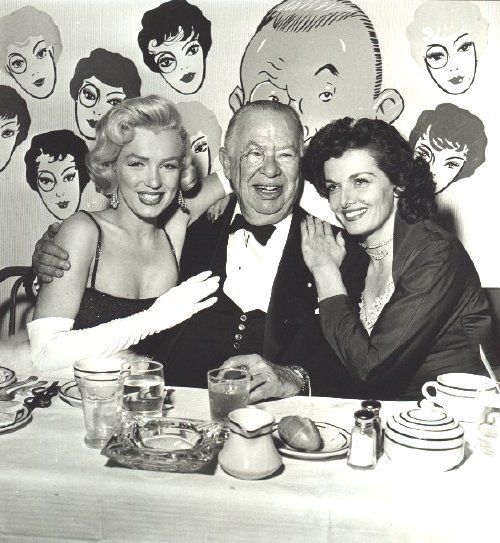
Marilyn Monroe and Jane Russell cozy up to Charles Coburn during the filming of  Gentleman Prefer Blondes.

6. Mostly known for his comedy roles, Coburn played dramatic roles in film classics like In Name Only (1939), Kings Row (1942), and The Constant Nymph (1943).

7. Coburn was so well spoken—he and his first wife organized the Coburn Shakespeare Players—that many people thought he was British.

8. Contrary to conventions of the time, Coburn often received star billing alongside his younger costars.

9. Coburn received his third (and last) Academy Award nomination for the enormously popular The Green Years (1946); he was nominated for Best Supporting Actor in spite of receiving top billing.

10. He played Barbara Stanwyck’s father in two films: The Lady Eve (1941) and B.F.’s Daughter (1948).

Charles Coburn multitasks: smoking and riding

Monday, March 20, 2017

Screening of “The More the Merrier” at Daystar Center April 4

Classic Movie Man Favorites Series: The More the Merrier
Where: Daystar Center, 1550 S. State Street
When: April 4, 2017
Time: 6:30 p.m.
Hosted by Stephen Reginald

The More the Merrier (1943) is one of the great romantic comedies released during the height of World War II.

Due to the housing shortage in Washington, D.C., retired millionaire Benjamin Dingle rents a room from the ultra patriotic Connie Milligan (Jean Arthur). After spending some time with Connie, Dingle decides that she needs to be married to a “clean-cut” young man in the person of Joe Carter (Joel McCrea), so Dingle rents half of his room to Joe. This causes all kinds of problems. Problem number one, Connie is engaged to a Washington bureaucrat Charles J. Pendergast (Richard Gaines). Problem number two, she’s living with two single men!

When the press uncovers their “scandalous” habitation, it’s up to Mr. Dingle to set things straight. The trio of Arthur, McCrea, and Coburn are a real treat. Not only do they handle the dialogue with great skill, but they delight us with their amazing physical comedy as well.

The More the Merrier was nominated for six Academy Awards including Best Picture, Best Actress (Jean Arthur), Best Director (George Stevens), and Best Supporting Actor (Charles Coburn). Coburn was the only winner for his engagingly comic performance.

Jean Arthur, Charles Coburn, and Joel McCrea in close quarters in The More the Merrier

This film is part of the “Classic Movie Man's Favorite” series.

Have some Joe and Enjoy the Show!
You can bring food and beverages into the auditorium; we even have small tables set up next to some of the seats. General Admission: $5 Students and Senior Citizens: $3.

Join the Chicago Film club; join the discussion
Twice a month we screen classic films and have a brief discussion afterward. For more information, including how to join (it’s free), click here. The Venue 1550 is easily accessible by the CTA. Please visit Transit Chicago for more information on transportation options.


Stephen Reginald is a freelance writer and editor. He has worked at various positions within the publishing industry for over 25 years. Most recently he was executive editor for McGraw-Hill’s The Learning Group Division. A long-time amateur student of film, Reginald hosts “Chicago Film Club,” a monthly movie event held in the South Loop, for the past two years. Reginald has also taught several adult education film classes at Facets Film School, Chicago.

Thursday, May 19, 2016

Preston Sturges series: Screening of “The Lady Eve” May 24 at the Daystar Center

Preston Sturges series: The Lady Eve
Where: The Venue 1550 at the Daystar Center, 1550 S. State Street, Chicago, IL
When: May 24, 2016
Time: 6:30 p.m.
Hosted by Stephen Reginald

Father and daughter con artists (Charles Coburn and Barbara Stanwyck) travel on transatlantic cruise ships swindling rich passengers in card games. When the two spot a big fish Charles Poncefort Pike (Henry Fonda), heir to Pike Ale—“The ale that won for Yale”—they decide to take him for all he’s worth. But when the daughter falls in love with their mark, things get complicated and hilarious. Preston Sturges directed his first big-budget hit with with amazing results. A critical and financial success, the New York Times declared The Lady Eve the best picture of 1941, above Citizen Kane! Once you see this film you’ll understand why they came to that amazing conclusion.

This was Preston Sturges’s third film as both writer and director and his first big-budget production, with A-list movie stars. After the critical and financial successes of The Great McGinty and Christmas in July, both released in 1940, Paramount gave Sturges free rein to craft The Lady Eve. For his leads, Sturges got Stanwyck and Fonda. From all accounts, both stars enjoyed working with each other and with Sturges. Sturges wrote The Lady Eve with Stanwyck in mind after he saw her performance in Remember the Night the year before. Sturges was so impressed with her characterization in that film that he knew she would be ideal as Eve.

Fonda, who had four films in release in 1940, including The Grapes of Wrath, was happy to star in a comedy. As Charles Pike, Fonda showed his lighter side, being especially deft at physical comedy. Fonda’s numerous pratfalls are one of the film’s major delights. Bosley Crowther in theNew York Times said, “No one could possibly have suspected the dry and somewhat ponderous comic talent which is exhibited by Henry Fonda as the rich young man.” As Eve, Stanwyck is one part of a trio of card sharks mixing it up with rich swells, like Pike, traveling by ocean liner. Along with her father, “Colonel” Harrington (Charles Coburn) and their “butler” Gerald (Melvin Cooper), Eve sees Pike as an easy mark.


A publicity shot during the filming of The Lady Eve

The Lady Eve is filled with a host of great character actors, most of which became part of the “Sturges Stock Company.” This stock company included William Demarest, Eric Blore, and Robert Grieg. The latter two appeared in Sturges’s Sullivan’s Travels, also released in 1941.

When the movie was opened, Crowther, declared Sturges, “the most refreshing new force to hit the American motion pictures in the past five years.” He went on to say that a “more charming or distinguished gem of nonsense has not occurred since It Happened One Night.”

The Lady Eve is not only one of the best screwball comedies, but one of the best American films ever made.

Henry Fonda said Barbara Stanwyck was his favorite leading lady.

Backstory: Preston Sturges wrote the screenplay for Remember the Night with Carole Lombard in mind. He was disappointed that Paramount didn't secure her services, but when he saw Stanwyck in the lead, he was impressed. Stanwyck told Sturges that no one writes comedies for her. Sturges said he would write one for her; that screenplay was The Lady Eve.

Have some Joe and Enjoy the Show!
Before the movie, grab a cup of coffee from Overflow Coffee Bar, located within the Daystar Center. You can bring food and beverages into the auditorium; we even have small tables set up next to some of the seats. General Admission: $5 Students and Senior Citizens: $3.


Join the Chicago Film club; join the discussion
Twice a month we screen classic films and have a brief discussion afterward. For more information, including how to join (it’s free), click here. The Venue 1550 is easily accessible by the CTA. Please visit Transit Chicago for more information on transportation options.

Stephen Reginald is a freelance writer and editor. He has worked at various positions within the publishing industry for over 25 years. Most recently he was executive editor for McGraw-Hill’s The Learning Group Division. A long-time amateur student of film, Reginald hosts “Chicago Film Club,” a monthly movie event held in the South Loop, for the past two years. Reginald has also taught several adult education film classes at Facets Film School, Chicago.


Daystar Center located at 1550 S. State St. works through a grassroots network of collaborations and partnerships with individuals and other nonprofit organizations. Through this web, they’re able to provide educational, cultural, and civic activities that enrich and empower their clients, guests, and community members. To learn more about classes and events offered at the Daystar Center, please visit their Web site.


Sunday, November 15, 2015

Preston Sturges and "The Lady Eve"

This post is part of The Criterion Blogathon hosted by Aaron at Criterion Blues, Kristina at Speakeasy and Ruth at Silver Screenings. It is one of many by some of the best movie bloggers around. I’m so glad to be a small part of this event. To check out all of the other great posts, click here.

Preston Sturges was a playwright, writer of screenplays, inventor, movie director, and a restaurateur. The Lady Eve cemented Preston Sturges’s place as one of American cinema’s major talents.

Sturges wrote the play Strictly Dishonorable in 1929. It was a major hit on Broadway for 16 months. This success caught the attention of Hollywood and Sturges began writing for Paramount. He eventually went from Paramount to Universal, MGM, and then back to Paramount where he had an amazing eight-year run as one of the very first writer/directors in Hollywood.

 The Lady Eve (1941) centers around Father and daughter con artists, along with their “butler” (Charles Coburn, Barbara Stanwyck, and Melvin Cooper respectively) and their caper on a transatlantic cruise ship swindling rich passengers in card games. When the two spot a big fish, Charles Poncefort Pike (Henry Fonda), heir to Pike Ale—“The ale that won for Yale”—they decide to take him for all he’s worth. But when the daughter (Eve/Stanwyck) falls in love with their mark, things get complicated and hilarious.

This was Preston Sturges’s third film as both writer and director and his first big-budget production with A-list movie stars. After the critical and financial successes of The Great McGinty and Christmas in July, both released in 1940, Paramount gave Sturges free rein to craft The Lady Eve. For his leads, Sturges got Stanwyck and Fonda. From all accounts, both stars enjoyed working with each other and with Sturges. Sturges wrote The Lady Eve with Stanwyck in mind after he saw her performance in Remember the Night the year before. Sturges was so impressed with her characterization in that film that he knew she would be ideal as Eve. Fonda, who had four films in release in 1940, including The Grapes of Wrath, was happy to star in a comedy. As Charles Pike, Fonda showed his talent for physical comedy. Fonda’s numerous pratfalls are one of the film’s major delights. Bosley Crowther in the New York Times said, “No one could possibly have suspected the dry and somewhat ponderous comic talent which is exhibited by Henry Fonda as the rich young man.” As Eve, Stanwyck is one part of a trio of card sharks mixing it up with rich swells, like Pike, traveling by ocean liner. Along with her father, “Colonel” Harrington (Coburn) and their “butler” Gerald (Cooper), Eve sees Pike as an easy mark, that is, until she falls in love with him.

Eve’s and Charles’s love is put to the test when Eve is revealed to be a card shark by the ship’s purser. Upon discovering this, Charles dumps Eve in a most humiliating and devastating fashion. Once Eve recovers, she is determined to get back at Charles by “disguising” herself as The Lady Eve Sedgewick, pretending to be the niece of another con artist “Sir Alfred McGlennan Keith” (Eric Blore). The Lady Eve manages to charm Charles on land in the same way Eve charmed him at sea. She eventually gets Charles to propose and he and The Lady Eve get married in an elaborate society wedding. On their honeymoon, Eve concocts a backstory about her past marriages and romances, turning the tables on Charles, humiliating and hurting him the way he hurt her. Charles leaves her, but it’s revealed that Eve is still in love with Charles in spite of everything (We suspect that Charles is still in love with Eve, but hes too stubborn and proud to admit it). Will The Lady Eve be revealed as just plain Eve? Will Charles and Eve discover each other and find true love and happiness?

Amidst all the hilarity, there are some serious themes running through the narrative: Can one really find true love? Is love redemptive or is it all a bunch of hooey? These themes would be repeated in more serious productions from Alfred Hitchcock. What was unique about Sturges’s approach is how he was able to point to the character flaws of both the upper and lower classes without malice or a mean spirit.

The Lady Eve is filled with a host of great character actors, most of which became part of the “Sturges Stock Company.” This stock company included William Demarest, Eric Blore, and Robert Grieg. The latter two appearing in Sturges’s Sullivan’s Travels, also released in 1941.

When the movie was released, Crowther, declared Sturges, “the most refreshing new force to hit the American motion pictures in the past five years.” He went on to say that a “more charming or distinguished gem of nonsense has not occurred since It Happened One Night.”

The Lady Eve is not only one of the best screwball comedies ever made, but one of the best American films ever made, this according to director and film historian, Peter Bogdanovitch. In case you think Bogdanovitch’s critique is a bit over the top, consider this: The Lady Eve was voted the best movie of 1941 by The New York Times over Citizen Kane!


Related Posts Plugin for WordPress, Blogger...