Showing posts with label Laird Cregar. Show all posts

Monday, June 13, 2022

Betty Grable, Victor Mature, and Carole Landis star in "I Wake Up Screaming"

I Wake Up Screaming (1941) is an American film noir directed by H. Bruce Humberstone and starring Betty Grable, Victor Mature, and Carole Landis. Other cast members include Laird Cregar, Alan Mowbray, Allyn Joslyn, Elisha Cook Jr., and Charles Lane.

Told mostly in flashbacks, the film explores the murder of a young starlet, Vicky Lynn (Landis). Vick's manager, Frankie Christopher (Mature) is the prime suspect, however, the case against him isn't that clear cut. Jill Lynn (Grable), Vicky's older sister is determined to find out who murdered her sister and why. In the meantime, detective Ed Cornell is convinced that Frankie is the murderer and works overtime trying to convince the police that this is so.

Did Frankie Christopher murder Vicky Lynn? If so, what was his motive? Was Frankie the only one who had a motive to murder Vicky?

Laird Cregar (far left) and Victor Mature (middle)


H. Bruce Humberstone (1901 - 1984) was an American film director and former child actor. A founding member of the Directors Guild of America, Humberstone worked in a variety of genres including comedies, dramas, and musicals. Some of the popular and classic films directed by Humberstone include Street Scene (1931), Sun Valley Serenade (1941), Hello, Frisco, Hello (1943), Wonder Man (1945), and The Desert Song (1953).

Betty Grable (1916 - 1973) was an American actress, dancer, and singer. She was the most popular pin-up girl during World War II. She was also a top box office star from 1942 to 1951. In 1946 and 1947, she was the highest-paid woman in America. Grable starred mostly in musicals and light comedies. Grable made two non-musicals,  A Yank in the R. A. F. (1941), and I Wake Up Screaming. Both films were extremely popular, but Grable felt most comfortable in musicals. Other popular Grable films include Down Argentine Way (1940), Moon Over Miami (1941), Sweet Rosie O'Grady (1943), The Dolly Sisters (1945), Mother Wore Tights (1947), and How to Marry a Millionaire (1953). 

Victor Mature (1913 – 1999) was an American stage, film, and television actor who became a major movie star during the 1940s under contract to 20th Century-Fox. Before his film career took off, Mature starred in Lady in the Dark (1941) on Broadway opposite Gertrude Lawrence. Some of Mature’s notable films include I Wake Up Screaming (1941) with Betty Grable, The Shanghai Gesture (1941) with Gene Tierney. In 1942, he starred opposite Rita Hayworth in the musical My Gal Sal. Other notable films include Samson and Delilah (1949), and The Robe (1952), the first film released in the Cinemascope widescreen process. Mature was self-deprecating when it came to his acting. He said, “I’m no actor, and I’ve got 64 pictures to prove it.”

Carole Landis (1919 - 1948) was an American actress and singer. She was under contract to Twentieth Century-Fox in the 1940s. Her breakout performance was in One Million B.C.I (1940) for United Artists costarring Victor Mature. It was her success in this film that lead to her contract with Fox. During World War II, Landis toured and entertained troops. She wrote about her experiences which were published in several magazines. Eventually, her experiences became the basis for the film Four Jills in a Jeep (1944). Landis's career declined somewhat in the late 1940s. She had an affair with Rex Harrison during this time. When he refused to divorce his wife and marry her, Landis committed suicide.

Laird Cregar (1913 - 1944) was an American film and stage actor. Cregar came to Hollywood due to his success with the play Oscar Wilde in Los Angeles in 1940. Cregar signed a contract with 20th Century Fox and quickly became a popular character actor. Due to his large size (he weighed 300 pounds), he was often cast as the bad guy. In an effort to become a leading man in the movies, Cregar went on a crash diet during the productions of The Lodger and Hangover Square. To aid in his dieting, Cregar was prescribed amphetamines which had a negative effect on his system, causing abdominal problems. These problems lead to surgery and eventually a heart attack. He died shortly after at age 31.


I Wake Up Screaming trivia
  • This was the first film noir produced by Twentieth Century-Fox.
  • Alice Faye was set to play the role that eventually went to Betty Grable.
  • Grable originally was to have a musical number in the film but that idea was ultimately rejected.
  • Carole Landis did her own singing in the film.
  • This was the first film Victor Mature made under his Fox contract.
  • Grable and the film were a big success but she never made another film noir.

To watch the film on YouTube, click the link below.


To join the discussion on June 20, 2022, at 6 p.m. Central Time, click here. Once you RSVP, you will receive an invitation and a link to the discussion on Zoom.


Discussion questions
  1. Does this film fit your understanding of what makes a film noir?
  2. Betty Grable said she never received a good review; what did you think of her performance?
  3. Carole Landis had a tough task playing the wildly popular Grable's younger sister. What did you make of her performance?
  4. We have another moody and odd performance by Laird Cregar, although this was one of his earlier character roles at Fox. Was he believable as the obsessed detective?
  5. Were you surprised by the film's conclusion? Would you have written a different ending?

Monday, May 23, 2022

Merle Oberon, George Sanders, and Laird Cregar in "The Lodger"

The Lodger (1944) is an American horror-suspense film directed by John Brahm and starring Merle Oberon, George Sanders, and Laird Cregar. The film is based on Jack the Ripper story and is a remake of Alfred Hitchcock's silent version, The Lodger: A Story of London Fog (1927). The screenplay was by Barre Lyndon, and the cinematography was by Lucien Ballard—who was married to Merle Oberon from 1945 to 1949. 

Ballard invented a light mounted by the side of the camera that provided direct light onto an actor’s face, which reduced skin blemishes and wrinkles. The device was named the “Obie” after Oberon, who had some facial scarring from a car accident.

Slade (Cregar) is a lodger in the home of a 19th-century London family. So is Kitty Langley (Oberon), a cabaret performer. Slade is attracted to Kitty and she to him. Will Kitty become Slade's next victim?

Laird Cregar

John Brahm (1893 - 1982) was a German film director who immigrated to the United States in 1937. Brahm found work as a director, first employed by Columbia Pictures and then 20th Century-Fox. Brahm's most famous films include The Lodger (1944), Hangover Square, and The Lockett (1946). Brahm also directed many television shows, including Alfred Hitchcock Presents and The Twilight Zone.

Merle Oberon (1911 - 1979) was a British actress who had roles in several popular films in Britain before coming to the United States to make films for Samuel Goldwyn. In 1935, she was nominated for the Academy Award for Best Actress for her role in The Dark Angel. In 1937, she was in a car accident that left her with facial scars. The accident almost ended her career but she was able to work in film and television until 1973. Oberon starred as Anne Boleyn opposite Charles Laughton in The Private Lives of Henry VIII (1933), which was her first big success. She starred opposite Lesley Howard in The Scarlet Pimpernel  (1934). Perhaps her most famous role is as Cathy in Wuthering Heights (1939) opposite Laurence Olivier. She also starred in These Three (1936), Beloved Enemy (1936), Lydia (1941), A Song to Remember (1945), Night Song (1947), and Berlin Express (1948).

Merle Oberon and George Sanders

George Sanders (1906 – 1972) was a British film and stage actor who also had a fine singing voice. Hollywood was looking for a villain to star opposite a young Tyrone Power in Lloyd’s of London (1936) and Sanders more than fit the bill. His performance in that film would forever stamp him as a sophisticated bad guy. Before his acting career, he worked in the textile industry, which must have helped him with his role in The Strange Affair of Uncle Harry. In the 1960s, Sanders played Mr. Freeze in the Batman (1966) television series.

Laird Cregar (1913 - 1944) was an American film and stage actor. Cregar came to Hollywood due to his success with the play Oscar Wilde in Los Angeles in 1940. Cregar signed a contract with 20th Century Fox and quickly became a popular character actor. Due to his large size (he weighed 300 pounds), he was often cast as the bad guy. In an effort to become a leading man in the movies, Cregar went on a crash diet during the productions of The Lodger and Hangover Square. To aid in his dieting, Cregar was prescribed amphetamines which had a negative effect on his system, causing abdominal problems. These problems lead to surgery and eventually a heart attack. He died shortly after at age 31.


The Lodger trivia
  • Merle Oberon fell in love with cinematographer Lucien Ballard during production. They were married the next year.
  • This film propelled Laird Cregar to stardom and the studio was in the process of finding similar properties for the actor.
  • One of the first films to have a point of view shot from the killer's perspective.
  • The film was completed in 1943 but not released until the next year.

To watch the film on YouTube, click on the link below.


To join the discussion on Monday, May 30, 2022, at 6:30 p.m. Central Time, click here. Once you RSVP, you will receive an invitation and link to join the discussion on Zoom. 


Discussion questions
  1. This film is related in style and plot to Hangover Square (1945), a film we discussed a few months ago, which also starred Laird Cregar and George Sanders and was also directed by John Brahm. Which film do you think is better?
  2. Did the film seem like a realistic depiction of the Jack the Ripper story?
  3. What did you think of Merle Oberon's performance as Kitty? Did she make a credible cabaret performer?
  4. This was a breakout film of sorts for Laird Cregar. What did you think of his performance?
  5. The film is often categorized as a horror film. Do you think that's the best category for this film? Do you have a better one?
  6. The Lodger was praised for the atmosphere created by the director and the production team? Were the critics correct in their assessment?


Tuesday, February 22, 2022

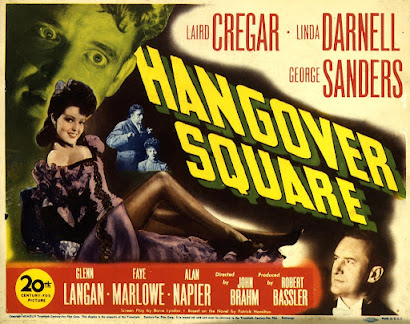
Laird Cregar, Linda Darnell, and George Sanders find themselves in "Hangover Square"

Hangover Square (1945) is an American period film noir directed by John Brahm and starring Laird Cregar, Linda Darnell, and George Sanders. Others in the cast include Glenn Langan, Faye Marlowe, and Alan Napier. The cinematography was by Joseph LaShelle (Laura, The Apartment) and the film score was by Bernard Herrmann (Citizen Kane, Psycho).

Composer George Harvey Bone (Cregar) has no memory of killing a shop owner and then setting his business on fire. It seems George goes into a trance when hears discordant sounds and loses all sense of time. He meets a music hall singer named Netta (Darnell) who uses George to write her songs for her act. When George finds out that Netta is engaged to Eddie Carstairs, he goes into a jealous rage, beating Carstairs and destroying any chance he had with Netta. With this rage and disappointment drive him to kill again?


John Brahm (1893 - 1982) was a German film director who immigrated to the United States in 1937. Brahm found work as a director, first employed by Columbia Pictures and then 20th Century-Fox. Brahm's most famous films include The Lodger (1944), Hangover Square, and The Lockett (1946). Brahm also directed a lot of television shows including Alfred Hitchcock Presents, and The Twilight Zone.

Laird Cregar (1913 - 1944) was an American film and stage actor. Cregar came to Hollywood due to his success with the play Oscar Wilde in Los Angeles in 1940. Cregar signed a contract with 20th Century-Fox and quickly became a popular character actor. Due to his large size (he weighed 300 pounds), he was often cast as the bad guy. In an effort to become a leading man in the movies, Cregar went on a crash diet during the productions of The Lodger and Hangover Square. To aid in his dieting, Cregar was prescribed amphetamines which had a negative effect on his system, causing abdominal problems. These problems lead to surgery and eventually a heart attack. He died shortly after at age 31.

Linda Darnell (1923 – 1965) was an American film actress. She signed a contract with 20th Century-Fox at age 15 and became a star almost overnight. She was immediately cast opposite Tyrone Power in Day-Time Wife (1939). She made two films with Power in 1940: Brigham Young and The Mark of Zorro. In 1941, she was again paired with Power in Blood and Sand, which also starred an up-and-coming Rita Hayworth. Darnell’s most famous role was that of Amber St. Clair in Forever Amber (1946), which turned out the be the biggest hit of the year. The role of Amber was the most sought-after female role since the casting of Scarlett O’Hara in Gone with the Wind (1939). Other important films she starred in include Unfaithfully Yours (1948), A Letter to Three Wives (1949), and No Way Out (1950). She died tragically at age 41 in a fire while visiting friends in Glenview, Illinois.

George Sanders (1906 – 1972) was a British film and stage actor who also had a fine singing voice. Hollywood was looking for a villain to star opposite a young Tyrone Power in Lloyd’s of London (1936) and Sanders more than fit the bill. His performance in that film would forever stamp him as a sophisticated bad guy. Before his acting career, he worked in the textile industry, which must have helped him with his role in The Strange Affair of Uncle Harry. In the 1960s, Sanders played Mr. Freeze in the Batman (1966) television series.

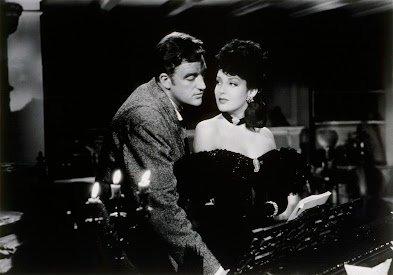
Laird Gregar and Linda Darnell


Hangover Square trivia

  • Stephen Sondheim saw the film as a 16-year-old and said that the film was the inspiration for his musical Sweeney Todd.
  • You can hear many musical cues in Herrmman's film score from other works including The Ghost and Mrs. Muir, Vertigo, and North by Northwest.
  • The film was released two months after Laird Cregar's death.
  • Cregar had originally rejected the role of Bone but changed his mind when fellow contract player Glenn Langan was announced as the lead.


To watch the film on YouTube, click on the link below.


To join the discussion on February 28, 2022, at 6:30 p.m. Central Time click here. Once you RSVP, you will receive an invitation and a link to the discussion on Zoom.

Discussion questions:

  1. What film genre would you categorize Hangover Square?
  2. Was Laird Cregar believable as a psychopath? Did you have any sympathy for his character?
  3. Would you consider Linda Darnell a turn-of-the-century femme fatale? Was she believable in her role?
  4. Did this film remind you of any other films you've seen?
  5. Were you surprised by anything in the film?


Related Posts Plugin for WordPress, Blogger...