Showing posts with label Thomas Mitchell. Show all posts

Tuesday, April 21, 2026

Through “The Dark Mirror”: A Twisted Tale of Twins and Terror

Released on October 18, 1946, and directed by the noir master Robert Siodmak, The Dark Mirror is a sophisticated psychological thriller that plunges into the unsettling mysteries of identity and the human mind. The story begins with a brutal murder in a high-rise apartment, where a prominent doctor is found dead. Detective Stevenson, played by the reliable Thomas Mitchell, quickly identifies a suspect: a beautiful woman seen leaving the scene. However, the investigation hits a surreal wall when it is discovered that the suspect has an identical twin sister, and both women possess an airtight alibi that places them together at the time of the crime.

Olivia de Havilland delivers a virtuosic dual performance as the twins, Ruth and Terry Collins. Though they are physically indistinguishable, their temperaments are subtly distinct—one appearing gentle and kind-hearted, while the other masks a cold, calculating nature. As the police find themselves legally paralyzed, unable to arrest one without risking the conviction of the other, they enlist the help of Dr. Scott Elliott (Lew Ayres), a specialist in the burgeoning field of twin psychology.

The setting shifts to a clinical but tension-filled environment as Dr. Elliott subjects the sisters to a series of Rorschach tests, polygraphs, and word-association games. Siodmak uses the urban backdrop of mid-century apartments and sterile offices to create a sense of mounting claustrophobia, utilizing mirrors and clever split-screen cinematography to force the sisters into a visual confrontation with one another. As the doctor becomes more deeply involved, the professional nature of his study begins to blur with a dangerous fascination, especially as he starts to suspect that one sister is hiding a truly predatory streak.

Throughout the film, the suspense is driven not just by the “whodunit” of the original murder, but by the psychological cat-and-mouse game played between the twins and the men trying to unravel their bond. The Dark Mirror remains a quintessential 1940s noir, blending the era’s obsession with Freudian psychiatry with Siodmak’s signature atmospheric lighting and sharp, cynical dialogue. It serves as a chilling exploration of the idea that the person closest to us may also be the one we know the least.


Olivia de Havilland and Olivia de Havilland

Robert Siodmak (1900 – May 1973) was a German-American director celebrated as one of the definitive architects of film noir, known for his masterful use of German Expressionist shadows and psychological tension. After beginning his career in the thriving Ufa studios in Berlin, Siodmak fled the rise of Nazism, eventually arriving in Hollywood, where he embarked on a legendary “dark period” during the 1940s. He specialized in capturing the claustrophobia of the human psyche in classics like The Killers (1946), The Spiral Staircase (1946), and The Dark Mirror (1946), often collaborating with top-tier cinematographers to create high-contrast, moody visuals that defined the era’s aesthetic. His ability to blend continental sophistication with American crime tropes left an indelible mark on the genre, solidifying his legacy as a director who could make the urban landscape feel as dangerous and complex as the characters inhabiting it.

Olivia de Havilland (1916–2020) was a legendary Anglo-American actress whose career spanned seven decades and earned her a reputation as one of the last great stars of the Golden Age of Hollywood. Initially rising to fame as the quintessential leading lady opposite Errol Flynn in sweeping adventures like The Adventures of Robin Hood (1938), she achieved cinematic immortality as the gentle Melanie Hamilton in Gone with the Wind (1939). Beyond her on-screen grace, she became a pivotal figure in industry history by successfully challenging the restrictive studio contract system in the landmark “De Havilland Decision,” which granted actors greater professional freedom. This newfound independence allowed her to pursue complex, psychologically demanding roles that showcased her immense range, leading to two Academy Awards for Best Actress for her performances in To Each His Own (1946) and The Heiress (1949). Her legacy is defined by a rare combination of elegant poise and fierce resilience, leaving behind a body of work that remains a cornerstone of classic cinema.

Lew Ayres (1908–1996) was a distinguished American actor whose career was defined by a rare combination of youthful sensitivity and unwavering moral conviction. He catapulted to international stardom with his haunting portrayal of a disillusioned soldier in the anti-war masterpiece All Quiet on the Western Front (1930), a role that mirrored his own lifelong commitment to pacifism. During the late 1930s, he became a household name as the idealistic title character in the popular Dr. Kildare film series, though his career faced a temporary turning point during World War II when he served as a conscientious objector and medic in the Pacific. Ayres successfully returned to the screen in the post-war era, delivering sophisticated performances in psychological thrillers like The Dark Mirror (1946) and earning an Academy Award nomination for his compassionate role in Johnny Belinda (1948). Throughout his long tenure in Hollywood, he remained a figure of quiet integrity, remembered for both his intellectual screen presence and his deep-seated humanitarian values.

Click HERE to watch the movie on YouTube or click HERE to watch the movie on the Internet Archive. Both are great prints.


Click HERE to join the discussion on Monday, April 27, 2026, at 6:30 p.m. Central Time. Once you RSVP, you will receive an invitation with a link to join the discussion on Zoom.


Lew Ayres and Olivia de Havilland

The Dark Mirror trivia

A Technical Triumph: The film is celebrated for its seamless twin effects. To allow Olivia de Havilland to appear on screen with herself, cinematographer Milton Krasner used sophisticated split-screen masking and double exposures. To ensure the two “Olivias” could interact naturally, the crew used a metronome and earpieces so she could time her dialogue with her own pre-recorded voice from the “other" sister.

A Noir Dream Team: The film was a collaboration between two titans of the genre. Director Robert Siodmak was the master of German Expressionist-influenced shadows (also directing The Killers that same year), while the screenplay was written by Nunnally Johnson. Johnson was a powerhouse writer-producer who later earned acclaim for The Three Faces of Eve, another film deeply rooted in psychological identity.

The Good Twin vs. The Oscar: 1946 was a career-defining year for Olivia de Havilland. While she was receiving praise for her dual role in The Dark Mirror, she was simultaneously winning her first Academy Award for Best Actress for her performance in To Each His Own. Her work in The Dark Mirror is often cited by film historians as the performance that proved her incredible range beyond the ingenue roles of her early career.

Psychology of the Era: The film was part of a major post-war trend in Hollywood often called the Freudian Noir. Following the success of Hitchcock’s Spellbound (1945), audiences were fascinated by psychoanalysis. The Dark Mirror utilized actual Rorschach inkblot tests and polygraph machines on screen, reflecting the public's real-life intrigue with using science to unmask the criminal mind.


Discussion questions

The Nuance of Identity: Olivia de Havilland opted not to use heavy makeup or different hairstyles to distinguish Ruth from Terry. Instead, she relied on subtle shifts in vocal pitch, posture, and the look in her eyes. How effective was this understated approach in making you believe they were two different people, and did it make the “evil” twin more or less chilling?

The Mirror as a Motif: Director Robert Siodmak uses mirrors, split-screens, and reflective surfaces constantly throughout the film. Aside from the obvious “twin” connection, how do these visuals support the noir theme of a fragmented or hidden self? Do the reflections make the characters seem more connected, or more isolated from one another?

The Science of Noir: The film relies heavily on the 1940s fascination with Freudian psychiatry and the Rorschach inkblot test to solve the mystery. Looking at the film today, does this focus on mid-century psychology add a layer of intellectual suspense, or does it feel like a dated gimmick compared to modern forensic thrillers?

The Detective vs. The Doctor: Detective Stevenson (Thomas Mitchell) represents traditional police legwork, while Dr. Elliott (Lew Ayres) represents the modern analytical approach. How does the tension between these two methods drive the plot? Do you think the detective could have solved the case without the doctor’s psychological intervention, or is Terry’s mind a "locked room" that only science could open?


Tuesday, January 16, 2024

Jean Gabin and Ida Lupino star in “Moontide”

Moontide (1942) is an American drama directed by Archie Mayo and starring Jean Gabin and Ida Lupino. The supporting cast includes Thomas Mitchell, Claude Rains, and Jerome Cowan.

Bobo (Gabin) works on a barge with Anna (Lupino) a girl he saved from committing suicide. Bobo has a violent past and is prone to fights when he is drunk. Bar-fly Pop Kelly (Arthur Aylesworth) was murdered and Bobo is concerned that he may have killed him while he was drunk.

Bobo and Anna try to make a life together but there are forces beyond their control that are out to destroy them.

Will Bobo and Anna be able to live in peace or are they destined to a life of misery and pain.

Ida Lupino nad Jean Gabin

Archie Mayo (1891 – 1968) was an American film director, screenwriter, and actor. Mayo began directing during the silent era, easily making the transition to talking pictures. He directed many stars of the pre-code era including James Cagney, Constance Bennett, and Joan Blondell. He also directed The Petrified Forest (1936) starring Leslie Howard, Bette Davis, and Humphrey Bogart.

Jean Gabin (1904 – 1976) was a French actor and singer. His reputation as a major star of French cinema brought him to Hollywood. Gabin didn’t like being under a studio contract and only made two films in Hollywood.

Ida Lupino (1918 – 1995) was an English-American actress, director, and producer. She appeared in over 50 films and was one of Warner Bros.’s biggest contract players during the 1940s starring in High Sierra (1941), The Sea Wolf (1941), and The Man I Love (1947). After she left Warner Bros., Lupino formed her own production company, producing, writing, and directing films that tackled subjects the big studios wouldn’t touch. During the 1950s, Lupino was the only female director working in Hollywood. She directed several small independent films but really made a name for herself directing for television. Lupino directed episodes of The Twilight Zone (starred in one too), The RiflemanBonanzaGilligan’s IslandIt Takes a ThiefFamily Affair, and Columbo. In 1966, she directed her one-and-only big-budget studio picture, The Trouble with Angels starring Rosalind Russell and Haley Mills.

Click here to watch the film on YouTube


Click here to join the discussion online on January 22, 2024, at 6:30 p.m.Central Time. Once you RSVP, you will receive an invitation and a link to join the discussion on Zoom.

Discussion questions

  1. Jean Gabin made only two films in Hollywood. What did you think of his performance? Do you think he could have been a big star in American if he stayed in Hollywood?
  2. Ida Lupino was borrowed from Warner Bros. to co-star with Gabin. Did you think they had good on-screen chemistry.
  3. The film’s production was affected by World War II. It was originally planned to be filmed on location but was instead filmed on the sound stages at 20th Century-Fox. Did you find the studio sets believable?
  4. Cinematographer Charles G. Clarke was nominated for an Academy Award for his work on Moontide. Did you think it was well deserved?
  5. Did you have a favorite character actor?


Tuesday, September 19, 2023

Gregory Peck discovers “The Keys of the Kingdom”

The Keys of the Kingdom (1944) is an American film based on the novel of the same name by A. J. Cronin. The film was directed by John M. Stahl and produced by Joseph L. Mankiewicz. The film stars Gregory Peck, Thomas Mitchell, Rose Stradner, Edmund Gwenn, James Gleason, Sir Cedric Hardwicke, Anne Revere, and Vincent Price. Others in the cast include Roddy McDowall and Peggy Ann Garner.

The plot focuses on Father Francis, (Peck) an old man, who returns to the parish of his youth. Monsignor Sleeth (Hardwicke) believes that it would be best if he retires, which is not what Father Francis desires. The Monsignor gets ready for bed and notices Father Francis’s journal. He begins to read it and learns all about the elderly priest’s life from his youth until today. He reads of Francis’s work in China and the church and school that he helped establish with the help of three missionary nuns.

As Monsignor Sleeth finishes the journal, he has second thoughts about Father Francis.

Gregory Peck and Rose Stradner

John M. Stahl (1886 – 1950) was an American film director and producer who began his career in silent movies in 1913. In 1919 he signed with the film company Louis B. Mayer Pictures, which would eventually become Metro-Goldwyn-Mayer. Stahl made the transition to sound and directed Imitation of Life (1934) starring Claudette Colbert which was nominated for a Best Picture Oscar. In 1935, he directed Magnificent Obsession starring Irene Dunne and Robert Taylor. Other films of note include Back Street (1932) starring Dunne and John Boles, and The Keys of the Kingdom (1944) starring Gregory Peck. Many believe that director Douglas Sirk was influenced by Stahl’s melodramatic style. Sirk remade both Magnificent Obsession (1954) and Imitation of Life (1959).

Gregory Peck (1916 – 2002) was one of the biggest stars in Hollywood. He had three Best Actor nominations early in his career for The Keys to the Kingdom (1944), The Yearling (1946), Gentleman’s Agreement (1947), and Twelve O’Clock High (1949). He had non-exclusive contracts with David O. Selznick and Twentieth Century-Fox, which gave him great flexibility in the roles he chose to play. Other classic Peck film roles include Roman Holiday (1953), The Big Country (1958), and The Guns of Navarone (1961). He finally won a Best Actor Academy Award for his iconic portrayal of Atticus Finch in To Kill a Mockingbird (1962).

Thomas Mitchell (1892 –1962) was an American character actor who had a long career in film and theater. Mitchell was one of the most recognizable character actors in movies during the 1930s and 1940s. In 1939, Mitchell had important roles in five classic films: StagecoachOnly Angles Have WingsMr. Smith Goes to WashingtonGone with the Wind, and The Hunchback of Notre Dame. Mitchell won a Best Supporting Actor Academy Award for his role as Doc Josiah Boone in Stagecoach.

Vincent Price (1911 - 1993) was an American actor who worked on the stage, in film, radio, and television. He was also an art collector and author. Price established himself as a character actor in the 1940s with roles in films like The Song of Bernadette (1943), Laura (1944), The Keys of the Kingdom (1944), and Leave Her to Heaven (1945). In the 1950s, he established himself as a star of horror films including House of Wax (1953), The Fly (1958), and House on Haunted Hill (1959). Toward the end of his career, Price had important roles in The Whales of August (1987) and Tim Burton’s Edward Scissorhands (1990).

Roddy McDowall (1928 - 1998) was a British-born American actor. He started his career as a baby model and then began appearing in films as a young child in England. When he came to Hollywood, he became an in-demand child actor where he appeared in dozens of films including My Friend Flicka (1943), Lassie Come Home (1943), The White Cliffs of Dover (1944), and Thunderhead, Son of Flicka (1945). McDowell was able to successfully transition from child actor to adult actor appearing in lead and supporting roles in films like Midnight Lace (1960), The Longest Day (1962), Cleopatra (1963), and That Darn Cat! (1965). He may be best known as Cornelius, one of the intelligent apes in The Planet of the Apes (1968), its sequels, and short-lived TV series. McDowall also served as a producer of Overboard (1987) as well as co-starring with Goldie Hawn and Kurt Russell.

Peggy Ann Garner (1932 – 1984) was an American child film actress who achieved great fame during the mid-1940s. Garner entered films at age six. By age twelve, she had reached her peak playing the role of Francie Nolan in A Tree Grows in Brooklyn. For her performance in that film, Garner won an Academy Juvenile Award. Garner was memorable as the title character as a young girl in Jane Eyre (1943). After her success in A Tree Grows in Brooklyn, Garner had starring roles in Nob Hill (1945), Junior Miss (1945), and Home Sweet Homicide (1946). Soon thereafter, Garner was relegated to a supporting player, never able to successfully transition to adult roles. In spite of the lack of film roles, Garner had success on Broadway and appeared on popular television shows including Perry MasonCombat!BatmanThe Big Valley, and Lou Grant.

The Keys of the Kingdom trivia

  • This film garnered Peck’s first Academy Award nomination.
  • Joseph Cotten tested for the role of Father Francis. Other actors considered were Spencer Tracy, Orson Welles, Edward G. Robinson, Gene Kelly, Alan Ladd, and Henry Fonda.
  • Ingrid Bergman was considered for the part of Mother Maria Veronica. The role went to Rose Stradner, the wife of producer Joseph L. Mankiwicz. This was her final film.
  • Alfred Hitchcock liked the novel and hoped to direct it.
  • Thomas Mitchell was in his 50s and Peck in his 20s when the film was released which makes it a bit odd that they were cast as best friends from childhood.


To watch the film on YouTube, click on the link.


To join the discussion on Monday, September 25, 2023, at 6:30 Central Time, click here. Once you RSVP, you will receive an invitation and a link to join the discussion on Zoom.


Publicity photo of Gregory Peck and Roddy McDowall reading the novel on set

Discussion questions

  1. This was Gregory Peck’s breakthrough film. What did you think of his performance?
  2. The film is an example of the studio system at its zenith. The depth of the supporting cast is staggering. Of all the great supporting players, did you have a favorite or one that stood out to you?
  3. The movie was filmed entirely on the backlot and the sound stages at 20th Century-Fox. What did you think of the production? Were you convinced the action took place in China?
  4. What do you think the movie had to say about faith and belief?
  5. Did anything about the film surprise you?


Wednesday, June 30, 2021

Claire Trevor and John Wayne head the cast of “Stagecoach”

Stagecoach (1939) is an American Western classic directed by John Ford and starring Claire Trevor and John Wayne. The film was produced by Walter Wanger Productions and the cinematography was by Bert Glennon (Young Mr. Lincoln-1939, Our Town-1940, Destination Tokyo-1943).

Considered not only one of the best westerns of all time, but Stagecoach is also considered one of the best pictures of all time. Supposedly, Orson Welles watched the film 40 times in preparation for the making of Citizen Kane (1941). Welles said Stagecoach was the “perfect textbook of film-making.”

When a group of strangers boards a stagecoach in June of 1885, from Tonto, Arizona Territory, to Lordsburg, New Mexico, little do they realize their lives will forever be changed. On that stagecoach is Dallas (Trevor) a prostitute who is run out of town by the all-female Law and Order League, Doc Boone (Thomas Mitchell), an alcoholic, Mrs. Lucy Mallory, (Louise Platt) an officer’s wife, whiskey salesman Samuel Peacock (Donald Meek), and gambler and Southern gentleman Hatfield (John Carradine). Along the way, they pick up dishonest banker Henry Gatewood (Berton Churchill) who has just embezzled money from his bank.

As if the stage wasn’t crowded enough, they meet up with the Ringo King (Wayne) who escaped from jail to avenge the deaths of his father and brother at the hands of Luke Plummer (Tom Tyler).

How these diverse personalities interact along the way is what makes the film so engaging. Will they be at each others’ throats or will they be able to pull together as they ride through dangerous Indian territory?


John Ford (1894 - 1973) was an American film director who won a record four Academy Awards, more than any other director in history. He is perhaps best known for his western films, but ironically the Academy Awards he won weren’t for his classic westerns like Stagecoach (1939) and The Searchers (1956). Ford got his start in silent film, first as an actor, then as a writer-director. He directed many silent films including the epic The Iron Horse (1924). Once the sound era arrived, Ford was one of its first pioneers. He hit his stride in the 1930s with films like The Lost Patrol (1934), The Whole Town’s Talking (1935), and The Informer (1935), which brought Ford his first Academy Award for Best Director. Other popular Ford films include The Hurricane (1937), Wee Willie Winkie (1937), Young Mr. Lincoln (1939), Drums Along the Mohawk (1939), and The Grapes of Wrath (1940) the last three all starring Henry Fonda. He also had a long collaborative relationship with John Wayne. Wayne starred in many classic Ford films including She Wore a Yellow Ribbon (1949), The Quiet Man (1952), The Searchers, and The Man Who Shot Liberty Valance (1962).

Walter Wanger (1894 - 1968) was an American film producer. He was active in films from 1910 until 1963. Wanger attended Dartmouth College and served in the United States Army during World War I. While working for what was to become Paramount Studios, during the early days of talking films, he recruited Broadway performers like Claudette Colbert, Jeanette MacDonald, Fredric March, and Miriam Hopkins to the movies. He also brought directors George Cukor and Rouben Mamoulian to the studio. Some of the films produced by Wanger include Foreign Correspondent (1940), The Long Voyage Home (1940), Scarlet Street (1945), The Reckless Moment (1949), Invasion of the Body Snatchers (1956), I Want to Live! (1958), and Cleapatra (1963). Wanger was married to actress Joan Bennett (1940 - 1965).

The cast of Stagecoach

Claire Trevor (1910 - 2000) was an American actress who appeared in over 60 movies. She received nominations for the Academy Award for Best Supporting Actress for Dead End (1937), and The High and the Mighty (1954). She won the award for her performance in Key Largo (1948). Trevor got her start on the New York stage and made her film debut in 1933. She also appeared on radio with Edward G. Robinson in the popular radio program Big Town. Trevor’s most famous role is probably Dallas in Stagecoach, but she had other memorable roles in Murder, My Sweet (1944), and Born to Kill (1947). Her last film role was in Kiss Me Goodbye (1982) where she played Sally Field’s mother. 

John Wayne (1907 - 1979) was an American actor and filmmaker. Nicknamed Duke, Wayne was a pop culture icon and one of the most popular movie stars of all time. During the end of the silent era, Wayne worked on movie sets and played bit parts in movies. He got the chance to play the lead in director Raoul Walsh’s The Big Trail (1930). The Western was an early widescreen epic and a box office disaster, which relegated Wayne to roles in a string of B Westerns. It wasn’t until his role as the Ringo Kid in Stagecoach that he became a star of A films who was now paired with some of the top actresses of the day. Wayne played a variety of roles in the movies but he is most identified with the Western genre and the movies he made with director John Ford. Some of Wayne’s popular films include Red River (1948), The Quiet Man (1952), Rio Bravo (1959), The Searchers (1956), and The Longest Day (1962). Wayne won his one and only Best Actor Academy Award for his role in Tue Grit (1969).

John Wayne and Claire Trevor

Stagecoach trivia

  • The hat John Wayne wore in the film was his own. He wore it in many westerns but retired it in 1959 after completing Rio Bravo.
  • Local Navajo Indians played Apaches.
  • Stagecoach was one of several big-budget Westerns released in 1939 including Union Pacific, Jesse James, and Dodge City.
  • John Wayne made less money than most of his costars
  • Thomas Mitchell won a Best Supporting Academy Award for this film but was very busy in 1939. Besides Stagecoach, he had important roles in Only Angels Have Wings, Mr. Smith Goes to Washington, The Hunchback of Notre Dame, and Gone with the Wind!


To watch the film on YouTube, click the link below.


To join the discussion on July 5, 2021, at 6:30 p.m. Central Time, click here. Once you RSVP, you will receive an email with an invitation and link to the discussion on Zoom.


Discussion questions:

  1. What did you make of John Wayne’s star-making turn in this film?
  2. Of all the character actors, did one stand out to you?
  3. How much experience with women do you think Wayne’s character had before meeting Dallas?
  4. Why do you think this film is held in such high regard by critics and filmgoers today?
  5. What do you think director John Ford thought of the character of Dallas?
Filming Stagecoach on location


Friday, November 13, 2020

Olivia de Havilland stars as identical twins in “The Dark Mirror”

The Dark Mirror (1946) is an American film noir directed by Robert Siodmak, and starring Olivia de Havilland, Lew Ayres, and Thomas Mitchell. The film was written and produced by Nunnally Johnson. Milton Krasner worked as the cinematographer and Dimitri Tiomkin wrote the film’s score.


Identical twin sisters Ruth and Terry Collins (de Havilland in a dual role) are almost impossible to tell apart. After Terry visits the apartment of Dr. Frank Peralta, he is found stabbed to death. Detective Lt. Stevenson (Mitchell) suspects Terry, but she has witnesses that can vouch for her whereabouts the evening of the murder. When Stevenson discovers that Terry has an identical twin sister Ruth, identifying the murderous sister becomes more complicated.

Robert Siodmak (1900 – 1973) had a very successful career in Hollywood and is best known for his thrillers and films noir. He signed a seven-year contract with Universal and directed The Killers (1946), the film that made Ava Gardner a star. He worked with some of the top movie stars during Hollywood’s Golden Age, including Deanna Durbin, Gene Kelly, Burt Lancaster, Dorothy McGuire, Yvonne de Carlo, Olivia de Havilland, and Barbara Stanwyck. Often compared to Hitchcock in his prime, he never got the recognition that the Master of Suspense did, but most of his films hold up remarkably well and are worth watching.

Nunnally Johnson (1897 – 1977) was a journalist, screenwriter, producer, and director. He worked for many years as a writer at 20th Century-Fox before he co-founded International Pictures in 1943 with William Goetz. Johnson was nominated for an Academy Award for Best Screenplay in 1940 for The Grapes of Wrath. Johnson wrote, produced, and directed The Man in the Gray Flannel Suit (1956) and The Three Faces of Eve (1957). As a writer-producer, he is responsible for The Gunfighter (1950), My Cousin Rachel (1952), and How to Marry a Millionaire (1953). Johnson’s last credited screenplay was for The Dirty Dozen (1967).

Milton R. Krasner (1904 – 1988) was an American cinematographer. He is best known for his work at 20th Century-Fox where he filmed such classics as All About Eve (1950) and The Seven Year Itch (1955). Other notable films he photographed include Scarlett Street (1945), The Dark Mirror (1946), The Egg and I (1947), The Farmer’s Daughter (1947), Bus Stop (1956), An Affair to Remember (1957), Bells Are Ringing (1960), Sweet Bird of Youth (1962), How the West Was Won (1962), Love with the Proper Stranger (1963), and The Singing Nun (1966). Krasner won an Academy Award for his work on Three Coins in the Fountain (1954).

Dimitri Tiomkin (1894 – 1979) was a Russian-born American film composer. He received 22 Academy Award nominations and won four Oscars. Tiomkin got his big break working with director Frank Capra on the classic Lost Horizon (1937). He also collaborated with Capra on You Can’t Take it With You (1938), Mr. Smith Goes to Washington (1939), Meet John Doe (1941) and It’s a Wonderful Life (1946). Tiomkin was famous for scoring western films including Duel in the Sun (1946), High Noon (1952), Giant (1956), Gunfight at the O.K. Corral (1957), and Rio Bravo (1959). Tiomkin also wrote the scores for three other Hitchcock films: Shadow of  Doubt (1943), I Confess (1953), and Dial M for Murder (1954).

Olivia de Havilland as identical twin sisters Terry and Ruth

Olivia de Havilland (1916 – 2020) was a British-American actress and two-time Best Actress Academy Award winner. De Havilland’s career spanned more than five decades. She was one of the leading actresses of the 1940s and was the last major surviving star from Hollywood’s Golden Age. Some of de Havilland’s classic films include The Adventures of Robin Hood (1938), Gone with the Wind (1939), Hold Back the Dawn (1941), To Each His Own (1946), The Snake Pit (1948), and The Heiress (1949).

Olivia de Havilland, Robert Siodmak, and Lew Ayres

Lew Ayres (1908 – 1996) was an American actor who had a long career in film and television. He is perhaps best known for portraying a German soldier in the film All Quiet on the Western Front (1930) and for portraying Dr. Kildare in nine movies. Ayres was a conscientious objector during World War II. This almost destroyed his career and reputation until it was revealed that he served as a non-combatant medic from 1942 to 1946. The Dark Mirror (1946) was Ayres’ first movie role after the war. In 1948 he was nominated for an Academy Award for Best Actor in the film Johnny Belinda (1948). Ayres was married to Ginger Rogers from 1934 until 1940.


Thomas Mitchell (1892 –1962) was an American character actor who had a long career in film and the theater. Mitchell was one of the most recognizable character actors in movies during the 1930s and 1940s. In 1939, Mitchell had important roles in five classic films: Stagecoach, Only Angles have Wings, Mr. Smith Goes to Washington, Gone with the Wind, and The Hunchback of Notre Dame. Mitchell won a Best Supporting Actor Academy Award for his role as Doc Josiah Boone in Stagecoach.


The Dark Mirror trivia:

  • The character of Terry is left-handed (Ruth is right-handed) and the only one of the two that smokes.
  • The film is an example of Hollywood’s 1940s obsession with Abnormal psychology and Psychoanalysis.
  • It was one of the top-grossing films of 1946.


To watch the film on YouTube, click the link below.


After you watch the film, join us for a discussion on Zoom, November 17, 2020, at 6:30 p.m. Central Time. Click here for information on Zoom links and invitation.


Questions for discussion:

  1. Noir or not?
  2. Did you think de Havilland was successful in creating two distinct characters?
  3. What did you think of the technical aspects of the film (Ruth and Terry on screen together)?
  4. Did you consider the choice of music for the music box (“Frankie and Johnny”) and its significance?


Wednesday, March 23, 2016

Great Films of 1939: "Stagecoach" April 16 at the Daystar Center

Great Films of 1939 series: Stagecoach
Where: The Venue 1550 at the Daystar Center, 1550 S. State Street, Chicago, IL
When: April 16, 2016
Time: 6:45 p.m.
Hosted by Stephen Reginald

Stagecoach (1939) changed the western film genre forever. Prior to this film, westerns weren’t taken too seriously and were relegated to low-budget second features or serials. John Ford’s classic also began the fruitful association and partnership with star John Wayne. Before Stagecoach, Wayne was starring in low-budget western second features at poverty row studios. The film boasts a wonderful performance from the female lead, Claire Trevor, who should have, like Wayne, emerged as a major movie star. The supporting cast features many who would become part of the John Ford stock company, including Thomas Mitchell (Academy Award Winner), Andy Devine, Tim Holt, and John Carradine.

Part of the “Great movies of 1939” series. Discover some of the greatest movies from Hollywood’s most famous year.


Backstory: Thomas Mitchell had a great 1939. Besides Stagecoach, Mitchell had major supporting roles in Only Angels Have Wings, Mr. Smith Goes to Washington, The Hunchback of Notre Dame, and Gone with the Wind!

Have some Joe and Enjoy the Show!
Before the movie, grab a cup of coffee from Overflow Coffee Bar, located within the Daystar Center. You can bring food and beverages into the auditorium; we even have small tables set up next to some of the seats. General Admission: $5 Students and Senior Citizens: $3.

Join the Chicago Film club; join the discussion
Twice a month we screen classic films and have a brief discussion afterward. For more information, including how to join (it’s free), click here. The Venue 1550 is easily accessible by the CTA. Please visit Transit Chicago for more information on transportation options.

Stephen Reginald is a freelance writer and editor. He has worked at various positions within the publishing industry for over 25 years. Most recently he was executive editor for McGraw-Hill’s The Learning Group Division. A long-time amateur student of film, Reginald hosts “Chicago Film Club,” a monthly movie event held in the South Loop, for the past two years. Reginald has also taught several adult education film classes at Facets Film School, Chicago.


Daystar Center located at 1550 S. State St. works through a grassroots network of collaborations and partnerships with individuals and other nonprofit organizations. Through this web, they’re able to provide educational, cultural, and civic activities that enrich and empower their clients, guests, and community members. To learn more about classes and events offered at the Daystar Center, please visit their Web site.


Sunday, October 27, 2013

Chicago Film Club Screens “Theodora Goes Wild” November 19

The novel that scandalized Lynnfield!
Small town girl
Imagine you’re a small-town girl from New England, raised by two maiden aunts. Imagine you’re a Sunday school teacher and the church organist. Imagine that you can barely sneeze without the entire community knowing about it. Then imagine that in the midst of all this, you’ve written a racy best-selling novel that has taken the world by storm under a pseudonym. How do you manage to live your life while keeping the truth from everyone you know?

The Sinner is a Sensation
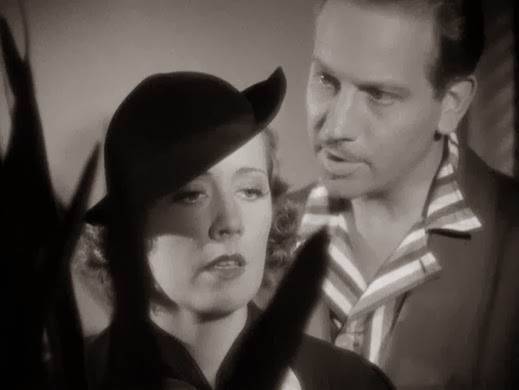
That’s the plot of Theodora Goes Wild starring Irene Dunne. With the publication of The Sinner by Caroline Adams (Theodora), the Lynnfield Literary Guild is up in arms. The local paper has serialized the scandalous novel and the guild wants it banned. And it’s up to Theodora to tell Jed Waterbury, (Thomas Mitchell) editor of the local paper, of the guild’s intentions.

Theodora (Dunne in foreground) with town gossip
Rebecca Perry (left) and her two aunts (right)
Let down your hair, woman
On a trip to New York City to meet with her publisher, Theodora runs into an artist named Michael Grant
(Melvyn Douglas), who thinks that Theodora needs to let her hair down. Grant, however, has stayed in a loveless marriage to appease his politically ambitious father. Theodora may need to let her hair down, but is Mr. Grant the right person to be telling her so?

A new career high
With Theodora Goes Wild, Dunne entered a new phase in her already successful career. Starring in her first comedy, after years of specializing in weepy melodramas, she was a revelation. With this one role, Dunne established herself as one of the silver screen’s great female comedians. Her turn as Theodora Lynn earned her a second Best Actress nomination, alongside fellow Hoosier, Carole Lombard, nominated that same year for My Man Godfrey. Louise Rainer who won for her performance in The Great Ziegfeld shut out both actresses.


A serious moment between Theodora
and Michael Grant (Melvyn Douglas)
Theodora Goes Wild will be screened as part of the Chicago Film Club’s “Screwball Comedy and the Feminine Mystique” film series on November 19, 2013 at 6:30 p.m. at the Daystar Center, 1550 S. State St. For information on the Film Club, click here. For information on purchasing tickets in advance and parking, click here. On street parking is available, but if you want to park in the Daystar parking lot, you need to buy your parking ticket in advance. Tickets will be available at the door for $5, $3 for students and senior citizens.


Related Posts Plugin for WordPress, Blogger...