Showing posts with label Bernard Herrmann. Show all posts

Tuesday, July 16, 2024

Doris Day and James Stewart as “The Man Who Knew Too Much”

The Man Who Knew Too Much (1956) is an American mystery thriller directed by Alfred Hitchcock and starring James Stewart and Doris Day. Other members of the cast include Brenda de Banzie, Bernard Miles, Daniel Gelin, and Hillary Brooke. This was a remake of Hitchcock’s 1934 film of The Man Who Knew Too Much.

Americans Dr. Benjamin “Ben” McKenna (Stewart) and popular singer Josephine “Jo” Conway (Day), and their young son Henry “Hank” McKenna are vacation in French Morocco when they meet a Frenchman Louis Bernard (Gelin). Jo is suspicious of him because of his prying questions and evasive answers.

When Bernard cancels a dinner date with Jo and Ben, only to see him arrive at the restaurant where they are sharing a meal with a friendly British couple Lucy (de Banzie) and Edward Drayton (Miles).

Who is Louis Bernard and what does he have to do with Jo, Ben, and their son Hank?


The Man Who Knew Too Much trivia

  • Doris Day thought Hitchcock wasn’t pleased with her performance because she didn’t think he was directing her. She confronted the director and he said if she wasn’t giving him what he wanted, he would direct her. Hitchcock was very pleased with Day’s performance.
  • Day didn’t wasn’t to record “Que Sera Sera” saying it was a forgettable children’s song. Day’s recording of the song was a huge hit, won an Academy Award, and became Day’s signature song.
  • The movie was 37 days behind schedule and over budget.
  • This was Stewart’s third collaboration with director Alfred Hitchcock.
  • June Allyson, Lana Turner, Grace Kelly, Kim Novak, Jane Russell, Gene Tierney, and Ava Gardner were all considered for the role of Jo. Hitchcock saw Day in the film Storm Warning (1951) and he was convinced she had the acting chops for Jo.


Click HERE to watch the movie on YouTube.


Click HERE to join the online discussion on July 22, 2024, at 6:30 p.m. Central Time. Once you RSVP, you will receive an email invitation with a link to join the meeting on Zoom.


Doris Day and James Stewart

Discussion questions

  1. If you saw the original 1934 version, which did you enjoy more?
  2. Were Stewart and Day believable as a married couple?
  3. Was Hitchcock right to trust his instincts in choosing Day for the role of Jo?
  4. Did you have any sympathy for Lucy Drayton? Do you think she had any idea how far her husband would go regarding Henry?
  5. Were the London locations a plus?
  6. Did anything about the movie surprise you?

Tuesday, March 19, 2024

Anthony Perkins, Vera Miles, John Gavin, and Janet Leigh star in Alfred Hitchock’s suspense classic “Psycho”

Psycho (1960) is an American suspense thriller directed by Alfred Hitchcock and starring Anthony Perkins, Vera Miles, John Gavin, and Janet Leigh. The supporting cast included Martin Balsam, John McIntire, Simon Oakland, Frank Albertson, and Pat Hitchcock. The music was by Bernard Herrmann and the cinematography was by John L. Russell. The film was edited by long-time Hitchcock collaborator George Tomasini.

What happens when Marion Crane (Leigh) an on-the-run thief meets Normal Bates (Perkins) an odd motel proprietor? That is the mystery of Psycho.

Marion Crane has left town with $40,000 in cash from her employer. She hopes that if her boyfriend Sam Loomis (Gavin) can pay off his debts, they can be married. When Marion goes missing her sister Lila  Crane (Miles) teams up with Sam to try and track her down.

Will Lila and Sam find Marion or discover more than they bargained for once they visit the Bates Motel?


Alfred Hitchcock (1899 – 1980) was an English film director, producer, and screenwriter. He is one of the most influential filmmakers of the 20th century. Hitchcock directed over 50 feature films, many are classics that have been honored and studied for years. Some of Hitchcock’s classic films include The 39 Steps (1939), Rebecca (1940), Suspicion (1941), Shadow of a Doubt (1943), Notorious (1946), Rear Window (1954), Vertigo (1958), North by Northwest (1959), and Psycho (1960).

Janet Leigh as Marion Crane

Anthony Perkins (1932 – 1992) was an American stage and film actor. Perkins got his start in summer stock but worked in movies before his Broadway debut. His first film was The Actress (1953), co-starring Spencer Tracy, Jean Simmons, and Teresa Wright. He made his Broadway debut in Tea and Sympathy (1953) replacing John Kerr in the role of Tom Lee. He then returned to Hollywood to star in Friendly Persuasion (1956) with Gary Cooper and Dorothy McGuire. Perkins was nominated for a Best Supporting Actor Academy Award for his performance in that film. Other films followed including Fear Strikes Out (1957), This Angry Age (1958) Desire Under the Elms (1958), The Matchmaker (1958), and Tall Story (1960). It would be Perkins’s role as Norman Bates in Psycho (1960) that would define him for the rest of his life and career.

Janet Leigh (1927 – 2004) was an American actress. Leigh was discovered by actress Norma Shearer who helped her secure a contract with M-G-M. Leigh made her movie debut in The Romance of Rosy Ridge (1947) co-starring Van Johnson. Other films followed including Act of Violence (1948), Little Women (1949), Angels in the Outfield (1951), and The Naked Spur (1953).  After she left M-G-M, Leigh signed contracts with Universal and Columbia. In 1958, Leigh co-starred with Charlton Heston in the film noir classic Touch of Evil directed by Orson Welles. Her most famous role was as Marion Crane in Psycho (1960) for which she was nominated for a Best Supporting Actress Academy Award. Later films include The Manchurian Candidate (1962), Bye, Bye Birdie (1963), and Wives and Lovers (1963). Leigh took a three-year break from acting, turning down some major roles, to concentrate on raising her two young daughters. She returned to film acting in 1966 starring in Kid Rodelo, Harper, and Three on a Couch co-starring Jerry Lewis. Apart from her acting, Leigh wrote four books, two novels, and two nonfiction works.

Vera Miles (1929 - ) is an American actress (retired) who was a popular leading lady in film during the 1950s and 1960s. In 1957, Miles signed a five-year personal contract with Alfred Hitchcock. Earlier he cast her opposite Henry Fonda in The Wrong Man (1956) and was his original choice for the female lead in Vertigo (1958). Hitchcock was grooming Miles as his next “cool blonde” replacing the recently retired Grace Kelly. When Miles became pregnant, she lost the role to Kim Novak. Miles starred in two classic John Ford westerns: The Searchers (1956) and The Man Who Shot Liberty Valance (1962). Other film roles include Lila Crane in Psycho (1960), Beau James (1957), The FBI Story (1959), and Hellfighters (1968).

John Gavin (1931 -2018) was an American actor and diplomat. He was president of the Screen Actors Guild (1971 – 1973) and was the United States Ambassador to Mexico (1981 – 1986). Gavin was a successful leading man in the late 1950s through the late 1960s. Some of Gavin’s films include Imitation of Life (1959), Spartacus (1960), Midnight Lace (1960), and Thoroughly Modern Millie (1967). He was the hero, playing Sam Loomis in Psycho (1960), probably his most famous role. He was set to take over the role of James Bond in Diamonds are Forever (1971) when George Lazenby left the role. Sean Connery ended up playing the role instead. Once again, Gavin was set to play 007 in Live and Let Die (1973), but the producer wanted a British actor to play Bond so the role went to Roger Moore. Gavin was married to actress and singer Constance Towers.


Psycho trivia

  • Hitchcock was so pleased with Bernard Herrmann’s score that he doubled his salary.
  • The director had the cast and crew pledge that they wouldn’t say anything about the movie’s storyline.
  • The rights to the novel by Robert Bloch were purchased by Hitchcock for only $9,000.
  • Both Anthony Perkins and Janet Leigh said they didn’t mind being stereotyped because of their work in Psycho. Both obtained screen immortality by their roles in the classic film.
  • Hitchcock was so anxious to make Psycho that he took a percentage deal (60% of the gross) instead of his normal $250,000 fee.
  • The movie was filmed in black and white because Hitchcock thought it would be too gory in color.

Vera Miles, John Gavin, and Anthony Perkins


Click HERE to join the discussion on March 25, 2024, at 6:30 p.m. Central Time. Once you RSVP, you will receive an invitation and link to join the discussion on Zoom.

Click HERE to watch the movie on YouTube.


Discussion questions

  1. How much did the music contribute to the overall success and feel of Psycho?
  2. Hitchcock made Psycho for under one million dollars. Did the movie look cheap to you?
  3. Anthony Perkins was forever typecast because of his performance as Norman Bates. What did you make of his performance?
  4. Janet Leigh was nominated for Best Supporting Actress, losing to Shirley Jones in Elmer Gantry. Do you think Leigh’s performance was Oscar-worthy?
  5. The acting attention is always on Leigh and Perkins, but what did you think of the performances of Vera Miles and John Gavin?
  6. Anthony Perkins wasn’t nominated for his performance. Do you think the Academy made a mistake in not recognizing him?

Tuesday, February 22, 2022

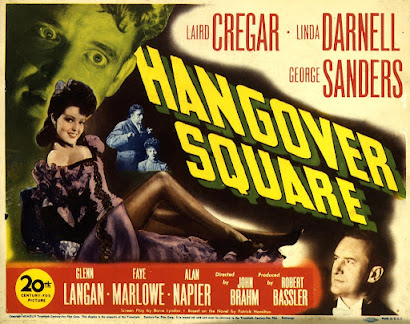
Laird Cregar, Linda Darnell, and George Sanders find themselves in "Hangover Square"

Hangover Square (1945) is an American period film noir directed by John Brahm and starring Laird Cregar, Linda Darnell, and George Sanders. Others in the cast include Glenn Langan, Faye Marlowe, and Alan Napier. The cinematography was by Joseph LaShelle (Laura, The Apartment) and the film score was by Bernard Herrmann (Citizen Kane, Psycho).

Composer George Harvey Bone (Cregar) has no memory of killing a shop owner and then setting his business on fire. It seems George goes into a trance when hears discordant sounds and loses all sense of time. He meets a music hall singer named Netta (Darnell) who uses George to write her songs for her act. When George finds out that Netta is engaged to Eddie Carstairs, he goes into a jealous rage, beating Carstairs and destroying any chance he had with Netta. With this rage and disappointment drive him to kill again?


John Brahm (1893 - 1982) was a German film director who immigrated to the United States in 1937. Brahm found work as a director, first employed by Columbia Pictures and then 20th Century-Fox. Brahm's most famous films include The Lodger (1944), Hangover Square, and The Lockett (1946). Brahm also directed a lot of television shows including Alfred Hitchcock Presents, and The Twilight Zone.

Laird Cregar (1913 - 1944) was an American film and stage actor. Cregar came to Hollywood due to his success with the play Oscar Wilde in Los Angeles in 1940. Cregar signed a contract with 20th Century-Fox and quickly became a popular character actor. Due to his large size (he weighed 300 pounds), he was often cast as the bad guy. In an effort to become a leading man in the movies, Cregar went on a crash diet during the productions of The Lodger and Hangover Square. To aid in his dieting, Cregar was prescribed amphetamines which had a negative effect on his system, causing abdominal problems. These problems lead to surgery and eventually a heart attack. He died shortly after at age 31.

Linda Darnell (1923 – 1965) was an American film actress. She signed a contract with 20th Century-Fox at age 15 and became a star almost overnight. She was immediately cast opposite Tyrone Power in Day-Time Wife (1939). She made two films with Power in 1940: Brigham Young and The Mark of Zorro. In 1941, she was again paired with Power in Blood and Sand, which also starred an up-and-coming Rita Hayworth. Darnell’s most famous role was that of Amber St. Clair in Forever Amber (1946), which turned out the be the biggest hit of the year. The role of Amber was the most sought-after female role since the casting of Scarlett O’Hara in Gone with the Wind (1939). Other important films she starred in include Unfaithfully Yours (1948), A Letter to Three Wives (1949), and No Way Out (1950). She died tragically at age 41 in a fire while visiting friends in Glenview, Illinois.

George Sanders (1906 – 1972) was a British film and stage actor who also had a fine singing voice. Hollywood was looking for a villain to star opposite a young Tyrone Power in Lloyd’s of London (1936) and Sanders more than fit the bill. His performance in that film would forever stamp him as a sophisticated bad guy. Before his acting career, he worked in the textile industry, which must have helped him with his role in The Strange Affair of Uncle Harry. In the 1960s, Sanders played Mr. Freeze in the Batman (1966) television series.

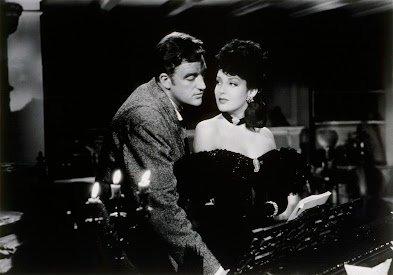
Laird Gregar and Linda Darnell


Hangover Square trivia

  • Stephen Sondheim saw the film as a 16-year-old and said that the film was the inspiration for his musical Sweeney Todd.
  • You can hear many musical cues in Herrmman's film score from other works including The Ghost and Mrs. Muir, Vertigo, and North by Northwest.
  • The film was released two months after Laird Cregar's death.
  • Cregar had originally rejected the role of Bone but changed his mind when fellow contract player Glenn Langan was announced as the lead.


To watch the film on YouTube, click on the link below.


To join the discussion on February 28, 2022, at 6:30 p.m. Central Time click here. Once you RSVP, you will receive an invitation and a link to the discussion on Zoom.

Discussion questions:

  1. What film genre would you categorize Hangover Square?
  2. Was Laird Cregar believable as a psychopath? Did you have any sympathy for his character?
  3. Would you consider Linda Darnell a turn-of-the-century femme fatale? Was she believable in her role?
  4. Did this film remind you of any other films you've seen?
  5. Were you surprised by anything in the film?


Tuesday, January 3, 2012

Classic Movie Man Takes a Look at “The Artist”

The 2011 release, The Artist is one-part A Star Is Born, one part Singing in the Rain, and another part The Jazz Singer. French director Michel Hazanavicius has managed to capture the look and feel of Hollywood when the movie studios were making the transition from silent films to “talkies.” During this transition, some movie stars managed to stay on top, while others faded into obscurity.  

A Falling Idol
The Artist is the story of silent movie idol George Valentin (Jean Dujardin) who finds his career on the skids with the advent of sound. In contrast, young starlet Peppy Miller (Bérénice Bejo) finds her career soaring as talkies gain acceptance with the movie-going public. The film spans the years 1927 (the year of The Jazz Singer) through 1932, the year Metro-Goldwyn-Mayer’s all-star (and all talking) blockbuster Grand Hotel won the Academy Award for Best Picture.


A Star is Born
Jean Dujardin as matinee idol George Valentin
The movie opens at the premier of Valentin’s latest action film A Russian Affair. While posing for photographs outside the theater, Valentin bumps into a pretty fan, Miller. A photographer snaps a picture of them together, which ends up on the cover of Variety with the headline “Who’s That Girl?” Miller uses her newfound fame and auditions for Valentin’s movie studio. Over the objections of studio boss Al Zimmer (John Goodman), she is given a bit role in Valentin’s next film at the star’s insistence. Once it’s clear that talking pictures are the future, Zimmer fires all his silent film stars, including Valentin who is convinced talkies are just a fad. In the meantime, Miller has progressed from bit roles to leads and is quickly promoted by the studio as one of its brightest new stars.

Using all his own resources, Valentin produces, directs, and stars in a silent epic that has the misfortune of opening on the same night as Miller’s latest talking picture. Miller’s film is a smash and Valentin’s is a bomb. Shortly thereafter Valentin’s wife (Penelope Ann Miller) leaves him, he goes broke, and he ends up living in a small apartment with his pet dog and faithful butler (James Cromwell). Miller, who has never forgotten his kindness toward her, buys all his possessions at an auction and keeps them in her home, unbeknownst to Valentin. In a fit of depression over his fall from grace, Valentin sets his films on fire and he almost dies. If not for his faithful dog (a cross between Lassie, Rin TinTin, and Asta) alerting a police officer, Valentin would have been lost.

Bérénice Bejo as future star Peppy Miller
Dancing Into Our Hearts
Miller takes Valentin into her home to nurse him back to health and for a time it looks like things will be alright. When Valentin discovers his possessions in storage in Miller’s Hollywood mansion, he returns to his burned out apartment and attempts to commit suicide. Miller suspecting the worst goes in search of Valentin. Finding him just in time, she convinces him all is not lost and that she loves him. Since she’s a major movie star, she insists on having Valentin costar with her in her next film, threatening to quit if Zimmer doesn’t relent.

A Plan Emerges
Remembering what a good dancer Valentin is, Miller comes up with a plan. The two perform a tap dance number for Zimmer and the movie production crew. During their number, we hear the music play and the sound from their tap shoes. Their performance is a smash and they get the go-ahead to make a movie together. Zimmer asks for one more performance and Valentin says “with pleasure,” revealing a heavy French accent.

Clever Use of Sound
Valentin at his lowest
Most of the film is silent with an accompanying sound track, but there are occasions where sound is cleverly employed. When sound movies begin to gain popularity, Valentin dreams “in sound.” The score borrows from other musical pieces and soundtracks, including a large part of Bernard Herrmann’s Vertigo score during the film’s climax. Hazanavicius reportedly did a lot of research for The Artist, including viewing many silent films so he could copy the best techniques. The research seems to have paid off. The Artist captures the look and feel of early Hollywood and Valentin and Bejo (Hazanavicius’s wife) are enormously appealing. Valentin is a cross between Douglas Fairbanks Sr. and John Barrymore, having a profile rivaling the latter. Bejo resembles Natalie Wood and Leslie Caron. But she seems to have Wood’s camera instincts; she’s always framed just right.

Look out Fred and Ginger!
Fictional History of the Movies
In an entertaining way, Hazanavicius has given us a fictional account of the history of the movies. There were many stars like Valentin who had foreign accents and/or a poor command of the English language whose careers ended with the advent of sound. Executives at M-G-M were extremely nervous when Greta Garbo spoke her first words in Anna Christie (1930). “Garbo Talks” they announced in pre-publicity for the film, but studio heads weren’t sure how audiences would react to her Swedish accent. They loved Garbo, of course, but not all silent film stars were so fortunate. When Valentin reveals his French accent, it’s clear he understood it could work against him in the new world of talking pictures. But just like in the movies, with the love and support of a woman like Peppy Miller, George Valentin’s career lives once again. For classic movie fans, The Artist is a rare treat in today’s motion picture landscape. Give it a try!


Thursday, January 28, 2010

The legacy of screenwriter John Michael Hayes


Best work with Hitchcock
Screenwriter John Michael Hayes did some of his best work while under the employ of director Alfred Hitchcock. Their four-film collaboration was short, but it produced three classic movies, including Rear Window  (1954) and To Catch a Thief (1955). The Man Who Knew Too Much (1956) was one of the biggest box office hits of the year.

Hayes’s screenplays for Hitchcock, bright and sophisticated when first produced, have remained fresh and contemporary, even in the been-there-done-that era in which we live today.

Rear window ethics
Sample this piece of dialogue between Jeff (James Stewart) and Stella (Thelma Ritter) from Rear Window.


Stella :You heard of that market crash in '29? I predicted that.
Jeff: Oh, just how did you do that, Stella?
Stella: Oh, simple. I was nursing a director of General Motors. Kidney ailment, they said. Nerves, I said. And I asked myself, "What's General Motors got to be nervous about?" Overproduction, I says; collapse. When General Motors has to go to the bathroom ten times a day, the whole country's ready to let go.


Few people before or since, have been able to match Hayes’s ear for authentic-sounding dialogue. Granted, having Stewart and Ritter mouth what you’ve written helps, but they had great material to work with to build their characterizations.

Three out of four isn't bad

The one picture that didn’t catch on with the public was The Trouble With Harry. It was too British in its black humor, according to Hitchcock (although apparently the British didn't like it much either). To Hitchcock fans, it's a fun film for a number of reasons. It features the film debut of Shirley MacLaine for one and a pre-Leave it to Beaver Jerry Mathers for another. It also has some beautiful cinematography and a pounding score by composer Bernard Herrmann. This was the beginning of a long professional relationship between Hitchcock and Herrmann, that lasted until Marnie (1964).

After Hayes moved on and worked more independently, his services were in great demand. He wrote the screenplays for some of the biggest blockbusters of the 1950s and 1960s, including Peyton Place (1957), The Carpetbaggers (1964), and Nevada Smith (1966). Still, his most enduring work remains the films he wrote for the master of suspense.

Hayes’s last screenplay was for the film Iron Will (1994) starring Kevin Spacey. Hayes died in November 2008 at the age of 89. 


Related Posts Plugin for WordPress, Blogger...