Showing posts with label My Man Godfrey. Show all posts

Monday, February 24, 2025

William Powell and Carole Lombard in “My Man Godfrey”.

My Man Godfrey (1936) is an American screwball comedy directed by Gregory La Cava and starring William Powell and Carole Lombard. The film is based on a short novel, 1101 Park Avenue by Eric S. Hatch. My Man Godfrey is considered one of the best screwball comedies of all time. In 1999, the film was deemed “culturally significant” by the United States Library of Congress and selected for preservation in the National Film Registry.

Carole Lombard and William Powell

During the Great Depression, two socialite sisters, Cornelia and Irene Bullock (Gail Patrick and Carole Lombard respectively) are competing in a charity scavenger hunt and need to find a “forgotten man.” They come across a man living in a New York City dump, but Cornelia gets to him first. She offers Godfrey Smith (William Powell) $5 if he will come play along and help her win the scavenger hunt. Godfrey finds Cornelia’s attitude annoying and backs her up into an ash pile. Irene who has been watching the whole episode ends up speaking with Godfrey who finds her to be kind, but a little bit crazy, and decides to help her. Irene drives the two of them to the Waldorf-Ritz Hotel where she presents Godfrey as her forgotten man. Irene wins the scavenger hunt and is so grateful that she offers Godfrey a job as a butler in her family’s home. Little does Godfrey realize that the Bullock family is quite eccentric and hasn’t been able to keep a butler for more than a few days. 

Gregory La Cava (1892 – 1952) was an American film director best known for several landmark films from the 1930s including My Man Godfrey and Stage Door (1937). La Cava was born in Pennsylvania and studied at the Art Institute of Chicago. La Cava directed many of the top stars during his heyday including Irene Dunne, Helen Hayes, Constance Bennett, Charles Boyer, Claudette Colbert, Joel McCrea, Melvin Douglas, and Katharine Hepburn. LaCava directed Ginger Rogers in three films in three years: Stage DoorFifth Avenue Girl (1939), and Primrose Path (1940).

William Powell (1892 – 1984) was an American actor who was most famous for the Thin Man series in which he co-starred with Myrna Loy. Loy and Powell made 14 films together. Powell was nominated for the Academy Award for Best Actor three times: The Thin Man (1934), My Many Godfrey (1936), and Life With Father (1947). Powell was under contract to Paramount, Warner Bros., and Metro-Goldwyn-Mayer where he had his greatest success. Some of Powell’s popular films include Manhattan Melodrama (1934), The Great Ziegfeld (1936), Libeled Lady (1936), The Last of Mrs. Cheney (1937), Love Crazy (1941), Life with Father (1947), The Senator Was Indiscreet (1947), Dancing in the Dark (1949), How to Marry a Millionaire (1953), and Mister Roberts (1955).

Clark Gable and Carole Lombard on their wedding day

Carole Lombard (1908 – 1942) was an American film actress who gained great fame starring in screwball comedies. So popular was she as a comedic actress that Life magazine dubbed her “The Screwball Girl.” He got her start in silent films as a child and progressed to more important roles when a car accident almost ended her career. Glass from the car’s windshield cut up her face leaving her with a small scar. She eventually hit the big time in 1934 with her breakout performance in Twentieth Century co-starring John Barrymore. The film directed by Howard Hawks (a distant cousin of Lombard’s) lead to better roles and eventually superstardom. In Lombard’s short career, she appeared in several iconic films including My Man GodfreyNothing Sacred (1937), Mr. & Mrs. Smith (1941) directed by Alfred Hitchcock, and To Be or Not to Be (1942). At the height of her career, Lombard died in a plane crash while returning from a bond tour. At the time of her death, she was married to Clark Gable. Together they were one of Hollywood’s original power couples.

The excellent supporting cast includes Alice Brady, Gail Patrick, Jean Dixon, Eugene Pallette, Alan Mowbray, Mischa Auer, and Franklin Pangborn. 

My Man Godfrey trivia:

  • It was the first movie to be nominated in all four acting categories.
  • Marion Davies, Constance Bennett, and Miriam Hopkins were all considered for the role of Irene.
  • William Powell and Carole Lombard were once husband and wife and had been divorced for three years when they made the film.
  • Jane Wyman has an uncredited role standing in the crowd at the Waldorf-Ritz Hotel.
  • Gail Patrick (Cornelia) played Irene’s (Lombard) older sister, but in reality, she was almost three years younger.

Click HERE to watch the film on YouTube.


Click HERE to join the online discussion on March 3, 2025, at 6:30 p.m. Central Time. Once you RSVP, you will receive an email with an invitation and a link to join the discussion on Zoom.

Questions for discussion:

  1. Is there a serious message amidst all the comedy? If yes, what is it?
  2. What do you think motivated Godfrey to get back on his feet?
  3. Did you have a favorite supporting character?
  4. Did Lombard and Powell have believable screen chemistry?
  5. Why do you think the film has remained a classic 85 years after its initial release?

Friday, January 15, 2021

William Powell and Carole Lombard in “My Man Godfrey”

My Man Godfrey (1936) is an American screwball comedy directed by Gregory La Cava and starring William Powell and Carole Lombard. The film is based on a short novel, 1101 Park Avenue by Eric S. Hatch. My Man Godfrey is considered one of the best screwball comedies of all time. In 1999, the film was deemed “culturally significant” by the United States Library of Congress and selected for preservation in the National Film Registry.

Carole Lombard and William Powell

During the Great Depression, two socialite sisters, Cornelia and Irene Bullock (Gail Patrick and Carole Lombard respectively) are competing in a charity scavenger hunt and need to find a “forgotten man.” They come across a man living in a New York City dump, but Cornelia gets to him first. She offers Godfrey Smith (William Powell) $5 if he will come play along and help her win the scavenger hunt. Godfrey finds Cornelia’s attitude annoying and backs her up into an ash pile. Irene who has been watching the whole episode ends up speaking with Godfrey who finds her to be kind, but a little bit crazy, decides to help her. Irene drives the two of them to the Waldorf-Ritz Hotel where she presents Godfrey as her forgotten man. Irene wins the scavenger hunt and is so grateful that she offers Godfrey a job as a butler in her family’s home. Little does Godfrey realize that the Bullock family is quite eccentric and hasn’t been able to keep a butler for more than a few days. 

Myrna Loy and Powell in The Thin Man

Godfrey is a success as a butler impressing the entire family especially Irene who finds herself falling in love with him. But Godfrey has a secret and Cornelia, who has held a grudge since she fell in the ash pile, is determined to expose it.


Gregory La Cava (1892 – 1952) was an American film director best known for several landmark films from the 1930s including My Man Godfrey and Stage Door (1937). La Cava was born in Pennsylvania and studied at the Art Institute of Chicago. La Cava directed many of the top stars during his heyday including Irene Dunne, Helen Hayes, Constance Bennett, Charles Boyer, Claudette Colbert, Joel McCrea, Melvin Douglas, and Katharine Hepburn. LaCava directed Ginger Rogers in three films in three years: Stage Door, Fifth Avenue Girl (1939), and Primrose Path (1940).

William Powell (1892 – 1984) was an American actor who was most famous for the Thin Man series in which he costarred with Myrna Loy. Loy and Powell made 14 films together. Powell was nominated for the Academy Award for Best Actor three times: The Thin Man (1934), My Many Godfrey (1936), and Life With Father (1947). Powell was under contract to Paramount, Warner Bros., and Metro-Goldwyn-Mayer where he had his greatest success. Some of Powell’s popular films include Manhattan Melodrama (1934), The Great Ziegfeld (1936), Libeled Lady (1936), The Last of Mrs. Cheney (1937), Love Crazy (1941), Life with Father (1947), The Senator Was Indiscreet (1947), Dancing in the Dark (1949), How to Marry a Millionare (1953), and Mister Roberts (1955).

Clark Gable and Carole Lombard on their wedding day

Carole Lombard (1908 – 1942) was an American film actress who gained great fame starring in screwball comedies. So popular was she as a comedic actress that Life magazine dubbed her “The Screwball Girl.” He got her start in silent films as a child and progressed to more important roles when a car accident almost ended her career. Glass from the car’s windshield cut up her face leaving her with a small scar. She eventually hit the big time in 1934 with her breakout performance in Twentieth Century co-starring John Barrymore. The film directed by Howard Hawks (a distant cousin of Lombard’s) lead to better roles and eventually superstardom. In Lombard’s short career, she appeared in several iconic films including My Man Godfrey, Nothing Sacred (1937), Mr. & Mrs. Smith (1941) directed by Alfred Hitchcock, and To Be or Not to Be (1942). At the height of her career, Lombard died in a plane crash while returning from a bond tour. At the time of her death, she was married to Clark Gable. Together they were one of Hollywood’s original power couples.

The excellent supporting cast includes Alice Brady, Gail Patrick, Jean Dixon, Eugene Pallette, Alan Mowbray, Mischa Auer, and Franklin Pangborn.


My Man Godfrey trivia:

  • Was the first movie to be nominated in all four acting categories.
  • Marion Davies, Constance Bennett, and Miriam Hopkins were all considered for the role of Irene.
  • William Powell and Carole Lombard were once husband and wife and had been divorced for three years when they made the film.
  • Jane Wyman has an uncredited role standing in the crowd in the Waldorf-Ritz Hotel.
  • Gail Patrick (Cornelia) played Irene’s (Lombard) older sister, but in reality, was almost three years younger.


To watch the film on YouTube, click on the link below.


To join us for a discussion on Zoom on January 19, 2021, at 6 p.m. Central Time, click here. Once you RSVP, you will receive an email with an invitation to the discussion with the appropriate links. 


Questions for discussion:

  1. Is there a serious message amidst all the comedy? If yes, what is it?
  2. What do you think motivated Godfrey to get back on his feet?
  3. Did you have a favorite supporting character?
  4. Did Lombard and Powell have believable screen chemistry?
  5. Why do you think the film has remained a classic 85 years after its initial release?


Wednesday, April 1, 2015

2015 Turner Classic Movies Film Festival Recap: Day 1

The Turner Classic Movies Film Festival began on Thursday March 29. The flight from Chicago to LA was uneventful (hallalujah!). After settling in at my hotel, I walked over to the Hollywood Roosevelt Hotel and Club TCM. I was hoping to connect with folks that I’ve known via social media for years in-person for the first time. After walking around the room for several minutes, a woman walked up to me and said, “Stephen?” I replied yes and Pam, a Twitter friend, was the first person I met. After Pam it was Kelly, Joel, Will, Aurora,  Laura, and Kristina. Kristina and I have known each other from social media for several years. Two years ago we organized and managed the Val Lewton blogathon together. It was wonderful to finally meet her in person to talk about classic movies and the excitement (and our good fortune) about attending the festival for the first time.

I was almost in tears when I realized
I wasn't going to be seeing this film.
To save some money, I opted out of attending The Sound of Music. I’m sure it would have been fun, but I was willing to pass up that opportunity. My first movie choice was also my first (and only) disappointment. I wanted to see Too Late For Tears (1949) starring Lizabeth Scott, but it was sold out! So instead, I went into The Man Who Shot Liberty Valance (1962) starring John Wayne, Jimmy Stewart, and Vera Miles. A John Ford classic and one of my favorites of his, so it was a fine consolation for missing out on Tears.

After Valance, it was a choice between My Man Godfrey (1936), Breaker Morant (1980), or The Sea Hawk (1940). I decided I wanted to laugh and Godfrey is a movie I never tire of seeing. And on a big screen with an audience, it was better than I could have imagined. The print screened was beautiful; It looked brand new. With the constant laughter emanating from the theater, it was almost like seeing the film for the very first time.

After Godfrey, it was time to go back to the hotel and try and catch up (or at least try) on my two hours of jet lag and plan day two!


To read my overview of the Turner Classic Movies Film Festival, click here.

Monday, September 20, 2010

My Man Godfrey this Friday

The Prairie District Neighborhood Alliance (PDNA) invites you to "Meet Me at the Movies," Friday September 24, 2010 at 6:30 p.m. at Sherwood Community Music School, Columbia College recital hall, 1312 S. Michigan Ave. The wrap party (dinner after movie) will be held at the Weather Mark Tavern 1503 S. Michigan Ave.

Classic performances and situations have made My Man Godfrey one of the best film comedies ever made. My Man Godfrey was the first film to receive Academy Award nominations in all four major categories, including Best Actor and Best Actress for William Powell and Carole Lombard respectively. Film critic Roger Ebert in a review of the movie simply said, “God, but this film is beautiful” and it truly is. My Man Godfrey is ranked 44 in the American Film Institute’s (AFI) “America’s 100 Funniest Movies” compiled in 2002. Not bad for a movie first released in 1936.
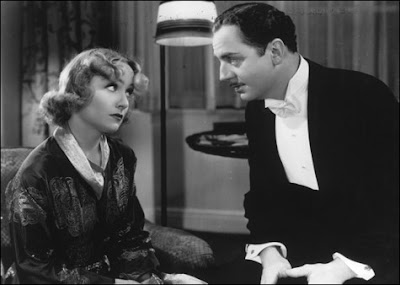
Lombard was so identified with the screwball comedy genre that Life magazine dubbed her “the screwball girl” in a 1938 cover story. When paired with Powell, no stranger to comedy himself, My Man Godfrey becomes a master class of screwball comedy technique.

Carole Lombard and William Powell in My Man Godfrey

Admission to the movie is $5. Dinner afterward (not required) is $15 per person. To RSVP to this event and/or the wrap party click here.


Thursday, March 4, 2010

Lombard Comes Across

If 1935 was a good year for Carole Lombard, 1936 was the year she became a screen immortal. The three films she made in 1936 were critical and box offices successes, with My Man Godfrey (which will be the subject of a future post) becoming one of the most famous film comedies of all time.

Becoming a film icon
Lombard's first release of 1936 was Love Before Breakfast, a modern-day take on The Taming of the Shrew, costarring Preston Foster and Cesar Romero. On loan to Universal, Lombard's name is the only one appearing above the title. The poster art for the film features a painting of Lombard with a black eye. When the poster, plastered on a wall in an Atlanta, Georgia, town became the subject of a photograph by Walker Evans, it only helped burnish Lombard's emergence as a screen icon.  Love Before Breakfast is far from a classic, but it is an entertaining film and it showcases Lombard's ability to carry a picture.


The second Lombard release is an interesting comedy, The Princess Comes Across. It reunited her with Fred MacMurray, who she costarred with the year before in the much-heralded Hands Across the Table. The Princess Comes Across combined elements of screwball comedy with a murder mystery,  popularized by films like The Thin Man, starring Lombard's ex-husband William Powell and Myrna Loy.

I want to be alone
The Princess Comes Across is a romp for Lombard. She gets to imitate Greta Garbo in her characterization of princess Olga, the personality she creates to get a movie contract. The cast headlined by Lombard is ably supported by MacMurray, Alison Skipworth, Porter Hall, Sig Rumann, William Frawley, and Mischa Auer.

You can take that to the bank
Lombard was fast becoming one of Paramount Pictures's biggest and most bankable stars. During this period, she was a bigger box office draw than Bette Davis, Katherine Hepburn, Jean Harlow, Janet Gaynor, and Marlene Dietrich. In 1935, Lombard was making $3000 a week, but her fortunes would change in 1937 when she would earn $150,000 per picture, making her one of the highest paid actresses in Hollywood.

Thursday, December 24, 2009

Carole Lombard: The Divine Screwball

19th-century pitcher Rube Waddell
A genre and a star is born
With the exception of perhaps Cary Grant, no movie star has been more identified with screwball comedy than Carole Lombard. In fact, if it weren’t for Lombard, the genre might not have received its name. “Miss Lombard has played screwball dames before…she needs only a resin bag to be a female Rube Waddell.” So said Variety in 1936, comparing Lombard’s performance, as Irene Bullock in My Man Godfrey, to the nineteenth-century baseball legend known for his screwball pitches.

 
Risk taker
From her breakthrough role in Twentieth Century (1934) opposite John Barrymore, it was apparent that a comic genius was born. Lombard could have become a typical Hollywood leading lady on her movie star looks alone, but instead she jumped head-first into screwball comedies, taking on roles that often downplayed her natural beauty. She took comedic risks that few women in Hollywood were willing to take and it paid off big time. The public loved Lombard, and they loved her screwball heroines.

At the top of her game
By the mid-1930s, Lombard was one of the top box office draws, besting Janet Gaynor, Bette Davis, Jean Harlow, and Katherine Hepburn. She was also on a winning streak with films like Hands Across the Table, Love Before Breakfast, The Princess Comes Across, My Man Godfrey, and Nothing Sacred.

Carole Lombard and William Powell in My Man Godfrey
Enduring popularity
Lombard tried her hand at drama with some success, but the public loved her screwball persona best and it’s the comedies that have endured. Even by today’s standards, Lombard’s performances seem strikingly fresh and contemporary. If it wasn't for her untimely death in 1942, who knows what heights she could have reached. Even so, few have risen so high.

Saturday, October 10, 2009

The roots of screwball comedy

The origins of screwball comedy started almost as surely as the first motion picture cameras began to roll. Depending on which film critic/historian you believe, the definition may vary, but there seems to be some agreement on some of its characteristics.

According to author/professor Wes D. Gehring, there is a distinct difference between screwball and romantic comedy. In screwball comedy, the emphasis is on the comedy not the romance, although there is often always romance involved. Accordingly, the romantic comedy emphasizes, what else? romance.

These distinctions may seem like splitting hairs to some, but most, I think, can notice the differences between a romantic comedy like The Philadelphia Story and a screwball comedy like My Man Godfrey, for example. There is obviously comedy in the former, but the romance or romantic entanglements of Tracey Lord is where the focus lies. In the latter, there is obviously romance, but it is the comedic actions of Irene Bullock and family, in particular, that is the primary focus.

Where the label “screwball comedy” came from seems to be in dispute. Some say the labeling of the genre coincided with the release and early reviews of the film My Man Godfrey. Supposedly, a New York critic said Miss Lombard plays a real screwball and thus the labeling began. Surely there were films before Godfrey that qualified as screwball comedies, going all the way back to the silent film days, as already stated. When the genre was identified and codified is another mystery altogether.

According to Maria DiBattista in Fast Talking Dames, the screwball comedy took shape in the early thirties right after the Production Code was introduced. The new self-censorship that Hollywood imposed on itself created a new type of sex comedy, if you will. Sex comedies without sex, but filled with sharp, rapid-fire dialogue that was loaded with innuendo and double entendres. The veiled “sex talk” may have gone over the heads of the censor boards, but not over those of the audience, which were delighted by fast-talking dames like Jean Harlow, Barbara Stanwyck, and Carole Lombard.

Whatever the origins, the genre has delighted audiences for generations and produced some of the most enduring films of all time.


Related Posts Plugin for WordPress, Blogger...