Showing posts with label Gregory LaCava. Show all posts

Tuesday, October 13, 2026

Central Park Meets the “5th Avenue Girl”

Directed by Gregory LaCava, 5th Avenue Girl (1939) is a Depression-era screwball comedy starring Ginger Rogers alongside Walter Connolly, Verree Teasdale, Tim Holt, James Ellison, and Kathryn Adams. The story begins with wealthy industrialist Timothy Borden (Walter Connolly), who feels thoroughly neglected and unappreciated by his self-absorbed family. On his birthday, left entirely alone in his sprawling Fifth Avenue mansion, Timothy strolls into Central Park and strikes up a conversation with Mary Grey (Ginger Rogers), a pragmatic, down-on-her-luck young woman who is unemployed and hungry. To celebrate his birthday, Timothy takes her out for a lively evening at a high-end nightclub, where they unexpectedly cross paths with Timothy’s straying wife.

When Timothy realizes how much his sudden late-night outing scandalizes his snobbish, indifferent family, he hatches a clever scheme. He invites Mary to live at his estate and pay her to act as his mistress, aiming to shake up his household and teach his family a lesson. Mary’s grounded presence and sharp wit quickly turn the household upside down. As Timothy conspicuously ignores his business to go out on the town with Mary, his spoiled son, Tim Jr. (Tim Holt), is forced to take responsibility at the family pump factory, while his wife Martha (Verree Teasdale) begins staying home to protect her marriage.

Meanwhile, Mary acts as a catalyst for genuine change, helping Timothy’s daughter Katherine (Kathryn Adams) navigate a romance with the family's politically vocal chauffeur, Mike (James Ellison). Tim Jr. initially tries to bribe Mary to leave, but as he gets to know her, he falls in love with her instead. Ultimately, Timothy and Martha rediscover their bond after reminiscing over their humble origins, leading to a heartwarming resolution where the charade is exposed, relationships are mended, and Mary is welcomed as a true member of the family.


Gregory LaCava (1892 – 1952) was an American film director and writer who rose to prominence during Hollywood's Golden Age, best known for his sharp social satires and contributions to the screwball comedy genre. Beginning his career as an animator and silent film gag writer, he developed an instinctive sense of comedic timing and ensemble pacing. LaCava gained widespread critical acclaim in the 1930s with classics such as My Man Godfrey (1936) and Stage Door (1937), earning two Academy Award nominations for Best Director. Known for his collaborative set atmosphere and reliance on unscripted improvisation, he consistently brought out nuanced, human performances from his cast members.

Ginger Rogers (1911 – 1995) was an iconic American actress, dancer, and singer whose versatile career spanned vaudeville, Broadway, and decades of cinema. While worldwide fame came from her legendary screen partnership with Fred Astaire in RKO musical comedies, Rogers was equally lauded for her dramatic and comedic acting prowess. Her leading role in 5th Avenue Girl demonstrated her signature charm and comedic finesse, paving the way for her Oscar-winning dramatic performance in Kitty Foyle (1940). Across more than 70 films, Rogers remained one of the most bankable and enduring stars of classic Hollywood.

Walter Connolly (1887 – 1940) was a prominent American stage and character actor whose warm screen presence and expressive comedic timing made him a staple of 1930s cinema. After an extensive career on the Broadway stage, Connolly transitioned to Hollywood sound pictures, quickly becoming one of the industry’s premier character leads. He frequently portrayed exasperated, soft-hearted patriarchs and wealthy figures, most notably in Frank Capra’s It Happened One Night (1934) and Twentieth Century (1934). His performance in 5th Avenue Girl served as one of his final feature film roles before his untimely passing.

James Ellison (1910 - 1993) was an American film actor who appeared in nearly 70 motion pictures throughout a career spanning three decades. Initially breaking into Hollywood as a handsome romantic lead, he achieved early prominence playing Buffalo Bill in Cecil B. DeMille’s The Plainsman (1936) and starring as Johnny Nelson alongside William Boyd in RKO’s popular Hopalong Cassidy Western series. Outside of Westerns, Ellison demonstrated strong versatility in romantic comedies and dramas, portraying the politically outspoken chauffeur Mike in 5th Avenue Girl (1939), as well as starring in notable features such as Jacques Tourneur’s horror classic I Walked with a Zombie (1943) and Busby Berkeley’s Technicolor musical The Gang's All Here (1943).

Tim Holt (1919 - 1973) was an American actor who became one of Hollywood’s most popular Western stars and an accomplished dramatic lead in several iconic films. Born into a theatrical family as the son of silent film actor Jack Holt, he made his screen debut as a child before establishing himself as a versatile leading man in the late 1930s. Beyond his prominent supporting role as the spoiled son Tim Jr. in 5th Avenue Girl, Holt earned critical acclaim for his standout performances in John Ford’s My Darling Clementine (1946), Orson Welles’s The Magnificent Ambersons (1942), and John Huston’s The Treasure of the Sierra Madre (1948). A decorated combat veteran who served as a B-29 bombardier during World War II, Holt anchored dozens of top-grossing B-Westerns for RKO Radio Pictures throughout his four-decade career.

Click HERE to watch the movie on the ok.ru website.

Click HERE to join the discussion on Monday, October 19, 2026, at 6:30 p.m. Central Time. Once you RSVP, you will receive an invitation and a link to join the discussion on Zoom.


Ginger Rogers and Tim Holt

5th Avenue Girl trivia

  • Director Gregory LaCava’s reunion with Ginger Rogers on this film came shortly after their success on Stage Door (1937), where LaCava famously joked to interviewers that the only way he could get Rogers to cry on set was to tell her that her house was on fire.
  • Future legendary director Robert Wise worked on the film as a co-editor alongside William Hamilton early in his Hollywood career before moving on to direct classics like The Sound of Music.
  • The screenplay, written by Allan Scott, features uncredited writing contributions from both director Gregory LaCava and famous Pulitzer Prize-winning playwright Morrie Ryskind.
  • Character actor Franklin Pangborn, renowned for playing flustered authority figures and pompous hotel managers throughout classic Hollywood, appears in the film as the estate’s stoic butler, Higgins.

Discussion Questions

  1. How does 5th Avenue Girl reflect Great Depression-era attitudes toward wealth, privilege, and class distinctions in American society?
  2. In what ways does Mary Grey serve as an agent of chaos and renewal within the Borden household dynamics?
  3. How does Gregory LaCava use screwball comedy conventions to explore themes of marital disillusionment and family neglect?
  4. How does Ginger Rogers’ comedic performance in this non-musical role compare to her performances in her famous musical collaborations with Fred Astaire?


Fans of Downton Abbey may enjoy this blog post, “ATale of Two Chauffeurs.” Did the creator of this popular series get plot ideas from 5th Avenue Girl?

Monday, February 24, 2025

William Powell and Carole Lombard in “My Man Godfrey”.

My Man Godfrey (1936) is an American screwball comedy directed by Gregory La Cava and starring William Powell and Carole Lombard. The film is based on a short novel, 1101 Park Avenue by Eric S. Hatch. My Man Godfrey is considered one of the best screwball comedies of all time. In 1999, the film was deemed “culturally significant” by the United States Library of Congress and selected for preservation in the National Film Registry.

Carole Lombard and William Powell

During the Great Depression, two socialite sisters, Cornelia and Irene Bullock (Gail Patrick and Carole Lombard respectively) are competing in a charity scavenger hunt and need to find a “forgotten man.” They come across a man living in a New York City dump, but Cornelia gets to him first. She offers Godfrey Smith (William Powell) $5 if he will come play along and help her win the scavenger hunt. Godfrey finds Cornelia’s attitude annoying and backs her up into an ash pile. Irene who has been watching the whole episode ends up speaking with Godfrey who finds her to be kind, but a little bit crazy, and decides to help her. Irene drives the two of them to the Waldorf-Ritz Hotel where she presents Godfrey as her forgotten man. Irene wins the scavenger hunt and is so grateful that she offers Godfrey a job as a butler in her family’s home. Little does Godfrey realize that the Bullock family is quite eccentric and hasn’t been able to keep a butler for more than a few days. 

Gregory La Cava (1892 – 1952) was an American film director best known for several landmark films from the 1930s including My Man Godfrey and Stage Door (1937). La Cava was born in Pennsylvania and studied at the Art Institute of Chicago. La Cava directed many of the top stars during his heyday including Irene Dunne, Helen Hayes, Constance Bennett, Charles Boyer, Claudette Colbert, Joel McCrea, Melvin Douglas, and Katharine Hepburn. LaCava directed Ginger Rogers in three films in three years: Stage Door, Fifth Avenue Girl (1939), and Primrose Path (1940).

William Powell (1892 – 1984) was an American actor who was most famous for the Thin Man series in which he co-starred with Myrna Loy. Loy and Powell made 14 films together. Powell was nominated for the Academy Award for Best Actor three times: The Thin Man (1934), My Many Godfrey (1936), and Life With Father (1947). Powell was under contract to Paramount, Warner Bros., and Metro-Goldwyn-Mayer where he had his greatest success. Some of Powell’s popular films include Manhattan Melodrama (1934), The Great Ziegfeld (1936), Libeled Lady (1936), The Last of Mrs. Cheney (1937), Love Crazy (1941), Life with Father (1947), The Senator Was Indiscreet (1947), Dancing in the Dark (1949), How to Marry a Millionaire (1953), and Mister Roberts (1955).

Clark Gable and Carole Lombard on their wedding day

Carole Lombard (1908 – 1942) was an American film actress who gained great fame starring in screwball comedies. So popular was she as a comedic actress that Life magazine dubbed her “The Screwball Girl.” He got her start in silent films as a child and progressed to more important roles when a car accident almost ended her career. Glass from the car’s windshield cut up her face leaving her with a small scar. She eventually hit the big time in 1934 with her breakout performance in Twentieth Century co-starring John Barrymore. The film directed by Howard Hawks (a distant cousin of Lombard’s) lead to better roles and eventually superstardom. In Lombard’s short career, she appeared in several iconic films including My Man Godfrey, Nothing Sacred (1937), Mr. & Mrs. Smith (1941) directed by Alfred Hitchcock, and To Be or Not to Be (1942). At the height of her career, Lombard died in a plane crash while returning from a bond tour. At the time of her death, she was married to Clark Gable. Together they were one of Hollywood’s original power couples.

The excellent supporting cast includes Alice Brady, Gail Patrick, Jean Dixon, Eugene Pallette, Alan Mowbray, Mischa Auer, and Franklin Pangborn. 

My Man Godfrey trivia:

  • It was the first movie to be nominated in all four acting categories.
  • Marion Davies, Constance Bennett, and Miriam Hopkins were all considered for the role of Irene.
  • William Powell and Carole Lombard were once husband and wife and had been divorced for three years when they made the film.
  • Jane Wyman has an uncredited role standing in the crowd at the Waldorf-Ritz Hotel.
  • Gail Patrick (Cornelia) played Irene’s (Lombard) older sister, but in reality, she was almost three years younger.

Click HERE to watch the film on YouTube.


Click HERE to join the online discussion on March 3, 2025, at 6:30 p.m. Central Time. Once you RSVP, you will receive an email with an invitation and a link to join the discussion on Zoom.

Questions for discussion:

  1. Is there a serious message amidst all the comedy? If yes, what is it?
  2. What do you think motivated Godfrey to get back on his feet?
  3. Did you have a favorite supporting character?
  4. Did Lombard and Powell have believable screen chemistry?
  5. Why do you think the film has remained a classic 85 years after its initial release?

Friday, January 15, 2021

William Powell and Carole Lombard in “My Man Godfrey”

My Man Godfrey (1936) is an American screwball comedy directed by Gregory La Cava and starring William Powell and Carole Lombard. The film is based on a short novel, 1101 Park Avenue by Eric S. Hatch. My Man Godfrey is considered one of the best screwball comedies of all time. In 1999, the film was deemed “culturally significant” by the United States Library of Congress and selected for preservation in the National Film Registry.

Carole Lombard and William Powell

During the Great Depression, two socialite sisters, Cornelia and Irene Bullock (Gail Patrick and Carole Lombard respectively) are competing in a charity scavenger hunt and need to find a “forgotten man.” They come across a man living in a New York City dump, but Cornelia gets to him first. She offers Godfrey Smith (William Powell) $5 if he will come play along and help her win the scavenger hunt. Godfrey finds Cornelia’s attitude annoying and backs her up into an ash pile. Irene who has been watching the whole episode ends up speaking with Godfrey who finds her to be kind, but a little bit crazy, decides to help her. Irene drives the two of them to the Waldorf-Ritz Hotel where she presents Godfrey as her forgotten man. Irene wins the scavenger hunt and is so grateful that she offers Godfrey a job as a butler in her family’s home. Little does Godfrey realize that the Bullock family is quite eccentric and hasn’t been able to keep a butler for more than a few days. 

Myrna Loy and Powell in The Thin Man

Godfrey is a success as a butler impressing the entire family especially Irene who finds herself falling in love with him. But Godfrey has a secret and Cornelia, who has held a grudge since she fell in the ash pile, is determined to expose it.


Gregory La Cava (1892 – 1952) was an American film director best known for several landmark films from the 1930s including My Man Godfrey and Stage Door (1937). La Cava was born in Pennsylvania and studied at the Art Institute of Chicago. La Cava directed many of the top stars during his heyday including Irene Dunne, Helen Hayes, Constance Bennett, Charles Boyer, Claudette Colbert, Joel McCrea, Melvin Douglas, and Katharine Hepburn. LaCava directed Ginger Rogers in three films in three years: Stage Door, Fifth Avenue Girl (1939), and Primrose Path (1940).

William Powell (1892 – 1984) was an American actor who was most famous for the Thin Man series in which he costarred with Myrna Loy. Loy and Powell made 14 films together. Powell was nominated for the Academy Award for Best Actor three times: The Thin Man (1934), My Many Godfrey (1936), and Life With Father (1947). Powell was under contract to Paramount, Warner Bros., and Metro-Goldwyn-Mayer where he had his greatest success. Some of Powell’s popular films include Manhattan Melodrama (1934), The Great Ziegfeld (1936), Libeled Lady (1936), The Last of Mrs. Cheney (1937), Love Crazy (1941), Life with Father (1947), The Senator Was Indiscreet (1947), Dancing in the Dark (1949), How to Marry a Millionare (1953), and Mister Roberts (1955).

Clark Gable and Carole Lombard on their wedding day

Carole Lombard (1908 – 1942) was an American film actress who gained great fame starring in screwball comedies. So popular was she as a comedic actress that Life magazine dubbed her “The Screwball Girl.” He got her start in silent films as a child and progressed to more important roles when a car accident almost ended her career. Glass from the car’s windshield cut up her face leaving her with a small scar. She eventually hit the big time in 1934 with her breakout performance in Twentieth Century co-starring John Barrymore. The film directed by Howard Hawks (a distant cousin of Lombard’s) lead to better roles and eventually superstardom. In Lombard’s short career, she appeared in several iconic films including My Man Godfrey, Nothing Sacred (1937), Mr. & Mrs. Smith (1941) directed by Alfred Hitchcock, and To Be or Not to Be (1942). At the height of her career, Lombard died in a plane crash while returning from a bond tour. At the time of her death, she was married to Clark Gable. Together they were one of Hollywood’s original power couples.

The excellent supporting cast includes Alice Brady, Gail Patrick, Jean Dixon, Eugene Pallette, Alan Mowbray, Mischa Auer, and Franklin Pangborn.


My Man Godfrey trivia:

  • Was the first movie to be nominated in all four acting categories.
  • Marion Davies, Constance Bennett, and Miriam Hopkins were all considered for the role of Irene.
  • William Powell and Carole Lombard were once husband and wife and had been divorced for three years when they made the film.
  • Jane Wyman has an uncredited role standing in the crowd in the Waldorf-Ritz Hotel.
  • Gail Patrick (Cornelia) played Irene’s (Lombard) older sister, but in reality, was almost three years younger.


To watch the film on YouTube, click on the link below.


To join us for a discussion on Zoom on January 19, 2021, at 6 p.m. Central Time, click here. Once you RSVP, you will receive an email with an invitation to the discussion with the appropriate links. 


Questions for discussion:

  1. Is there a serious message amidst all the comedy? If yes, what is it?
  2. What do you think motivated Godfrey to get back on his feet?
  3. Did you have a favorite supporting character?
  4. Did Lombard and Powell have believable screen chemistry?
  5. Why do you think the film has remained a classic 85 years after its initial release?


Sunday, January 27, 2013

A Tale of Two Chauffeurs: “Fifth Avenue Girl” and “Downton Abbey”


One of the great screwball comedies of 1939 was Gregory La Cava’s Fifth Avenue Girl starring Ginger Rogers. La Cava directed the better-known classics My Man Godfrey (1936) and Stage Door (1937). But as I’ve said before, 1939 was such an amazing year for classic films, it’s hard to keep track of them all. And like many other great films released that year, it’s been mostly forgotten.

Political drivers
What I find interesting about Fifth Avenue Girl is a similar plot point that seems to have been “borrowed” by the writers of Downton Abbey. The second season of the high-rated British TV drama featured the romance between Lady Sybil (Jessica Brown Findlay) and Downton chauffeur, Tom Branson (Allen Leech). Branson, is an Irish Republican, very political and interested in among other things, rights for women and freedom for Ireland. He objects to the class hierarchy he sees and experiences at Downton. But he’s drawn to Sybil and encourages her burgeoning independence, especially when it comes to her political views. Branson has socialist tendencies, which play out in the course of the series.

The Chauffer is a socialist!
“The nocturnal meanderings of the upper class do not interest me!”
In Fifth Avenue Girl, Rogers finds herself in the home of a wealthy New York City industrialist, Alfred Borden (Walter Connolly) who has a socialist chauffeur named Mike (James Ellison). Mike is constantly complaining about the inequities between the rich folk he works for and the servant class.

Upstairs and Downstairs
Instead of the chauffeur pursuing the industrialist’s daughter in Fifth Avenue Girl, Katherine Borden (Kathryn Adams) pursues the chauffeur. She doesn’t quite agree or understand all of his political philosophy, but finds him irresistible nonetheless. The rich daughter falling for a servant is hardly a new plot point. But what I found fascinating was the similarities between Mike, the chauffeur in Fifth Avenue Girl and Tom, the chauffeur on Downton.

“I’m a socialist, not a revolutionary and I won't always be a chauffeur.”
On the backs of the poor
Mike criticizes Mr. Borden and all he stands for. Tom is a little less harsh, although he thinks Robert Crawley, Earl of Grantham and all his class has built their lives on the backs of the poor and less fortunate.

Both characters highlight the inequities in life, one (Mike) in a humorous way, the other (Tom) in a more serious manner.

What do you think, classic movie fans? Did Julian Fellowes see Fifth Avenue Girl? Do you think it may have influenced the story line of Downton Abbey?


Backstory on Fifth Avenue Girl : La Cava directed Ginger Rogers in three consecutive films: Stage Door, Fifth Avenue Girl, and Primrose Path (1940).

Monday, September 20, 2010

My Man Godfrey this Friday

The Prairie District Neighborhood Alliance (PDNA) invites you to "Meet Me at the Movies," Friday September 24, 2010 at 6:30 p.m. at Sherwood Community Music School, Columbia College recital hall, 1312 S. Michigan Ave. The wrap party (dinner after movie) will be held at the Weather Mark Tavern 1503 S. Michigan Ave.

Classic performances and situations have made My Man Godfrey one of the best film comedies ever made. My Man Godfrey was the first film to receive Academy Award nominations in all four major categories, including Best Actor and Best Actress for William Powell and Carole Lombard respectively. Film critic Roger Ebert in a review of the movie simply said, “God, but this film is beautiful” and it truly is. My Man Godfrey is ranked 44 in the American Film Institute’s (AFI) “America’s 100 Funniest Movies” compiled in 2002. Not bad for a movie first released in 1936.
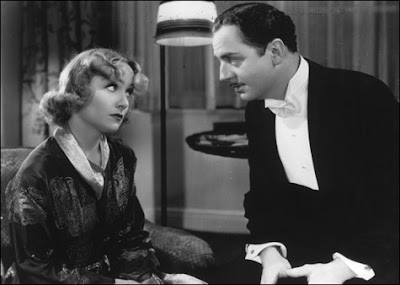
Lombard was so identified with the screwball comedy genre that Life magazine dubbed her “the screwball girl” in a 1938 cover story. When paired with Powell, no stranger to comedy himself, My Man Godfrey becomes a master class of screwball comedy technique.

Carole Lombard and William Powell in My Man Godfrey

Admission to the movie is $5. Dinner afterward (not required) is $15 per person. To RSVP to this event and/or the wrap party click here.


Monday, June 14, 2010

Go “Wild” with Theodora this Saturday at Facets Night School

Looking for something “wild” to do this Saturday? Look no further than this week’s midnight screening of the screwball comedy classic, Theodora Goes Wild (1936), starring Irene Dunne at Facets Film School, 1517 W. Fullerton Ave., Chicago, IL.

Drama Queen
Irene Dunne took a leap of faith by starring in a comedy after she was dubbed “Queen of the Weepies” by the film trade publications in the 1930s. Having made her mark in the western epic Cimarron (1931), Dunne carved out an enormously successful career as the heroine of a string of popular melodramas.

Comedy Rules
When she reluctantly accepted the role of Theodora Lynn in the film directed by Richard Boleslawski, Dunne was an instant comedy sensation. So popular was the film and Dunne’s performance, that she earned her second Academy Award nomination for Best Actress (Dunne’s first nomination was for her role in Cimarron). The year 1936 was a great year for the screwball comedy. That same year saw the release of Frank Capra’s Mr. Deeds Goes to Town and Gregory LaCava’s My Man Godfrey.

The Peyton Place of Lynnfield!
The plot surrounds Dunne, a small town woman who is the best-selling author of a scandalous romance novel. Writing under the name of Caroline Adams, her secret is safe. That is until she meets a New York illustrator played by Melvin Douglas. He decides Theodora needs to break out of her small-town existence, all the while he’s trapped in a loveless marriage to please his politically connected father. So who really needs to go wild?

Theodora Goes Wild is a highly entertaining comedy that borders on comic genius. It deserves to be in the same class as Capra’s Mr. Deeds Goes to Town and LaCava’s My Man Godfrey. It fact, it's in a class all by itself.


Friday, June 11, 2010

Been There Dunne That

Today, Irene Dunne is remembered as one of the top movie actresses from Hollywood’s golden age. She was nominated for five Best Actress Oscars between 1931 and 1949. Although she never won a competitive Oscar, she excelled at both comedy and melodrama. Dunne was known for her professionalism on and off the set. As far as her personal life was concerned, Dunne was never the subject of negative press. And she was married to the same man for 37 years, practically a miracle in Hollywood.

Kentucky-Born, Indiana-Bred
Dunne was born in Kentucky in 1898, but moved to Madison, Indiana, after her father’s death when she was 12. Dunne’s mother encouraged her young daughter to study piano and voice. As an adult, Dunne won a scholarship to Chicago Musical College, now part of Roosevelt University. After she earned her degree, Dunne was determined to sing Opera at New York’s Metropolitan. While performing as Magnolia in the Chicago company of Show Boat, Dunne was discovered and signed to a movie contract with RKO. The studio wanted to groom her to star in movie musicals. The Metropolitan Opera would have to wait.

Slow Start
In the early days of talking pictures, musicals were all the rage. Dunne’s first film was the forgotten musical comedy Leathernecking (1930). Unfortunately for Dunne and RKO, the popularity of movie musicals was in decline and Leathernecking was a flop. The following year would prove to be a game-changer.

An Epic Performance
Dunne’s next role was as Sabra Cravat, the heroine of Edna Ferber’s epic novel Cimarron (1931). Still relatively unknown, it was remarkable that she was given such an important part. The film, costarring Richard Dix, was an immediate critical and financial success. It brought Dunne her first Best Actress Academy Award nomination and it set the course of her career for the next five years.

Queen of the Weepies
Instead of starring in musicals, the career path RKO originally plotted for her, Dunne was cast in a series of successful melodramas. These melodramas included Back Street (1932), This Man is Mine (1934), and Magnificent Obsession (1936). Due to her commercial successes in melodramas, she was dubbed the "Queen of the Weepies," in the trade. Dunne did make two musicals during this period: Roberta (1935) and Show Boat (1936). Both movies were hits, but they didn’t have the world clamoring for more Irene Dunne musicals.

The Reluctant Comedianne
Producers saw something in Dunne’s portrayal of Magnolia, another Edna Ferber character, in Show Boat. It was the ability to let herself go in the musical numbers. There was joy and humor in her performances. The studio suits theorized that Dunne would be perfect for the role of Theodora Lynn in Theodora Goes Wild (1936) on loan-out to Columbia. But Dunne didn’t like comedy. Plus she had an excellent career as a dramatic actress and didn’t want to damage her reputation by giving a poor performance. So adverse was Dunne to playing Theodora that she took an extended vacation in Europe, hoping the studio would assign the role to another actress. After much prodding and pleading, and a few threats from Columbia, Dunne finally relented. What happened would be a major high point in an already successful career.

This Place is Full of Aunts
In Theodora Goes Wild, Dunne plays a small-town girl raised by two maiden aunts. Unbeknownst to them and the rest of the inhabitants of Lynnfield, CT, is the secret that Theodora has written a monster best-selling novel, The Sinner, under the penname, Caroline Adams. On a visit to her publisher in New York City, Theodora meets an unhappily married artist who seems to think Theodora needs to loosen up and live a little. As the movie progresses, Theodora does loosen up, but realizes she’s not the only one whose life could use a shot of excitement. Dunne’s character eventually reveals her true identity and throws caution to the wind, while the rest of Lynnfield is left dumbstruck.

Wild Success
Theodora Goes Wild was an instant hit with film critics and audiences. For her tour de force performance, Dunne received her second Academy Award nomination for Best Actress. As the choir-singing, organ-playing, church soloist, all of Dunne’s talents were on display.

Good Company
Dunne and Theodora were in good company in 1936. Frank Capra’s Mr. Deeds Goes to Town and Gregory La Cava’s My Man Godfrey were also released that year. Dunne’s fellow Hoosier, Carole Lombard, was nominated for Best Actress. Both Dunne and Lombard lost out to Louise Rainer, who had a supporting role, if that, in The Great Ziegfeld, in one of the most controversial Best Actress races of all time.

Comedy Classics
Looking back, it’s hard to understand Dunne’s reluctance to play Theodora. She performs the role so effortlessly and is so believable. It’s a good thing too because if we don’t believe Dunne and her genuine small-town goodness, the movie doesn’t work. Perhaps Dunne realized this when she saw the script and knew if not played just right, it would be an utter failure, a failure laid entirely at her feet. Fortunately for Dunne and film history, she was more than up to the task. If there were no Theodora, chances are there would be no Lucy Warriner in The Awful Truth, no Ellen Arden in My Favorite Wife, and no Nancy Andrews in Unfinished Business. And that would have been a pity. A real pity indeed!

Sources used: Irene Dunne: First Lady of Hollywood, Wes D. Gehring, Scarecrow Press, Inc., Lanham, MD, copyright 2003
Romantic Comedy in Hollywood: From Lubitsch to Sturges, James Harvey, Da Capo Press, New York, NY, copyright 1987

Thursday, April 22, 2010

Down-to-Earth Sophistication: Claudette Colbert in Hollywood

Claudette Colbert’s biography could have been dreamed up by a Hollywood press agent. She was born Lily Claudette Chauchoin in Paris, France, on September 13, 1903. In 1910, Colbert’s family immigrated to America.

From an early age, Colbert wanted a career on the stage. By the late 1920s, she was a Broadway veteran, earning good notices. In 1927, Colbert tried her hand at movies. She starred in For the Love of Mike, helmed by a young director named Frank Capra. Unhappy with the results, Colbert vowed never to make another film. But when the stock market crashed, and the lights on Broadway dimmed, she gave the movies another try.

Colbert signed with Paramount Pictures in 1929, appearing in musicals, melodramas, epics, and comedies. In 1934, Colbert starred in a record three movies (It Happened One Night, Imitation of Life, and Cleopatra) that were all nominated for the Best Picture Academy Award. That same year, she won the Oscar for Best Actress, playing run-away heiress Ellie Andrews in It Happened One Night.

What made Colbert unique from other actresses, was her ability to combine class and sophistication with down-to-earth warmth and charm, a talent that endeared her to both men and women equally.

A top box office draw for over 20 years, Colbert was one of the highest paid actresses in Hollywood. She worked with the best directors in the world, including Capra, Gregory LaCava, Ernst Lubitsch, Mitchell Leisen, and Preston Sturges. Excelling at sophisticated comedy, Colbert is the only actress, from Hollywood’s golden age, to have worked with both Lubitsch and Sturges.

Few movie stars, before or since, have matched her talent. By any measure, she's one of the greatest actresses Hollywood has ever seen.


Related Posts Plugin for WordPress, Blogger...