Showing posts with label Robert Montgomery. Show all posts

Tuesday, July 21, 2026

Bound by Luxury, Broken by Truth: “The Easiest Way”

Directed by Jack Conway, The Easiest Way (1931) is a Pre-Code melodrama starring Constance Bennett, Adolphe Menjou, and Robert Montgomery. The story centers on Laura Murdock (Bennett), a young woman living in a cramped, poverty-stricken tenement with her working-class family. Desperate to escape her difficult circumstances and support her struggling relatives, Laura leaves her job as a department store clerk to work as a commercial model. Her captivating looks quickly catch the eye of her wealthy employer, agency head William Brockton (Menjou).

Attracted to the promise of luxury and financial security, Laura becomes Brockton’s kept mistress, moving into a lavish apartment fully funded by his wealth. While this arrangement elevates her social standing, it strains her relationship with her family, especially her sister Peg (Anita Page) and hard-working brother-in-law Nick (Clark Gable), who reject Laura for compromising her morals. Despite the lavish gifts, Laura remains unfulfilled by her loveless, dependent setup with Brockton.

Everything shifts when Laura travels to Colorado and meets Jack Madison (Montgomery), a charming young journalist. The two fall deeply in love, prompting Laura to abandon Brockton, return his expensive presents, and seek honest employment at Macy’s while Jack takes a months-long assignment in South America. However, left on her own, Laura faces severe financial hardship and is unable to pay her mounting rent bills. Out of sheer desperation, she turns back to Brockton, who agrees to support her again on the condition that she tell Jack the truth about her situation.

When Jack unexpectedly returns from his trip, Brockton reveals the truth of Laura’s return before she can elope with Jack. Devastated by her broken promise of fidelity, Jack abandons her, leaving Laura heartbroken. Rather than remaining with Brockton as his mistress, Laura walks away from his fortune. She eventually returns to her sister and brother-in-law’s humble home, where Nick comforts her and offers a faint glimmer of hope for reconciliation with Jack once tempers cool.


Robert Montgomery and Constance Bennett

Jack Conway (1886 – 1952) was an American film director, producer, and actor who spent much of his prolific career as a dependable contract director for Metro-Goldwyn-Mayer. Born Hugh Ryan Conway in Graceville, Minnesota, he began his entertainment career on the stage before moving to early film acting in 1909 and joining D.W. Griffith’s stock company. Transitioning behind the camera in the 1910s, Conway proved adept at managing large-scale productions, top-tier studio talent, and slick commercial entertainment. Over his long tenure at MGM, he directed classic films such as Viva Villa! (1934), A Tale of Two Cities (1935), Libeled Lady (1936), and Boom Town (1940). Conway retired from filmmaking in 1948 and passed away in Pacific Palisades, California, in 1952.

Constance Campbell Bennett (1904 -1965) was a prominent American stage, film, radio, and television actress who rose to become one of Hollywood's top box-office draws during the late 1920s and 1930s. Born in New York City into a prominent acting dynasty—the daughter of stage star Richard Bennett—she made her initial mark in silent films before taking a temporary hiatus from acting. Upon returning to Hollywood, her sophisticated charm, glamour, and dramatic versatility made her the highest-paid actress in the industry during the early 1930s. Best known for her performances in Pre-Code dramas like The Easiest Way (1931) and What Price Hollywood? (1932), as well as the hit fantasy comedy Topper (1937), Bennett continued acting across various mediums throughout her life until her death from a cerebral hemorrhage in 1965.

Adolphe Jean Menjou (1890 – 1963) was an acclaimed American actor recognized for his suave, debonair persona, impeccable wardrobe, and signature mustache, which established him as a quintessential symbol of Hollywood sophistication. Born in Pittsburgh, Pennsylvania, Menjou transitioned successfully from a prominent silent film career—highlighted by Charlie Chaplin’s A Woman of Paris (1923)—into talkies as a versatile character actor and leading man. He earned an Academy Award nomination for Best Actor for his role in The Front Page (1931). He delivered memorable performances in classics like Little Miss Marker (1934), A Star Is Born (1937), and Stanley Kubrick’s Paths of Glory (1957). Menjou remained active in film and television for four decades until his death from hepatitis in Beverly Hills, California, in 1963.

Robert Montgomery (1904–1981) was a versatile American actor, director, and producer. After launching his career on the Broadway stage, he was signed to Metro-Goldwyn-Mayer, where he quickly established himself as one of the studio's premier and most charismatic leading men. Possessing exceptional artistic range, Montgomery transitioned effortlessly between sophisticated romantic comedies and intense psychological dramas. His acting prowess earned him two Academy Award nominations for Best Actor: first for his chilling portrayal of a psychopathic Irish handyman in Night Must Fall (1937), and later for his whimsical performance as a resurrected boxer in the fantasy-comedy Here Comes Mr. Jordan (1941). During his banner years at MGM, he shared the screen with Hollywood’s most prestigious female stars, including Norma Shearer, Joan Crawford, Ann Harding, and Greta Garbo. Driven by strong civic duty prior to America's official entry into World War II, Montgomery traveled to Europe to join the American Field Service, driving ambulances during the Battle of France. Once the United States formally entered the conflict, he enlisted in the United States Navy, serving with distinction as a lieutenant commander. Following his wartime service, he starred alongside Carole Lombard in Alfred Hitchcock's screwball comedy Mr. & Mrs. Smith (1941), joined John Wayne in John Ford’s naval drama They Were Expendable (1945), and directed as well as starred in two celebrated film noir classics: Lady in the Lake (1947)—famous for its subjective point-of-view camera style—and Ride the Pink Horse (1947). In the 1950s, he successfully transitioned to television, hosting and producing the acclaimed live anthology series Robert Montgomery Presents from 1950 to 1957. His creative talents extended back to the theater as well; in 1955, he won a Tony Award for Best Direction of a Play for staging the original Broadway production of The Desperate Hours. He was also the father of acclaimed television actress Elizabeth Montgomery.


Click HERE to watch the movie online.

Click HERE to join the online discussion on Monday, July 27, 2026, at 6:30 p.m. Central Time. Once you RSVP, you will receive an invitation with a link to join the discussion on Zoom.


The Easiest Way trivia

  • Although Clark Gable played a minor supporting role as Nick, the laundry delivery man, his raw screen presence at test screenings stole the spotlight, sparking widespread studio and audience interest that helped propel him to major stardom at MGM.
  • The movie was adapted from Eugene Walter’s controversial 1909 Broadway play of the same name, which had previously been filmed during the silent era in 1917 starring Clara Kimball Young.
  • The story was initially considered for production at Columbia Pictures a few years earlier, but Hays Office censorship restrictions blocked the studio from making it before MGM ultimately secured the film's production.
  • Constance Bennett made this picture under a test arrangement with MGM executive Louis B. Mayer, who wanted to gauge audience reaction to her before offering her another long-term studio contract.


Montgomery, Bennett, and Adolphe Monjou

Discussion questions

  1. Does the film portray Laura’s choice to become a “kept woman” primarily as a moral failing or as a systemic necessity forced by financial desperation?
  2. How does the character of Nick reflect early 1931 Depression-era attitudes toward working-class pride and traditional moral boundaries compared to Laura’s pragmatic choices?
  3. In what ways does The Easiest Way showcase Pre-Code Hollywood themes through its direct depiction of non-marital relationships and financial dependency?
  4. Does the film’s open-ended conclusion offer a genuine sense of redemption for Laura, or does it serve as an inescapable punishment for violating social standards?
  5.  


Monday, May 1, 2023

Carole Lombard and Robert Montgomery are "Mr and Mrs. Smith"

In 1940, Alfred Hitchcock’s third American film, Mr. and Mrs. Smith (released in 1941), was a screwball comedy. Yes, that’s right a screwball comedy. And it starred Carole Lombard, who had recently been proclaimed the “Screwball Girl” in a Life magazine profile. Few classic movie fans are familiar with this Hitchcock comedy, even though it was a critical and commercial hit, making its debut at New York’s Radio City Music Hall.

The plot is typical for a screwball comedy. Ann (Lombard) and David (Robert Montgomery) Smith, discover that through a technicality their marriage isn’t legal. After David admits to his wife that if he had it to do all over again, he wouldn’t get married, Ann decides that she doesn’t want to be married either. What follows is a series of events in which each spouse tries to make the other jealous. Ann starts dating David’s law partner Jeff Custer (Gene Raymond) and David takes a room at his club and starts to hang out with a philandering Chuck Bensen (Jack Carson), which leads to some of the film’s funniest moments.

Carole Lombard and Robert Montgomery


Alfred Hitchcock loved Carole Lombard. She was his type of actress: beautiful, smart, earthy, and blonde. The Hitchcock family rented Lombard’s house after she and Clark Gable were married in 1939. The Hitchcock’s and the Gable’s became fast friends and it was inevitable that the director and actress would work together. Unfortunately, Lombard would make one movie after Mr. and Mrs. Smith, dying tragically in a plane crash the next year, after a successful war bond drive during World War II.

The script written by Oscar winner, Norman Krasna (Hands Across the TableBachelor MotherIt Started with EvePrincess O’Rourke) is quite good and Lombard and Montgomery have great on-screen chemistry and deliver good performances. Raymond is perfect as Montgomery’s strait-laced college chum and partner. The film is peppered with some great character actors like Carson, Lucile Watson, Charles Halton, Esther Dale, and Betty Compson.

Mr. and Mrs. Smith proved that Hitchcock, the master of suspense, could be successful in any genre he put his mind to.

Carole Lombard directs Hitchcock's cameo.


Mr. and Mrs. Smith trivia

  • Carole Lombard directed Hitchcock's cameo and had him do multiply takes.
  • This was the first movie to feature a pizzeria.
  • Cary Grant was the first choice for the role of David which went to Montgomery.
  • Of Hitchcock's first four American films, this was the first one to take place in America.
  • Montgomery was on loan from M-G-M and Hitchcock was on loan from David O. Selznick.
  • The film was held over for several weeks at Radio City Music Hall.


To watch the film on YouTube, click onthe link below.


To join the discussion on May 8, 2023, at 6:30 p.m., click here. Once you RSVP, you will receive an invitation and a link to join the discussion on Zoom.


Discussion questions

  1. Did this feel like a Hitchcock movie? Did you see any Hitchcock touches?
  2. Was this a good screwball comedy in your estimation? How does it compare to others you’ve seen.
  3. Did you think that Lombard and Montgomery had good screen chemistry?
  4. Was there a supporting character that you liked?
  5. Were you surprised by anything?

Saturday, April 16, 2022

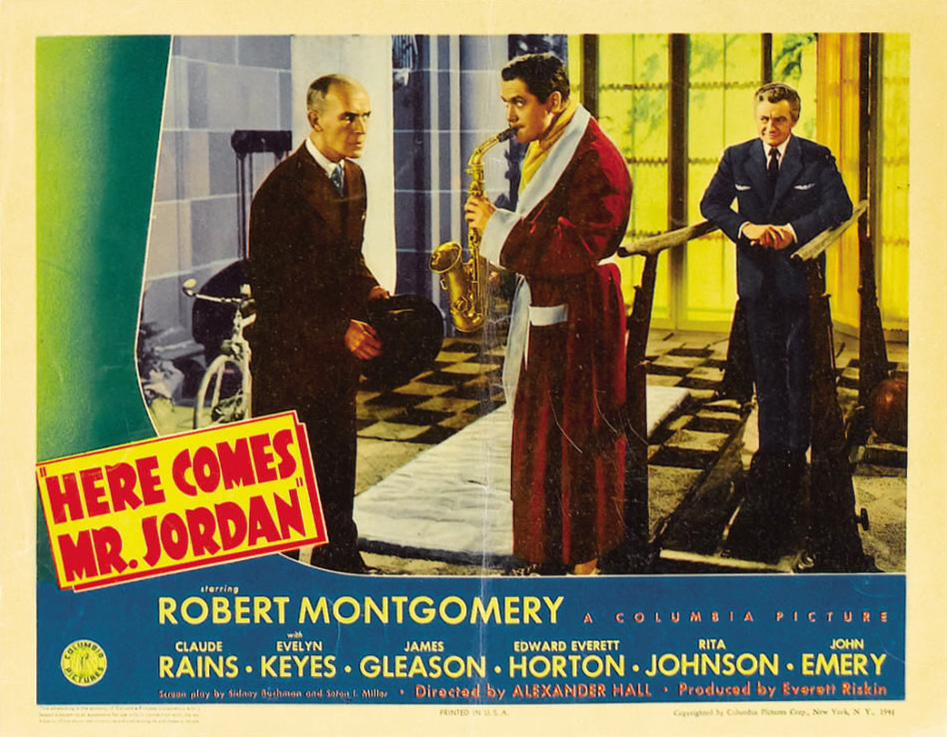
Here comes Robert Montgomery in "Here Comes Mr. Jordan"

Here Comes Mr. Jordan (1941) is an American fantasy romantic comedy directed by Alexander Hall and starring Robert Montgomery, Claude Rains, and Evelyn Keyes. The screenplay was written by Sidney Buchman and Seton I. Segall and the cinematography was by Joseph Walker (It Happened One Night, It's a Wonderful Life).

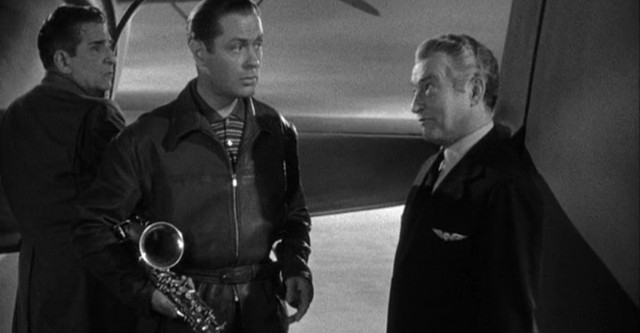
Boxer and amateur pilot Joe Pendleton (Montgomery) while flying to his next bout in New York City. A severed control cable cause him to crash his plane. An overly conscientious Angel 7013 (Edward Everett Horton) retrieves his soul concluding that he couldn't survive the crash. Upon further examination, Angel 7013's superior Mr. Jordan (Raines) determined that Joe should have lived another 50 years. 

To make amends, Mr. Jordan has Joe's soul enter the body of a crooked banker named Bruce Farnsworth who was murdered by his wife and his secretary. 

Can Joe find happiness and resume his boxing career in the body of another man?


Alexander Hall (1894 - 1968) was an American film director. He was working on the stage at age four and continued acting. As an adult, he worked in silent film before becoming interested in film production. Hall worked as a film editor and assistant director until 1932. His first directed film was Sinners in the Sun. In 1937, he signed a contract with Columbia Pictures and worked there almost exclusively. He gained a reputation for directing sophisticated comedies. Some of the films he directed include Little Miss Marker (1934), My Sister Eileen (1942), They All Kissed the Bride (1942), Down to Earth (1947), and The Great Lover (1949). 

Robert Montgomery (1904 - 1981) was an actor, director, and producer. Montgomery began his career on the stage but was soon signed by M-G-M becoming one of that studio's most popular leading men. The actor was adept at both dramas and comedies. Montgomery was twice nominated for the Best Actor Academy Award. In 1937, he was nominated for his performance as a murderous Irish handyman in Night Must Fall, and for his comedic performance in Here Comes Mr. Jordan (1942). While at M-G-M, he worked with all of the great leading ladies of the day including Norma Shearer, Joan Crawford, Ann Harding, and Greta Garbo. Before the United States entered World War II, Montgomery joined the American Field Services in London and drove ambulances in France. When the United States entered the war, he joined the Navy. He starred opposite Carole Lombard in Mr. & Mrs. Smith, They Were Expendable (1945), and two film noir classics The Lady in the Lake (1947) and Ride the Pink Horse (1947). From 1950 to 1957, he hosted the Emmy Award-winning series Robert Montgomery Presents. In 1955 he won a Tony Award for his direction of the play The Desperate Hours. He was also the father of actress Elizabeth Montgomery.

Edward Everett Horton, Robert Montgomery, and Claude Rains


Claude Rains (1889 - 1967) was a British actor whose career lasted almost seven decades. He was one of the most highly regarded character actors during Hollywood's classical period. He appeared in a number of classic films including The Adventures of Robin Hood (1938), Mr. Smith Goes to Washington (1939), The Wolf Man (1941), Casablanca (1942), and King's Row (1942). Later in his career, he starred in Lawrence of Arabia (1962), and The Greatest Story Ever Told (1965). He starred in four films with Bette Davis including Now, Voyager (1942), and Mr. Skeffington (1944). Rains was a four-time Best Supporting Actor Academy Award nominee. Many of his contemporaries consider him one of the greatest actors of the 20th century.


To watch the film on YouTube, click on the link below.


Here Comes Mr. Jordan trivia
  • The film was originally meant to be a vehicle for Cary Grant.
  • It won two Academy Awards for Best Writing, Original Story, and Best Writing Screenplay. The film was nominated for five other Academy Awards including Best Director and Best Actor and Best Supporting Actor nods for Robert Montgomery and James Gleason.
  • Columbia Pictures Studio Chief Harry Cohn was reluctant to finance the picture, thinking it wasn't the type of story that would be popular with the public.
  • Montgomery was loaned out from his home studio, M-G-M.
  • The movie was remade as Heaven Can Wait (1978) starring Warren Beatty.


To join the discussion on May 2, 2022, at 6:30 p.m. Central Time, click here. When you RSVP, you will receive an invitation and Zoom link to the discussion.


Discussion questions:
  1. Was Robert Montgomery convincing as a New York City boxer?
  2. Did this film remind you of any others you've seen?
  3. If you saw Warren Beatty in Heaven Can Wait, how does it compare to the original?
  4. The film is filled with great character actors; did one character actor stand out to you?

John Emery, Rita Johnson, Robert Montgomery, Evelyn Keyes, Claude Rains


Saturday, November 11, 2017

Honor and Remember our Veterans Today and Everyday

(from left to right) Actors Robert Montgomery, Clark Gable, and Robert Taylor served in the
armed forces during World War II.

Monday, May 30, 2016

Memorial Day 2016

Remembering those who sacrificed all for our freedom

John Wayne, Donna Reed, and Robert Montgomery in They Were Expendable

Thursday, July 3, 2014

Hitchcock’s Mr. and Mrs. Smith to screen July 8, 2014 at Daystar Center

When: Tuesday, July 8, 2014 6:30 p.m.
Where: The Venue 1550 at the Daystar Center, 1550 S. State Street

Yes, a Hitchcock Screwball Comedy
In 1940, Alfred Hitchcock’s third American film, Mr. and Mrs. Smith, was a screwball comedy. Yes, that’s right a screwball comedy. And it starred Carole Lombard, who had recently been proclaimed the “Screwball Girl” in a Life magazine profile. Few classic movie fans are familiar with this Hitchcock comedy, even though it was a critical and commercial hit, making its debut at New York’s Radio City Music Hall.

Typically screwball
The plot is typical for a screwball comedy. Ann (Lombard) and David (Robert Montgomery) Smith, discover that through a technicality their marriage isn’t legal. After David admits to his wife that if he had it to do all over again, he wouldn’t get married, Ann decides that she doesn’t want to be married either. What follows is a series of events in which each spouse tries to make the other jealous. Ann starts dating David’s law partner Jeff Custer (Gene Raymond) and David takes a room at his club and starts to hang out with a philandering Chuck Bensen (Jack Carson), which leads to some of the film’s funniest moments.

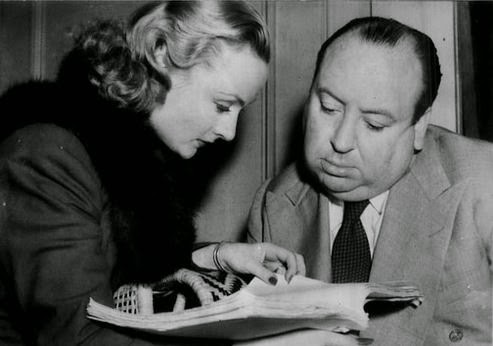
Carole Lombard and Alfred Hitchcock look at the script
His kind of actress
Alfred Hitchcock loved Carole Lombard. She was his type of actress: beautiful, smart, earthy, and blonde. The Hitchcock family rented Lombard’s house after she and Clark Gable were married in 1939. The Hitchcock’s and the Gable’s became fast friends and it was inevitable that the director and actress would work together. Unfortunately, Lombard would make one movie after Mr. and Mrs. Smith, dying tragically in a plane crash the next year, after a successful war bond drive during World War II.


Award-winning script writer
The script written by Oscar winner, Norman Krasna (Hands Across the Table, Bachelor Mother, It Started with Eve, Princess O’Rourke) is quite good and Lombard and Montgomery have great on-screen chemistry and deliver good performances. Raymond is perfect as Montgomery’s strait-laced college chum and partner. The film is peppered with some great character actors like Carson, Lucile Watson, Charles Halton, Esther Dale, and Betty Compson.

Mr. and Mrs. Smith proved that Hitchcock, the master of suspense, could be successful in any genre he put his mind to.

Have some Joe and Enjoy the Show!
Before the movie, grab a cup of coffee from Overflow Coffee Bar, located within the Daystar Center. You can bring food and beverages into the auditorium; we even have small tables set up next to some of the seats.

Join the Chicago Film club, join the discussion
The Chicago Film Club is for classic movie fans. Once a month we screen a classic film and have a brief discussion afterward. For more information, including how to join (it’s free), click here. To purchase your ticket in advance, click here. The Venue 1550 is easily accessible by the CTA. Please visit Transit Chicago for more information on transportation options.

Lombard and Anne Shirley in Vigil in the Night

Backstory: Mr. and Mrs. Smith opened on February 20, 1941 at New York’s Radio City Music Hall. Hitchcock and Lombard had hoped to get Cary Grant to costar, but he was not available. Some Hitchcock critics say that Mr. and Mrs. Smith was a critical and financial flop. This is not true. Audiences were delighted to see Lombard in a comedy after starring in two heavy dramas (Vigil in Night and They Knew What They Wanted). Hitchcock’s first three American films were all solid commercial successes.

Tuesday, March 23, 2010

Mr. and Mrs. Smith (1941) trailer

Mr. & Mrs. SmithCheck out this classic trailer for Mr. and Mrs. Smith. You've got to love the stylized approach.  Supposedly, Alfred Hitchcock was surprised that Carole Lombard and Robert Montgomery had never worked together before. The trailer touts this fact.

Enjoy


Monday, March 22, 2010

The Truth about "Mr. and Mrs. Smith"

There is a belief today that Mr. and Mrs. Smith  (1941) starring Carole Lombard and Robert Montgomery and directed by Alfred Hitchcock was a flop. Nothing could be further from the truth, but for some unknown reason, this "untruth" seems to crop up whenever the film is discussed or written about.

For the love of Carole
It is true that Hichtcock directed this film as a favor to Lombard, whom he loved and admired, but he didn't dread the task, nor did he just go through the motions, not caring about the result. The production and texture of the film is very polished. It has the look of a very expensive production, and the cast, including the supporting players, are first-rate, accomplished performers. As Lombard films go, it's not in the same league, perhaps, as Nothing Sacred or My Man Godfrey, but in its day, audiences voted it one of the best films of the year, along with Hitchcock's classics Rebecca and Foreign Correspondent!

Udder hilarity
When Hitchcock moved to America, he rented a house owned by Lombard and the two became fast friends. Ever the prankster, Lombard had fun with Hitchcock and his supposed comments saying "actors are like cattle" by having a corral with three calves in it installed on the set for the first day of shooting. Each calf wore a nametag of one of the three leads: Carole, Robert, and Gene (Raymond). It was important for Lombard to set a congenial and fun atmosphere on her film sets, and this stunt must have been planned to do just that. To keep the jokes going, Lombard insisted on directing Hitchcock during his brief cameo. Not able to resist temptation, Lombard insisted Hitchcock do take after take until his "performance" was to her liking.

Held over at Radio City
Radio City Music Hall Photograph - Beautiful 16"x20" Photographic Print by Carol M. HighsmithWhen Mr.and Mrs. Smith opened at Radio City Music Hall on January 20, 1941, it played to sold-old audiences. In fact the first nine days were booked solid and the film was held over (it was something of a big deal to be held over at the Music Hall, back in the day). The reviews were almost unanamously good with Look magazine saying that "Hitchcock has employed the same strategy that marks his blood-chilling melodramas," utilizing the "same casual approach, the same pell-mell finish, the same corner-of-the eye viewpoint.... The net effect is the same, too: another Alfred Hitchcock hit." The New York World-Telegram said that "Portly Alfred Hitchcock abandons melodrama, but not entertainment, in the frisky, scampish, gleeful comedy called Mr. and Mrs. Smith." Other reviews positively noted that for an Englishman, Hitchcock seems to know exactly how American couples think (New York Herald Tribune). The New York Post compared Hitchcock's first comedy to those of Ernst Lubitsch!

Check it out for yourself
Modern audiences can decide for themselves whether or not Mr. and Mrs. Smith is a classic or even a worthwhile entertainment, but one thing is for certain: Lombard's timeless appeal shines through and Montgomery proves to be one of Hollywood's most adept film comedians.

Rent it from Netflix and see for yourself, then let me know what you think.


Related Posts Plugin for WordPress, Blogger...