Set against the backdrop of a dusty Mexican border town, Hold Back the Dawn (1941), directed by Mitchell Leisen, follows the story of Georges Iscovescu (Charles Boyer), a suave but desperate European dancer stranded in a crowded hotel. Having fled the turmoil of war-torn Europe, Georges is one of many refugees stuck in a bureaucratic limbo, waiting for a quota number that will allow him to legally enter the United States. When he realizes his wait could last years, he becomes disillusioned and decides to take a more cynical path to gain entry.
The plot pivots when Georges encounters an old flame and
former dance partner, Anita Dixon (Paulette Goddard), who has successfully
entered the U.S. by marrying an American citizen and then quickly divorcing
him. Anita convinces Georges that his best chance at freedom is to find a naive
American woman to marry for the sole purpose of obtaining a visa. This cold-hearted
plan sets the stage for a calculated seduction, as Georges begins to scan the
various tourists visiting the border for a suitable target.
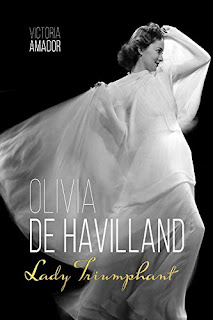
His mark arrives in the form of Emmy Brown (Olivia de
Havilland), a sweet, wholesome schoolteacher from California who has brought
her students on a brief field trip across the border. Sensing her innocence and
romantic nature, Georges turns on his considerable charm, sweeping her off her
feet in a whirlwind twenty-four-hour courtship. Emmy, unaware of the legal
mechanics behind his sudden affection, falls deeply in love and agrees to marry
him, believing she has found a genuine soulmate amidst the chaos of the world.
The final act of the story explores the growing tension
between Georges’s deceptive intentions and the unexpected emotional impact of
Emmy’s unwavering kindness. As an immigration officer begins to investigate the
suspicious speed of their marriage, Georges is forced to navigate a high-stakes
game of pretense. The film focuses on the psychological conflict of a man
caught between his desperate need for a new life and the guilt of exploiting a
woman who represents the very best of the country he is so desperate to join.
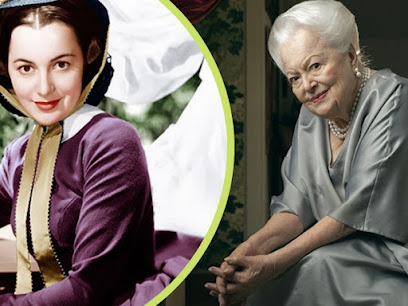
 |
| Charles Boyer and Olivia de Havilland |
Hold Back the Dawn trivia
1. The Movie That Made Billy Wilder a Director
The legendary Billy Wilder co-wrote the screenplay, but he was so infuriated by the filming process that he vowed never to let another director “ruin” his scripts again. Specifically, lead actor Charles Boyer refused to film a scene Wilder had written where his character, in a moment of despondent isolation, has a conversation with a cockroach on his hotel wall. When director Mitchell Leisen sided with the actor and cut the scene, Wilder decided he had to become a director himself to protect his work. His very next project was his directorial debut, The Major and the Minor (1942).
2. Semi-Autobiographical Origins
The film’s focus on the grueling wait for a U.S. visa was deeply personal for Billy Wilder. As a Jewish refugee fleeing Nazi Germany, Wilder had actually spent time stranded in a Mexican border town (Mexicali) in the late 1930s, waiting for his own quota number to come up so he could legally re-enter the United States. He channeled that genuine anxiety and the “limbo” of the border hotels directly into the script.
3. The Sister vs. Sister Oscar Showdown
The 1941 Academy Awards featured one of the most famous sibling rivalries in history. Olivia de Havilland was nominated for Best Actress for Hold Back the Dawn, while her sister, Joan Fontaine, was nominated in the same category for Hitchcock’s Suspicion. When Fontaine won, it notoriously cooled their relationship for years. This remains one of the few times in Oscar history that two sisters competed against each other for the same top honor.
4. A Clever “Meta” Cameo
The film uses a “story-within-a-story” framing device where Charles Boyer’s character
enters a movie studio to sell his life story to a director. The director he
speaks to is played by none other than Mitchell Leisen, the real-life
director of Hold Back the Dawn. In the scene, Leisen is shown directing
a movie starring Veronica Lake and Brian Donlevy, which was actually real
footage from I Wanted Wings, a film Leisen had completed just months
earlier.
Click HERE to watch the movie. This is a new site for watching
movies. You may have to register to watch it, but registration is free.
Click HERE to join the online discussion on January 26,
2026, at 6:30 p.m. Central Time. Once you RSVP, you will receive an invitation
and link to join the discussion on Zoom.
Discussion questions
1. The Morality of the “Visa Marriage”
Georges begins the film as a
cynical opportunist who views Emmy merely as a “passport” to the
United States. Given the desperate circumstances of the European refugees in
the hotel, does the film successfully make Georges a sympathetic protagonist,
or does his exploitation of Emmy’s innocence make him irredeemable? At what
specific point in the film—if ever—do you think his feelings for her become
genuine?
2. The Portrayal of Bureaucracy
and the Border
Hold Back the Dawn was
released in 1941, while the real-world visa crisis for refugees was at its
peak. How does the film portray the American immigration system? Does the “limbo” of the Mexican border town feel like a prison, or is it
presented with the lighthearted touch typical of Paramount romances of that
era? Consider how the setting of the Hotel Esperanza reflects the emotional
state of its residents.
3. Emmy Brown: Naivety vs.
Strength
Emmy is often described as a “wholesome schoolteacher,” a archetype common in 1940s cinema.
However, by the end of the film, she is forced to confront a devastating
betrayal. Does Emmy remain a victim throughout the story, or does her reaction to
the truth show a different kind of strength? Discuss how Olivia de Havilland’s
performance (which earned her an Oscar nomination) elevates a character that
could have been a one-dimensional "mark."
4. The “Wilder” Influence and Tone
Knowing that Billy Wilder was
frustrated by the direction of this film, can you spot the “Wilder touch” in the dialogue or the darker, more cynical moments of the plot?
Compare the sophisticated, witty banter between Georges and Anita to the earnest,
romantic scenes with Emmy. How do these two different “worlds”—the
cynical European past and the optimistic American future—clash within the
film’s narrative?


 left his native Germany in 1922 at the invitation of silent-screen legend
  . He directed Pickford in two popular films, Rosita (1923) and The Marriage Circle (1924). Right from the start, his American films had a quality, polish, and sophistication that seemed fresh and new. Audiences loved the "Lubitsch touch" and his career in Hollywood prospered. When talking pictures took hold, Lubitsch adapted immediately without missing a beat.
 (1940), written and directed by
  was a huge hit. Surely Lubitsch with his talent for comedy would be able to be equally successful with
  (1942).
 . Benny was a superstar on the radio, but his movie career never matched his radio success. To help secure financing, Benny actively courted Lombard to star opposite him. Lubitsch, anxious to work with Lombard didn't think the part was large enough to interest her. Surprisingly, Lombard loved the script. The fact that she would be part of an ensemble cast rather than being the "star" didn't seem to matter. Additionally, Lombard thought that with the rumors of a World War on everyone's mind, a satire like To Be or Not To Be would help in the fight against the Axis powers.


 , and
, and  would never be realized. But fortunately for us, she left a body of work that still brings us joy, laughter, and tears.

 , then her work in 1935 proved the previous year's performance was no fluke.
 , her costar in Bolero. Although not well remembered today, Rumba was a commercial success and this time, Lombard received equal billing with Raft. If 1935 started well, it would end even better.
 . The story about a cynical manicurist, was based on "Bracelets," a story by Vina Delmar, who would go on to win an Oscar nomination, two years later, for writing the screenplay for
  .
. , a star vehicle for Katherine Hepburn, directed by
  . MacMurray's performance in that film received good notices, but there was some concern that he did not have the depth needed for his performance opposite Lombard. In Leisen's retelling, Lombard pitched in as almost the codirector. According to MacMurray's account, "I owe so much of that performance and my subsequent career to her [Lombard] .... She worked with me on every scene."
 , which was Paramounts biggest grossing film that year. It is interesting to note that the pairings of Hepburn and Cary Grant which are much more heralded today, were not nearly as commercially successful as the pairings of Lombard and MacMurray.
 released the year before. Some critics commented that Lombard, by eliminating the heavy makeup that she typically used, revealed a natural beauty that previously had not been seen by the movie-going public. Apparently, Lombard took note of these critiques and her future films reflect a more natural look.