Showing posts with label Teresa Wright. Show all posts

Tuesday, August 27, 2024

Teresa Wright and Joseph Cotten star in Alfred Hitchcock’s “Shadow of a Doubt”

A Personal Favorite

Considered Alfred Hitchcock’s personal favorite of all his films, Shadow of a Doubt (1943), is also the only film he ever shot entirely on location. Hitchcock picked Santa Rosa, CA, because it exemplified, at least it did in 1942, the ideal American town. Film critic Bosley Crowther said in his review of the film, “The flavor and ‘feel’ of a small town has been beautifully impressed in this film by the simple expedient of shooting most of it in Santa Rosa, California.”


No Prima Donnas
One of the reasons Shadow of a Doubt was Hitchcock’s favorite was due to the cast. Teresa Wright and Joseph Cotten were movie stars but weren’t prima donnas. The director was impressed with Wright’s professionalism and preparation for her role. Cotten thought Hitchcock was one of the easiest directors he ever worked with. The two hit it off and remained great friends for the rest of their lives. The rest of the supporting cast, Henry Travers, Patricia Collinge, Hume Cronyn, and MacDonald Carey were all pros, with Cronyn, before this film, a stage actor, making his movie debut in Shadow of a Doubt. He too, along with his wife, Jessica Tandy (Tandy would appear in The Birds some 20 years later.) remained friends with Hitchcock for the rest of their lives.

Teresa Wright
Idolizing Uncle Charlie
When Uncle Charlie (Joseph Cotton) travels west to visit his sister and her family, the sleepy town of Santa Rosa is never the same. Handsome and debonair, Uncle Charlie is idolized by his young niece Charlene “Charlie” Newton (Teresa Wright) who has become disenchanted with her small-town life. Uncle Charlie represents glamour and excitement to young Charlie and she craves his attention.

Word of Mouth
As word spreads about a man they call the Merry Widow murderer, Charley suspects that he and her beloved uncle are one and the same. But when a government agent investigating the case befriends her, Charley is faced with some tough choices. Does she cooperate, putting her uncle at risk, and upsetting her mother? By getting closer to her uncle, does she put her own life in jeopardy?

Where Evil Lurks
With the help of playwright Thorton Wilder (Our Town) and screenwriter Sally Benson (Meet Me in St. Louis), Hitchcock created a truly suspenseful film. Shadow of a Doubt demonstrates one of Hitchcock’s favorite themes: evil can lurk in the most unlikely and innocent of places…within our own towns or cities and among our own families.


Alfred Hitchcock (1899 – 1980) was an English film director, producer, and screenwriter. He is one of the most influential filmmakers of the 20th century. Hitchcock directed over 50 feature films, many classics that have been honored and studied for years. Some of Hitchcock’s classic films include The 39 Steps (1939), Rebecca (1940), Suspicion (1941), Shadow of a Doubt (1943), Notorious (1946), Rear Window (1954), Vertigo (1958), North by Northwest (1959), and Psycho (1960).

Teresa Wright (1918 - 2005) was an American stage, film, and television actress. She received Academy Award nominations in her first three films, a record that still holds today. In 1942, she was nominated for Best Supporting Actress for Mrs. Miniver and Best Actress in The Pride of the Yankees. She won the Supporting Oscar for Mrs. Miniver, and her co-star, Greer Garson won Best Actress. Today Wright is most famous for playing Lou Gehrig’s wife in The Pride of the YankeesThe Best Years of Our Lives, and Alfred Hitchcock’s Shadow of a Doubt (1943). Wright was a popular star throughout the 1940s starring opposite Robert Mitchum, Ray Milland, Gary Cooper, and David Niven. She starred opposite Marlon Brando in his first film role in The Men (1950). Wright continued working in film, with her last role as Miss Birdie in The Rainmaker (1997). Wright was the only non-baseball player to be honored by the New York Yankees when she passed away at age 86. 

Joseph Cotten (1905 - 1994) was an American film, stage, radio, and television actor. Cotten achieved fame on Broadway in the original stage productions of The Philadelphia Story and Sabrina Fair.  He became famous worldwide after appearing in Citizen Kane (1941) and The Magnificent Ambersons (1942). As one of the most popular leading men of the 1940s, Cotten starred in Shadow of a Doubt (1943), Gaslight (1943), Duel in the Sun (1946), and The Third Man (1949). Cotten alternated between work on stage and film into the late-1950s. Cotten also appeared on television guest-starring on The Name of the GameCimarron Strip, and Ironside. Cotten’s last film role was in 1981.

Joseph Cotten and Teresa Wright in a tense scene


Shadow of a Doubt trivia

  • Teresa Wright didn't read the script; Alfred Hitchcock described the entire movie to her and agreed to star in it on the spot.
  • Edna May Wonacott (Ann Newton) and Estelle Jewell (Catherine) were locals of Santa Rosa, where this movie was shot on location. Many of the extras were residents of the town, which was too far away from Hollywood to be affected by Actors Guild guidelines demanding the use of professional actors and actresses.
  • The $40,000 Uncle Charlie deposits in the bank is equivalent to over $600,000 today.
  • Hitchcock wanted William Powell to play Uncle Charlie but M-G-M wouldn’t loan him.
  • The Newton home and the railway station are still standing in Santa Rosa. The library was demolished due to earthquake concerns as some of the other buildings were destroyed in the earthquake of 1969.
  • Teresa Wright who played a teenager in the film was 25 years old when the film was in production.


Click HERE to watch the film on the Internet Archive. Click HERE to watch it on YouTube

Click HERE to join the online discussion on September 2, 2024, at 6:30 p.m. Central Time. Once you RSVP, you will receive an invitation with a link to join the discussion on Zoom.


Discussion questions

  1. Why do you think this was Alfred Hitchcock's favorite of all his films?
  2. Was the setting of the film similar in some ways to the location of Boomerang!?
  3. Teresa Wright and Joseph Cotten give terrific performances but neither were nominated for action Oscars. Do you think this was an oversight on the Academy’s part?
  4. The supporting cast is strong with many outstanding performances. Do you have a favorite?
  5. Did you have a favorite scene from the film?
  6. The film plays with doubles: two Charlies, the waitress working at the Til-Two bar for two weeks, and the two detectives. Did you find any other doubles?
  7. Did the ending surprise you? Was it satisfying?

Monday, February 6, 2023

Marlon Brando makes his film debut with Teresa Wright in "The Men"

The Men (1950) is an American drama directed by Fred Zinnemann and starring Marlon Brando—in his film debut—and Teresa Wright. The supporting cast includes Everett Sloane and Jack Webb. The film was produced by Stanley Kramer. The screenplay was written by Carl Foreman. The cinematography was by Robert De Grasse. The music was by Dimitri Tiomkin.

Ken Wilocek (Brando) is a returning World War II veteran who is a paraplegic due to an injury in the war. He struggles with his new circumstances and how they will impact his life back in the States. Ken doesn’t know where he fits in now that he finds himself in a wheelchair. His fiancĂ©e Ellen (Wright) struggles with her feelings toward Ken and his feelings of inadequacy.

Will Ken be able to navigate his world in a wheelchair? Will he be able to have a successful relationship with Ellen?


Fred Zinnemann (1907 -1997) was an Austrian Empire-born American film director. He won four Academy Awards for directing and producing films. He was an early advocate for filming on location for authenticity. Zinnemann introduced many stars to film, including Brando, Julie Harris, Montgomery Clift, Shirley Jones, and Meryl Streep. He also directed 19 actors to Oscar nominations, including Frank Sinatra, Audrey Hepburn, Jason Robards, Gary Cooper, and Maximilian Schell. Some of his films were From Her to Eternity (1953), Oklahoma! (1955), and The Nun’s Story (1959).

Marlon Brando (1924 – 2004) was an American actor. He is considered one of the most influential actors of his generation. Brando’s success on the stage, most notably in A Streetcar Named Desire, led to a career in film. He received his first Academy Award nomination for recreating the role of Stanley Kowalski in the 1951 film version of Streetcar. Other films include Viva Zapata! (1962), Julius Caesar (1953), On the Waterfront (1954), Guys and Dolls (1955), and The Godfather (1972). Brando won two Best Actor Academy Awards for his performances in On the Waterfront and The Godfather.

Teresa Wright (1918 - 2005) was an American stage, film, and television actress. She received Academy Award nominations in her first three films, a record that still holds today. In 1942, she was nominated for Best Supporting Actress for Mrs. Miniver and for Best Actress in The Pride of the Yankees. She won the Supporting Oscar for Mrs. Miniver, and her co-star, Greer Garson won Best Actress. Today Wright is most famous for playing Lou Gehrig’s wife in The Pride of the YankeesThe Best Years of Our Lives, and Alfred Hitchcock’s Shadow of a Doubt (1943). Wright was a popular star throughout the 1940s starring opposite Robert Mitchum, Ray Milland, Gary Cooper, and David Niven. She starred opposite Marlon Brando in his first film role in The Men (1950). Wright continued working in film, with her last role as Miss Birdie in The Rainmaker (1997). Wright was the only non-baseball player to be honored by the New York Yankees when she passed away at age 86. 

Teresa Wright and Marlon Brando


The Men trivia

  • Brando remained in a wheelchair on and off the set during the film's production.
  • For his first film role, Brando earned $50,000 (approximately $400,000 today).
  • The film included 49 men from the Birmingham Veterans Administration Hospital.
  • Star Trek star Deforest Kelley has a small role as a doctor.
  • Arthur Jurado who played Angel was a paraplegic and not an actor.


To watch the film on YouTube, click the link below.


Discussion questions

  1. The Men is a film of its time and was groundbreaking in its day. Do you think it holds up in the 21st century?
  2. Many of the cast members weren't trained actors, including many of the veterans and some of the nurses. Was it obvious to you or did you even notice?
  3. Considering that this was Brando's first film, do you think it was an impressive debut?
  4. What did you think of Teresa Wright's performance? Were she and Brando a convincing couple?
  5. Was there anything about this film that surprised you?


To join the discussion on February 13, 2023, at 6:30 p.m. Central Time, click here. Once you RSVP, you will receive an invitation with a link to the meeting on Zoom.

Monday, August 22, 2022

"The Best Years of Our Lives" is the Best Picture of 1946

The Best Years of Our Lives (1946) is an American drama directed by William Wyler and starring Myrna Loy, Fredric March, Dana Andrews, Teresa Wright, and Virginia Mayo. The screenplay was written by Robert E. Sherwood, based on a novella, Glory for Me by MacKinlay Kantor. The cinematography was by Greg Toland.

The plot of the movie concerns three United States servicemen returning home after World War II and the struggle they have re-adjusting to civilian life. The movie is almost a time capsule of what life was like after the war and the changes it brought to American society. Apart from winning the Best Picture Academy Award, it was the top-grossing film of the year and the top-grossing film of the decade. Adjusted for inflation, it is one of the top 100 grossing films in the United States.

The movie lobby card downplays the seriousness of the film.


William Wyler (1902 - 1981) was an American (born in Mulhouse, Alsace, then part of Germany) film director and producer. He won the Academy Award for Best Direction three times: Mrs. Miniver (1942), The Best Years of Our Lives (1946), and Ben-Hur (1959). Wyler was nominated 12 times for Best Director, an Academy Awards history record. Wyler started working in the movie business during the silent era, eventually making a name for himself as a director in the early 1930s. He would go on to direct Wuthering Heights (1939), The Westerner (1940), and The Little Foxes (1941). Actress Bette Davis received three Oscar nominations under Wyler’s direction, winning her second Oscar for her performance in Jezebel (1938). Other popular films directed by Wyler include The Heiress (1949), Roman Holiday (1954), Friendly Persuasion (1956), The Big Country (1958), and Funny Girl 1968).

Myrna Loy (1905 - 1993) was an American film, television, and stage actress. Loy was a trained dancer but decided to concentrate on acting, appearing in silent films before becoming a major star with the advent of sound. Perhaps Loy is most famous for playing Nora Charles opposite William Powell in The Thin Man (1934) and its subsequent sequels. Loy and Powell were one of the screen’s most popular acting teams; they appeared in 14 films together. Loy starred opposite the top leading men of the day including Clark Gable, Spencer Tracy, Tyrone Power, and Cary Grant. Some of her films include Wife vs. Secretary (1936), Libeled Lady (1936), The Great Ziegfeld (1936), Test Pilot (1938), Too Hot to Handle (1938), The Rains Came (1939), Love Crazy  (1941), The Bachelor and the Bobby-Soxer (1947), and Mr. Blandings Builds His Dream House (1948). Film character: Milly Stephenson.

Fredric March (1897 - 1975) was an American actor and two-time Best Actor Academy Award winner. Also a famous stage actor, March won two Tony Awards as well and is one of a few actors to have won both the Academy Award and the Tony Award twice. March was an immediate success in films receiving his first Best Actor nomination in 1930. He won his first Best Actor Oscar for Dr. Jekyll and Mr. Hyde (1932) and his second for The Best Years of Our Lives (1946). During the 1930s and 1940s, March was a popular leading man starring opposite Greta Garbo, Joan Crawford, Janet Gaynor, Norma Shearer, Katharine Hepburn, and Carole Lombard. March continued acting on stage and in films until 1973, two years before his death from cancer. Film character: Al Stephenson.

Actor Dana Andrews (standing) refuses to serve cinematographer Greg Toland (left) and director William Wyler (right) on the set.

Dana Andrews (1909 – 1992) was an American stage, film, and television actor. During the 1940s, Andrews was a major star and leading man starring in Laura (1944), State Fair (1945), A Walk in the Sun (1945), The Best Years of Our Lives (1946), Canyon Passage (1946), Boomerang! (1947), and Daisy Kenyon (1947) co-starring Joan Crawford and Henry Fonda; so popular was Andrews during the 1940s that he was billed above Fonda. During the 1950s, film roles were harder to come by, but he had success in Elephant Walk (1954) co-starring Elizabeth Taylor and Peter Finch, While the City Sleeps (1956), and Curse of the Demon (1957). In 1958 he replaced Henry Fonda on Broadway in Two for the SeesawFilm character: Fred Derry.

Teresa Wright and Dana Andrews in a crucial scene from
The Best Years of Our Lives

Teresa Wright (1918 - 2005) was an American stage, film, and television actress. She received Academy Award nominations in her first three films, a record that still holds today. In 1942, she was nominated for Best Supporting Actress for Mrs. Miniver and for Best Actress in The Pride of the Yankees. She won the Supporting Oscar for Mrs. Miniver, and her co-star, Greer Garson won Best Actress. Today Wright is most famous for playing Lou Gehrig’s wife in The Pride of the Yankees, The Best Years of Our Lives, and Alfred Hitchcock’s Shadow of a Doubt (1943). Wright was a popular star throughout the 1940s starring opposite Robert Mitchum, Ray Milland, Gary Cooper, and David Niven. She starred opposite Marlon Brando in his first film role in The Men (1950). Wright continued working in film, with her last role as Miss Birdie in The Rainmaker (1997). Wright is the only non-baseball player to be honored by the New York Yankees when she passed away at age 86. Film character: Peggy Stephenson.

Virginia Mayo (1920 - 2005) was an American actress and dancer. She made a series of popular films with Danny Kaye while under contract to Samuel Goldwyn which made her a star. In the late 1940s, Warner Bros. bought her contract from Goldwyn and she became one of the studio’s top box office attractions. At Warners, Mayo made a variety of films including musicals, comedies, and dramas. She co-starred with James Cagney in White Heat (1949), The Flame and the Arrow (1950) opposite Burt Lancaster, Captain Horatio Hornblower R.N. co-starring Gregory Peck (1951), the studio’s biggest hit of the year. After her film career ended, Mayo guest-starred on much popular television series including Remington SteeleThe Love Boat, and Murder, She WroteFilm character: Marie Derry.

Harold Russell (1914 - 2002) was a Canadian-born American World War II veteran. Russell lost both hands in a training accident when a defective fuse detonated the explosives he was handling. He was given two hooks to serve as hands and he was featured in an Army rehabilitation film, Diary of a Sergeant. This film brought Russell to the attention of director Wyler who cast him in the film. Russell won two Academy Awards. He won an honorary award for bringing hope and courage to veterans and he also won the Best Supporting Actor award, something he was not predicted to win. Russell remains one of only two non-professional actors to win Academy Awards. Haing S. Ngor won a Best Supporting Actor Oscar for his performance in The Killing Field (1985). Film character: Homer Parrish.

Cathy O’Donnell (1923 - 1970) was an American actress best known for her roles in The Best Years of Our LivesThey Live by Night (1948), and Ben-Hur (1959) where she played Tirzah, the sister of Judah Ben-Hur (Charlton Heston). She appeared on the small screen on Perry Mason and Bonanza. She was married to director Wyler’s older brother Robert. She passed away after a long illness on her 22nd wedding anniversary. Film character: Wilma Cameron.


To watch the film on YouTube, click on the link below.


The Best Years of Our Lives trivia:

  • The fictional Boone City was modeled after Cincinnati, Ohio.
  • William Wyler hated the score by Hugo Friedhofer; it won the Oscar that year for the best film score.
  • Myrna Loy was only 13 years older than Teresa Wright who played her daughter.
  • The film includes four Oscar winners: Fredric March, Teresa Wright, Hoagy Carmichael (Uncle Butch), and Harold Russell.
  • Future director Blake Edwards has an uncredited part as a Corporal and actor Sean Penn’s father, Leo, played a soldier working as a scheduling clerk at the beginning of the film.

To join the discussion on August 29, 2022, at 6:30 p.m. Central Time, click here. Once you RSVP, you'll receive an invitation and a link to join the discussion on Zoom.

Questions for discussion:

  1. The film is a product of its time. Does it still have meaning for us today in 2022?
  2. What if anything surprised you about the film?
  3. Did you have a favorite scene or piece of dialogue that stood out to you?
  4. Would you recommend this film to a friend to watch?
  5. How do you think the acting holds up? Are the performances true to life?
  6. Do you think the film had an anti-war message?
  7. Why do you think this film resonated with audiences in 1946?

Wednesday, August 17, 2022

Book Review: Making The Best Years of Our Lives: The Hollywood Classic That Inspired a Nation

The Best Years of Our Lives (1946) is one of the most honored and beloved films from Hollywood's
Golden Age. It was released over 75 years ago. Author and film historian, Alison Macor has written a very readable narrative on how this ground-breaking film got made.

It all started with a short article that producer Samuel Goldwyn's wife, Frances read in Time entitled "The Way Home" about returning Marines after the war. Goldwyn wasn't interested in making a film like that but he was shrewd enough to register "The Way Home" as a possible movie title.

While browsing a bookshelf at the Goldwyn studio, the director Willliam Wyler came across the novel Glory for Me written by MacKinlay Kantor. Goldwyn wanted to have playwright Robert E. Sherwood adapt the book for the screen, but Sherwood was busy and wasn't sure the subject of soldiers readjusting to life after World War II would be relevant by the time the production made it to the screen. 

Teresa Wright and Dana Andrews in a crucial scene from
The Best Years of Our Lives


Well, Goldwyn was nothing if not persistent. Eventually, Sherwood would write the screenplay and the whole project would come together under the direction of William Wyler, who was at the tail end of his contract with Goldwyn. Amazingly, everything jelled to create a truly memorable motion picture.

Macor has done scrupulous research in putting the pieces together on how The Best Years of Our Lives came to be. From its beginning as an idea to its casting, everything you ever wanted to know about the making of this beloved classic in Macor's book.

Cinematographer Greg Toland and director William Wyler discuss how
to shoot a scene with Dana Andrews and Virginia Mayo.


As someone who truly loves The Best Years of Our Lives (I have my own DVD copy), I was a little uncertain if it would meet my expectations. It did and then some.

If you love The Best Years of Our Lives and/or you love learning how the old studio system worked, Making The Best Years of Our Lives, is a great read and you'll learn a lot.

The book is available from Amazon or wherever books are sold.


  • Publisher ‏ : ‎ 
    University of Texas Press (June 7, 2022)
  • Language ‏ : ‎ English
  • Hardcover ‏ : ‎ 240 pages
  • ISBN-10 ‏ : ‎ 1477318917
  • ISBN-13 ‏ : ‎ 978-1477318911
  • Item Weight ‏ : ‎ 1.1 pounds
  • Dimensions ‏ : ‎ 6 x 0.9 x 9 inches

Tuesday, January 25, 2022

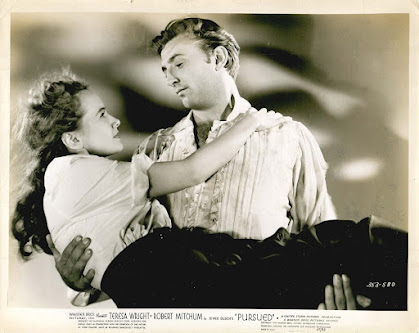
Teresa Wright and Robert Mitchum are "Pursued"

Pursued (1947) Is considered the first noir western, directed by Raoul Walsh and starring Teresa Wright and Robert Mitchum. The cinematography is by the legendary James Wong Howe and music by the equally legendary Max Steiner. Oscar-winning director Martin Scorsese counts Pursued as one of his favorite films.

Mitchum is Jeb Rand, a man haunted by traumatic events from his past that left him an orphan. Mrs. Callum (Judith Anderson) adopts him and raises him as her son with her natural children Adam (John Rodney) and Thorley (Wright). But there is tension in these relationships, and a man he doesn’t even know torments Jeb for reasons he doesn’t understand. 

Others in the cast include Dean Jagger and Alan Hale.

Publicity still of Teresa Wright and Robert Mitchum


Raoul Walsh (1887 - 1980) was an American director, actor, and founding member of The Academy of Motion Picture Arts and Sciences (AMPAS). Walsh got his start acting on the stage in New York. He eventually began acting in silent films and worked as an assistant director alongside D.W. Griffith. He eventually became a director on his own working with major silent-film stars Douglas Fairbanks, Gloria Swanson, and Anna May Wong. He lost his right eye in a freak accident in 1928 and never acted again, instead of focusing exclusively on directing. Some of his notable films include The Roaring Twenties (1939) starring James Cagney and Priscilla Lane, High Sierra (1941) starring Ida Lupino and Humphrey Bogart, The Strawberry Blonde (1941) starring Cagney and Olivia de Havilland, White Heat (1949) starring Cagney and Virginia Mayo, and Captian Horatio Hornblower (1951) starring Gregory Peck and Mayo.

Teresa Wright (1918 - 2005) was an American stage, film, and television actress. She received Academy Award nominations in her first three films, a record that still holds today. In 1942, she was nominated for Best Supporting Actress for Mrs. Miniver and for Best Actress in The Pride of the Yankees. She won the Supporting Oscar for Mrs. Miniver, her co-star, Greer Garson won Best Actress. Today Wright is most famous for playing Lou Gehrig’s wife in The Pride of the YankeesThe Best Years of Our Lives, and Alfred Hitchcock’s Shadow of a Doubt (1943). Wright was a popular star throughout the 1940s starring opposite Robert Mitchum, Ray Milland, Gary Cooper, and David Niven. She starred opposite Marlon Brando in his first film role in The Men (1950). Wright continued working in film, with her last role as Miss Birdie in The Rainmaker (1997). Wright is the only non-baseball player to be honored by the New York Yankees when she passed away at age 86. 

Robert Mitchum (1917 - 1997) was an American film actor, director, and singer. His breakthrough came in The Story of G.I. Joe (1945) for which he was nominated for a Best Supporting Actor Academy Award. He later starred in the film noir classic Out of the Past (1947) Crossfire (1947), Rachel and the Stranger (1948), River of No Return (1954) The Night of the Hunter (1955) Heaven Knows, Mr. Allison (1957), Home from the Hill (1960), Cape Fear (1962), and Ryan's Daughter (1970). Mitchum would remain busy until the late-nineties. Mitchum is rated number 23 on the American Film Institute's list of the greatest male stars of classic American cinema.


Pursued trivia

  • When the film was released, Teresa Wright was #6 at the box office.
  • Charles Bates who plays Adam Callum as an 11-year-old boy played Teresa Wright's younger brother in Alfred Hitchcock's Shadow of a Doubt (1943).
  • The film was filmed in Gallup, New Mexico.
  • The screenplay was written by Niven Busch who was Teresa Wright's husband.
  • Niven Busch also wrote the novel Duel in the Sun which was made into a hit western that was supposed to star Wright. Wright had to drop out due to pregnancy. Pursued was a consolation prize of sorts.
  • Producer Milton Sperling and his United States Pictures production company worked out a distribution deal with Warner Bros. It was a profitable deal for both.

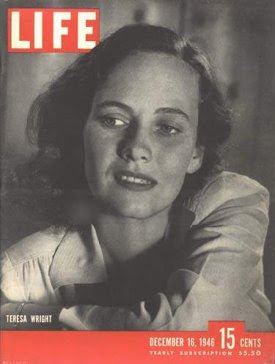
Teresa Wright was on the cover of Life magazine on December 16, 1946.


Why watch this film?

  1. The film features beautiful black and white cinematography by James Wong Howe.
  2. It's an opportunity to see Robert Mitchum in an early lead role.
  3. It's considered the first film noir western, directed by a legend of the Classic Hollywood period.
  4. The film boasts a strong cast including top-billed Teresa Wright, Judith Anderson, and Dean Jagger.


To watch the film on YouTube, click the link below.


Discussion questions:
  1. Do you think a western could be classified as a film noir?
  2. Freud and psychological dramas were all the rage in the 1940s. Does Pursued work as a psychological western?
  3. What did you make of Jeb's relationship with his stepmother, stepbrother, and sister?
  4. Do you think the family dynamics would have been different had Jeb's true origins been known from the beginning?
  5. The scene when Jeb and Adam sing together is a pleasant one and suggests that togetherness and family love was possible or does it?
  6. Was there a performance that stood out to you?
  7. Did anything surprise you?
  8. Do you think the movie had a theme? If so, what do you think it was?
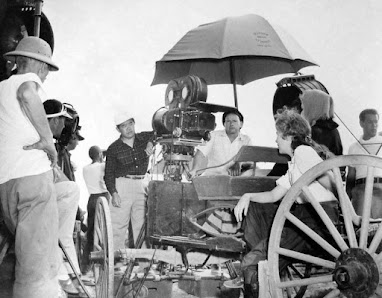
Teresa Wright on location with cinematographer James Wong Howe behind the camera

To join the discussion on January 31, 2022, at 6:30 p.m. Central Time, click here. Once you RSVP, you'll receive an invitation and a link to the discussion on Zoom.


Contemporary reviews for Pursued

Bosley Crowther in The New York Times said this about the film: "...And it is likewise hard to work up any sympathy for the hero, who seems bored by all his woes. That may be because Robert Mitchum, who plays the latter, is a very rigid gent and gives off no more animation than a Frigidaire turned to 'Defrost.'"*

Variety praised the film: "Pursued is potent frontier days Western film fare. Standout in picture is suspense generated by the original script and Raoul Walsh's direction. It builds the western gunman's death walk to high moments of thrill and action. Strong casting also is a decided factor in selling the action wares. Production makes use of natural outdoor backgrounds supplied by New Mexico scenery, lending air of authenticity that is fully captured by the camera."**

*New York Times, Crowther, Bosley, review March 8, 1947
**Variety magazine, Variety staff, review December 31, 1946

Sunday, March 7, 2021

Best Picture of 1946: "The Best Years of Our Lives"

The Best Years of Our Lives (1946) is an American drama directed by William Wyler and starring Myrna Loy, Fredric March, Dana Andrews, Teresa Wright, and Virginia Mayo. The screenplay was written by Robert E. Sherwood, based on a novella, Glory for Me by MacKinlay Kantor. The cinematography was by Greg Toland.

The plot of the movie concerns three United States servicemen returning home after World War II and the struggle they have re-adjusting to civilian life. The movie is almost a time capsule of what life was like after the war and the changes it brought to American society. Apart from winning the Best Picture Academy Award, it was the top-grossing film of the year and the top-grossing film of the decade. Adjusted for inflation, it is one of the top 100 grossing films in the United States.

The movie poster downplays the seriousness of the film.

William Wyler (1902 - 1981) was an American (born in Mulhouse, Alsace, then part of Germany) film director and producer. He won the Academy Award for Best Direction three times: Mrs. Miniver (1942), The Best Years of Our Lives (1946), and Ben-Hur (1959). Wyler was nominated 12 times for Best Director, an Academy Awards history record. Wyler started working in the movie business during the silent era, eventually making a name for himself as a director in the early 1930s. He would go on to direct Wuthering Heights (1939), The Westerner (1940), and The Little Foxes (1941). Actress Bette Davis received three Oscar nominations under Wyler’s direction, winning her second Oscar for her performance in Jezebel (1938). Other popular films directed by Wyler include The Heiress (1949), Roman Holiday (1954), Friendly Persuasion (1956), The Big Country (1958), and Funny Girl 1968).

Myrna Loy (1905 - 1993) was an American film, television, and stage actress. Loy was a trained dancer but decided to concentrate on acting, appearing in silent films before becoming a major star with the advent of sound. Perhaps Loy is most famous for playing Nora Charles opposite William Powell in The Thin Man (1934) and its subsequent sequels. Loy and Powell were one of the screen’s most popular acting teams; they appeared in 14 films together. Loy starred opposite the top leading men of the day including Clark Gable, Spencer Tracy, Tyrone Power, and Cary Grant. Some of her films include Wife vs. Secretary (1936), Libeled Lady (1936), The Great Ziegfeld (1936), Test Pilot (1938), Too Hot to Handle (1938), The Rains Came (1939), Love Crazy  (1941), The Bachelor and the Bobby-Soxer (1947), and Mr. Blandings Builds His Dream House (1948). Film character: Milly Stephenson.

Myrna Loy (left), Fredric March, and Teresa Wright

Fredric March (1897 - 1975) was an American actor and two-time Best Actor Academy Award winner. Also a famous stage actor, March won two Tony Awards as well and is one of a few actors to have won both the Academy Award and the Tony Award twice. March was an immediate success in films receiving his first Best Actor nomination in 1930. He won his first Best Actor Oscar for Dr. Jekyll and Mr. Hyde (1932) and his second for The Best Years of Our Lives (1946). During the 1930s and 1940s, March was a popular leading man starring opposite Greta Garbo, Joan Crawford, Janet Gaynor, Norma Shearer, Katharine Hepburn, and Carole Lombard. March continued acting on stage and in films until 1973, two years before his death from cancer. Film character: Al Stephenson.

Actor Dana Andrews (standing) refuses to serve cinematographer Greg Toland (left) and director William Wyler (right) on the set.

Dana Andrews (1909 – 1992) was an American stage, film, and television actor. During the 1940s, Andrews was a major star and leading man starring in Laura (1944), State Fair (1945), A Walk in the Sun (1945), The Best Years of Our Lives (1946), Canyon Passage (1946), Boomerang! (1947), and Daisy Kenyon (1947) co-starring Joan Crawford and Henry Fonda; so popular was Andrews during the 1940s that he was billed above Fonda. During the 1950s, film roles were harder to come by, but he had success in Elephant Walk (1954) co-starring Elizabeth Taylor and Peter Finch, While the City Sleeps (1956), and Curse of the Demon (1957). In 1958 he replaced Henry Fonda on Broadway in Two for the Seesaw. Film character: Fred Derry.

Teresa Wright (1918 - 2005) was an American stage, film, and television actress. She received Academy Award nominations in her first three films, a record that still holds today. In 1942, she was nominated for Best Supporting Actress for Mrs. Miniver and for Best Actress in The Pride of the Yankees. She won the Supporting Oscar for Mrs. Miniver, her co-star, Greer Garson won Best Actress. Today Wright is most famous for playing Lou Gehrig’s wife in The Pride of the Yankees, The Best Years of Our Lives, and Alfred Hitchcock’s Shadow of a Doubt (1943). Wright was a popular star throughout the 1940s starring opposite Robert Mitchum, Ray Milland, Gary Cooper, and David Niven. She starred opposite Marlon Brando in his first film role in The Men (1950). Wright continued working in film, with her last role as Miss Birdie in The Rainmaker (1997). Wright is the only non-baseball player to be honored by the New York Yankees when she passed away at age 86. Film character: Peggy Stephenson.

Virginia Mayo (1920 - 2005) was an American actress and dancer. She made a series of popular films with Danny Kaye while under contract to Samuel Goldwyn which made her a star. In the late 1940s, Warner Bros. bought her contract from Goldwyn and she became one of the studio’s top box office attractions. At Warners, Mayo made a variety of films including musicals, comedies, and dramas. She co-starred with James Cagney in White Heat (1949), The Flame and the Arrow (1950) opposite Burt Lancaster, Captain Horatio Hornblower R.N. co-starring Gregory Peck (1951), the studio’s biggest hit of the year. After her film career ended, Mayo guest-starred on many popular television series including Remington Steele, The Love Boat, and Murder, She Wrote. Film character: Marie Derry.

Harold Russell (1914 - 2002) was a Canadian-born American World War II veteran. Russell lost both hands in a training accident when a defective fuse detonated the explosives he was handling. He was given two hooks to serve as hands and he was featured in an Army rehabilitation film, Diary of a Sergeant. This film brought Russell to the attention of director Wyler who cast him in the film. Russell won two Academy Awards. He won an honorary award for bringing hope and courage to veterans and he also won the Best Supporting Actor award, something he was not predicted to win. Russell remains one of only two non-professional actors to win Academy Awards. Haing S. Ngor won a Best Supporting Actor Oscar for his performance in The Killing Field (1985). Film character: Homer Parrish.

Cathy O’Donnell (1923 - 1970) was an American actress best known for her roles in The Best Years of Our Lives, They Live by Night (1948), and Ben-Hur (1959) where she played Tirzah, the sister of Judah Ben-Hur (Charlton Heston). She appeared on the small screen on Perry Mason and Bonanza. She was married to director Wyler’s older brother Robert. She passed away after a long illness on her 22nd wedding anniversary. Film character: Wilma Cameron.


The Best Years of Our Lives trivia:

  • The fictional Boone City was modeled after Cincinnati, Ohio.
  • William Wyler hated the score by Hugo Friedhofer; it won the Oscar that year for the best film score.
  • Myrna Loy was only 13 years older than Teresa Wright who played her daughter.
  • The film includes four Oscar winners: Fredric March, Teresa Wright, Hoagy Carmichael (Uncle Butch), and Harold Russell.
  • Future director Blake Edwards has an uncredited part as a Corporal and actor Sean Penn’s father, Leo, played a soldier working as a scheduling clerk at the beginning of the film.


To watch the film on YouTube, click the link below.


Questions for discussion:

  1. The film is a product of its time. Does it still have meaning for us today in 2021?
  2. What if anything surprised you about the film?
  3. Did you have a favorite scene or piece of dialogue that stood out to you?
  4. Would you recommend this film to a friend to watch?
  5. How do you think the acting holds up? Are the performances true to life?
  6. Do you think the film had an anti-war message?
  7. Why do you think this film resonated with audiences in 1946?

Thursday, November 1, 2018

Screening of “Shadow of a Doubt” at Daystar Center November 10

Shadow of a Doubt (1943)
Where: Daystar Center, 1550 S. State Street, Room 102
When: November 10, 2018
Time: 6:45 p.m
Hosted by Stephen Reginald

Shadow of a Doubt (1943) was Alfred Hitchcock’s personal favorite of all his films. It is packed with heart-pounding suspense and truly amazing performances. When Uncle Charlie (Joseph Cotton) visits his sister’s family in Santa Rosa, CA, his niece and namesake “Young Charlie” (Teresa Wright) begins to suspect that he may be the “Merry Widow Murderer,” wanted by the authorities. As Young Charlie’s suspicions about her uncle prove to be true, she has a tough decision to make. Will she report her uncle to the detectives that are tailing him or will she let him get away with murder? With a unique mixture of charm and menace, Cotton’s characterization is one of the creepiest in the history of film.

Considered Hitchcock’s first great American film, it features an extraordinary supporting cast that includes, MacDonald Carey, Patricia Collinge, Henry Travers, Wallace Ford, and Hume Cronyn, in his very first screen role. "Shadow of a Doubt" also has the distinction of being the only film Hitchcock made on location.

General Admission: $5, Students and Senior Citizens: $3

Have some Joe and Enjoy the Show!
Before the movie, grab a cup of coffee from Overflow Coffee Bar, located within the Daystar Center. You can bring food and beverages into room 102.

Join the Chicago Film club; join the discussion
Twice a month we screen classic films and have a brief discussion afterward. For more information, including how to join (it’s free), click here. The Venue 1550 is easily accessible by the CTA. Please visit Transit Chicago for more information on transportation options.

Stephen Reginald is a freelance writer and editor. He has worked at various positions within the publishing industry for over 25 years. Most recently he was executive editor for McGraw-Hill’s The Learning Group Division. A long-time amateur student of film, Reginald hosts “Chicago Film Club,” a monthly movie event held in the South Loop, for the past two years. Reginald has also taught several adult education film classes at Facets Film School, Chicago.

Tuesday, October 16, 2018

Screening of “Pursued” at Daystar Center October 29

Pursued (1947)
Where: Daystar Center, 1550 S. State Street, Room 102
When: October 29, 2018
Time: 6:45 p.m
Hosted by Stephen Reginald

Pursued (1947) is considered the first noir western, starring Teresa Wright and Robert Mitchum. Mitchum is Jeb, a man haunted by traumatic events from his past that left him an orphan. Mrs. Callum (Judith Anderson) adopts him and raises him as her son with her natural children Adam (John Rodney) and Thorley (Wright). But there is tension in these relationships, and a man he doesn’t even know torments Jeb for reasons he doesn’t understand.

Robert Mitchum and Teresa Wright
Directed by Raoul Walsh (White Heat), with photography by the legendary James Wong Howe and music by the equally legendary Max Steiner. Oscar-winning director Martin Scorsese counts "Pursued" as one of his favorite films and is responsible for its restoration.

General Admission: $5, Students and Senior Citizens: $3


Have some Joe and Enjoy the Show!
Before the movie, grab a cup of coffee from Overflow Coffee Bar, located within the Daystar Center. You can bring food and beverages into room 102.

Join the Chicago Film club; join the discussion
Twice a month we screen classic films and have a brief discussion afterward. For more information, including how to join (it’s free), click here. The Venue 1550 is easily accessible by the CTA. Please visit Transit Chicago for more information on transportation options.

Stephen Reginald is a freelance writer and editor. He has worked at various positions within the publishing industry for over 25 years. Most recently he was executive editor for McGraw-Hill’s The Learning Group Division. A long-time amateur student of film, Reginald hosts “Chicago Film Club,” a monthly movie event held in the South Loop, for the past two years. Reginald has also taught several adult education film classes at Facets Film School, Chicago.

Monday, July 23, 2018

Screening of "The Little Foxes" at Daystar Center July 24

The Little Foxes (1941)
Where: Daystar Center, 1550 S. State Street, Room 102
When: July 24, 2018
Time: 6:30 p.m.
Hosted by Stephen Reginald


During the turn of the 20th century in the Deep South, the Hubbard family is fighting for control of a cotton mill predicted to earn them millions. Bette Davis stars as Regina who is more calculating and crafty than her brothers. Directed by the legendary William Wyler, The Little Foxes was nominated for 9 Academy Awards, including Best Picture.


General Admission is $5. $3 for Students and Seniors.

Have some Joe and Enjoy the Show!
You can bring food and beverages into the auditorium; we even have small tables set up next to some of the seats. General Admission: $5 Students and Senior Citizens: $3.


Join the Chicago Film club; join the discussion
Twice a month we screen classic films and have a brief discussion afterward. For more information, including how to join (it’s free), click here. The Venue 1550 is easily accessible by the CTA. Please visit Transit Chicago for more information on transportation options.

Stephen Reginald is a freelance writer and editor. He has worked at various positions within the publishing industry for over 25 years. Most recently he was executive editor for McGraw-Hill’s The Learning Group Division. A long-time amateur student of film, Reginald hosts “Chicago Film Club,” a monthly movie event held in the South Loop, for the past two years. Reginald has also taught several adult education film classes at Facets Film School, Chicago.

Friday, September 26, 2014

Hitchcock’s “Shadow of a Doubt” to screen October 14, 2014 at Daystar Center

When: Tuesday, October 14, 2014 6:30 p.m.
Where: The Venue 1550 at the Daystar Center, 1550 S. State Street

A Personal Favorite
Considered Alfred Hitchcock’s personal favorite of all his films, Shadow of a Doubt (1943), is also the only film he ever shot entirely on location. Hitchcock picked Santa Rosa, CA, because it exemplified, at least it did in 1942, the ideal American town. Film critic Bosley Crowther said in his review of the film, “The flavor and ‘feel’ of a small town has been beautifully impressed in this film by the simple expedient of shooting most of it in Santa Rosa, Calif.”

No Prima Donnas
One of the reasons Shadow of a Doubt was Hitchcock’s favorite was due to the cast. Teresa Wright and Joseph Cotton, although movie stars, weren’t prima donnas. The director was impressed with Wright’s professionalism and preparation for her role. Cotton thought Hitchcock was one of the easiest directors he ever worked with. The two hit it off from the start and remained great friends for the rest of their lives. The rest of the supporting cast, Henry Travers, Patricia Collinge, Hume Cronyn, and MacDonald Carey were all pros, with Cronyn, prior to this film, a stage actor, making his movie debut in Shadow of a Doubt. He too, along with his wife, Jessica Tandy (Tandy would  appear in The Birds some 20 years later.) remained friends with Hitchcock for the rest of his lives.

Teresa Wright
Idolizing Uncle Charlie
When Uncle Charlie (Joseph Cotton) travels west to visit his sister and her family, the sleepy town of Santa Rosa is never the same. Handsome and debonair, Uncle Charlie is idolized by his young niece Charlene “Charlie” Newton (Teresa Wright) who has become disenchanted with her small-town life. Uncle Charlie represents glamour and excitement to young Charlie and she craves his attention.

Word of Mouth
As word spreads about a man they call the Merry Widow murderer, Charley suspects that he and her beloved uncle to be one in the same. But when a government agent investigating the case befriends her, Charley is faced with some tough choices. Does she cooperate, putting her uncle at risk, and upsetting her mother? By getting closer to her uncle, does she put her own life in jeopardy?

Where Evil Lurks
With the help of playwright Thorton Wilder (Our Town) and screenwriter Sally Benson (Meet Me in St. Louis), Hitchcock created a truly suspenseful film. Shadow of a Doubt demonstrates one of Hitchcock’s favorite themes: evil can lurk in the most unlikely and innocent of places…within our own towns or cities and in the midst our own families.

Joseph Cotton
Have some Joe and Enjoy the Show!
Before the movie, grab a cup of coffee from Overflow Coffee Bar, located within the Daystar Center. You can bring food and beverages into the auditorium; we even have small tables set up next to some of the seats.

Join the Chicago Film club; join the discussion
Once a month we screen a classic film and have a brief discussion afterward. For more information, including how to join (it’s free), click here. To purchase your ticket in advance, click here. The Venue 1550 is easily accessible by the CTA. Please visit Transit Chicago for more information on transportation options.


Backstory: Teresa Wright was nominated for Academy Awards for her first three film roles. It’s a record that stands to this day. She won for her performance in Mrs. Miniver (Best Supporting Actress). Shadow of a Doubt was only her fourth film where she was top billed. Wright was a legitimate stage actress, understudying for Martha Scott who was the original Emily in Thornton Wilder’s Our Town. She originated the role of Mary Skinner in the Broadway production of Life With Father, the role Elizabeth Taylor played on the screen.


Related Posts Plugin for WordPress, Blogger...