Showing posts with label Academy Award. Show all posts

Tuesday, March 3, 2026

Olivia de Havilland’s Masterclass in “To Each His Own”

Directed by Mitchell Leisen and starring Olivia de Havilland in an Academy Award-winning performance, To Each His Own (1946) is a sweeping drama that spans nearly three decades. The story begins in London during the Blitz of World War II, where an aging, hardened woman named Jody Norris works as a fire warden. As she waits for a train, the film transitions into an extended flashback, revealing the poignant, secret history of her life in a small American town during the First World War.

In the flashback, the young and spirited Jody falls deeply in love with a dashing pilot, Capt. Bart Cosgrove (played by John Lund). Their brief, intense romance results in an unplanned pregnancy, but Bart is tragically killed in action before they can marry. To avoid the social scandal of the era and protect her child's future, Jody devises a plan to leave her infant son on a doorstep, intending to “find” and adopt him legally. However, the plan goes awry when a wealthy neighbor adopts the boy first, forcing Jody to watch her son grow up from a distance.

As the years pass, Jody transforms from a heartbroken girl into a cold, successful businesswoman, driven by her singular obsession with being near her son, Griggsy. She eventually moves to New York and becomes a high-powered executive in the cosmetics industry, providing for the boy financially through anonymous “commissions” while remaining a family friend he barely knows. The emotional weight of the film rests on Jody’s internal struggle: the agony of a mother who cannot claim her own child and the sacrificial love required to let him believe he belongs to another family.

Mitchell Leisen (1898 – 1972) was a master of Hollywood’s “Golden Age,” uniquely known for blending a sophisticated visual aesthetic with deep emotional sensitivity. Before moving into the director’s chair, he began his career as an architect, set designer, and costume designer—most notably for Cecil B. DeMille—a background that gifted his films with an unmatched level of style and glamour. While he excelled in the screwball comedy genre with hits like Easy Living (1937) and Midnight (1939), he was equally revered for his “woman’s pictures” and lush melodramas, such as To Each His Own (1946) and Hold Back the Dawn (1941). Often overshadowed by the writers he worked with, such as Billy Wilder and Preston Sturges, Leisen is now remembered as a director’s director whose meticulous attention to detail and ability to elicit nuanced, Academy Award-winning performances defined the Paramount Pictures house style of the 1930s and 40s.

Olivia de Havilland (1916 – 2020) was a British-American actress and two-time Best Actress Academy Award winner. De Havilland’s career spanned more than five decades. She was one of the leading actresses of the 1940s and was the last major surviving star from Hollywood’s “Golden Age.” Some of de Havilland’s classic films include The Adventures of Robin Hood (1938), Gone with the Wind (1939), Hold Back the Dawn (1941), To Each His Own (1946), The Snake Pit (1948), and The Heiress (1949).

John Lund (1911 – 1992) was a versatile American actor who rose to prominence during the post-war era of Hollywood, initially carving out a career as a writer and stage performer. Before his film debut, Lund showcased his creative range on Broadway, not only acting in productions like The Hasty Heart (1945) but also writing the book and lyrics for the revue New Faces of 1943. His transition to the screen was immediate and prestigious, starring in dual roles as both the father and son in Mitchell Leisen’s To Each His Own (1946). This debut established him as a reliable and sophisticated leading man, leading to a decade of high-profile collaborations at Paramount and MGM. He famously held his own against powerhouse stars like Marlene Dietrich in Billy Wilder’s A Foreign Affair (1948) and Barbara Stanwyck in No Man of Her Own (1950). Though he eventually moved into character roles—most notably as the straight-laced fiancĂ© George Kittredge in the musical High Society (1956)—Lund remained a respected figure in the industry, serving as a vice president of the Screen Actors Guild for nearly a decade before retiring from the screen in the early 1960s.


Olivia de Havilland and John Lund


Too Each His Own trivia

  • The “De Havilland Decision” Catalyst: This was the first film Olivia de Havilland made after her landmark legal victory against Warner Bros. She had been blacklisted for two years while fighting a studio system that extended actor contracts indefinitely. Her performance—and subsequent Oscar win—proved she could still command the screen despite the long absence and industry hostility.
  • Sequential Storytelling: Unusually for a major production, director Mitchell Leisen insisted on filming the movie in chronological order. This was done to help de Havilland naturally portray the character’s physical and emotional aging over the film's 27-year span, allowing her to gradually adjust her voice, posture, and energy.
  • Olfactory Method Acting: To further distinguish the three different eras of her character's life (youth, middle age, and older age), Olivia de Havilland wore a different perfume for each section of the shoot. She famously chose Chanel No. 5 for the final World War II sequences to help her inhabit the persona of a sophisticated, successful businesswoman.
  • The "Human" Oscar: On the final day of filming, Mitchell Leisen and producer Charles Brackett were so impressed by de Havilland’s performance that they presented her with a “living Oscar” as a wrap gift: a man painted entirely in gold body-stocking material, mimicking the famous statuette.


Olivia de Havilland and Griff Barnett

Click HERE to watch the movie online.

Click HERE to join the online discussion on March 9, 2026, at 6:30 p.m. Central Time. Once you RSVP, you will receive an invitation with a link to join the discussion on Zoom.


Olivia de Havilland received her Best Actress Oscar from Ray Milland.

Discussion questions

  1. The Burden of Social Morality: Jody Norris makes the agonizing decision to give up her son to avoid a scandal in her small town. In the context of 1917 America, was her choice an act of maternal sacrifice or an act of cowardice? How does the film portray the community’s judgment as a character in its own right?
  2. The Duality of John Lund: Director Mitchell Leisen made the deliberate choice to cast John Lund as both the father (Capt. Bart Cosgrove) and the grown son (Gregory). How does this double-casting affect the audience’s emotional experience? Does seeing the father’s face on the son make Jody’s obsession more sympathetic, or does it make her inability to move on feel more tragic?
  3. Professional Success vs. Personal Loss: As the years pass, Jody becomes a wealthy and powerful executive in the cosmetics industry. To what extent is her professional drive a substitute for her missing motherhood? Does the film suggest that her success is hollow without her son, or does it present her as a trailblazing woman of her time?
  4. The Final Recognition: In the film’s famous climax, Gregory finally acknowledges Jody with the line, “I think this is our dance, Mother.” Why do you think the film waits until the very last moment for this revelation? Does this happy ending make up for the twenty-seven years of separation, or is the resolution bittersweet given the time they lost?

Tuesday, February 4, 2025

Charles Boyer and Ingrid Bergman star in “Gaslight”

Gaslight (1944) is an American psychological thriller set in 19th-century London. The film was directed by George Cukor and stars Charles Boyer, Ingrid Bergman, and Joseph Cotten. The film features Dame May Whitty, and Angela Lansbury in her feature film debut.

Alice Alquist, a world-famous opera singer is murdered in her home in Victorian London. Her niece Paula (Bergman) is sent to Italy to study opera like her aunt, but unfortunately, she doesn’t have her aunt’s talent. When she reaches adulthood, she falls in love with her accompanist Gregory Anton (Boyer). They marry after a two-week romance and settle in her late aunt’s townhouse. Paula has a hard time living in the home where everything reminds her of that terrible murder. While moving her aunt’s furnishings into the attic, Paula discovers a letter from a man named Sergis Bauer. When Gregory sees the letter he becomes enraged, but then apologizes.

Is Gregory hiding something from Paula? If so, what does it mean?


Ingrid Bergman and Charles Boyer

George Cukor (1899 – 1983) was an American director. He was famous for directing comedies and literary adaptations of classics like Little Women (1933) and David Copperfield (1935). He was famously fired from directing Gone with the Wind (1939), but that incident didn’t mar an impressive directorial career that included The Philadelphia Story (1940), Gaslight (1944), and Born Yesterday (1950). Cukor won an Academy Award as Best Director for My Fair Lady (1964).

Charles Boyer (1899 - 1978) was a French-American stage and film actor. Boyer was nominated for the Best Actor Academy Award four times. He became a major movie star in the late 1930s in films like The Garden of Allah (1936), Algiers (1938), and Love Affair (1939). He starred as the evil husband of Ingrid Bergman in Gaslight (1944). Boyer starred opposite most of the top female stars of the period including Claudette Colbert, Marlene Dietrich, Irene Dunne, Jean Arthur, Greta Garbo, Bette Davis, Joan Fontaine, Katharine Hepburn, and Olivia de Havilland. As he grew older, Boyer played supporting roles in film and also starred on Broadway in Kind Sir (1953 - 1954) and The Marriage-Go-Round (1958 - 1960).

Ingrid Bergman (1915 – 1982) was a Swedish actress who became an international star upon her Hollywood debut in Intermezzo (1939). Few actresses were as popular as Bergman during the 1940s. In fact, she was the number two box office draw (after Bing Crosby) in 1946. She starred opposite Humphrey Bogart in Casablanca (1942), For Whom the Bell Tolls (1943) opposite Gary Cooper, and Gaslight (1944) for which she won the Best Actress Academy Award. She starred opposite newcomer Gregory Peck in Spellbound (1945) which was her first collaboration with director Alfred Hitchcock. Bergman would win another Best Actress Academy Award for Anastasia (1956) and a Best Supporting Actress Academy Award for Murder on the Orient Express (1974).

Joseph Cotten (1905 - 1994) was an American film, stage, radio, and television actor. Cotten achieved fame on Broadway in the original stage productions of The Philadelphia Story and Sabrina Fair.  He became famous worldwide after appearing in Citizen Kane (1941) and The Magnificent Ambersons (1942). As one of the most popular leading men of the 1940s, Cotten starred in Shadow of a Doubt (1943), Gaslight (1943), Duel in the Sun (1946), and The Third Man (1949). Cotten alternated between work on stage and film into the late-1950s. Cotten also appeared on television guest starring in The Name of the GameCimarron Strip, and Ironside. Cotten’s last film role was in 1981.


Angela Lansbury and Ingrid Bergman

Gaslight trivia

  • M-G-M tried to get the film negatives of the 1940 British version destroyed.
  • Ingrid Bergman studied mental patients to help with her characterization of Paula.
  • Angela Lansbury turned 18 during the production of the film. The cast and crew held a birthday party for her.
  • Bergman was initially concerned that she wouldn’t be able to portray a fragile character like Paula.
  • Boyer’s son and only child was born during production.
  • In her autobiography, Bergman said that Boyer was the most intelligent actor she ever worked with and one of the nicest.


Click HERE to watch the film on the Internet Archive

Click HERE to join the online discussion on Monday, February 17, 2025, at 6:30 p.m. Central Time. Once you RSVP, you will receive an invitation with a link to join the discussion on Zoom.


Discussion questions

  1. The film is described today as a psychological thriller. Does that description work for you? Would you categorize it differently?
  2. What did you think of Bergman’s performance?
  3. Charles Boyer was nominated for Best Actor for his performance in this film (he lost to Bing Crosby). What did you think of his performance?
  4. Angela Lansbury had never acted before her role as the maid, Nancy. What did you think of her performance?
  5. Joseph Cotten is hardly ever mentioned when this film is discussed. Is his a thankless role?


Wednesday, February 2, 2022

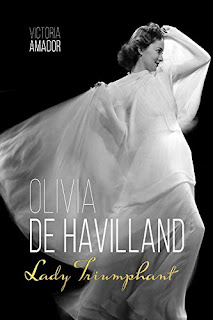
Book review: "Olivia de Havilland: Lady Triumphant"

Olivia de Havilland: Lady Triumphant

Author: Victoria Amador

ISBN: 978-0-8131-5465-7 (trade paper edition)


Olivia de Havilland: Lady Triumphant by Victoria Amador, is one part biography, one part film history, and one part fangirl. The life of Olivia de Havilland is the story of Hollywood's Golden Age. The days when a young woman could get discovered in a play at the Hollywood Bowl while still in her teens and end up with a seven-year contract with Warner Brothers. Such is the story of Olivia de Havilland.

For many young women, being under contract to a major studio, earning a good salary, and working with leading men like Errol Flynn would be exciting enough. Being the "girl" in pictures wasn't de Havilland's idea of a career. She wanted to be taken seriously as an actress; she wanted the career that fellow Warner Brothers colleague Bette Davis had.

Jack Warner never considered de Havilland as anything more than a pretty girl to co-star with leading men like Flynn. As much as she enjoyed working with Flynn (admitting to being in love with him for a time), she wanted more challenging roles than looking pretty in beautiful clothes and period costumes. But de Havilland's beautiful face and charming demeanor hid a strong ambition and a willingness to take risks with her career.

To get the role of Melanie Hamilton in Gone with the Wind, the biggest movie production of the century, de Havilland appealed to Jack Warner's wife. She got the role, an Oscar nomination, and screen immortality. But that wasn't enough for de Havilland; she wanted better roles.

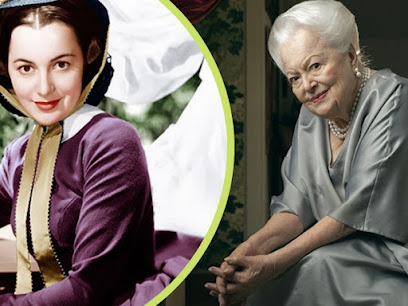
Olivia de Havilland as Melanie Hamiltion, age 23 and at 103

When presented with inferior scripts, de Havilland refused them. This put her on suspension and at odds with Warner. During the studio era, when an actor or actress refused a role assigned to them, they were put on suspension which meant they went without pay until the film they refused to do was completed. The studios would add the time spent on suspension to their contract which would keep a performer under contract indefinitely. When she thought her seven-year contract was up, Warner Brothers told her she owed them another six months work. This didn't sit well with de Havilland and at great peril to her career, she decided to take the studio to court. 

The court decided that contracts could not last past their calendar date, thus siding with the actress in what became known as the "de Havilland decision." That decision was the beginning of the end to the Hollywood studio system. After leaving Warner Brothers, de Havilland went on to win two Best Actress Academy Awards for To Each His Own (1946) and The Heiress (1949).

If you're a classic movie fan, you probably know a lot of the details of de Havilland's career. However, the author has written an engaging biography/memoir that includes her relationship and friendship with the legendary actress, giving us a glimpse at her life in Paris during her latter years. 


Disclaimer: I won Olivia de Havilland: Lady Triumphant in a contest sponsored by Classic Movie Hub. You may like them on Facebook and follow them on Twitter.

Thursday, September 16, 2021

Barbara Stanwyck and Gary Cooper in “Meet John Doe”

Meet John Doe (1941) is a comedy-drama directed by Frank Capra and starring Gary Cooper and Barbara Stanwyck. The screenplay is by frequent Capra collaborator, Robert Riskin. The cinematography is by George Barnes (Rebecca) and the music is by Dimitri Tiomkin (It’s a Wonderful Life).

Gary Cooper and Barbara Stanwcyk


When Ann Mitchell (Stanwyck) gets fired from her job as a newspaper columnist, her final column focuses on “John Doe” who threatens to commit suicide on Christmas Eve because of all the injustice in the world. Ann parlays this fictional column into a sensation for the newspaper, as well as a financial boon to herself. In order to keep the stunt going and circulation rising, Ann and the new editor, Henry Connell (James Gleason) hire John Willoughby (Cooper), a minor league ballplayer who is down on his luck to portray John Doe.

As John Doe, Willoughby makes speeches and personal appearances, causing a sensation whenever he goes out in public. Doe’s love your neighbor philosophy spreads and John Doe clubs pop up all over the country, attracting the attention of the paper’s owner D. B. Norton (Edward Arnold), who has political ambitions. Norton plans on using the John Doe clubs to help elect him president! 

Will his scheme be successful? Will the John Doe movement survive?


Frank Capra (1897 - 1991) was an American film director, producer, and writer. During the 1930s and 1940s, Capra’s films were among the most popular and awarded films. By 1938, Capra has won three Best Director Academy Awards. Born in Italy, Capra immigrated to the United States with his family when he was five years old. By sheer determination and his self-described cockiness, Capra talked his way into the movie business. He found a great home at “Poverty Row” studio, Columbia Pictures. At Columbia he had a major success with It Happened One Night (1934), which swept all the major categories at the Academy Awards that year. This helped turn Columbia Pictures from a Poverty Row studio into a major one. Other Capra successes include You Can’t Take It with You (1938), Mr. Smith Goes to Washington (1939), and It’s a Wonderful Life (1946).

Gary Cooper (1901 - 1961) was an American film actor who was known for his down-to-earth, understated acting style. He was a major star for almost four decades until his untimely death at age 60. Cooper got his start in silent film but easily made the transition to sound. During the early 1930s, he became a major star in films like A Farewell to Arms (1932), The Lives of a Bengal Lancer (1935), and Mr. Deeds Goes to Town (1936). Other popular Cooper films include Meet John Doe (1941), Sergeant York (1941), The Pride of the Yankees (1942), and For Whom the Bell Tolls (1952). Cooper won two Best Actor Academy Awards: Sergeant York and High Noon (1952).

Barbara Stanwyck (1907 – 1990) was an American film star who got her acting start with a supporting role on Broadway in a play called The Noose (1926). The next year she had the lead in another Broadway production, Burlesque which was a huge hit. She eventually made it to Hollywood where her success was not immediate. Director Frank Capra saw something in Stanwyck and he educated her in filmmaking and film acting and the rest is history. Stanwyck was nominated four times for the Best Actress Oscar—Stella Dallas (1937), Ball of Fire (1941), Double Indemnity (1945), Sorry, Wrong Number (1948)—and remains one of the most beloved movie stars from Hollywood’s Golden Age.

The amazing supporting cast includes Edward Arnold, Walter Brennan, Spring Byington, James Gleason, Gene Lockhart, Irving Bacon, and Regis Toomey.


Why watch this film?
  • It’s considered one of director Frank Capra’s classic films, featuring two of his favorite actors (Stanwyck and Cooper).
  • The film has a timeless appeal and seems relevant no matter the era in which it is viewed.
  • It features great performances from Stanwyck and Cooper who were somewhat ubiquitous in 1941.
  • Along with the stars, the film features some of the best supporting players working in film at the time.


To watch the film on YouTube, click the link below.


Meet John Doe trivia:
  • Gary Cooper agreed to star in the film without reading a script. He enjoyed working with Capra on Mr. Deeds Goes to Town, and he wanted to work with Barbara Stanwyck.
  • This was the first film that Cooper and Stanwyck starred in in 1941, the second one was Ball of Fire.
  • It was the first independent film produced by Frank Capra.
  • Ann Sheridan was Capra’s first choice to play Ann Mitchell but Warner Bros. wouldn’t let her take the role because she was in a dispute with the studio.
  • Olivia de Havilland was also considered but she too was in dispute with Warner Bros.

To join the discussion on September 20, 2021, at 6:30 p.m, Central Time, click here. Once you RSVP, you will receive an invitation and a link to the discussion on Zoom.

Discussion questions:
  1. How would you compare and contrast Ann Mitchell and Hildy Johnson? They are both women journalists working in a predominately male working environment. Was one more successful than the other?
  2. How would you compare Professor Potts with Long John Willoughby?
  3. What did you think of the chemistry between Cooper and Stanwyck? Better than Ball of Fire?
  4. As far as your knowledge of Capra movies goes, where do you think this one ranks? Top ten? Top five?
  5. Did anything about the film surprise you?


Friday, April 9, 2021

Celia Johnson and Trevor Howard have a “Brief Encounter”

Brief Encounter (1945) is a British romantic film directed by David Lean and starring Celia Johnson and Trevor Howard. The screenplay was written by Noel Coward which was based on his play Still Life (1936).

Laura Jesson (Johnson) and Dr. Alec Harvey (Howard) are two strangers who meet by chance at a train in England. The two, both married to other people, begin to meet and develop a relationship that goes deeper than friendship. How will these two reconcile their growing love for each other when they’re both attached to other people?

Brief Encounter was only the fourth film that Lean directed. It was also the first time he was nominated for Best Director by the Motion Picture Academy. Lean won two Best Director Academy Awards for The Bridge on the River Kwai (1958) and Lawrence of Arabia (1963). He was nominated for Best Director a total of seven times from a total output of 17 films.

Celia Johnson and Tevor Howard

David Lean (1908 - 1991) was an English film director, producer, screenwriter, and editor. He is considered one of the greatest and most influential directors of all time. Lean started out working in silent films where he worked his way up from teaboy to film editor. He made the transition to talking pictures and in directed his first feature In Which We Serve in 1942 which was made in collaboration with Noel Coward. Lean collaborated with Coward on This Happy Breed (1944), Blithe Spirit (1945), and Brief Encounter (1945) widely considered one of the greatest British films ever made. Today Lean is best known in America for his epic productions of films like The Bride on the River Kwai, Lawrence of Arabia, Doctor Zhivago (1965), and A Passage to India (1984).

Celia Johnson (1908 - 1982) was an English actress who was a star on the stage, film, and television. She was nominated for a Best Actress Academy Award for her performance in Brief Encounter. Other films Johnson starred in include This Happy Breed (1944) and Captain's Paradise (1953). Later in her career, Johnson won a BAFTA Award for Best Actress in a Supporting Role for The Prime of Miss Jean Brodie (1969).


Brief Encounter trivia:

  • The film was shot during the winning days of World War II.
  • This was Trevor Howard’s first major film role.
  • Billy Wilder says he got the idea for his film The Apartment (1960) from a pivotal scene in this film.
  • The film was banned in Ireland on its initial release.
  • Celia Johnson was married to Peter Fleming, the elder brother of Ian Fleming, the creator of James Bond.


To watch the film on YouTube click the link below.


Why watch this movie?

This was director David Lean’s first Best Director Academy Award nomination.

The film is considered one of the best British films of all time.

Lean’s film focuses more on the story than “star power” or a glamorous setting.

It influenced future director Robert Altman.


To join us for a discussion of the film on April 13, 2021, at 6:30 p.m. Central Time on Zoom. To join the discussion click here. Once you RSVP you’ll receive an email and invitation for the Zoom meeting.


Questions for discussion:

  1. Why do you think this film has the reputation for being one of the best films of all time?
  2. What did you think of the characterizations of Johnson and Howard? Were they likable?
  3. Did anything in the film surprise you?
  4. Was the ending satisfying? Did it end the way you had anticipated?


Friday, November 20, 2020

10 Things You May Not Know About Olivia de Havilland

Olivia de Havilland (1916 – 2020) was a two-time Academy Award Winner for Best Actress. She was the last remaining major movie star from Hollywood’s Golden Age when she passed away at her home in Paris, France, at 104.

1. De Havilland was born in Tokyo, Japan. Her father was an English professor at the Imperial University in Tokyo City at the time of her birth. Her parents were both citizens of the United Kingdom so she became an automatic citizen.

De Havilland as Alice in the Saratoga Community Players production
of Alice in Wonderland in 1933

2. She took ballet lessons at four and piano lessons at five and could read before she was six.

3. De Havilland originally planned on becoming a schoolteacher, focusing on English and speech; she received a scholarship to Mills College in Oakland, CA for this pursuit.

4. She was reluctant to become a film actress but was convinced by director Max Reinhardt (who in some respect discovered her) and producer Henry Blake to sign a contract in 1934 with Warner Bros. Her starting salary was $200 a week, an amazing sum for an 18-year-old actress.

Two perfect profiles: Olivia de Havilland and Errol Flynn in Captain Blood

5. At age nineteen, de Havilland starred opposite another newcomer, Errol Flynn in Captain Blood, released in 1935. The pairing of the two stars was so popular with the public that they made a total of eight films together.

6. De Havilland was cast as Maid Marian opposite Errol Flynn in the Technicolor classic The Adventures of Robin Hood (1938). It was one of the most popular adventure films of the late 1930s.


Hattie McDaniel, (Mammy), de Havilland (Melanie), and Vivien Leigh (Scarlett) in
Gone with the Wind

7. She managed to convince Warner Bros Studio head Jack Warner (with the help of his wife) to be loaned to David O. Selznick to play Melanie Hamilton in Gone with the Wind (1939). She would receive the first of five Academy Award nominations for her role. The New York Times wrote as Melanie de Havilland’s performance “is a gracious, dignified, tender gem of characterization.”

8. In 1943 she sued Warner Bros. after her contract was up but the studio contended that she owed them an additional six months for the times she had been suspended for turning down certain roles. She won her case (known today as the De Havilland Law) but Warner Bros. blacklisted de Havilland which resulted in her not working for almost two years.

De Havilland (center) played a patient in a state mental hospital in The Snake Pit (1948)

9. In 1945, de Havilland began filming To Each His Own. She played an unwed mother who gives her child up for adoption. In the film, she ages almost 30 years. She won her first Best Actress Oscar for her performance, marking a remarkable comeback.

De Havilland and Yvette Mieux in Light in the Piazza (1962)

10. She was appointed a Chevaliler of the Legion d’honneur, the highest decoration in France in 2010 by President Nicolas Sarkozy, and was appointed Dame of the Order of the British Empire in 2017 by Queen Elizabeth II.


Sunday, July 26, 2020

Olivia de Havilland dead at 104

As Maid Marion in The Adventures of Robin Hood
Olivia de Havilland, winner of two Best Actress Academy Awards and the last remaining star of Gone with the Wind (1939) has died. She passed away in her sleep on July 25, 2020.

De Havilland was one of the last links to Hollywood’s Golden Age, having starred in so many classic films. Ironically, it was her lawsuit against Warner Brothers that helped bring down the studio system. She sued the studio for adding six months to her seven-year contract and won. Her court victory was known as the “de Havilland decision.” She was blackballed for a time by all the major studios, but she fought back and eventually reached heights few actresses ever attain.

In 1945, de Havilland signed a two-picture deal with Paramount. Her first film for that studio was The Well Groomed Bride co-starring Ray Milland, but it would her second Paramount release that would launch her career to the next level. As an unwed mother who gives up her child for adoption in Michell Leisen’s To Each His Own (1946), she won her first Best Actress Academy Award. Better roles continued with Robert Siodmak’s The Dark Mirror (1946) where she played identical twins—one good, the other a psychotic killer. One of her best roles was as Virginia Cunningham in Anatole Litvak’s The Snake Pit (1948). The film dealt with the treatment of patients suffering from mental illness under severe conditions at a state-run mental institution. The film’s success helped bring about many changes in mental hospitals.

William Wyler tapped de Havilland for the lead in The Heiress (1949). The movie was based on the Henry James novel Washington Square. For her performance, she won the New York Film Critics Award, the Golden Globe, and the Academy Award for Best Actress. Now a two-time Oscar winner, de Havilland’s services were in demand by top directors and studios. Elia Kazan wanted her for the role of Blache DuBois in his film version of A Streetcar Named Desire (1950), but she turned it down. Her Gone with the Wind co-star Vivien Leigh ended up playing Blanche, winning her second Best Actress Oscar in the process. Besides her work on the screen, de Havilland appeared on Broadway in Romeo and Juliet and Candida, taking the latter on the road.

Celeste Holm (left) and Olivia de Havilland in The Snake Pit
During the 1950s, de Havilland starred in Not as a Stranger (1955), receiving top-billing over Robert Mitchum and Frank Sinatra, The Ambassador’s Daughter (1956), and The Proud Rebel (1958). The Proud Rebel, directed by Michael Curtiz co-starred Alan Ladd who would become a lifelong friend. The Ladd family and the de Havilland family remain close to this day. In 1962 she starred in Guy Green’s Light in the Piazza. The film co-starred Rossano Brazzi with Yvette Mimiuex playing de Havilland’s mentally disabled daughter. That same year she starred on Broadway with Henry Fonda in A Gift of Time. The play brought some of the best reviews of her career. The New York World Telegram and Sun said of her performance, “It is Miss de Havilland who gives the play its unbroken continuity. This distinguished actress reveals Lael as a special and admirable woman.” Also that year-a busy one—she published her first book, Every Frenchman Has One about her attempts to adapt to living in France; it became a bestseller.

Olivia de Havilland (left) with Yvette Mimiuex in Light in the Piazza
Her movie career slowed down in the 1960s although she would appear—somewhat reluctantly—in the box office hit Hush...Hush, Sweet Charlotte with fellow Warner Brothers alum Bette Davis. De Havilland replaced Joan Crawford, at Davis’s request when Crawford dropped out of the film. During the 1970s, she still appeared in films, but she also appeared on television in a variety of productions including Roots: The Next Generations (1979) playing the wife of a former Confederate officer played by Henry Fonda. She won a Golden Globe Award for Best Supporting Actress in a Series, Miniseries or Television Film in 1986 for Anastasia: The Mystery of Anna.

This brief obituary of de Havilland is only a small slice of her talent and impact on Hollywood during its most creative period. Thankfully we have her tremendous body of work which will live on for generations to come.

Tuesday, June 12, 2018

10 Things You May Not Know About Henry Fonda

Henry Fonda (1905 – 1982) was one of the most popular and enduring stars of Hollywood’s Golden Age. He starred in dozens of movies, but he loved the theater. On Broadway he starred in Mr. Roberts, Two for the Seasaw, Clarence Darrow, and First Monday in October. Fonda is also the father of Jane and Peter Fonda.

1. Fonda can trace his European ancestral roots to Genoa, Italy and the Netherlands.

2. He was a Boy Scout and reached the rank of Eagle Scout.

3. Dodie Brando (Marlon Brando’s mother) suggested that he try out for a play at the Omaha Community Playhouse, thus launching his acting career.

Henry Fonda and Janet Gaynor in The Farmer Takes a Wife

4. He went to Hollywood in 1935 to star opposite Janet Gaynor in The Farmer Takes a Wife, in the role he originated on Broadway.

5. James Stewart followed his friend Fonda to Hollywood where they shared a home next door to Greta Garbo.

Fonda as Abraham Lincoln in Young Mr. Lincoln
6. In 1939 he starred in three highly successful films: Young Mr. Lincoln, his first picture with the legendary John Ford, Jesse James, costarring Tyrone Power, and Drums Along the Mohawk, costarring Claudette Colbert, also directed by Ford.

7. Ford insisted that Fonda play Tom Joad in the screen adaptation of The Grapes of Wrath (1940) over the objections of Twentieth Century-Fox studio head Darryl Zanuck (he wanted Tyrone Power to play Tom).

Fonda impressed critics with his prat falls in The Lady Eve
8. He surprised the critics with his comedic performance (including his amazing physical comedy that included a half-dozen or so pratfalls) in The Lady Eve (1941), directed by Preston Sturges and costarring Barbara Stanwyck.

9. Fonda enlisted in the United States Navy during WW II; he served for 3 years and was awarded the Navy Presidential Unit Citation and the Bronze Star.

10. He received only two Academy Award Best Actor nominations, during his long film career, for The Grapes of Wrath and On Golden Pond (1981); he won for the latter, making him the oldest recipient of the award.

Thursday, October 5, 2017

10 Things You May Not Know About Deborah Kerr

Deborah Kerr (1921 – 2007) is perhaps best remembered as portraying proper British ladies on the screen, but she had quite a range as an actress. She appeared in comedies, dramas, and musicals with ease.

1. Kerr first trained to be a ballet dancer.

2. Early in her career, she appeared in various walk-on parts in Shakespeare productions in London.

3. At 21 Kerr made her West End debut in Ellie Dunn, stealing the spotlight from established stage stars Edith Evans and Isabel Jeans.

4. Her career in film took off with the Michael Powell and Eric Pressburger production of The Life and Death of Colonel Blimp (1943) in which she played three women.

5. A starring role in another Powell Pressburger production, Black Narcissus (1947) brought Kerr to the attention of Hollywood.

Deborah Kerr with Burt Lancaster in From Here to Eternity, a change of pace
role for the actress

6. Kerr’s first Hollywood role was in the film The Hucksters (1947) costarring Clark Gable with the tagline “Gable’s new star is Deborah Kerr,” in part to introduce American audiences to the pronunciation of Kerr—it rhymes with star!

7. Three times Kerr played a governess in popular films: The King and I (1956), The Innocents (1961), and The Chalk Garden (1964).

8. Kerr was nominated six times for Best Actress Academy Awards, but never won; she was awarded an honorary Oscar in 1994.

9. The actress starred with good friend Robert Mitchum in three films: Heaven Knows, Mr. Allison (1957), The Sundowners and The Grass is Greener (both 1960).

10. Kerr has a star on the Hollywood Walk of Fame at 1709 Vine Street.


Saturday, July 1, 2017

Happy 101st birthday to Olivia de Havilland!

Today is Olivia de Havilland’s 101st birthday. The screen legend is the only surviving major cast member of the Civil War classic Gone With the Wind (1939). She’s also the most famous surviving actress from Hollywood’s Golden Age, outliving her younger sister, Joan Fontaine who passed away in 2013 at 96.
Olivia de Havilland in perhaps her most famous role as Melanie Hamilton
in Gone With the Wind

De Havilland is a two-time Oscar winner for To Each His Own (1946) and The Heiress (1949). Her first Oscar nomination was for Best Supporting Actress for her role as Melanie Hamilton in Gone With the Wind. She received two other Best Actress nominations for Hold Back the Dawn (1941), famously losing to her sister, and The Snake Pit (1948). For The Snake Pit she won the National Board of Review Award and New York Film Critics Circle Award for Best Actress. The Snake Pit exposed the poor conditions in state mental institutions. It had such an impact on audiences in 1948 that many states adopted new rules and regulations regarding the treatment of mental patients in state-run institutions.

De Havilland and her attorneys recently announced that they are suing FX and producer Ryan Murphy “over unauthorized use of her [de Havilland’s] identity in Feud: Bette and Joan.” De Havilland sued Warner Bros. in 1943 over the studio practice of adding the time an actor spent on suspension to his/her long-term contract. Her suit helped end the power and control of the major Hollywood studios which led to their decline.

De Havilland’s first film role was in A Midsummer Night’s Dream (1935). Her last big screen appearance was in The Fifth Musketeer (1979). In between there were some great movies and performances. Below is a list of some of the best.

Captain Blood (1935) – her first pairing with Errol Flynn
The Adventures of Robin Hood (1938) – another pairing with Flynn (their third) in glorious Technicolor

Dodge City (1939) – her fifth picture with Flynn, also starring Ann Sheridan; one of the earliest Technicolor westerns
Gone With the Wind (1939) – her first Academy Award nomination for Best Supporting Actress; she lost to costar Hattie McDaniel
Santa Fe Trail (1940)) – one of the top films of the year and another pairing with Flynn
They Died with Their Boots On (1941) – the final pairing of de Havilland with Flynn
The Strawberry Blonde (1941) – a great screen pairing with James Cagney and an up-and-coming Rita Hayworth
Hold Back the Dawn (1941) – on loan to Paramount, she was nominated for Best Actress under the direction of Mitchell Leisen; she lost to her sister Joan Fontaine for her work in Suspicion (1941)

Charles Boyer and de Havilland in Hold Back the Dawn

The Male Animal (1942) – good comedy role based on the James Thurber Broadway hit co-starring Henry Fonda
Princess O’Rourke (1943) – delightful comedy that was a forerunner to Roman Holiday (1953)
To Each His Own (1946) – her first Best Actress Oscar win, once again she was under the direction of Mitchell Leisen
The Dark Mirror (1946) – interesting dual role for de Havilland, playing identical twin sisters, one good one bad
The Snake Pit (1948) – an amazing performance of a woman suffering from mental illness


The Heiress (1949) – de Havilland goes from meak and mild to cold and ruthless in this classic based on Henry James’s Washington Square
My Cousin Rachel (1952) – notable as Richard Burton’s film debut, but it features a finely shaded performance from de Havilland as the mysterious Rachel
The Proud Rebel (1958) – one of my favorite de Havilland performances; she plays a tough woman rancher who befriends a man and his handicapped son

de Havilland with David Ladd, Alan Ladd

Light in the Piazza (1962) – beautifully photographed melodrama set in Rome
Hush…Hush, Sweet Charlotte (1964) – interesting film for the pairing of de Havilland with old friend Bette Davis

Friday, July 1, 2016

Happy Birthday, Olivia de Havilland...100 years young!

Olivia de Havilland (1916) turns 100 today. Not only is de Havilland the last surviving cast member of Gone with the Wind (1939), but she’s also one of the last links to Hollywood’s Golden Age. Her career in Hollywood started in 1934 when she signed a five-year contract with Warner Bros.

Olivia de Havilland as Maid Marion  in The Adventures of Robin Hood, directed by Michael Curtiz

As a contract player, de Havilland performed in a variety of movies from the classical, A Midsummer Night’s Dream (1935) to the adventure spectacle, The Adventures of Robin Hood (1938). A seemingly effortless performer, she excelled in both comedy and drama. In 1935 she costarred with Errol Flynn in the swashbuckler adventure Captain Blood. Flynn and de Havilland’s classic good looks plus their on-screen chemistry made them one of the movies most popular screen teams. Other collaborations included Charge of the Light Brigade (1938), Four’s a Crowd (1938), Dodge City (1939), Santa Fe Trail (1940), and They Died with Their Boots On (1941).

As Melanie Hamilton in Gone with the Wind directed by Victor Fleming

When David O. Selznick acquired the rights to Margaret Mitchell’s best-selling novel, Gone with the Wind, every actress in and out of Hollywood wanted to play Scarlett O’Hara except de Havilland. She had her sights set on playing Melanie Hamilton. Unknown to de Havilland, Selznick wanted her for the part. Jack Warner at first refused to loan her to Selznick, but de Havilland appealed to Warner’s wife and she got the role and an Oscar nomination for Best Supporting Actress (she lost to Hattie McDaniel).
With Charles Boyer in Hold Back the Dawn, directed by Mitchell Leisen

With the success of Gone with the Wind, you’d think that Warner Bros. would have given de Havilland bigger and better roles, but she found some of her best parts on loan to other studios. She made Hold Back the Dawn (1941) at Paramount and received her first Academy Award nomination for Best Actress, losing famously to her younger sister Joan Fontaine. Eventually, she would fight Warner Bros. in court over the terms of the typical Hollywood contract and their habit of putting stars on suspension for turning down roles. She won the case and in many ways it was the beginning of the end of the studio system.

With John Lund in To Each His Own, directed by Mitchell Leisen

With her court case behind her, de Havilland signed a contract with Paramount. Her first picture for them was the comedy, The Well Groomed Bride (1946) costarring Ray Milland. But it was her next picture, To Each His Own (1946) directed by Mitchell Leisen, that would be one of her greatest successes. The movie was a hit and de Havilland won the Best Actress Oscar for her performance. More great roles followed, including playing twins—one good, one evil—in The Dark Mirror (1946). She starred in the groundbreaking film about a woman suffering from mental illness in The Snake Pit (1948). For that performance she was nominated for another Best Actress Oscar. She didn’t win that year, but her performance was honored with awards from the National Board of Review, New York Film Critics Circle Award, and the Venice Film Festival Volpi Cup. With all the honors and new acclaim, de Havilland was in demand; all the major directors in Hollywood wanted to work with her.

Playing identical twins in The Dark Mirror, directed by Robert Siodmak

Another great role came her way when she starred in the William Wyler production of The Heiress (1949). De Havilland’s performance is a tour de force of emotion with her character starting out as an innocent and shy woman to one who becomes worldly-wise, hard and steely by the film’s end. The Academy honored de Havilland with another Best Actress Oscar. Once again, de Havilland was in demand from the best directors in Hollywood. Elia Kazan wanted her to star as Blanche DuBois in A Streetcar Named Desire (1951). She turned that role down, saying she wasn’t able to relate to the character being too happy after the birth of her son. Ironically, the role went to Vivian Leigh, her costar in Gone with the Wind. Leigh would go on to win her second Oscar.

With David Ladd and Alan Ladd in The Proud Rebel, directed by Michael Curtiz

Other big roles came her way including star turns in My Cousin Rachel (1952), Not as a Stranger (1955), The Ambassador’s Daughter (1956), and one of my personal favorites, The Proud Rebel (1958) costarring Alan Ladd who would become a lifelong friend. After the film Libel (1959), de Havilland’s film career began to slow down. She made occasional films like the romantic drama Light in the Piazza (1962), Lady in a Cage (1964), and to the help out old friend Bette Davis, she replaced Joan Crawford in Robert Aldrich’s Hush…Hush Sweet Charlotte (1964). During the 1970s, she appeared in supporting roles in several movies. She also starred in television movies, including Roots: The Next Generation (1979) as the wife of a former Confederate officer played by Henry Fonda. The production reunited the two stars who played husband and wife in The Male Animal (1942). In 1986 de Havilland won a Golden Globe Award for Best Supporting Actress playing the Dowager Empress Maria in the miniseries Anastasia: The Mystery of Anna.

A great beauty and a great talent, de Havilland was and is one of the true legends of classic Hollywood.


Turner Classic Movies (TCM) is honoring de Havilland as the July star of the month.

Friday, April 1, 2016

Judy Garland is Turner Classic Movies's April Star of the Month

Film icon Judy Garland (1922-1969) is Turner Classic Movies’s April Star of the Month. TCM will be screening Garland’s films every Friday. Garland was one of Hollywood’s top movie musical talents during the 1930s and 1940s.

The Wizard of Oz (1939) made Garland a star at Metro-Goldwyn-Mayer where she reigned as the studio’s top musical star. At her home studio she starred in For Me and My Gal (1942), Presenting Lily Mars (1943), Meet Me in St. Louis (1944), The Harvey Girls (1946), Till The Clouds Roll By (1946), Easter Parade (1948), In the Good Old Summertime (1949), and Summer Stock (1950).

Margaret O'Brien and Judy Garland in Meet Me in St. Louis

Garland also excelled in dramatic roles like The Clock (1945), but the studio loved Garland and musicals because they were big business. Meet Me in St. Louis was M-G-M’s biggest hit since Gone With the Wind* (1939). In 1950 Garland and M-G-M parted ways. She appeared on television in the 1950s and started performing in live concerts that were very popular. In 1954 Garland starred in a musical remake of A Star is Born (1954). The film was a hit with the public and critics, but it lost money due to its huge budget. In spite of this Garland was nominated for Best Actress. Many thought Garland was the favorite to win, but Grace Kelly bested her for her performance in The Country Girl.

Garland in The Harvey Girls

Garland had a dramatic success in the 1961 film Judgment at Nuremberg for which she was Golden Globe and Oscar- nominated for Best Supporting Actress. She starred alongside Burt Lancaster in A Child is Waiting (1963), and with Dirk Bogarde in I Could Go On Singing (1963), which was her last film. In 1967, Garland was cast as Helen Lawson in the movie version of Valley of the Dolls. Garland was fired for missing rehearsals and was replaced by Susan Hayward.

Garland died on June 22, 1969 of an overdose of barbiturates.


*GWTW was co-produced with Selznick International Studios

Thursday, November 19, 2015

Chicago Film Club field trip: “Roman Holiday” November 29 at The AMC East

Where: AMC East 21, 322 East Illinois, Chicago, IL
When: November 29, 2015
Time: 2:00 p.m.
Hosted by Stephen Reginald

Special Fathom Feature: Enjoy a specially produced introduction from Turner Classic Movies that will give insight into William Wyler’s classic.

Fathom Events, Turner Classic Movies and Paramount Pictures are delighted to bring the 1953 American romantic-comedy classic, Roman Holiday, back to the big screen in cinemas nationwide on Sunday, November 29.


Starring Gregory Peck and Audrey Hepburn and directed by William Wyler, Roman Holiday won three Academy Awards® for Best Actress in a Leading Role, Best Costume Design and Best Writing. In this timeless classic, Hepburn is at her transcendent best as a sheltered princess who falls for an American newsman in Rome.

This film will be shown in the same aspect ratio as when it was originally released in cinemas.

The purchase tickets in advance click here.

Run Time: 2 hours and 15 minutes (approximate). Let's try to meet at 1:45 p.m. by the concessions, theater level.


Join the Chicago Film club; join the discussion
Once a month we screen a classic film and have a brief discussion afterward. For more information, including how to join (it’s free), click here. The Venue 1550 is easily accessible by the CTA. Please visit Transit Chicago for more information on transportation options.

Wednesday, November 26, 2014

Book Review: And the Winner Really Is by Ken Grout

Available at Amazon
And the Winner Really Is: The Definitive Ranking of the Greatest Actors and Actresses in Oscar History by Ken Grout. Mixing statistics, motion picture history, and some common sense, Grout has come up with an interesting formula to determine who is the real Oscar champ.

Grout’s book considers all Academy Award winning actors and actresses as well as those nominees who never actually won the award (you see, using Grout’s system, you earn points for each nomination). That’s why Irene Dunne (nominated five times, but never a winner) ranks higher on the list than Clark Gable (nominated 3 times with one win).

To deal with ties, Grout came up with some steps. Here are four that helped crown the champions: Number of Career Wins, Number of Career Nominations, Career Performances in Best Picture Winners, and Career Performances in Best Picture Nominees.

Fan favorites like Cary Grant (two nominations and no wins—honorary Oscars don’t count) and Maureen O’Hara (no nominations, one honorary Oscar) don’t make the list at all. The book also includes the top “Never-Won’s.” According to Grout’s research, “There are twenty-four individuals in Oscar history who have been nominated for at least four competitive acting Oscars,” but haven’t won. Who do you think tops this list? Hint: It’s a man. In fact number two is also a man and a good friend and professional rival of number one.

Sisters Joan Fontaine and Olivia de Havilland have three Best Actress Oscars between them.

Grout charts the dominance of Bette Davis from the late 1940s to the late 1960s. He also adds some fun stats like who are the greatest families in Academy Award history. Spoiler alert: It’s the Fondas: Jane, Henry, and Peter. What Oscar winner is also a champion at the box office?

If you love the Oscars and the movies, you’ll have a ton of fun with And the Winner Really Is. It’s already found a place in my group of movie reference books. I know I’ll be referring to it for years to come.

And the Winner Really Is is available for purchase from Lemonyyellow Books and Amazon.


Saturday, December 10, 2011

Re-Dunne: Original Irene Dunne Films Remade

Rex Harrison and Dunne in Anna and the King of Siam
A few weeks ago, a Twitter friend of mine Bobby Rivers, (@BobbyRiversTV) and I were talking movies, specifically, Irene Dunne movies. He remarked that it is amazing how many of Dunne’s movies have been remade. We started trading movie titles and compiled quite a list. I thought the list was long enough that it was worthy of a blog post.

An Incredible Body of Work
Dunne, one of the movie screen’s great actresses, left an incredible body of film work. Many of the films she starred in are considered classics or near classics today. Dunne started working in films at the beginning of the sound era. Some of the films she made were remakes of silent films, but most of the movies she starred in were not remakes, but properties tailored specifically for her talents.

Dunne and John Boles starred in the 1932 version.
Let’s Do It Again
Movies are remade for a few reasons. One reason is it’s easier to go with a known property than to create something from scratch. Another reason is to update a popular film using new technology like color photography to make it palatable to a younger generation of filmgoers. Since I’m the Classic Movie Man, I generally prefer originals as opposed to remakes. And most of Dunne’s versions hold up and are in most cases superior to the remakes, in my opinion.

Below is a list of Dunne’s films that were remade and the actresses who starred in the roles Dunne originated.


Cimarron* 1931 (1960-Maria Schell)
Back Street 1932 (1941-Margaret Sullivan; 1961-Susan Hayward)
The Age of Innocence 1934 (1993-Michelle Pfeiffer)
Roberta 1935 (1952-Kathryn Grayson; remade as Lovely to Look At)
The 1936 version featured Paul Robeson singing “Ol’ Man River.”
Magnificent Obsession 1935 (1954-Jane Wyman*)
Show Boat 1936 (1951-Kathryn Grayson)
The Awful Truth* 1937 (1953-Jane Wyman; remade as Let’s Do it Again)
Love Affair* 1939 (1957-Deborah Kerr, remade as An Affair to Remember; 1994-Annette Benning)
My Favorite Wife 1940 (1962-Doris Day; remade as Move Over Darling)
A Guy Named Joe 1943 (1989-Holly Hunter; remade as Always)
Anna and the King of Siam 1946 (1956-Deborah Kerr*; remade as The King and I; 1999-Jodie Foster remade as Anna and the King)

If you want to learn more about movies, TV, and pop culture, you should follow Bobby Rivers on Twitter and find him on Facebook. Rivers was one of the original VH1 hosts and was an entertainment reporter for ABC News.


*Academy Award nominations for Best Actress

This post corresponds with the class Elegant and Madcap: The Incredible Versatility of Irene Dunne—Class starts November 16, 2011. Meets on Wednesdays from 7p.m. - 10 p.m. for six weeks. Classes are held at Facets Film School on Fullerton Ave. in Chicago, IL.


Related Posts Plugin for WordPress, Blogger...