Showing posts with label Hollywood. Show all posts

Tuesday, April 15, 2025

2025 Turner Classic Movies Film Festival: What movies will I see?

Turner Classic Movies Film Festival Plan – Subject to change

Planning for the Turner Classic Movies Film Festival (TCMFF) is always tough. The way movies are scheduled means you have to make tough choices. Often, you are disappointed that a movie that you really love is scheduled at the same time as another movie you really love.

Here is my schedule (subject to change) at this moment in time.

Thursday April 24

7-8 p.m. Teacher’s Pet (1958) – I’ve never seen this film, and I’m excited to see it on the big screen with an audience. And for this night only, it doesn’t conflict with any other movie I’d like to see.

Clark Gable and Doris Day in Teacher's Pet

10 p.m. – 12 a.m. If I can stay awake, I may see Hud (1963) in the Egyptian Theatre. It’s been years since I’ve seen this film and never in the theater, so this could be fun.

Friday April 25

9 a.m. – 11:30 a.m. Thunderball (1965) starring Sean Connery as James Bond. Screening in the Chinese Multiplex House, and Luciana Paluzzi will be at the post-screening. Cinderella (1950) is screening at the El Capitan Theatre at 10 a.m. I’m tempted to go see it because I haven’t seen it since my older sister took me to see it when I was a kid and the El Capitan is a really beautiful theater. I’ll probably end up seeing the Bond film. Odd decision between Thunderball and Cinderella, but that’s how it goes at the TCMFF.

12:15 p.m. – 2:15 p.m. This is a toss-up. The Time Machine (1960) and Babe (1995) are both scheduled at the same time. The Time Machine is in the small Chinese Multiplex Theatre 4.

3 p.m. – 5 p.m.; 3:15 p.m. -5 p.m.; 3:30 – 5:15 p.m. Three movies that I would like to see, but I have to choose one. In order of show times it’s: Bringing Up Baby (1938), The Enchanted Cottage, and Edge of the City (1957). Which movie would you choose?

6:30 p.m. The Lady Eve (1941) is a movie I have to see on the big screen with an audience. It’s one of my favorite Preston Sturges films, and it stars two legends of the screen: Barbara Stanwyck and Henry Fonda.

Henry Fonda and Barbara Stanwyck in The Lady Eve

9 p.m. – 11:15 p.m. Now, Voyager (1942); 9:15 – 10:45 p.m. Lili (1953) Another toss-up and two completely different movies. I may just flip a coin on this one. It might be tough getting into Lili since it’s screening in Theatre 4.

Saturday April 26

9 a.m. – 1 p.m. Ben-Hur (1959) is being presented in a world premiere restoration in the Chinese Theatre. I can’t think of a better theatre to see this Academy Award-winning epic. If I see this film, that means I’m giving up a chance to see two other movies. I would like to see Daisy Kenyon (1947) at the Egyptian Theatre in a nitrate print.

3:45 p.m. – 5:30 p.m. To Be or Not To Be (1942) is screening at Theatre 4 so it could be tough getting into this one, but I’m going to try. This Ernst Lubitsch comedy is one of the best of the era.

9 p.m. – 11:15 p.m. A Guy Named Joe is a movie I wanted to see as soon as it was announced. The film stars Spencer Tracy and Irene Dunne, with a star-making turn by a young Van Johnson. It’s in Theatre 4, so I’ll have to get in line early.


Sunday April 27

Sunday can be a crap shoot with the TBA movies being revealed. As of this moment, I don’t know what I want to see. Nothing is a must-see for me, although there are some movies I’d like to see on the big screen, like Splendor in the Grass (1961) at 11:45 a.m. in Theatre 1. I may go see the silent version of Beau Geste (1926) in the Egyptian Theatre at 7:30 p.m.

Choosing which movies to see is tough, and if past years are any guide, I’ll change my mind when I get to LA.

Wednesday, February 2, 2022

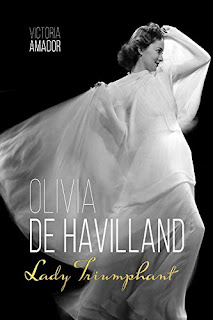
Book review: "Olivia de Havilland: Lady Triumphant"

Olivia de Havilland: Lady Triumphant

Author: Victoria Amador

ISBN: 978-0-8131-5465-7 (trade paper edition)


Olivia de Havilland: Lady Triumphant by Victoria Amador, is one part biography, one part film history, and one part fangirl. The life of Olivia de Havilland is the story of Hollywood's Golden Age. The days when a young woman could get discovered in a play at the Hollywood Bowl while still in her teens and end up with a seven-year contract with Warner Brothers. Such is the story of Olivia de Havilland.

For many young women, being under contract to a major studio, earning a good salary, and working with leading men like Errol Flynn would be exciting enough. Being the "girl" in pictures wasn't de Havilland's idea of a career. She wanted to be taken seriously as an actress; she wanted the career that fellow Warner Brothers colleague Bette Davis had.

Jack Warner never considered de Havilland as anything more than a pretty girl to co-star with leading men like Flynn. As much as she enjoyed working with Flynn (admitting to being in love with him for a time), she wanted more challenging roles than looking pretty in beautiful clothes and period costumes. But de Havilland's beautiful face and charming demeanor hid a strong ambition and a willingness to take risks with her career.

To get the role of Melanie Hamilton in Gone with the Wind, the biggest movie production of the century, de Havilland appealed to Jack Warner's wife. She got the role, an Oscar nomination, and screen immortality. But that wasn't enough for de Havilland; she wanted better roles.

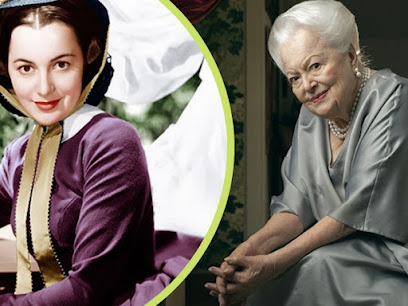
Olivia de Havilland as Melanie Hamiltion, age 23 and at 103

When presented with inferior scripts, de Havilland refused them. This put her on suspension and at odds with Warner. During the studio era, when an actor or actress refused a role assigned to them, they were put on suspension which meant they went without pay until the film they refused to do was completed. The studios would add the time spent on suspension to their contract which would keep a performer under contract indefinitely. When she thought her seven-year contract was up, Warner Brothers told her she owed them another six months work. This didn't sit well with de Havilland and at great peril to her career, she decided to take the studio to court. 

The court decided that contracts could not last past their calendar date, thus siding with the actress in what became known as the "de Havilland decision." That decision was the beginning of the end to the Hollywood studio system. After leaving Warner Brothers, de Havilland went on to win two Best Actress Academy Awards for To Each His Own (1946) and The Heiress (1949).

If you're a classic movie fan, you probably know a lot of the details of de Havilland's career. However, the author has written an engaging biography/memoir that includes her relationship and friendship with the legendary actress, giving us a glimpse at her life in Paris during her latter years. 


Disclaimer: I won Olivia de Havilland: Lady Triumphant in a contest sponsored by Classic Movie Hub. You may like them on Facebook and follow them on Twitter.

Saturday, April 27, 2019

2019 Turner Classic Movies Film Festival (#TCMFF) Recap: The Works!

I was excited to be attending my fifth Turner Classic Movies Film Festival this April 11 – 14. The fact that it was the festival’s 10th anniversary and TCM’s 25th anniversary made it something special indeed.

Getting to LA from Chicago is pretty easy, but I’m always nervous up to the time of departure. Did I pack everything I need? Will the flight be on time? Will I finally make the #TCMParty class picture? All that anxiety disappears once I’m on the plane and in the air. Then it’s what films will I see? Here’s how it went down:

Thursday 4/11/19
After arriving in LA and checking into my room, it was off to get some lunch and then over to the Hollywood Roosevelt Hotel’s Blossom Room for the meet and greet at Club TCM. It’s always great to see folks you haven’t seen in a year and catch up face to face, which is really one of the highlights of the festival.

Last year I missed the #TCMParty class picture due to a miscommunication. This year I was determined to get into the 2019 picture if it killed me. The fact that it was the 10th anniversary really didn’t factor in, but it turned out to be fortuitous. Because I’m not very tall, I was in the front row when they were staging us for the picture. I was holding the inflatable “0” next to Aurora (@CitizenScreen) who was holding the “1.”. After numerous takes, the photographers got what they wanted: some pics and video footage of all of us cheering. Check out the photo below. Yes, that’s me, holding the “0” (No cracks please!).

How many people can you recognize from this photo? Click image to enlarge.

As a Classic Pass holder, I wasn’t going to the red carpet event movie screening (When Harry Met Sally),so I decided to see Gentlemen Prefer Blondes (1953) at 6:45 p.m. at the Egyptian. The digital transfer was perfect; the movie looked brand new and Jane Russell and Marilyn Monroe never looked better in color. Seeing this classic with an audience was a hoot. The theater crowd loved it and made seeing it on the big screen a real joy.


Next up, I went back to the Egyptian for The Bachelor and the Bobby-Soxer (1947) at 9:30 p.m. I’ve seen this movie at least a dozen times, but the idea of seeing in on the big screen in the Egyptian with an appreciative audience couldn’t be denied. However, the introduction by film critic and journalist Tara McNamara was odd and in many ways inappropriate. The way she tried to cast this movie in light of the #MeToo movement was disturbing and quite literally made little to no sense at all. I really didn’t understand the point she was trying to make, nor did she seem to portray Shirley Temple in the best light. It was the strangest introduction of the festival. Fortunately the movie and the performances of Cary Grant, Myrna Loy, and Shirley Temple were comic gold. Also impressive were Ray Collins—in a rare comedic role—and Rudy Vallee.

After the whirlwind of the first night of the festival, it’s time for some sleep to rest up for Friday, the first full day of films!

Friday 4/12/19

I made up my mind that I was going to see The Postman Always Rings Twice (1946) at 9 a.m. at the Egyptian (I always seem to be at this theatre). I was counting on the pre-code Merrily We Go To Hell (1932) being one of the “To Be Announced” films on Sunday. Did my crapshoot pay off? We’ll soon find out.

The Postman Always Rings Twice is one of the most interesting films noir of the 1940s. It has two very attractive leads in Lana Turner and John Garfield, which isn’t unusual for the genre. What makes it different from many other films noir is the fact that most of the action takes place in the bright sunshine of California. There are some night scenes for sure, but darkness and shadows don’t hide most of the action. And for most of the film, Turner is costumed in glowing white outfits that are so bright they’re almost blinding at times. The M-G-M polish is evident in the entire production, but that doesn’t keep it from being a worthy entry into the films noir canon. Turner and Garfield smolder, but there are great supporting performances from Cecil Kellaway as Turner’s hapless older husband, Leon Ames as the fiesty District Attorney, and Hume Cronyn as the shiftiest of shifty defense lawyers.


At 12:00 p.m. I was back, where else, but the Egyptian for a screening of Sleeping Beauty (1959). My older sister took me to see just about all of the classic Disney movies, but I had never seen this film before. Author and historian, Mindy Johnson, introduced the film. She interviewed two of the film’s animators: Jane Baer and Floyd Norman. Baer and Norman were very young when they worked on Sleeping Beauty. They described what it was like to work as a Disney animator (It was fun!) and other tales from the old days of animation before computers came on the scene. The movie was really enjoyable and the old-school animation was charming and visually appealing. I was glad that I was able to see this classic for the first time the way it was presented back in 1959.

Randolph Scott, Irene Dunne, and Cary Grant in My Favorite Wife

At 2:45 p.m. I found myself, where else, but at the Egyptian! This time I was there for another comedy classic. My Favorite Wife (1940) is one of my favorite Irene Dunne and Cary Grant movies—truth be told, I love all three movies they made together—and one that still brings the laughs due in great part to the extraordinary talents of the two leads. Dunne and Grant were so natural in their comedy performances and together they’re comedy gold. Mario Cantone introduced the film. After his introduction he interviewed Jennifer Grant, daughter of Cary and Dyan Cannon, on what it was like to have Cary Grant as her dad. It was great! Special treat at this screening was the opportunity to share it with Melanie Hooks (@melaknee13), producer of my favorite podcast, Classic Movie Recall. We had connected some months earlier on social media so it was especially sweet to meet her in person.
I “escaped” the confines of the Egyptian for my next movie at 6 p.m. I went to Chinese Multiplex House #1 to see a movie that I had never seen before, Day for Night (1973). Directed by Francois Truffaut, I remember this film being heralded as a classic the moment it was first released. In French with English subtitles, the film stars Jacqueline Bisset, Jean-Pierre Aumont, and Jean-Pierre Leaud. This movie about making movies was interesting and engaging in the way it gave you a glimpse into how movies are made woven into the narrative. Eddie Muller introduced the movie and then interviewed star, Bisset. Muller admitted that the movie changed his life as a young man and his admiration for the film and its lead actress was plain to see. Bisset was gracious and classy during the interview, explaining the differences between making movies in the U.S. and Europe.

Cornell Wilde, Richard Widmark, and Ida Lupino in a tense scene from Road House

I may have grabbed something to eat, but honestly, I don’t do too much eating during the festival. At most I eat two meals, but it’s mostly just one meal a day, with a few protein bars in between. At 9:30 p.m. I was back at the Egyptian for Road House (1947). This is one of my favorite Ida Lupino movies. It’s not a film that will change your life, but you’ll have a lot of fun watching it. I couldn’t pass up the opportunity to see the nitrate print of this film noir classic on the big screen. Boy was it a blast. The film was introduced by Sloan De Forest who was an enthusiastic fan of Lupino and the film and joked that she was glad she “could give Eddie Muller a break.” The rest of the cast was terrific and included Cornel Wilde, Celeste Holm, and Richard Widmark at his looniest.

After the fun and excitement of seeing Road House on the big screen, it was time for some shuteye. Another big day of watching movies would start again on Saturday.

Saturday 4/13/19

I was up bright and early to head back to Chinese Multiplex House #1 to see the 1951 science fiction classic When Worlds Collide. I remember seeing this film on television growing up. It was usually on Saturday afternoons before the days of cable. Comedian Dennis Miller introduced the film. Miller then introduced and interviewed star Barbara Rush. Rush looked every inch the movie star even at 92! Miller was obviously smitten with Rush, which made the interview a joy. Seeing the movie on the big screen with an audience was fun. The special effects, which were quite impressive when first released, seem kind of simple today, but the story was compelling and there were many parts of the film that I had forgotten. The real treat was the opportunity to see Rush in person though and a treat it was.


After When Worlds Collide, I walked over to The Legion Theater Post 43, the newest theater to the festival. The only theater owned and operated by veterans, it was one of the hits of the festival. Beautifully restored, with some of the most comfortable movie theater seating I’ve ever experienced, The Legian was a real treat. At 12 p.m. they screened Fox: An Appreciation (2019). The film was a series of clips that were introduced by Shawn Belson, Archivist at Twentieth Century-Fox. The history of the studio was told via clips of the studio’s many classic films. This presentation wasn’t as great as I had hoped it would be, but I was glad I had to opportunity to see it in such an amazing theater.


At 2:45 p.m. I went to Chinese Multiplex House #6 to see Love Affair (1939) starring Irene Dunne and Charles Boyer. An Affair to Remember (1957) is a remake of  the’39 original and perhaps the more famous of the two, but not the best version in my opinion. Dana Delany who introduced the film also found Love Affair the superior version. She shared her analysis of the film and her admiration for its two stars. Dunne and Boyer made three films together, but this is undoubtedly their most popular and enduring. Delany apologized for not being able to watch the movie with us. She said she was attending a memorial service for Luke Perry, which made the audience sigh. She said Perry loved classic films and that the two would often talk about classic movies when working together during down time. She dedicated the film to Perry.

Lawrence Olivier and Merle Oberon
Next on my list was another trip to The Legion Theater to see Wuthering Heights (1939) starring Merle Oberon, Lawrence Olivier, and David Niven. Had it not been for Gone With the Wind, Wuthering Heights might have been the Best Picture winner that year. It’s a beautifully mounted film, with a wonderful score and terrific black and white cinematography by Greg Tolland, not to mention excellent direction from William Wyler. Alex Trebek, who looked terrific, introduced the film. He said he wasn’t going to accept the invitation to participate in this year’s festival because it takes some preparation and he said, “I had other things going on.” But when he found out they wanted him to introduce Wuthering Heights, one of his all-time favorite films, he said yes. His introduction was insightful and he recommended that fans of the film not go out and read the novel, which is much darker. He’s not kidding; the novel is no picnic!


I hung around The Legion Theater to see Indiscreet (1958) at 9:15 p.m., a movie I had never seen. Before the film some friends and I went downstairs to the bar to enjoy a drink before the movie started. One of the pluses of the Legion is their full bar. Even if you weren’t drinking, it was a great place to hang out and talk movies and soak up its rich history. Indiscreet was directed by Stanley Donen and starred Cary Grant and Ingrid Bergman. It was a delight from start to finish. It was sophisticated and beautifully photographed.

Well, it was the end of another day of movies. Back to hitting the sack to rest up for the last (sigh!) day of the festival.

Sunday 4/14/19

Sundays at the festival are always bittersweet. There’s a full day of movies, but you know it’s the last day and that’s kind of sad. I was hoping the pre-Code Merrily We Go To Hell (1932) would be one of the TBA movies and I lucked out! At 9 a.m. it was presented at The Legion Theater in glorious black and white. The film starred Sylvia Sydney and Fredric March with Dorothy Arzner directing. Also in the cast was Cary Grant in a small role. Sydney was adorable as March’s much put-upon wife. There were times when she smiled that she reminded me of Gene Tierney. March was drunk during most of the action, which is a fairly typical scenario for pre-Code films. What was interesting for me was seeing character actress Esther Howard in a substantial role as the editor of the paper March worked for. I’m used to her doing comical bits in Preston Sturges movies, so seeing her as a younger woman was a bit of a revelation.


Since it was Palm Sunday, I thought catching The Robe (1953) at the Egyptian would be fitting. The Robe made history as the first film released in Cinemascope setting the standard for widescreen film production and was a forerunner to Panavision. Attending the movie were Bob Koster, director Henry Koster’s son, and Victoria Mature, star Victor Mature’s daughter. Unfortunately, neither were interviewed before the film, which was disappointing. In any event, seeing The Robe in a restored transfer was worth it. It looked brand new and seeing Richard Burton, Jean Simmons, Victor Mature, and Michael Rennie in their primes in the glory of Cinemascope and stereophonic sound was just plain awesome.


After The Robe, it was off to Club TCM for The Complicated Legacy of Gone With The Wind” at 2:30 p.m. Film historian and author Donald Bogle hosted the panel. The panel consisted of film producer Stephanie Allain; author and film critic Molly Haskell; and Professor of Cinema and Media Studies at the University of Chicago, Jacqueline Stewart. I was a little worried how this panel would go, but the discussions and insights into this classic film were really enlightening. All of the panelists liked the movie and thought it was worthy of public screenings. They all acknowledged that there were problems with the film as far as its depiction of slavery is concerned, but all agreed that the film has a lot to offer modern audiences. The production, even after 80 years, holds up amazingly well. The acting of the main players also holds up, especially Vivian Leigh’s portrayal of Scarlett O’Hara as well as Hattie McDaniel’s ground-breaking role as Mammy. The panelists could have discussed the film for hours and we would have stayed and listened. It was really a very enjoyable experience.

Donald Bogle, Stephanie Allain, Molly Haskell, and Jacqueline Stewart
With all that background information now in my head, it was time to see the genuine article, Gone With The Wind at 4:30 p.m. on the big screen in the Chinese Theatre. And what a treat it was. The new digital transfer was absolutely stunning. The color was perfect and so was the sound. The story of the love affair between Scarlett O’Hara and Rhett Butler set against the backdrop of the American Civil War and Reconstruction really needs no explanation. The audience ate it up—one woman was dressed in Scarlett’s curtain dress, minus the rod—as if seeing it for the first time. And honestly, when you see a movie in a theater like the Chinese, it is like seeing just about any movie for the first time. Missing was some kind of video of Olivia de Havilland (still with us at 102!) or an interview with her daughter, Giselle, who has attended the festival in the past, but we can’t have everything.

Vivian Leigh and Hattie McDaniel

Boo, hoo, the movie is over and so is the festival. But it’s back to Club TCM for the Closing Night Party and the opportunity to bid farewell to all our friends until next year!

List of films I saw this festival:
Gentleman Prefer Blondes
The Bachelor and the Bobby-Soxer
The Postman Always Rings Twice
Sleeping Beauty—First time seeing this film
My Favorite Wife
Day for Night—First time seeing this film
Road House
When Worlds Collide
Fox An Appreciation—Special for the festival and new to me*
Love Affair
Wuthering Heights
Indiscreet—First time seeing this film
Merrily We Go To Hell—Fist time seeing this film
The Robe
Gone With The Wind

Total: 14 films and one documentary*

Sunday, May 27, 2018

2018 Turner Classic Film Festival (#TCMFF) Day 4

Sunday the 29th was the last day of the TCM Film Festival. The last day is always bittersweet. Sweet because there are still some great moves to be seen and bitter because we know that the fun will end all too soon.


As usual, there were some great choices for morning screenings: Once Upon a Time in the West (1968), The Black Stallion (1979), Woman of the Year (1942), A Midsummer Night’s Dream (1935), and Tunes of Glory (1960). Once again, all of the choices were worth seeing on the big screen. I chose Woman of the Year, which was an unusual choice for me because I’m not a huge fan of Spencer Tracy and Katharine Hepburn. But I am a big fan of director George Stevens and producer Joseph L. Mankiewicz (before he was writing and directing). We have Mankiewicz for bringing the two superstars together in this their first film. In attendance was actor Keith Carradine. Carradine is an engaging person and is always interesting to listen to, but I felt that some of the folks introducing movies at the festival talked more about themselves than the movies. It was fun to hear some of the stories about Carradine’s father and Hepburn, but I really wanted to hear more about the movie itself. Oh, well, we can’t have everything. I was curious how this film would play in the 21st century. There have been a lot of modern critiques of the film that say Stevens degraded Hepburn’s character at the end, but I’ve never felt that was so. The digital print looked beautiful on the big screen. The writing, acting, and direction was excellent; I truly enjoyed this film on the big screen with an appreciative audience.


Next was another film that I had never seen from beginning: Frank Capra’s Mr. Smith Goes to Washington (1939). Capra who helped James Stewart become the iconic movie star he is today, worked with Stewart the year before in You Can’t Take it With You. Stewart was under contract to M-G-M, but hadn’t been mostly relegated to playing supporting roles in a variety of film genres, including musicals! Who could forget Stewart serenading Eleanor Powell in Born to Dance (1936)? On loan to Columbia, Stewart as Jefferson Smith has his best role to date. He also earned his first Best Actor Academy Award nomination. Costarring with Stewart was Capra favorite, Jean Arthur who gets top billing since she was the bigger star at the time. Just as it was in You Can’t Take it With You, Arthur and Stewart’s chemistry was just perfect. As Mr. Smith’s assistant, Arthur is amazing; the role and the movie wouldn’t have been the same in the hands of a lesser actress. As usual, Capra cast all the supporting roles perfectly. We get to see some of the best character actors in the business, including Thomas Mitchell—what a great year he had in 1939!--, Beulah Bondi, Eugene Pallette, Guy Kibbee, Ruth Donnelly, Harry Carey, and Claude Rains. Amazing, right? The story about a freshman senator coming face-to-face with political corruption seems to ring true—unfortunately—with each new generation. Rather than being depressing though, the film was inspiring and reminds us what it is that makes America great…it’s people.


I was excited to see my next choice which was one of the “To Be Announced” films on Sunday. Finishing School (1934) was originally shown on Thursday night, but it conflicted with To Have and Have Not (1944), which I decided would be my first movie of the festival. This pre-code classic was a hoot from beginning to end. The film starred Frances Dee and Ginger Rogers as roommates in an exclusive and extremely snooty finishing school. Dee is pretty level-headed and decent, in spite of the fact that her amazingly irresponsible parents (Billie Burke and John Halliday) seem to have little interest in their daughter. Rogers is the hell raiser, always pulling pranks and breaking the rules by having parties off campus. She goes so far as to pay an actress to pretend to be a visiting aunt so she can get away from the school to party. Dee falls in love with a medical student (Bruce Cabot), but has to keep her romance a secret from the impossibly straightlaced headmistress played to annoying perfection by Beulah Bondi. Rogers gets all the best lines, many of which brought down the house. The film also featured a young Anne Shirley, while she was still billed as Dawn O’Day. Written and directed by Wanda Tuchock, who was the only woman to direct a film in the 1930s who wasn’t Dorothy Arzner. If you get a chance to see this gem, don’t pass it up; you won’t be disappointed.


The last film I chose to end my festival was A Star is Born (1937). For my money, this is the best—it’s also the original—version of the classic story of one star’s rise another’s fall. Directed by William A. Wellman, this was a rare Technicolor treat. The nitrate print shown in the Egyptian Theatre was beautiful. The print was courtesy of the George Eastman House and the Nitrate Picture Show. Having seen so many public domain versions of this classic that were horrible, this print was a revelation. The film was introduced by the director’s son, William Wellman Jr. Janet Gaynor was delightful as Esther Blodgett/Vicki Lester and Fredric March, who was a very popular leading man at the time, was perfect as the doomed Norman Maine. The character that I loved in this version was May Robson as Esther’s grandmother. As Esther’s biggest booster throughout the film, Robson was lovable and brought some wonderful comic relief, as well as some sage advice to her granddaughter. Why the other versions didn’t keep the grandmother character, I’ll never know. The supporting cast also included Adolphe Menjou, Andy Devine, Lionel Stander, and Edgar Kennedy. I couldn’t think of a better movie to end the festival with than the original version of A Star is Born. I was not disappointed.

Tuesday, May 8, 2018

2018 Turner Classic Film Festival (#TCMFF) Day 1

It’s hard to believe that the 2018 TCM Film Festival is over. My anticipation builds as soon as the weather turns chilly here in Chicago. Dreaming about the film festival and warm days and nights in Los Angeles helps me get through the winter. Plus it’s great reconnecting with friends from all over the country and the world.


This year’s festival began for me on Thursday, April 26. Flying out of Chicago’s Midway airport in the morning and arriving in LA four hours later…in the morning! After leaving the airport and heading for the Hollywood Roosevelt Hotel where fellow classic movie fans gather in the Blossom Room—the room where the very first Academy Awards ceremony was held in 1929—to hang out and chat, celebrity watch, and watch everyone arrive. After the couple of hours of meeting and greeting, it’s check in time at the Air B & B; this year barely a block away from the Hollywood Roosevelt Hotel. Score!

After checking in, it’s back to the Hollywood Roosevelt for the hardest movie trivia game ever, “So You Think You Know Movies,” hosted by Bruce Goldstein, repertory program director of New York’s Film Forum. I think my knowledge of classic movies is pretty good, but every year, this event just crushes me. We assembled a good team, but we came up extremely short.


As usual I opted for the Classic Pass, which doesn’t include the red carpet presentation movie (this year Mel Brooks’s The Producers). The bump in price has never seemed worth it and there are plenty of movies to choose from while the celebrities mingle with ordinary folk on the red carpet at the Chinese Theater. The first movie I saw was To Have And Have Not (1944) directed by Howard Hawks. I’ve seen bits and pieces of this film over the years, but I don’t think I’ve ever seen it from beginning to end. The film that introduced Lauren Bacall to film audiences starred Humphrey Bogart who would end up marrying his 19-year-old leading lady the next year. The 35MM print provided by Warner Bros. Classics looked great on the big screen at the Egyptian Theatre and was the perfect movie to start my 2018 TCMFF.


The next movie on my agenda was The Sea Wolf (1941) directed by Michael Curtiz, starring Edward G. Robinson, Ida Lupino, and John Garfield. The supporting cast includes Gene Lockhart, Alexander Knox, and Barry Fitzgerald. Besides being a fan of all three stars, this movie went through a restoration. In 1947, Warner Brothers paired The Sea Wolf with The Sea Hawk (1940) on a double bill. In order to get more screenings in, Warners cut 14 minutes from The Sea Wolf. Those 14 minutes were thought lost forever until a 35MM nitrate print was discovered at the Museum of Modern Art. What we saw at the Chinese Multiplex House # 6 was a beautiful digital restoration that looked brand new. The performances of Robinson, Lupino, and Garfield are extraordinary. Robinson’s performance is especially good; it’s hard to believe he was never nominated for a competitive Oscar—neither was Lupio; Garfield was nominated twice: Best Supporting Actor in Four Daughters (1938) and Best Actor in Body and Soul (1947). By the time The Sea Wolf ended, it was nearly 11:30 p.m. (1:30 p.m. Chicago time!). Time to get some shuteye and plan on what movie to see Friday morning. Here are my three choices: The Merry Widow (1934), Strangers on a Train (1951), and Intruder in the Dust (1949). Which movie would you pick?

Thursday, October 5, 2017

10 Things You May Not Know About Deborah Kerr

Deborah Kerr (1921 – 2007) is perhaps best remembered as portraying proper British ladies on the screen, but she had quite a range as an actress. She appeared in comedies, dramas, and musicals with ease.

1. Kerr first trained to be a ballet dancer.

2. Early in her career, she appeared in various walk-on parts in Shakespeare productions in London.

3. At 21 Kerr made her West End debut in Ellie Dunn, stealing the spotlight from established stage stars Edith Evans and Isabel Jeans.

4. Her career in film took off with the Michael Powell and Eric Pressburger production of The Life and Death of Colonel Blimp (1943) in which she played three women.

5. A starring role in another Powell Pressburger production, Black Narcissus (1947) brought Kerr to the attention of Hollywood.

Deborah Kerr with Burt Lancaster in From Here to Eternity, a change of pace
role for the actress

6. Kerr’s first Hollywood role was in the film The Hucksters (1947) costarring Clark Gable with the tagline “Gable’s new star is Deborah Kerr,” in part to introduce American audiences to the pronunciation of Kerr—it rhymes with star!

7. Three times Kerr played a governess in popular films: The King and I (1956), The Innocents (1961), and The Chalk Garden (1964).

8. Kerr was nominated six times for Best Actress Academy Awards, but never won; she was awarded an honorary Oscar in 1994.

9. The actress starred with good friend Robert Mitchum in three films: Heaven Knows, Mr. Allison (1957), The Sundowners and The Grass is Greener (both 1960).

10. Kerr has a star on the Hollywood Walk of Fame at 1709 Vine Street.


Thursday, August 31, 2017

2018 #TCMFF dates set: April 26 – April 29

The dates for the 2018 Turner Classic Film Festival (TCMFF) have been announced: April 26 – April 29. The 2018 theme will be Powerful Words: The Page Onscreen.

TCL Chinese Theatre

According the the TCM website, “Writing focuses visions, reflects our feelings and inspires great performances on both sides of the camera. Join us for the 2018 TCM Classic Film Festival, celebrating the representation of the written word on the silver screen. From original screenplays to unique adaptations to portrayals of writers real and imagined, we will celebrate the foundation of great film: the written word.”

Passes for the 2018 TCM Classic Film Festival will go on sale in November 2017. Passes are limited, especially the top-level (and priced) “Spotlight” passes.

Pass information and pricing:

The “Spotlight” Festival Pass: $2,149 – Includes all privileges available to “Classic” and “Essential” passholders, priority entry to all screening events; plus entry to the Opening Night Gala party; meet-and-greet events with TCM hosts and special guests, and a limited edition TCM Classic Film Festival poster.

The “Essential” Festival Pass: $799 – Includes all privileges available to “Classic” passholders, plus entry to the Opening Night Red Carpet Gala screening at TCL Chinese Theatre and official TCM Classic Film Festival collectibles.

The “Classic” Festival Pass: $649 – Includes four-day access to film programs at all festival venues Thursday, April 26 – Sunday, April 29 (does not include admittance to the Opening Night Red Carpet Gala screening at TCL Chinese Theatre or the opening night party); access to all Club TCM events, panels and poolside screenings at the Hollywood Roosevelt Hotel; an opening night welcome reception at the Hollywood Roosevelt Hotel; and the closing night event.

The “Palace” Festival Pass: $299 – Includes three-day access to screenings at three historic venues, Friday, April 27 – Sunday, April 29 :  the TCL Chinese Theatre (excluding the Opening Night Red Carpet Gala), the Egyptian Theatre, and poolside screenings at the Hollywood Roosevelt Hotel. Note: This pass does not grant entry to the TCL Chinese 6 Theatres multiplex, Club TCM events or official parties and receptions.


Editor’s note: The “Classic” pass is the one I have gotten the past three years. It gets you into just about everything except the Thursday Opening Night Red Carpet Gala. I think it’s the best value for the money.

For helpful hints for those attending their first TCM Classic Film Festival, check out the link here.


Classic Pass from 2017 TCMFF

Thursday, July 20, 2017

Book Review: "Ava: A Life in Movies"

This new biography of screen legend Ava Gardner is one pretty package. Authors Kendra Bean and Anthony Uzarowski, while focusing on Gardner’s “life in movies,” also smoothly weave in pertinent information on the star’s personal life. The book is loaded with gorgeous photographs—some candid, some studio generated—that remind us what a beautiful woman Gardner was.

Gardner was born in “a five-bedroom clapboard house in Johnston County, North Carolina on Christmas Eve, 1922.” Her rise to stardom and iconic stature during Hollywood’s Golden Age is the stuff of fairy tales. Gardner never having any ambition to be an actress of any stripe got noticed by Barney Duhan, a Loews Incorporated employee (parent company of Metro-Goldwyn-Mayer). Gardner’s photo was prominently displayed in her brother-in-laws photographic studio in New York and Duhan, looking for a date, inquired about the beautiful girl in the window. In a phone call to the photo shop, Duhan mentioned that he worked for MGM. Gardner wasn’t in New York so she never met him. Based on Duhan’s interest, Gardner’s brother-in-law decided to deliver her photos to MGM’s New York office. This led to a screen test and a contract in 1941. She was only 18 years old.

Ava: A Life in Movies details the actress’s rise from bit player to major movie star with words and pictures. And as mentioned before, the photographs are plenty and beautiful. Many haven’t been seen before. My favorite is a studio test shot of Gardner taken in 1942  (page 31). This headshot was attached to her MGM employment questionnaire. She already looks like a movie star; it’s obvious that the camera loved her. I don’t know how many pictures of Gardner Bean and Uzarowski looked at, but all the pictures in their biography are pretty amazing. The woman apparently never took a bad picture.

A studio publicity photo of Gardner in fashionable beachwear

Not meaning to take anything away from the text—which is engaging, well researched, and easy-reading—I would be negligent if I didn’t mention what a beautiful package this book is. The cover, the endpapers, the typography, all make it the perfect book for your coffee table (it’s too beautiful to put on your bookshelf). If you’re interested in Ava Gardner and classic Hollywood, I think you’ll enjoy Ava: A Life in Movies.


Ava: A Life in Movies
Hardcover: 264 pages
Publisher: Running Press (July 11, 2017)
Language: English
ISBN-10: 0762459948
ISBN-13: 978-0762459940
Product Dimensions: 8.5 x 1.2 x 10.4 inches
Price: $30.00

Wednesday, April 12, 2017

2017 Turner Classic Movies Film Festival (#TCMFF) Recap

I can’t believe the 2017 Turner Classic Movies Film Festival is over. All winter long, I looked forward to the festival to get me through the days, the weeks, the months until those magical four days of classic movie bliss. Now, this third TCMFF is history.


This year I saw 14 movies (the same number as last year), but all the movies I attended were in either the Egyptian Theatre or the TCL Chinese Theatre IMAX! All the movies I wanted to see I got to see. Last year I was shut out of Midnight and Double Harness (twice!). Since so many films were shown at the Egyptian (618 seats), it was less stressful than last year. Last year it seemed like the time between movies was so tight that I was constantly running to the next screening for fear of not getting in. Thankfully, this was not the case this year.

Part of the crowd at the Egyptian Theatre

The festival was dedicated to the memory of Robert Osborne, which was only right. His knowledge and love of classic movies will be sorely missed. I think he would have enjoyed this year’s movie lineup that included some of the funniest screwball comedies from the 1930s and 1940s. Plus his favorite movie star, Gene Tierney was showcased in the classic film noir, Laura.


My goal this year was to try and see movies I hadn’t seen before. Of all the movies I saw, six were new to me. At this year’s festival, they promoted several nitrate films. Thanks in part to TCM, the Egyptian remodeled its projection booth so that it could screen nitrate films safely. I ended up seeing all the nitrate screenings. I had seen all of these films before, but Lady in the Dark hasn’t been seen anywhere for years. It’s been at least 30 years since I last saw it—and I didn’t remember a thing—so in many ways it was new to me.


Besides movies, I attended the “So You Think You Know Movies” event at ClubTCM (tough, tough questions!), enjoyed “conversations” with Peter Bogdanovitch and Lee Grant. Good stuff!

Films were shown in the following formats: 35mm, digital, and nitrate (35mm). Below is the breakdown of film formats I saw this year:

35mm – 9 films
Digital – 5 films
Nitrate – 4 films (nitrate films were all 35mm)

Check back for daily recaps and recollections from my four days at the festival.

Thursday, October 20, 2016

Sullivan’s Travels: “There’s always a girl in the picture”

The posters for Sullivans Travels
emphasize “The Girl.”
Preston Sturges was one writer-director who could make fun of the American public and their conventions without insulting them. Even when he makes fun of motherhood, romance, and marriage, he never makes you feel foolish for believing in them. In 1941 Sturges took on the motion picture business that is both hilarious and poignant.

John L. (Sully) Sullivan (Joel McCrea) is a successful motion picture director best know for light comedies and musicals like Ants in Your Plants of 1939. However, at this point in his career he wants to tackle more serious fare. “Something like Capra” studio executive Mr. Hadrian (Porter Hall) says, to which Sullivan retorts. “What’s the matter with Capra?” He wants to film O, Brother Where Art Thou?, a novel that deals with “social significance” (think The Grapes of Wrath). Sullivan says “conditions have changed, these are troublous times.” The studio executives, Mr. Lebrand (Robert Warwick) and Mr. Hadrian, see their top moneymaker slipping away so they ask Sullivan what he knows about trouble? While Lebrand and Hadrian contrast Sullivan’s charmed life—boarding school, college—with their own hardscrabble youth—mostly fiction—selling newspapers and supporting their families. Sullivan has to admit that he doesn’t know what trouble is. At this point, Lebrand and Hadrian try to coax him into making Ants in Your Pants of 1941 with Bob Hope, Bing Crosby, Mary Martin, Jack Benny and Rochester, all names movie audiences would have been familiar with. This name-dropping continues throughout, which makes it even more enjoyable for classic movie fans.

Preston Sturges directs Veronica Lake and Joel McCrea
But no, Sullivan is determined to learn about suffering by disguising himself as a tramp with only a dime in his pocket! The studio suits reluctantly give in to Sullivan, but plan to exploit his adventure. They enlist studio publicist Mr. Casalsis (Franklin Pangborn) who has renovated DeMille’s “land yacht” that he used while filming Northwest Mounted Police (1940) to follow Sullivan. Along for the ride are a doctor, a writer, a secretary, a radio operator, a cook, studio publicists, and a driver. Sullivan ditches this group and spends a day with two sisters working as their handyman. When one sister gets too amorous, he runs away and hitches a ride with a truck driver who lets Sullivan out in Hollywood, the town he’s been trying to get away from. Sullivan stumbles into a diner where he meets “The Girl”—“There’s always a girl in the picture” (Veronica Lake) who has decided to leave Hollywood and forget about a career in the movies. At first she takes pity on Sullivan thinking he’s a tramp down on his luck, even buying him breakfast, until it’s revealed that he is in fact a famous director who knows (Ernst) Lubitsch, the director she would most like to meet.

McCrea and Lake at a revival meeting
When Sullivan goes back on his journey The Girl convinces him to take her along. Dressed as tramps, they travel with the poor and downtrodden, eating at soup kitchens, and sleeping in shelters. At one point they’re reduced to looking through trashcans for food. Sullivan decides they’ve had enough and the two return to Hollywood. Sullivan feels he has now “suffered enough” to direct O, Brother Where Art Thou? Before he returns to directing, Sullivan secretly hands out five-dollar bills to the homeless folks in appreciation for those who were kind to him. Unfortunately one man wants more and assaults Sullivan, steals the money and loads the unconscious director on a freight train. The thief runs away accidentally dropping cash on the train tracks. While trying to pick up the money, the thief is hit and killed by a train. When his mangled body is discovered, a studio identification card sewn into his boots identifies him as Sullivan (the thief stole Sullivan’s boots earlier). The studio and The Girl are informed that Sullivan is dead.

Sullivan and the chain gang watch a Mickey Mouse cartoon.
Sullivan wakes up in a freight car with no memory of what had happened to him. Due to his confusion and memory loss, he ends up assaulting a railroad worker who finds him. This assault lands him on a chain gang. When his memory comes back, no one believes he is John L. Sullivan the famous director. As life on the chain gang becomes more routine, he and the other prisoners go to a black church where they see the Walt Disney cartoon Playful Pluto. At first Sullivan watches the cartoon looking glum and unhappy, but when he sees the audience laughing, he joins them. It’s at this point he has an epiphany. Maybe directing movies that make people laugh, helping them to forget their troubles for a while, is nobler than he thought. Out goes his plans to film O, Brother Where Art Thou?, but how does he get off the chain gang?

Sullivan has an epiphany!
While thinking of ways to get off the chain gang, he has a brainstorm. He says he killed John L. Sullivan, which gets his picture in the paper and he is quickly released. When The Girl, now a movie star, sees Sullivan alive on the front page of the newspaper, she leaves the set (where Sturges is the director). She runs out of the soundstage, where she almost mows down Ray Milland, who looks like he’s in costume for Reap the Wild Wind (1941). Sullivan is released and reunited with the girl and his studio, but he decides “There's a lot to be said for making people laugh. Did you know that that's all some people have? It isn't much, but it's better than nothing in this cockeyed caravan.”

Sullivan is too happy to make O, Brother Where Art Thou?
Sturges supposedly wrote Sullivan’s Travels as a response to other comedy films that he thought tended to be preachy. I like to think that he was commenting on Hollywood and its tendency to take itself too seriously. Preston Sturges loved movie comedy enough to make fun of it even if it was at his own expense.

This post is part of the Hollywood on Hollywood blogathon sponsored by the Classic Movie Blog Association (CMBA) running from October 17 to October 21, 2016. To read more posts in the Hollywood on Hollywood blogathon, click here.

Monday, May 9, 2016

2016 #TCMFF: Sunday, The Third Full (and Last) Day

The last full day of the film festival is always a little sad. Even though the schedule is crammed with movies, it’s the realization that all good things must come to an end. On the positive side, my Thursday strategy of seeing The More The Merrier over Shanghai Express (1932) paid off. Shanghai Express was a TBD scheduled for noon.

Bobby Henrey and Ralph Richardson in The Fallen Idol

The first movie I saw on Sunday was Carol Reed’s The Fallen Idol (1948). This film from the UK starring Ralph Richardson and Michelle Morgan was one that I had never seen before. It was an intriguing tale of a diplomat’s son Philippe (Bobby Henrey) who idolizes his father’s butler, Baines (Richardson). To keep the young boy occupied, Baines made up stories about his life in Africa, a place he has never been. After Philippe witnesses a tragic accident, what’s true and what’s false gets complicated. The Fallen Idol was wonderfully directed and acted, especially by Richardson. After the movie, Bobby Henrey who played Philippe talked about his experiences making the film. Unfortunately, I had to dash before Henrey really got going in order to get in line to see Shanghai Express (1932).


I had never seen the film, directed by Dietrich’s mentor Josef von Sternberg. The restoration was flawless. Shanghai Express was Dietrich’s most commercially successful film and for good reason. The story moves along briskly and is beautifully filmed by Lee Garmes who won an Academy Award for his efforts. I was especially impressed with the slow screen dissolves, which instead of being a device to go from one scene to the other, actually helped advance the narrative. Dietrich never looked more glamorous and Garmes photographed her in the most flattering light; she looked absolutely stunning. The supporting cast is a who’s who of early-1930s cinema: Clive Brook, Anna May Wong, Warner Oland, and Eugene Pallette.

There was some time in between Shanghai Express and The Russians Are Coming, The Russians Are Coming (1966) so I went to the Roosevelt Hotel to hang out and visit with some people. While I was there, the folks promoting the TCM Backlot fan club had a trivia contest. I answered a question correctly and won a t-shirt and baseball cap, both with the TCM Backlot logo. Woohoo!

My trivia winnings
I was looking forward to seeing The Russians Are Coming, The Russians Are Coming for two reasons: 1. I hadn’t seen it since I saw it in the movies with my parents and 2. I was finally going to see Eva Marie Saint in person. Saint was in Chicago several years ago with Robert Osborne for a special screening of North By Northwest, but I was unable to attend. I thought, well that’s that; I’ll never get the opportunity to see her again. When I saw that she was on the TCM Film Festival schedule I almost couldn’t believe it. It’s hard to believe that Saint is 92 years old. She’s so vibrant and funny. She really enjoyed making The Russians Are Coming, The Russians Are Coming and she shared some stories related to its production that were both interesting and amusing. Though the political climate between Russia and the United States has changed since the movie was released 50 years ago, it’s still hilarious. The cast was loaded with great comic actors, including Carl Reiner, Jonathan Winters, Brian Keith, and Paul Ford. Again, even though the film is 50 years old, it’s aged very well.

Fred Astaire, Nanette Fabray, and Jack Buchanan from The Bandwagon
Well it finally came…the last movie of the festival. Once again, I chose a film that I hadn’t seen before. The film was introduced by director and choreographer Susan Stroman and Illeana Douglas. Hard to believe, but I had never seen The Bandwagon (1953) before. The musical stars Fred Astaire, Cyd Charisse, Nanette Fabray, Jack Buchanan (who stole the picture in my opinion), and Oscar Levant. The plot is a thin one, Fred is a washed up song-and-dance man attempting a Broadway comeback, but it’s really all about the dancing and musical numbers. Director Vincent Minnelli and producer Arthur Freed gave The Bandwagon that MGM polish with its vibrant Technicolor photography. Far from my favorite film musical, it was enjoyable mostly for the talent involved. After the film it was time to pose for some photos, touch base with some friends and head to the Hollywood Roosevelt Hotel to say my good-byes and prepare for the early morning wake-up call and trip to the airport.

Here’s to next year’s festival!

Films seen after four days:
A Tree Grows in Brooklyn
Brief Encounter
The More The Merrier
The Conversation
It’s A Wonderful Life
The Manchurian Candidate
Bambi
Dead Men Don’t Wear Plaid
Buona Sera, Mrs. Campbell
The King and I
The Fallen Idol
Shanghai Express
The Russians Are Coming, The Russians Are Coming
The Band Wagon


Related Posts Plugin for WordPress, Blogger...