Showing posts with label Dick Powell. Show all posts

Tuesday, May 7, 2024

Dick Powell and Rhonda Fleming “Cry Danger”

Cry Danger (1951) is an American film noir drama directed by Robert Parrish and starring Dick Powell, and Rhonda Fleming. The supporting cast includes Richard Erdman, William Conrad, Regis Toomey, and Jean Porter.

Rocky Mulloy (Powell) was sentenced to life in prison for a robbery and murder that he did not commit. He is released five years later when an “eyewitness,” a one-legged ex-Marine named Delong (Erdman) said he didn’t do it. The alibi by Delong is a fake one, but ever the opportunist, by freeing Rocky, he hopes to share in the missing $100,000 from the robbery. However, Rocky says he wasn’t involved with the robbery and is determined to find out who framed him and his friend Danny Morgan, whose wife Nancy (Fleming) was involved with Rocky before she married Danny. Nancy seems to want to start where they left off many years ago which makes Rocky uncomfortable and complicates his quest to clear himself and Danny.

Will Rocky uncover who framed him and will he be able to clear his name.


Robert Parrish (1916 – 195) was an American film director, film editor, and former child actor. As a child, Parrish appeared in many silent films, including the classic Sunrise: A Story of Two Humans. He transitioned to talking pictures including Anna Christie (1930) with Greta Garbo, The Big Trail (1930) with John Wayne, and Forbidden (1932) with Barbara Stanwyck. Parish, with John Ford’s encouragement,  began working behind the scenes as a film editor. He worked with Ford on Stagecoach (1939), Young Mr. Lincoln (1939), and The Grapes of Wrath. Parrish won an Academy Award (shared with Francis Lyon) for editing Body and Soul (1947). Cry Danger (1951) was Parrish’s first directorial effort. He went on the direct major stars like Jane Wyman, Charlton Heston, Rita Hayworth, Jack Lemmon, and Michael Cain.

Dick Powell (1904 - 1963) was an American actor, singer, producer, and director. He began his movie career in musicals and comedies but eventually toughened up his image in the mid-1940s where he became a popular star of films noir. He was the first actor to portray Philip Marlowe in Murder, My Sweet (1944). After appearing in his last film, Susan Slept Here, Powell started directing. In the 1950s he was one of the founders of Four Star Television along with Charles Boyer, David Niven, and Ida Lupino. Some popular films starring Powell include 42nd Street (1933), A Midsummer's Night Dream (1935), Christmas in July (1940), Pitfall (1948), and The Bad and the Beautiful (1952).

Rhonda Fleming (1923 – 2020) was an American actress and singer. Fleming was discovered walking to high school by agent Henry Willson. She was signed to a seven-year contract without a screen test, “it was a Cinderella story, but those things could happened in those days,” said Fleming. She had bit parts in Since You Went Away (1944) and When Strangers Marry (1944). Fleming had her first substantial role in Alfred Hitchcock’s Spellbound starring Ingrid Bergman and Gregory Peck. In 1949, Fleming won the female lead in A Connecticut Yankee in King Arthur’s Court (1949) co-starring Bing Crosby. In that film, she got to show off her singing ability. Also in 1949, she co-starred with Bob Hope in The Great Lover. Ten years later, she co-starred with Hope again in Alias Jesse James. After her film career slowed down, Fleming worked in television starting in the 1950s. She worked for several charities and established the Rhonda Fleming Mann Clinic for Women’s Comprehensive Care at the UCLA Medical Center.

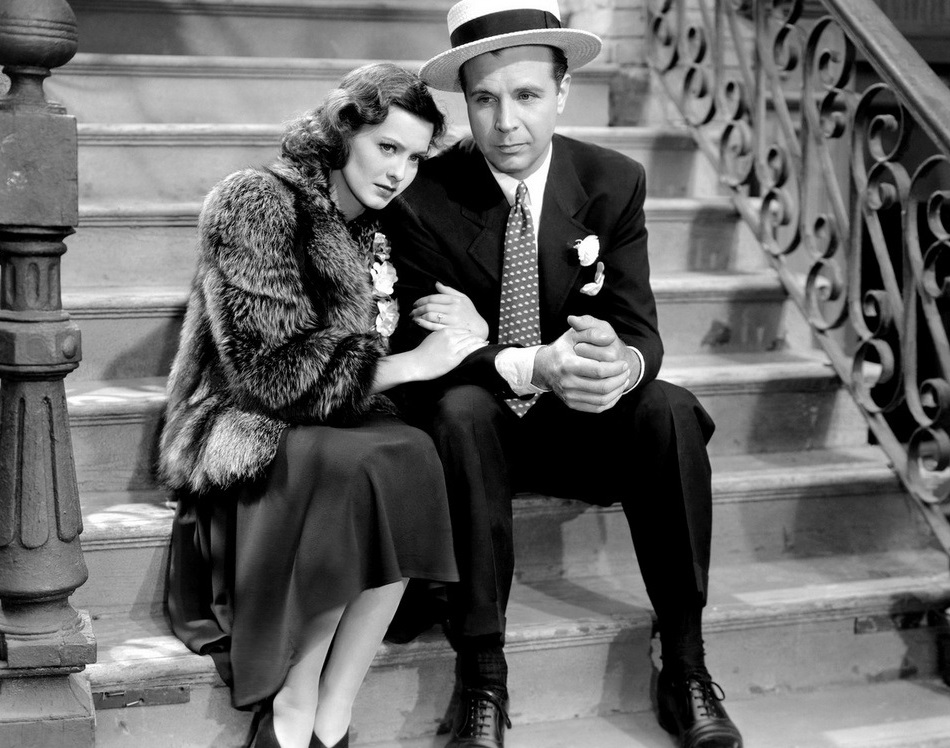
Dick Powell and Rhonda Fleming


Cry Danger trivia

  • Actress Jean Porter said that Dick Powell directed the film but gave the screen credit to Robert Parrish.
  • This is Rhonda Fleming’s personal favorite of all her films.
  • Fleming donated to restore the film by the Film Noir Foundation and UCLA’s Film and Television Archive.
  • There is a credit for the song “Cry Danger” but no song by that name is heard in the film.
  • $100,000 in 1946 (when the film took place) is equivalent to over one million dollars today.


Click HERE to watch the movie on YouTube.


Click HERE to join the discussion May 13, 2024, at 6:30 p.m. Central Time. Once you RSVP, you will receive an invitation and a link to join the discussion on Zoom.


Discussion questions

  1. How do you think this film compared with Pitfall?
  2. Does this film fit with your idea of a “classic” film noir?
  3. Film noir plots are notoriously complicated and hard to follow. Where you able to follow the plot of Cry Danger?
  4. What did you think of Fleming’s performance? Was she a typical femme fatale?
  5. Did this film surprise you in any way?


Tuesday, April 30, 2024

Dick Powell and Lizabeth Scott in “Pitfall”

Pitfall (1948) is an American film noir drama directed by Andre de Toth and starring Dick Powell, Lizabeth Scott, and Jane Wyatt. The supporting cast includes Ann Doran, John Litel, and Raymond Burr.

Johnny Forbes (Powell) works for an insurance company in downtown Los Angeles Johnny is introduced to the case of Mona Stevens and Bill Smiley by former policeman and private investigator J.B. “Mac” MacDonald (Burr). Smiley has been showering Mona with expensive gifts with money he embezzled. Johnny gets involved with Mona Stevens (Scott) the girlfriend of jailed criminal Bill Smiley (Byron Barr) while working on the investigation and Mona’s possible involvement. Johnny who has become disillusioned with his “happy” suburban life with his wife Sue (Wyatt) and his young son Tommy (Jimmy Hunt), finds himself attracted to Mona.

Will Johnny’s affair with Mona damage the investigation of Bill Smiley, and more importantly destroy his marriage to Sue?


Andre de Toth (1913 – 2002) was a Hungarian-American film director. De Toth directed films in Europe before World War II. He went to England and then to Los Angeles in 1942. De Toth worked in a variety of genres including films noir and westerns. He directed Gary Cooper in Springfield Rifle (1952) and Vincent Price in House of Wax (1953), the most popular 3-D movie during the 3-D movie craze. Later in his career, he worked as a second-unit director on Lawrence of Arabia (1962) and Superman (1978). De Toth was married seven times. One of his wives was Veronica Lake with whom he had two children.

Dick Powell (1904 - 1963) was an American actor, singer, producer, and director. He began his movie career in musicals and comedies but eventually toughened up his image in the mid-1940s where he became a popular star of films noir. He was the first actor to portray Philip Marlowe in Murder, My Sweet (1944). After appearing in his last film, Susan Slept Here, Powell started directing. In the 1950s he was one of the founders of Four Star Television along with Charles Boyer, David Niven, and Ida Lupino. Some popular films starring Powell include 42nd Street (1933), A Midsummer's Night Dream (1935), Christmas in July (1940), Pitfall (1948), and The Bad and the Beautiful (1952).

Lizabeth Scott (1922 – 2015) was an American actress dubbed “The Threat” because she had a similar husky voice and screen persona as Lauren Bacall. Scott was an understudy to Tallulah Bankhead in The Skin of Our Teeth but never got the opportunity to replace Bankhead’s run of the play. When Bankhead was replaced by Miriam Hopkins, Scott did go on for one night and received good reviews. It wasn’t long for Hollywood to take notice and producer Wallis signed her to a contract. She made her film debut as Ivy Hotchkiss in You Came Along (1945) with Robert Cummings. The Strange Love of Martha Ivers (1946) was Scott’s second feature. She went on to star in Dead Reckoning (1947) with Humphrey Bogart, I Walk Alone (1947) with Burt Lancaster, and Dark City (1950) with Charlton Heston in his film debut. She had a falling out with producer Wallis after starring in Loving You (1957) with Elvis Presley and another Wallis contract player, Wendell Corey. She basically retired from film after Loving You but appeared on television sporadically during the 1950s and 1960s.

Dick Powell and Jane Wyatt


Pitfall trivia

  • There is a shot of the May Company department store on Wilshire Blvd. It’s now the home of the Academy Museum of Motion Pictures.
  • According to TCM host Eddie Muller, this was Lizabeth Scott’s favorite role.
  • This was an independent production for Regal Films owned by producer Samuel Bischoff. Dick Powell was on the company’s board of directors.
  • The comic in John’s son’s bedroom is Flash #77 which is worth over $500 in very good condition.
  • John’s personal car is a 1947 Ford Super Deluxe convertible which was the top-of-the-line model.
  • John’s company car is a 1948 Studebaker Commander Land Cruiser.


Click HERE to watch the movie on YouTube.


Click HERE to join the discussion on May 6, 2024, at 6:30 p.m. Central Time. Once you RSVP, you will receive an invitation and a link to join the discussion on Zoom.


Discussion questions

  1. Most film noirs aren’t set in suburbia. Did the setting enhance or harm the film’s narrative?
  2. Was Dick Powell’s affair with Lizabeth Scott’s character believable?
  3. Is Lizabeth Scott’s character the typical femme fatale?
  4. What did you think of the performances? Powell, Scott, Wyatt, and Burr?
  5. Did this movie remind you of any others you’ve seen?


Sunday, May 1, 2022

Preston Sturges’s “Christmas in July”

Christmas in July (1940) is a comedy written and directed by Preston Sturges and starring Dick Powell and Ellen Drew. 

Jimmy MacDonald (Powell) was one of the millions of people to enter the Maxford House Coffee contest. He submitted the slogan "If you can't sleep at night, it's not the coffee, it's the bunk." Jimmy dreams of proving to himself and others that he is a success and able to provide for his mother (Georgia Caine) and marry his girlfriend Betty Casey (Drew).

"If you can't sleep at night, it's not the coffee, it's the bunk."

As a joke, three coworkers send Jimmy a fake telegram announcing that he has won the contest. When his boss hears that Jimmy "won" the contest, he promotes him with a fancy office and a secretary. When the incident snowballs out of control, things really get crazy.

Will Jimmy's newfound success be short-lived or will he be able to prove that he deserves to be taken seriously as an astute businessman?

Ellen Drew and Dick Powell

Preston Sturges (1898 - 1959) was an American playwright, screenwriter, and film director. Sturges was one of the first film directors to direct his own screenplays, opening up the door for Billy Wilder and Joseph L. Mankiewicz to do the same. Sturges was a successful playwright and Hollywood screenwriter and script doctor. As a writer-director, Sturges had an amazing output of films in a period of five years, all considered classics today. These films include The Great McGinty (1940), Christmas in July (1940), The Lady Eve (1941), Sullivan's Travels (1941), The Palm Beach Story (1942), Hail the Conquering Hero (1944), and The Miracle of Morgan's Creek (1944). After leaving Paramount Pictures in a dispute with upper management, Sturges's career declined and he never produced anything close to the quality of his earlier successes. In spite of this decline, Sturges is considered one of the greatest talents to come out of Hollywood.

Dick Powell (1904 - 1963) was an American actor, singer, producer, and director. He began his movie career in musicals and comedies but eventually toughened up his image in the mid-1940s when he became a popular star of film noir. He was the first actor to portray Philip Marlowe in Murder, My Sweet (1944). After appearing in his last film, Susan Slept Here, Powell started directing. In the 1950s he was one of the founders of Four Star Television along with Charles Boyer, David Niven, and Ida Lupino. Some popular films starring Powell include 42nd Street (1933), A Midsummer's Night Dream (1935), Christmas in July (1940), Pitfall (1948), and The Bad and the Beautiful (1952).

Ellen Drew (1914 -2003) was an American film actress. She was under contract with Paramount studios from 1938 to 1944. At Paramount she costarred with Bing Crosby, Fred MacMurray, and George Raft. After leaving Paramount, Drew went to RKO where she was the leading lady opposite Ronald Colman, William Holden, and Robert Preston. During the 1950s, with film roles drying, Drew turned to television where sh guest-starred on shows like Perry Mason and The Millionaire.


To watch the film on YouTube, click on the link below.


To join the discussion on May 9, 2022, at 6:30 p.m. Central Time, click here. Once you RSVP, you'll receive an invitation with a link to the meeting on Zoom.

Christmas in July trivia

  • The $25,000 prize money would be equivalent to about $460,000 today.
  • Preston Sturges helped invent the special sofa featured in the movie. Sturges was an inventor besides being a filmmaker.
  • Betty Field and William Holden were originally announced as the film's stars.
  • Sturges sold the script to Paramount for $6,000. He sold his first script to Paramount, The Great McGinty for $10.

Discussion questions

  1. How would you classify this film? Screwball comedy? Romantic comedy? Something else?
  2. The film has many of the "Preston Sturges Stock Company" character actors. Did you have a favorite?
  3. Did you understand Jimmy's slogan? Did you think it was worthy of winning the contest?
  4. Do you think Sturges was making a commentary on corporate America with his comedy?
  5. What did you think of the two leads: Dick Powell and Ellen Drew?


Wednesday, October 27, 2021

Dick Powell and Linda Darnell in “It Happened Tomorrow”

It Happened Tomorrow (1944) is an American fantasy film directed by Rene Clair, starring Dick Powell, Linda Darnell, and Jack Oakie. This was Clair’s fourth of five films he made in Hollywood.

Lawrence Stevens (Powell) writes obituaries for the local paper but he dreams of writing important, hard news stories. An old newspaperman named Pop Bensen (John Philliber) gives Stevens a newspaper with tomorrow’s news. This unusual event allows Stevens to write stories, scooping the other reporters and newspapers. Along the way, he meets Oscar Smith (Oakie) and Sylvia Smith (Darnell) an uncle and niece clairvoyant act.

At first, knowing future events is exciting and helps move Stevens along in his career. But as time goes by, he discovers knowing the future isn’t what’s cracked up to be.

Dick Powell and Linda Darnell

Rene Clair (1898 - 1981) was a French film director and writer. He directed silent films in his native France but was lured to Hollywood where he directed five films. His first American film was The Flame of New Orleans (1941) starring Marlene Dietrich. The film was not a success and it would be a year before he made another American film. His most popular American film was And Then There Were None (1945) based on Agatha Christie’s novel of the same name. After World War II, Clair returned to France where he was considered one of that country’s best film directors.

Dick Powell (1904 - 1963) was an American actor, singer, producer, and director. He began his movie career in musicals and comedies but eventually toughened up his image in the mid-1940s where he became a popular star of films noir. He was the first actor to portray Philip Marlowe in Murder, My Sweet (1944). After appearing in his last film, Susan Slept Here, Powell started directing. In the 1950s he was one of the founders of Four Star Television along with Charles Boyer, David Niven, and Ida Lupino. Some popular films starring Powell include 42nd Street (1933), A Midsummer's Night Dream (1935), Christmas in July (1940), Pitfall (1948), and The Bad and the Beautiful (1952).

Linda Darnell (1923 – 1965) was an American film actress. She signed a contract with 20th Century-Fox at age 15 and became a star almost overnight. She was immediately cast opposite Tyrone Power in Day-Time Wife (1939). She made two films with Power in 1940: Brigham Young and The Mark of Zorro. In 1941, she was again paired with Power in Blood and Sand, which also starred an up-and-coming Rita Hayworth. Darnell’s most famous role was that of Amber St. Clair in Forever Amber (1946), which turned out the be the biggest hit of the year. The role of Amber was the most sought-after female role since the casting of Scarlett O’Hara in Gone with the Wind (1939). Other important films she starred in include Unfaithfully Yours (1948), A Letter to Three Wives (1949), and No Way Out (1950). She died tragically at age 41 in a fire while visiting friends in Glenview, Illinois.

Jack Oakie (1903 - 1978) was an American film actor who also appeared on the stage and radio. He is probably most famous for portraying Napaloni in Charlie Chaplin’s The Great Dictator (1940). Oakie began his film career during the silent era but had no problem when sound was introduced. After fulfilling his seven-year contract with Paramount Pictures in 1934, Oakie decided to freelance, not being attached to any one studio. He was very successful as a freelancer appearing in popular films like The Call of the Wild (1935), The Toast of New York (1937), Tin Pan Alley (1940), Hello Frisco, Hello (1943), Thieves Highway (1949), and Around the World in 80 Days (1959).


It Happened Tomorrow trivia

  • Frank Capra owned the rights to the film but sold them to producer Arnold Pressburger when he entered the U.S. Army during World War II.
  • Jack Oakie reworked his dialogue throughout the film which didn’t bother director Clair at all.
  • Cary Grant was originally considered for the role of Lawrence Stevens.
  • The opera singer alluded to in the film is most likely Nellie Melba; Peach Melba and Melba toast are named for her.
  • Inspiration for the television show Early Edition.


To watch the film on YouTube, click the link below.


Why watch this film?

  • It features Dick Powell in a non-singing role before he turned “touch guy” as Philip Marlow in Murder, My Sweet the same year.
  • We have another fantasy film from Clair, two years after I Married a Witch (1942).
  • The film features the popular and busy character actors working in Hollywood Jack Oakie and Edgar Kennedy.
  • Linda Darnell has a fairly good role as Sylvia Smith on loan out from her home studio, 20th Century-Fox.


To join the discussion on Monday, November 1, 2021, at 7:30 p.m. Central Time, click here. Once you RSVP, you will get an invitation and link to the discussion on Zoom.


Discussion questions:

  1. Do you think this lighthearted film has a serious message? If so, what is it?
  2. What did you think of Dick Powell’s performance in the lead? Do you think his casting was a good choice?
  3. How do you think this film compares to Clair’s I Married a Witch?
  4. Did you have a favorite character and/or scene from the movie?
  5. Did you have a problem with Oakie’s portrayal as “The Great Gigolini”


Saturday, April 16, 2016

Preston Sturges series: Screening of “Christmas in July” April 26 at the Daystar Center

Preston Sturges series: Christmas in July
Where: The Venue 1550 at the Daystar Center, 1550 S. State Street, Chicago, IL
When: April 26, 2016
Time: 6:30 p.m.
Hosted by Stephen Reginald

Christmas in July (1940) was Preston Sturges’s second film as writer/director, based on his play, A Cup of Coffee (1931). The movie stars Dick Powell, Ellen Drew, and the growing Sturges stock company of supporting players.

Dr. Maxford, the head of Maxford House Coffee is anxious to announce the winner of a slogan contest for his popular brew. Unfortunately for Maxford, the jury is deadlocked by the bull-headed Mr. Bildocker (William Demarest). The contest winner was supposed to be announced on national radio, but because of the deadlock, no winner is announced.

Jimmy MacDonald (Powell) dreams of winning the contest to prove to himself and his girlfriend Betty Casey (Drew) that he has the talent to make it big in the advertising business. He also wants to provide for his mother (Georgia Caine). No one gets Jimmy’s slogan: “If you can’t sleep at night, it’s not the coffee, it’s the bunk.”

As a joke, three of Jimmy’s coworkers create a fake telegram announcing him as the winner. The joke gets completely out of hand. Jimmy’s boss gives him a promotion, a raise, his own office, and a private secretary (Betty). It isn’t long before the jig is up, but not before Jimmy has bought gifts for his mother, girlfriend, and just about everyone in his neighborhood. When the manager of Shindel’s department store comes to repossess his merchandise, it is revealed that Jimmy didn’t win the contest after all.


Will all of Jimmy’s career dreams be dashed? Will he still be able to win Betty’s heart? Will their Christmas in July have a happy ending?


Have some Joe and Enjoy the Show!
Before the movie, grab a cup of coffee from Overflow Coffee Bar, located within the Daystar Center. You can bring food and beverages into the auditorium; we even have small tables set up next to some of the seats. General Admission: $5 Students and Senior Citizens: $3.


Join the Chicago Film club; join the discussion
Twice a month we screen classic films and have a brief discussion afterward. For more information, including how to join (it’s free), click here. The Venue 1550 is easily accessible by the CTA. Please visit Transit Chicago for more information on transportation options.

Stephen Reginald is a freelance writer and editor. He has worked at various positions within the publishing industry for over 25 years. Most recently he was executive editor for McGraw-Hill’s The Learning Group Division. A long-time amateur student of film, Reginald hosts “Chicago Film Club,” a monthly movie event held in the South Loop, for the past two years. Reginald has also taught several adult education film classes at Facets Film School, Chicago.


Daystar Center located at 1550 S. State St. works through a grassroots network of collaborations and partnerships with individuals and other nonprofit organizations. Through this web, they’re able to provide educational, cultural, and civic activities that enrich and empower their clients, guests, and community members. To learn more about classes and events offered at the Daystar Center, please visit their Web site.

Monday, April 1, 2013

Murder, My Sweet: 3rd Film in “High Heels and Fedoras” series at Daystar Center April 9, 2013


Tuesday, April 9, 2013
6:30 p.m.
The Venue 1550 at the Daystar Center
1550 S. State Street


Murder, My Sweet, based on the novel by Raymond Chandler, was released in 1944, a few months after another noir classic, Double Indemnity. It was popular with audiences and critics alike. It transformed Dick Powell from a pretty-boy singer into a film noir icon. It also provided a great femme fatale role for Claire Trevor, one of Hollywood’s most versatile and talented actresses. For Anne Shirley, who was acting in the movies since she was four years old, her portrayal of Ann Grayle would mark her last film role.

Powell was probably the only actor in Hollywood who actively campaigned to play Walter Neff in Double Indemnity. Most of his contemporaries were afraid to play a murderer, but Powell was desperate to reinvent himself.

As a contract player at Warner Brothers, Powell was cast in musicals often costarring tap dancer Ruby Keeler and his first wife Joan Blondell. With his pretty-boy looks and tenor voice, Powell was a matinee idol during the early to mid-1930s. As the 1940s began, Powell thought he was too old to continue playing young romantic leads.

Powell  starred in movie musicals
during the 1930s.
Although he didn’t get the Walter Neff role, Powell did secure a contract with RKO where they were developing a B-movie based on Raymond Chandler’s detective novel, Farewell, My Lovely. When Powell and Trevor signed on as leads, the budget increased, turning it into an A-picture. Audiences and critics loved Powell’s portrayal of detective Philip Marlowe. Powell was now a successful dramatic actor. His reinvention was complete. Here’s what the New York Times said of Powell: “This is a new type of character for Mr. Powell. And while he may lack the steely coldness and cynicism of a Humphrey Bogart, Mr. Powell need not offer any apologies. He has definitely stepped out of the song-and-dance, pretty-boy league with this performance.”

Murder, My Sweet made Powell a bankable star once again. It also gave Trevor one of the best roles in her long movie career. For director, Edward Dmytryk, it raised his profile at RKO. He was given more A-movies to direct, including the Academy Award nominated Crossfire (1947). Dmytryk would go on to direct the epic Raintree County (1957), The Young Lions (1958), and the all-star The Carpetbaggers (1964), which was the highest grossing film that year.

To purchase tickets for the March 12 screening, click here. Tickets are $5 per person general admission $3 for students and seniors. To download a flyer to post in your building or office, click here. Tickets may be purchased at the door.

Anne Shirley (center) in Anne of Green Gables


Backstory: Anne Shirley began acting in silent movies when she was only four years old. She started out as Dawn O’Day, but when she portrayed Lucy Maud Montgomery’s heroine Anne Shirley in Anne of Green Gables, she took that name for her own. Shirley progressed from child star to adult roles; she was one of many actresses who tested for the role of Melanie Hamilton in Gone With The Wind, eventually losing out to Olivia de Havilland.

She met and married her second husband, Adrian Scott, who produced Murder, My Sweet.


Related Posts Plugin for WordPress, Blogger...