Showing posts with label Robert Siodmak. Show all posts

Thursday, May 14, 2026

2026 #TCMFF Wrap-Up

Another Turner Classic Film Festival (TCMFF) is in the books. This year’s festival was held from April 30 to May 3. The anticipation for the TCMFF is huge. Thinking about the film festival helps get me through the Chicago winters.

At this festival, I saw 11 movies. This total is the lowest of all my festivals, dating back to 2015. There were so many movies I wanted to see that I had to be strategic, so I passed on some films to guarantee that I’d get into the ones I really wanted to see and the ones I knew would be the most popular.


What did I see?

Thursday, April 30

Out of the Past (1947) I love this classic film noir starring Robert Mitchum and Jane Greer, co-starring Kirk Douglas and Rhonda Fleming. The movie was introduced by Eddie Muller and Dana Delany. The film we saw at the Egyptian Theatre was a 4K restoration by Warner Bros. Discovery. Not as famous as Double Indemnity (1944), but every bit as good. A must-see on any screen.


Man Hunt (1941). This World War II drama stars Walter Pidgeon and Joan Bennett. Pidgeon stars as a big-game hunter whose failure at assassinating Hitler puts him on the run. He meets up with Bennett, a Cockney streetwalker who helps to hide him from his Nazi pursuers. Directed by Fritz Lang, this is the beginning of his collaboration with Bennett that included The Woman in the Window (1944), Scarlet Street (1945), and The Secret Beyond the Door (1947). The film was screened in Chinese Multiplex #6.

Friday, May 1

Letty Lynton (1932). The movie that everyone has been dying to see for over 90 years. If you’re a classic movie fan, you’ve heard of this film. Presented in a beautiful 4K restoration by Warner Bros. Discovery. The film stars Joan Crawford and Robert Montgomery. The other star is the clothes designed for Crawford by the legendary M-G-M costume designer, Adrian. The film was introduced by Eddie Muller, George Feltenstein, and Casey LaLonde, Joan Crawford’s grandson. According to Muller and LaLonde, this was the movie that made Joan Crawford, Joan Crawford. At the screening, we learned that the film will be released on Blu-Ray in June. The film was screened in the Egyptian Theatre.

Joan Crawford in the Letty Lynton dress

Strangers on a Train (1951) As soon as Letty Lynton let out, I was back on line at the Egyptian Theatre. Strangers on a Train was the beginning of Alfred Hitchcock’s amazing string of classic movies. After a series of box-office disappointments like Rope (1948), Under Capricorn (1949), and Stage Fright (1950), many people thought Hitchcock had lost his touch. Strangers on a Train put that idea to rest. Hitchcock would produce a string of classics, including Rear Window (1954), The Man Who Knew Too Much (1956), Vertigo (1958), North by Northwest (1959), Psycho (1960), and The Birds (1963). The film was introduced by Alicia Malone with special guest Carol Burnett. She was an usher at the old Warner Bros. Theatre on Hollywood Blvd. while on summer break from college. Strangers was playing, and in the old days, movies ran continuously. You could walk into the theater during the middle of the movie, sit down, watch, and then when the movie got to the part where you came in, you’d leave. While Carol was working as an usher, an old couple came during the film’s finale and wanted to be seated. Carol tried to convince the couple that they should wait until the film started again because it would spoil their enjoyment. The manager overheard this “discussion,” and Carol was fired on the spot. When she became famous, and she was asked where she’d like her star on the Hollywood Walk of Fame, she asked for it to be right in front of the old movie theater. Years later, when Alfred Hitchcock heard about Carol’s firing, he sent her a framed copy of the movie poster. He wrote, “Dear Carol, I’m sorry. Alfred Hitchcock.”

Fred MacMurray and Carole Lombard

The Princess Comes Across (1936) is a forgotten screwball comedy/mystery starring Carole Lombard and Fred MacMurray. This was the second of four films the stars made together. Alicia Malone interviewed Kate MacMurray, the daughter of Fred MacMurray and June Haver. Kate spoke lovingly of her father and his friendship with Lombard. She said he was his favorite leading lady, although I heard her say at the screening of The Egg and I at an earlier festival that Claudette Colbert was his favorite. In any event, it was a delightful movie shown in a packed Theater #4. Kate had never seen the movie on the big screen, so she stayed and watched it with us. She was sitting right behind me.

Saturday, May 2

Phantom Lady (1944) Saturday morning was relaxing. I decided to skip all the early-morning movies and have a nice breakfast at 25 Degrees, inside the Hollywood Roosevelt Hotel. I wanted to get into see Phantom Lady in Theater #4, so that was one of the reasons I passed on the earlier films. After breakfast, I went to the Multiplex and was first in line for Phantom. The theater was totally sold out, so my strategy worked. Eddie Muller interviewed Christina Lane, the author of her 2020 biography, Phantom Lady: Hollywood Producer Joan Harrison. It was a great introduction, but the 35mm print was not the best, which was a bit disappointing. Fortunately, the film is good enough that you could get past the less-than-perfect print. I’m glad I got to see it on the big screen.

Ella Raines and Alan Curtis in the shadows

There’s Always Tomorrow (1956) is a classic Douglas Sirk melodrama starring Barbara Stanwyck, Fred MacMurray, and Joan Bennett. MacMurray is a married (to Bennett) father of three children and feels like his life is dull and meaningless. When Stanwyck surprises MacMurray with a visit while she’s in town, he begins to think that life with Stanwyck, an old colleague, would be better than the life he’s currently living. How will it all end? The movie was introduced by Dana Dalany and former child actress Gigi Perreau, who starred in the film as the older daughter of MacMurray and Bennett’s characters. Perreau had some interesting stories about the making of the film, including the fact that she felt that Stanwyck was in total control of the movie and not in a bad way. She said she, “Missy,” played cards and smoked cigarettes with the crew, which was something she would never have been allowed to do as a teenager on the set. Another packed house in Theater #4.

The Devil and Miss Jones (1941) is a delightful comedy starring Jean Arthur, Robert Cummings, Spring Byington, Edmund Gwenn, and Charles Coburn. It’s a tale of labor versus management. Charles Coburn is a rich industrialist who owns a New York City department store. He’s so rich that he didn’t even know he owned it, until he was hanged in effigy by a disgruntled department store staff that includes Arthur, Cummings, and Byington. Cummings is an organizer fighting for better treatment for employees. Coburn is convinced that he can get things under control by going undercover as a department store employee. Much to his own surprise, he becomes friendly with the “agitators” and becomes their champion. I don’t remember who introduced this film, but it attracted a good crowd in Multiplex Theater #1.

Sunday, May 3

The Best Years of Our Lives (1946) is one of my favorite movies. I’ve always wanted to see it on the big screen, and it was a great experience. What we saw was a restored version of the film that looked brand new. I was a special guest of author Alison Macor, who introduced the movie. She wrote a book, The Making of The Best Years of Our Lives: The HollywoodClassic That United a Nation. Seeing it with an audience was special. When two of the main characters got together, the audience applauded. Thanks to Alison, I got a “golden ticket,” which meant I didn’t have to wait in line and had a reserved seat! Not bad. There was a good crowd, although I think it should have been packed in Multiplex Theater #1.

Dana Andrews and Teresa Wright

From Song to Scene was an event in Club TCM with a trio of music supervisors, with Eddie Muller moderating. The job of the music supervisor is to work with the director to make sure the music used in a film matches the narrative. One of the three music supervisors, Maureen Crowe, graduated from high school with me. We both graduated from Holy Trinity High School, Hicksville, Long Island, New York. We last saw each other at our high school reunion in October and planned on seeing each other during the festival. However, she wasn’t on the TCM schedule at that time. It was great seeing her in action, and she and her colleagues were thrilled by the positive reaction.

Maureen and me

Trouble in Paradise (1932) I have to admit that I don’t think I’ve seen this pre-Code classic from beginning to end. I’ve seen parts of it over the years, so seeing it on the big screen in a beautiful 4K digital restoration was a real treat. Director Ernst Lubitsch was a master of pre-Code comedies, and Trouble may be his best film from this period. The movie was introduced by Julia Sweeney, a true Lubitsch fan. Her introduction was funny, informative, and brief. Translation: it was perfect! I think Multiplex #1 was sold out for this showing.

Kay Francis, Herbert Marshall, and Miriam Hopkins

Lady Windemere’s Fan (1925) was a silent film version of the Oscar Wilde play, directed by Ernst Lubitsch (two Lubitsch films in one day). It starred a very young Ronald Colman. The film was accompanied by the Molto Alto Motion Picture Orchestra. The film, restored by The Museum of Modern Art, was beautiful. It looked as good as it probably looked in 1925 when it first premiered. The last three festivals, I’ve ended with a silent film (last year’s silent, Beau Geste (1926), also starred Ronald Colman).  The film was introduced by TCM host Jacqueline Stewart in the Egyptian Theatre.

Another great festival is in the books.

I’m already thinking of next year!


Tuesday, April 21, 2026

Through “The Dark Mirror”: A Twisted Tale of Twins and Terror

Released on October 18, 1946, and directed by the noir master Robert Siodmak, The Dark Mirror is a sophisticated psychological thriller that plunges into the unsettling mysteries of identity and the human mind. The story begins with a brutal murder in a high-rise apartment, where a prominent doctor is found dead. Detective Stevenson, played by the reliable Thomas Mitchell, quickly identifies a suspect: a beautiful woman seen leaving the scene. However, the investigation hits a surreal wall when it is discovered that the suspect has an identical twin sister, and both women possess an airtight alibi that places them together at the time of the crime.

Olivia de Havilland delivers a virtuosic dual performance as the twins, Ruth and Terry Collins. Though they are physically indistinguishable, their temperaments are subtly distinct—one appearing gentle and kind-hearted, while the other masks a cold, calculating nature. As the police find themselves legally paralyzed, unable to arrest one without risking the conviction of the other, they enlist the help of Dr. Scott Elliott (Lew Ayres), a specialist in the burgeoning field of twin psychology.

The setting shifts to a clinical but tension-filled environment as Dr. Elliott subjects the sisters to a series of Rorschach tests, polygraphs, and word-association games. Siodmak uses the urban backdrop of mid-century apartments and sterile offices to create a sense of mounting claustrophobia, utilizing mirrors and clever split-screen cinematography to force the sisters into a visual confrontation with one another. As the doctor becomes more deeply involved, the professional nature of his study begins to blur with a dangerous fascination, especially as he starts to suspect that one sister is hiding a truly predatory streak.

Throughout the film, the suspense is driven not just by the “whodunit” of the original murder, but by the psychological cat-and-mouse game played between the twins and the men trying to unravel their bond. The Dark Mirror remains a quintessential 1940s noir, blending the era’s obsession with Freudian psychiatry with Siodmak’s signature atmospheric lighting and sharp, cynical dialogue. It serves as a chilling exploration of the idea that the person closest to us may also be the one we know the least.


Olivia de Havilland and Olivia de Havilland

Robert Siodmak (1900 – May 1973) was a German-American director celebrated as one of the definitive architects of film noir, known for his masterful use of German Expressionist shadows and psychological tension. After beginning his career in the thriving Ufa studios in Berlin, Siodmak fled the rise of Nazism, eventually arriving in Hollywood, where he embarked on a legendary “dark period” during the 1940s. He specialized in capturing the claustrophobia of the human psyche in classics like The Killers (1946), The Spiral Staircase (1946), and The Dark Mirror (1946), often collaborating with top-tier cinematographers to create high-contrast, moody visuals that defined the era’s aesthetic. His ability to blend continental sophistication with American crime tropes left an indelible mark on the genre, solidifying his legacy as a director who could make the urban landscape feel as dangerous and complex as the characters inhabiting it.

Olivia de Havilland (1916–2020) was a legendary Anglo-American actress whose career spanned seven decades and earned her a reputation as one of the last great stars of the Golden Age of Hollywood. Initially rising to fame as the quintessential leading lady opposite Errol Flynn in sweeping adventures like The Adventures of Robin Hood (1938), she achieved cinematic immortality as the gentle Melanie Hamilton in Gone with the Wind (1939). Beyond her on-screen grace, she became a pivotal figure in industry history by successfully challenging the restrictive studio contract system in the landmark “De Havilland Decision,” which granted actors greater professional freedom. This newfound independence allowed her to pursue complex, psychologically demanding roles that showcased her immense range, leading to two Academy Awards for Best Actress for her performances in To Each His Own (1946) and The Heiress (1949). Her legacy is defined by a rare combination of elegant poise and fierce resilience, leaving behind a body of work that remains a cornerstone of classic cinema.

Lew Ayres (1908–1996) was a distinguished American actor whose career was defined by a rare combination of youthful sensitivity and unwavering moral conviction. He catapulted to international stardom with his haunting portrayal of a disillusioned soldier in the anti-war masterpiece All Quiet on the Western Front (1930), a role that mirrored his own lifelong commitment to pacifism. During the late 1930s, he became a household name as the idealistic title character in the popular Dr. Kildare film series, though his career faced a temporary turning point during World War II when he served as a conscientious objector and medic in the Pacific. Ayres successfully returned to the screen in the post-war era, delivering sophisticated performances in psychological thrillers like The Dark Mirror (1946) and earning an Academy Award nomination for his compassionate role in Johnny Belinda (1948). Throughout his long tenure in Hollywood, he remained a figure of quiet integrity, remembered for both his intellectual screen presence and his deep-seated humanitarian values.

Click HERE to watch the movie on YouTube or click HERE to watch the movie on the Internet Archive. Both are great prints.


Click HERE to join the discussion on Monday, April 27, 2026, at 6:30 p.m. Central Time. Once you RSVP, you will receive an invitation with a link to join the discussion on Zoom.


Lew Ayres and Olivia de Havilland

The Dark Mirror trivia

A Technical Triumph: The film is celebrated for its seamless twin effects. To allow Olivia de Havilland to appear on screen with herself, cinematographer Milton Krasner used sophisticated split-screen masking and double exposures. To ensure the two “Olivias” could interact naturally, the crew used a metronome and earpieces so she could time her dialogue with her own pre-recorded voice from the “other" sister.

A Noir Dream Team: The film was a collaboration between two titans of the genre. Director Robert Siodmak was the master of German Expressionist-influenced shadows (also directing The Killers that same year), while the screenplay was written by Nunnally Johnson. Johnson was a powerhouse writer-producer who later earned acclaim for The Three Faces of Eve, another film deeply rooted in psychological identity.

The Good Twin vs. The Oscar: 1946 was a career-defining year for Olivia de Havilland. While she was receiving praise for her dual role in The Dark Mirror, she was simultaneously winning her first Academy Award for Best Actress for her performance in To Each His Own. Her work in The Dark Mirror is often cited by film historians as the performance that proved her incredible range beyond the ingenue roles of her early career.

Psychology of the Era: The film was part of a major post-war trend in Hollywood often called the Freudian Noir. Following the success of Hitchcock’s Spellbound (1945), audiences were fascinated by psychoanalysis. The Dark Mirror utilized actual Rorschach inkblot tests and polygraph machines on screen, reflecting the public's real-life intrigue with using science to unmask the criminal mind.


Discussion questions

The Nuance of Identity: Olivia de Havilland opted not to use heavy makeup or different hairstyles to distinguish Ruth from Terry. Instead, she relied on subtle shifts in vocal pitch, posture, and the look in her eyes. How effective was this understated approach in making you believe they were two different people, and did it make the “evil” twin more or less chilling?

The Mirror as a Motif: Director Robert Siodmak uses mirrors, split-screens, and reflective surfaces constantly throughout the film. Aside from the obvious “twin” connection, how do these visuals support the noir theme of a fragmented or hidden self? Do the reflections make the characters seem more connected, or more isolated from one another?

The Science of Noir: The film relies heavily on the 1940s fascination with Freudian psychiatry and the Rorschach inkblot test to solve the mystery. Looking at the film today, does this focus on mid-century psychology add a layer of intellectual suspense, or does it feel like a dated gimmick compared to modern forensic thrillers?

The Detective vs. The Doctor: Detective Stevenson (Thomas Mitchell) represents traditional police legwork, while Dr. Elliott (Lew Ayres) represents the modern analytical approach. How does the tension between these two methods drive the plot? Do you think the detective could have solved the case without the doctor’s psychological intervention, or is Terry’s mind a "locked room" that only science could open?


Tuesday, November 18, 2025

Burt Lancaster and Yvonne De Carlo can’t seem to catch a break in “Criss Cross”

Criss Cross (1948) is an American film noir directed by Robert Siodmak that plunges the audience into a dark, fatalistic world of obsessive love and impending disaster. The story centers on Steve Thompson (Burt Lancaster), a man who returns to Los Angeles trying to leave his past behind. He takes back his old job as a driver for an armored car company, a symbol of the honest, steady life he hopes to maintain. However, Steve can’t shake his deep, lingering obsession with his beautiful and volatile ex-wife, Anna (Yvonne De Carlo).

Despite his family’s and friends’ warnings about Anna’s manipulative nature, Steve inevitably crosses paths with her again, immediately reigniting a passionate but doomed romance. The situation is complicated by the fact that Anna is now married to Slim Dundee (Dan Duryea), a local gangster and nightclub owner. Steve’s renewed relationship with Anna forces him into a dangerous love triangle, quickly pushing him away from his attempts at a clean start and back toward the corrupting influences of the criminal underworld. This relentless attraction to a woman who is demonstrably bad for him sets the stage for the escalating tragedy.

As the plot unfolds, Steve becomes trapped in a tangled web of deceit and double-crosses, where no one—not Anna, not Slim, and certainly not Steve himself—can be completely trusted. The film masterfully builds a sense of inescapable doom as the intricate plan for the heist is set in motion. Criss Cross is a powerful, stylish examination of human weakness, desire, and betrayal, showcasing how a single, consuming obsession can irrevocably lead a man down a path to his own destruction.

Yvonne De Carlo and Burt Lancaster


Robert Siodmak (1900 – 1973) had a very successful career in Hollywood and is best known for his thrillers and films noir. He signed a seven-year contract with Universal and directed The Killers (1946), the film that made Ava Gardner a star. He worked with some of the top movie stars during Hollywood’s Golden Age, including Deanna Durbin, Gene Kelly, Burt Lancaster, Dorothy McGuire, Yvonne de Carlo, Olivia de Havilland, and Barbara Stanwyck. Often compared to Hitchcock in his prime, he never got the recognition that the Master of Suspense did, but most of his films hold up remarkably well and are worth watching.

Burt Lancaster (1913- 1994) was an American actor and producer. He won a Best Actor Academy Award for his performance in Elmer Gantry (1960). Lancaster made his film debut in The Killers (1946). After the release of that film, he was on his way as a leading man, starring in quick succession Desert Fury (1947), Brute Force (1947), Variety Girl (1947), I Walk Alone (1947), All My Sons (1948), and Sorry, Wrong Number (1948). Other popular films starring Lancaster include The Flame and the Arrow (1950), Jim Thorpe All-American (1951), From Here to Eternity (1953), The Rose Tattoo (1955), and Birdman of Alcatraz (1962).

Yvonne De Carlo (1922 – 2007) was a Canadian-American actress, dancer, and singer whose career spanned six decades across film, television, and stage. She first rose to prominence in the 1940s and 1950s as a Hollywood film star, gaining recognition in lavish Technicolor productions like Salome, Where She Danced (1945) and often being cast in exotic or adventurous roles, including her notable turn in the film noir Criss Cross (1949). Her film career peaked when she played Sephora, the wife of Moses, in Cecil B. DeMille’s epic The Ten Commandments (1956). She gained renewed fame with a new generation of fans in the 1960s for her enduring role as Lily Munster, the glamorous matriarch, in the popular CBS sitcom The Munsters (1964–1966).

Dan Duryea (1907 – 1968) was an American film, stage, and television actor. He is best known for his character roles as villains, but he had a long career that included a variety of lead and second lead roles. Duryea graduated from Cornell University in 1928. In his senior year, he was the president of the college drama society. Duryea went to Hollywood in 1940 to play Leo Hubbard in The Little Foxes, a role he created on Broadway. He established himself in films noir, costarring in classics like Scarlet Street (1945), Criss Cross (1948), and Too Late for Tears (1949).


Criss Cross trivia

  • Reunion of Noir Veterans: The film reunited director Robert Siodmak and star Burt Lancaster, along with composer Miklós Rózsa, all of whom had previously collaborated on the highly successful 1946 film noir classic, The Killers. The two movies share the thematic elements of a doomed protagonist drawn back into crime by a manipulative woman.
  • Uncredited Star Debut: A very young and uncredited Tony Curtis makes a brief appearance in the film. He can be spotted as an extra dancing with Yvonne De Carlo’s character, Anna, in the lively nightclub scene at “The Round-Up.”
  • Los Angeles Location as a Character: Criss Cross was shot extensively on location in the Bunker Hill neighborhood of downtown Los Angeles. This area, known for its steep hills, Victorian architecture, and rundown boarding houses, was a popular setting for classic film noirs, and its gritty, precarious atmosphere adds to the movie’s sense of fatalism. Much of the architecture seen in the film was later demolished in the 1950s and 60s due to redevelopment.
  • Novel Adaptation: The film is based on the 1934 novel of the same name by Don Tracy. While the novel provided the core plot, the film adaptation, scripted by Daniel Fuchs, amplified the key elements of film noir, including the complex flashback structure, the fatalistic voice-over narration, and the overwhelming sense of doom.


Click HERE to watch the movie on the Internet Archive.

Click HERE to join the online discussion on Monday, November 24, 2025, at 6:30 p. m. Central Time. Once you RSVP, you’ll receive a link with an invitation to join the discussion on Zoom.

Discussion questions

  1. The Nature of Obsession and Fate: The film utilizes a flashback structure that essentially reveals the ending in the very first scene. How does knowing Steve Thompson's ultimate fate from the beginning affect the audience's viewing experience? Does this structure amplify the fatalism and obsessive nature of his choices, or does it simply reduce the suspense?
  2. The Archetype of the Femme Fatale: How does Anna (Yvonne De Carlo) embody the classic film noir archetype of the femme fatale? Is she truly evil and manipulative, or is she also a victim of her circumstances and the limited opportunities available to women in her environment? How does her character compare to other famous film noir women?
  3. Moral Compromise and the American Dream: Steve Thompson returns to Los Angeles determined to live an honest, working-class life, but his desires quickly derail him. How does the film comment on the idea of the American Dream or the possibility of redemption? At what point does Steve cross the moral line, and is his downfall inevitable regardless of his choices?
  4. Style and Setting in Noir: The film makes extensive use of location shooting in the atmospheric, now-demolished Bunker Hill neighborhood of Los Angeles. How do the movie's visual style—specifically the use of low-key lighting (chiaroscuro), shadows, and gritty urban settings—reflect and enhance the themes of desperation, moral corruption, and entrapment in the story?

Wednesday, December 11, 2024

Deanna Durbin and Gene Kelly in “Christmas Holiday”

Christmas Holiday (1944) is a film noir directed by Robert Siodmak and starring Deanna Durbin and Gene Kelly. Audiences in 1944 might have thought they were going to see a light musical, considering the talent involved, but it’s a heavy drama with both Durbin and Kelly playing against type.


This was Durbin’s biggest box office success up to that time and Universal’s biggest hit of the year, but it’s practically forgotten today. The film has an interesting pedigree. It’s based on a novel by W. Somerset Maugham, with a screenplay by Herman J. Mankiewicz (Citizen Kane). The cinematographer was Woody Bredell (The KillersThe Inspector General). It had an Academy Award-nominated film score by Hans J. Salter (The Reckless Moment), and a new song, “Spring Will Be a Little Late This Year” by Frank Loesser.

Deanna Durbin reads her fan mail. Durbin had the largest fan club in the world.
Like Judy Garland, Durbin had grown up on film. At 15, Durbin starred in Three Smart Girls (1936) and became an overnight sensation. She had the vocal range of a legitimate lyric soprano. Durbin had considered a career in opera, but the movies changed all that. In 1938, she was awarded the Academy Juvenile Award. Durbin starred in a string of box office hits where she was the wholesome heroine with a beautiful singing voice. In almost all of her features, Durbin would sing a famous opera aria. As she matured, Durbin wanted to tackle more adult roles. Durbin was 23 when Christmas Holiday was released. Critics weren’t too sure the role was right for Durbin, but director Siodmak thought she was a “real actress” and had confidence that she was up to playing the abused wife of a small-time criminal (Kelly).
This publicity still for Christmas Holiday belies the dark subject matter.
Kelly was brought to Hollywood and put under contract by M-G-M based on his performance in Pal Joey on Broadway. The same year that Christmas Holiday was released, Kelly, on loan to Columbia, starred with Rita Hayworth in the Technicolor musical Cover Girl. With Durbin and Kelly in the same picture, movie fans surely expected a musical or light comedy but were drawn into a complicated drama set during the Christmas holiday.

Despite the critics being “bothered” that wholesome Durbin was playing a woman of questionable character, audiences ate it up. It was a huge commercial success. Based on the film’s box office, Durbin signed a new exclusive six-year contract.


Click HERE to watch the film on YouTube


Click HERE to join the online discussion on December 16, 2024, at 6:30 p.m. Central Time. Once you RSVP, you will receive an invitation with a link to join the discussion on Zoom.

Discussion questions
  1. What did you think of Gene Kelly and Deanna Durbin playing against type?
  2. Would you consider Christmas Holiday a film noir? If not a film noir, what genre would you categorize it?
  3. Did the setting (New Orleans) add anything to the film?
  4. The film has a strong supporting cast. Did any of the supporting performances stand out to you?
  5. Did anything about the film surprise you?


Saturday, November 19, 2022

Ella Raines searches for the "Phantom Lady"

Phantom Lady (1944) is an American film noir directed by Robert Siodmak and starring Franchot Tone, Ella Rains, and Alan Curtis. This was Siodmak’s first film noir, a genre he would be closely identified with throughout his career. The film was produced by Joan Harrison (her first). She was the first female executive at Universal Pictures. Harrison started out in the film business as Alfred Hitchcock’s personal assistant. She would be closely related to Hitchcock professionally and personally for her entire career.

After an argument with his wife on their anniversary, Scott Henderson (Curtis) meets an unhappy woman at a bar in New York City. Scott convinces her to go to a stage show with him. The woman refuses to tell Scott anything about herself including her name. At the show, Scott notices that the leading lady, Estela Monteiro (Aurora) is wearing the same hat as his mystery date.

When Scott returns home, he is greeted by the police, including Inspector Burgess (Thomas Gomez). Scott’s wife was strangled to death with one of his ties. As the number one suspect in his wife’s murder, Scott is convicted and sentenced to death.

Carol Richman, (Raines) Scott’s loyal secretary tries to prove his innocence. Carol is secretly in love with Scott. She goes undercover trying to find the Phantom Lady and the real killer.

Will Carol get to the truth before it’s too late?

Fay Helm and Alan Curtis

Robert Siodmak (1900 – 1973) had a very successful career in Hollywood and is best known for his thrillers and films noir. He signed a seven-year contract with Universal and directed The Killers (1946), the film that made Ava Gardner a star. He worked with some top movie stars during Hollywood’s Golden Age, including Deanna Durbin, Gene Kelly, Burt Lancaster, Dorothy McGuire, Yvonne de Carlo, Olivia de Havilland, and Barbara Stanwyck. Often compared to Hitchcock in his prime, he never got the recognition that the Master of Suspense did, but most of his films hold up remarkably well and are worth watching.

Franchot Tone (1905 – 1968) was an American actor. He was a leading man in the 1930s and early 1940s. Tone was nominated for an Academy Award for Best Actor for his portrayal of Midshipman Roger Byram in Mutiny on the Bounty (1935). Tone was also a star on the Broadway stage and was a founding member of the Group Theatre. Tone signed with M-G-M in 1933 and was immediately cast in several pre-Code films including Today We Live (1933) with Gary Cooper and Joan Crawford, Midnight Mary (1933) with Loretta Young, and Bombshell (1933) with Jean Harlow. He starred with Harlow again in Suzy (1936) which also featured Cary Grant, billed below Tone who was the bigger star at the time. In 1935, Tone married Joan Crawford. They divorced in 1939; they made seven films together. As his film career declined, Tone continued to appear on stage and television. 

Thomas Gomez, Ella Raines, and Franchot Tone

Ella Raines (1920 – 1988) was born in Washington State where she studied drama at the University of Washington. Howard Hawks spotted her in a college production and signed her to a contract. Right out of the gate, she starred in some big movies, including Preston Sturges’s Hail the Conquering Hero and Tall in the Saddle (both 1944) where she shared equal billing with John Wayne. As her movie career declined in the 1950s, Raines worked in series television starring as Janet Dean, Registered Nurse (1954-55). She appeared on the cover of Life magazine twice, once in 1944 and in 1947.

Alan Curtis (1909 – 1953) was an American film actor. He began his career as a model before becoming an actor. His good looks brought him to the attention of Hollywood where he started appearing in films in the late 1930s. He had film roles in Hollywood Cavalcade (1939), High Sierra (1941), and Buck Privates (1941). One of his most prominent roles was in the film noir classic Phantom Lady (1944). Curtis starred as Philo Vance in two films in 1947. Although never a major star, Curtis worked in film until his untimely death in 1953. He was 43 years old.


Phantom Lady trivia

  • Top-billed Franchot Tone doesn't show up until 45 minutes into the film.
  • The Phantom Lady is referred to as Miss Terry (mystery).
  • The date on the court stenographer's pad is August 6, 1943. August 6th is Ella Raine's birthday.
  • This was the film debut of Victoria Horne (the woman who copied the hat).


To watch the film on YouTube, click the link below.


To join the discussion on November 28, 2022, 6:30 p.m. Central Time, click here. Once you RSVP, you will receive an invitation and a link to join the discussion on Zoom.


Discussion questions

  1. The year 1944 was a great year for film noir—Double Indemnity, Murder, My Sweet, Laura, Christmas Holiday, Gaslight, Ministry of Fear, and The Lodger. Christmas Holiday was directed by Robert Siodmak. How do you think Phantom Lady stacks up against these other classics?
  2. What are some of the elements that make Phantom Lady a film noir?
  3. Joan Harrison was the first female producer at Universal; do you think the film has a female point of view?
  4. What did you think of the jam session with Elisha Cook Jr. on drums?
  5. Did you have a favorite scene or piece of dialogue?
  6. There was a notable piece of artwork in Franchot Tone's apartment-studio. Did you notice it?
  7. Were you surprised by anything?

Sunday, November 6, 2022

Victor Mature and Richard Conte star in "Cry of the City"

Cry of the City (1948) is an American film noir directed by Robert Siodmak and starring Victor Mature and Richard Conte. Others in the cast include Fred Clark, Shelly Winters, Betty Garde, Debra Paget, and Hope Emerson.

Tough guy Martin Rome (Conte) is a criminal about to undergo surgery for leg wounds he receive in a shootout with a police officer that he killed. Police detectives Candella (Mature) and Collins (Clark) question Rome about a jewel robbery and murder. Candella and Rome were childhood friends who grew up in the same poor neighborhood. As an adult, Candella despises Rome for choosing a life of crime, disgracing his parents, and influencing his younger brother Tony (Tommy Cook) to follow in his criminal footsteps.

Rome escapes from the hospital where he tries to recover the jewels from a robbery where another man was killed. At the same time, he’s trying to run off with his girlfriend Teena Ricante (Paget).

Will Rome get the jewels, run off with Teena, and escape prosecution?

Richard Conte and Victor Mature

Robert Siodmak (1900 – 1973) had a very successful career in Hollywood and is best known for his thrillers and films noir. He signed a seven-year contract with Universal and directed The Killers (1946), the film that made Ava Gardner a star. He worked with some of the top movie stars during Hollywood’s Golden Age, including Deanna Durbin, Gene Kelly, Burt Lancaster, Dorothy McGuire, Yvonne de Carlo, Olivia de Havilland, and Barbara Stanwyck. Often compared to Hitchcock in his prime, he never got the recognition that the Master of Suspense did, but most of his films hold up remarkably well and are worth watching.


Victor Mature (1913 – 1999) was an American stage, film, and television actor who became a major movie star during the 1940s under contract to 20th Century-Fox. Before his film career took off, Mature starred in Lady in the Dark (1941) on Broadway opposite Gertrude Lawrence. Some of Mature’s notable films include I Wake Up Screaming (1941) with Betty Grable, and The Shanghai Gesture (1941) with Gene Tierney. In 1942, he starred opposite Rita Hayworth in the musical My Gal Sal. Other notable films include Samson and Delilah (1949), and The Robe (1952), the first film released in the Cinemascope widescreen process. Mature was self-deprecating when it came to his acting. He said, “I’m no actor, and I’ve got 64 pictures to prove it.”


Richard Conte (1910 – 1975) was an American actor who came to prominence in the late 1940s under contract to 20th Century-Fox. He co-starred with James Stewart in Call Northside 777 (1948) and had the lead role in Thieve’s Highway (1949) directed by Jules Dassin (Night and the City 1950), and played Gene Tierney’s husband in Otto Preminger’s Whirlpool (1949). Conte worked constantly and had major roles in Ocean’s 11 (1960) and The Godfather (1972).


To watch the film on YouTube, click on the link below.


Join the discussion on November 14, 2022, at 6:30 p.m. Central Time, clicked here. Once you RSVP, you'll receive an invitation and a link to the discussion on Zoom.


Cry of the City trivia

  • Victor Mature was originally cast as the killer and Conte was cast as the cop. The roles were reversed because Mature had played a few bad guys prior to this film.
  • Alfred Newman's "Street Scene "is used in the opening and closing credits. This music was used in more Fox films than any other. It was first used in the movie Street Scene (1931).
  • Debra Paget made her film debut at age fourteen in Cry of the City.
  • Director Robert Siodmak was borrowed from Universal to direct this film.

Victor Mature and Fred Clark


Discussion questions

  1. What did you think of Victor Mature's performance as the good cop?
  2. The film was shot on location in New York City. Did it add to the film's realistic look?
  3. The film has a very good supporting cast; did anyone supporting player stand out to you?
  4. Did anything about the film surprise you?
  5. Did this film remind you of any other films you've seen?


Tuesday, August 16, 2022

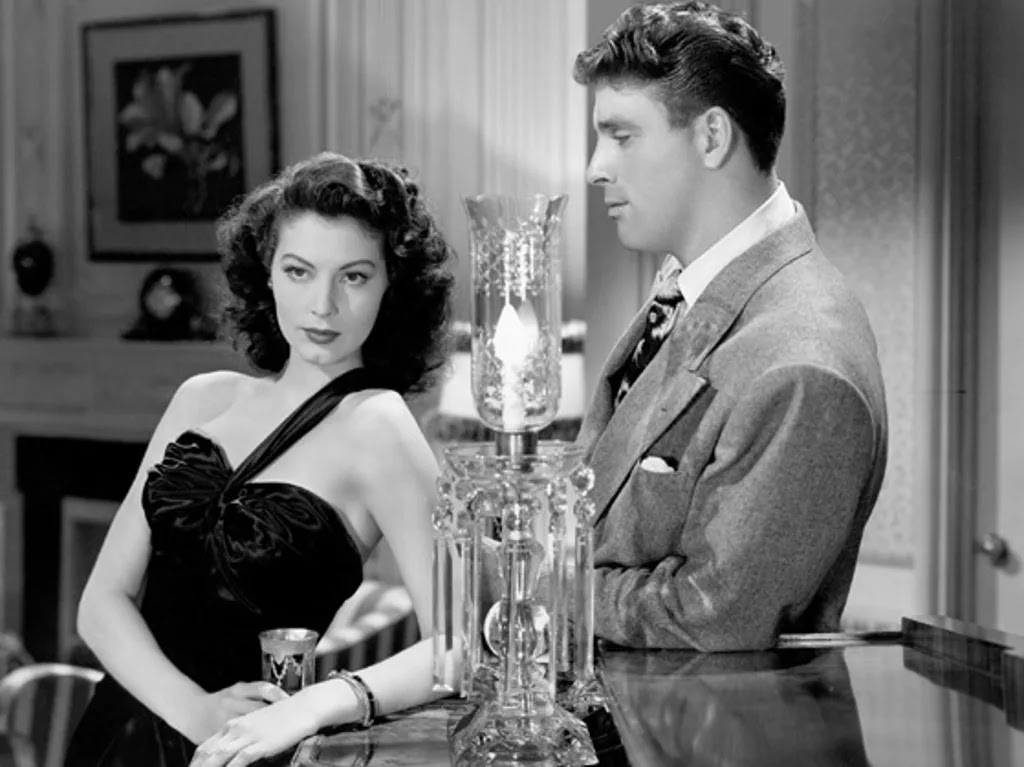
Burt Lancaster and Ava Gardner in director Robert Siodmak's "The Killers"

The Killers (1946) is an American film noir directed by Robert Siodmak and starring Burt Lancaster in his movie debut and Ava Gardner. The film co-stars Edmond O'Brien, Sam Levine, and Charles McGraw. The film is based on The Killers, a short story by Ernest Hemingway. The cinematography is by Elwood Bredell (The Phantom Lady 1944).

A former boxer known as "The Swede" (Lancaster) is murdered by some criminal associates from his past. Insurance agent Jim Reardon (O'Brien) is assigned to find the beneficiary of the Swede's $2,500 insurance policy. By interviewing people who knew the Swede, Reardon pieces together the tragic events that led to his death. 

What Reardon discovers is that no one's life is as it seems on the surface.

Ava Gardner and Burt Lancaster


Robert Siodmak (1900 – 1973) had a very successful career in Hollywood and is best known for his thrillers and films noir. He signed a seven-year contract with Universal and directed The Killers (1946), the film that made Ava Gardner a star. He worked with some of the top movie stars during Hollywood’s Golden Age, including Deanna Durbin, Gene Kelly, Burt Lancaster, Dorothy McGuire, Yvonne de Carlo, Olivia de Havilland, and Barbara Stanwyck. Often compared to Hitchcock in his prime, he never got the recognition that the Master of Suspense did, but most of his films hold up remarkably well and are worth watching.

Burt Lancaster (1913- 1994) was an American actor and producer. He won a Best Actor Academy Award for his performance in Elmer Gantry (1960). Lancaster made his film debut in The Killers (1946). After the release of that film, he was on his way as a leading man, starring in quick succession Desert Fury (1947), Brute Force (1947), Variety Girl (1947), I Walk Alone (1947), All My Sons (1948), and Sorry, Wrong Number (1948). Other popular films starring Lancaster include The Flame and the Arrow (1950), Jim Thorpe All-American (1951), From Here to Eternity (1953), The Rose Tattoo (1955), and Birdman of Alcatraz (1962).

Ava Gardner (1922 - 1990) was an American actress who signed a film contract with M-G-M in 1941. She played minor roles in a variety of films until her breakout performance in The Killers (1946) on loan to Universal. She hit her stride in the 1950s with films like Mogambo (1953), The Knights of the Round Table (1953), Bhowani Junction (1956), The Sun Also Rises (1957), On the Beach (1959), and 55 Days in Peking (1963). Later in her career, she had a recurring role on the television series Knots Landing (1985). During her prime, Garnder was considered one of the world’s most beautiful women.


The Killers trivia
  • Burt Lancaster was the third choice to play the Swede. Wayne Morris and Sonny Tufts were first and second choices but were unavailable.
  • Ava Gardner was the producer's only choice to play Kitty Collins.
  • The movie ran 24 hours in New York City to accommodate the crowds, breaking previous box office records.
  • Ernest Hemingway was a fan of the film adaptation of his short story.


To watch the film on YouTube, click on the link below.


To join the conversation on August 22, 2022, at 6:30 p.m. Central Time, click here. Once you RSVP, you will receive an invitation with a link to the discussion on Zoom.


Discussion questions
  1. The Killers made Lancaster a movie star overnight. What did you think of his performance?
  2. Ava Gardner was under contract with MGM since 1941. On loan to Universal, the role of Kitty Collins elevated her to leading-lady status. Was she a convincing femme fatale?
  3. Did you think there was any significance to Kitty's name?
  4. What did you think of the narrative style? Did it remind you of any other movies?
  5. Did anything in this film surprise you?
  6. Would you have waited in line to have seen this film in 1946? Why do you think this movie was such a hit in its day?


Wednesday, November 18, 2020

Dorothy McGuire descends "The Spiral Staircase"

The Spiral Staircase (1946) is a psychological suspense film directed by Robert Siodmak starring Dorothy McGuire, George Brent, and Ethel Barrymore. Dore Schary produced the film; the screenplay was by Mel Dinelli, the music by Roy Webb, and the cinematography by Nicholas Musuraca.


The setting is a small New England town during the early 20th century terrorized by a serial killer targeting handicapped women. McGuire stars as Helen, a mute since childhood, after she witnessed her parents burn to death in a fire. She is employed by Mrs. Warren (Barrymore), who insists that Helen leave town because she fears she could be the killer’s next victim. Does Mrs. Warren know who the killer is? Mrs. Warren is a widow with two sons: Professor Albert Warren (Brent) and Steven Warren (Gordon Oliver). Albert is Mrs. Warren’s stepson, the son of her husband’s first marriage. Steven is her biological son.

Dorothy McGuire walks home in the dark.

All the action takes place during one day, which adds to the film’s increasing tension. The cast also features Kent Smith, Elsa Lanchester, Sara Allgood, and Rhonda Fleming.

Robert Siodmak (1900 – 1973) had a very successful career in Hollywood and is best known for his thrillers and films noir. He signed a seven-year contract with Universal and directed The Killers (1946), the film that made Ava Gardner a star. He worked with some of the top movie stars during Hollywood’s Golden Age, including Deanna Durbin, Gene Kelly, Burt Lancaster, Dorothy McGuire, Yvonne de Carlo, Olivia de Havilland, and Barbara Stanwyck. Often compared to Hitchcock in his prime, he never got the recognition that the Master of Suspense did, but most of his films hold up remarkably well and are worth watching.

Dore Schary (1905 – 1980) was an American screenwriter, producer, and studio executive. Schary was a journalist and acted in bit parts on Broadway. Schary wrote screenplays for all the major studios before becoming a film executive with David O. Selznick’s Vanguard Films where he oversaw the production of I’ll Be Seeing You (1944), The Farmer’s Daughter (1947), and The Bachelor and the Bobby-Soxer (1947). He moved on to the head of production for RKO where he produced Mr. Blandings Builds His Dream House (1948) and Crossfire (1948). Schary left RKO and went to M-G-M to be vice president in charge of production in 1948 and immediately clashed with studio head Louis B. Meyer. Things came to a head with Meyer resigning and Schary made the head of the studio. After a series of film flops, Schary was fired from M-G-M in 1957. Schary went on to have success writing and producing shows on Broadway including Sunrise at Campobello (1958-59). He went on to write and produce the film version to great success.

Mel Dinelli (1912 – 1991) was an American writer for theater, radio, and film. Dinelli wrote the screenplays for The Window (1949), The Reckless Moment (1949), Cause for Alarm! (1951), Beware, My Lovely (1952), Jeopardy (1953), and Lizzie (1957).

Roy Webb (1888 – 1982) was an American film music composer. Webb was born in New York City and conducted on Broadway before moving to Hollywood in the late 1920s where he became the music director at RKO where he stayed until 1955. He was nominated for seven Academy Awards for his film scores including scores for My Favorite Wife (1940), I Married a Witch (1942), and The Enchanted Cottage (1945). Other famous film scores include Notorious (1946), Out of the Past (1947), I Remember Mama (1948), and Teacher’s Pet (1958). A graduate of Columbia University, Webb wrote the fight song “Roar, Lion Roar” in 1925.

Nicholas Musuraca (1892 – 1975) was a cinematographer best known for his work at RKO where he helped establish their house style. Musuraca filmed producer Val Lewton’s famous horror film Cat People (1942) and the film noir classic Out of the Past (1947), and director George Stevens’s I Remember Mama (1948). Other movies he filmed include Deadline at Dawn (1946), The Locket (1946), and The Bachelor and the Bobby-Soxer (1947).

McGuire at the movies

Dorothy McGuire (1916 – 2001) was an American theater and film actress. McGuire developed an interest in acting at a young age. At 13, she made her stage debut in A Kiss for Cinderella in Omaha, Nebraska, her hometown. Henry Fonda, also from Omaha, was her costar. As an adult, she achieved fame on Broadway in Claudia”(1941 to 1943). In 1943, she starred in the film version with Robert Young that was a huge success. She reunited with Young for The Enchanted Cottage (1945) and replaced Gene Tierney in A Tree Grows in Brooklyn (1945). She was nominated for Best Actress in Gentleman’s Agreement (1947). Some of her other films include Three Coins in the Fountain (1954), Trial (1955), and Friendly Persuasion (1956). McGuire made several popular films for Walt Disney including Old Yeller (1957), Swiss Family Robinson (1960), and Summer Magic (1963).

George Brent (1904 – 1979) was an Irish-American stage, film, and television actor. Brent went to Hollywood in 1930 and appeared in supporting roles in several films. In 1931, he signed with Warner Bros. where he played opposite Barbara Stanwyck in So Big! (1932). That same year he co-starred with Stanwyck again in The Purchase Price. In 1933 he appeared in the musical classic 42nd Street, The Keyhole with Kay Francis and Stanwyck again in Baby Face. He made a string of pictures with Bette Davis: Jezebel (1938), Dark Victory (1939), The Old Maid (1939), The Great Lie (1941), and In This Our Life (1942). Brent continued acting in movies and television till 1978, a year before he died of emphysema.

Ethel Barrymore and McGuire

Ethel Barrymore (1879 – 1959) was an American actress whose career spanned more than six decades. She was the sister of actors John and Lionel Barrymore, the aunt of John Drew Barrymore, and the great-aunt of Drew Barrymore. Barrymore established herself as a major Broadway actress in the 1920s and appeared on the cover of Time magazine in 1924. Barrymore made 15 silent movies and appeared in the early talking picture Rasputin and the Empress (1932) with her brothers John and Lionel. She won an Academy Award for Best Supporting Actress for her role in None but the Lonely Heart (1944) co-starring Cary Grant. She was nominated for three more Best Supporting Actress Oscars for The Spiral Staircase (1946), The Paradine Case (1947), and Pinky (1949).

A cautious McGuire navigates The Spiral Staircase


The Spiral Staircase trivia:

  • Ingrid Bergman was originally considered for the role of Helen.
  • The Killer’s eyes are those of director Robert Siodmak.
  • The silent film being watched by Dorothy McGuire’s character is D.W. Griffith’s The Sands of Time (1922).
  • Included among the American Film Institute’s 2001 list of 400 movies nominated for the top 100 Most Heart-Pounding American Movies.


To watch the film on YouTube, click the link below.


To join us on Zoom for a discussion of the film on November 24, 2020, at 6:30 p.m. Central Time, click on the link to the Chicago Film Club.


Discussion questions:

  1. What genre category do you think this film fits? 
  2. Some have called it a horror film. Is that a fair assessment?
  3. What did you make of the dynamic between the two brothers?
  4. Did you wonder if Mrs. Warren knew who the murderer was?
  5. Was the romance between Helen and Dr. Parry believable?


Related Posts Plugin for WordPress, Blogger...