Showing posts with label James Gleason. Show all posts

Tuesday, February 17, 2026

Spency Tracy and Irene Dunne star in “A Guy Named Joe”

A Guy Named Joe (1943) is an American romantic drama directed by Victor Fleming and starring Spencer Tracy, Irene Dunne, and Van Johnson in a breakout performance. Also in the cast are Lionel Barrymore, Ward Bond, James Gleason, Barry Nelson, Don Defore, and Esther Williams.

During the height of World War II, Pete Sandidge (Spencer Tracy) is a reckless but talented B-25 bomber pilot stationed in England. Despite the pleas of his devoted girlfriend, Women Airforce Service Pilot (WASP) Dorinda Durston (Irene Dunne), Pete continues to take unnecessary risks in the air. His luck eventually runs out during a perilous mission when he sacrifices himself to destroy a German aircraft carrier. Pete dies in the crash, leaving a devastated Dorinda behind to mourn the man she couldn’t convince to fly safely.

Pete awakens in a celestial “pilot’s heaven,” where he meets his “General”—a high-ranking officer who explains that deceased pilots have a new mission: to act as unseen guardians and mentors to the next generation of fliers. Pete is assigned to guide Ted Randall (Van Johnson), a young, green pilot who reminds Pete of his own younger, impulsive self. As Pete whispers advice and maneuvers into Ted’s subconscious, the novice pilot blossoms into an ace, but the situation becomes complicated when Ted is reassigned to the Pacific and falls deeply in love with a still-grieving Dorinda.

The film reaches its emotional climax as Pete must overcome his own ghostly jealousy to help Dorinda find happiness again. Realizing that his final duty is to let her go, Pete uses his spiritual influence to guide Dorinda through a dangerous solo bombing mission, ensuring her safety and giving her the closure she needs to embrace a future with Ted. Pete finally accepts his place in the afterlife, understanding that his legacy lives on through the lives he saved and the love he fostered, embodying the soldier’s creed that no one truly dies as long as their spirit guides those who follow.


Victor Fleming (1889 – 1949) was a quintessential “man’s man” of Hollywood’s Golden Age, a former auto racer and cameraman whose rugged, masculine energy translated into a reputation for being a master of large-scale, high-stakes productions. Known for his ability to handle difficult personalities and complex sets, he achieved the unprecedented feat of directing the two most iconic films of 1939: the whimsical fantasy The Wizard of Oz and the sprawling historical epic Gone with the Wind, for which he won the Academy Award for Best Director. Though he was often viewed as a “studio craftsman” rather than a stylistic auteur, Fleming possessed a unique talent for extracting legendary performances from stars like Clark Gable and Vivien Leigh, ultimately shaping the visual language of American escapism before his sudden death in 1949.

Spencer Tracy (1900–1967) was a titan of Hollywood’s Golden Age, revered by his peers as the “actor’s actor” for a naturalistic, understated style that made him one of the screen’s greatest realists. Born in Milwaukee, Wisconsin, Tracy rose from the Broadway stage to become a dominant force at MGM, where he became the first person to win back-to-back Academy Awards for Best Actor for his roles in Captains Courageous (1937) and Boys Town (1938). Though his off-screen life was often marked by a private battle with alcoholism and a complex, decades-long romantic partnership with actress Katharine Hepburn, his professional consistency was unmatched, earning him a total of nine Oscar nominations over a career that spanned nearly four decades. He delivered his final performance in Guess Who's Coming to Dinner (1967), passing away just weeks after filming concluded and leaving behind a legacy as one of the most versatile and enduring figures in cinematic history.

Irene Dunne (1898–1990) was often called the “First Lady of Hollywood,” a title earned through her unparalleled versatility and a reputation for being one of the most gracious and professional stars in the industry. Born in Louisville, Kentucky, she transitioned from a successful career in musical theater and opera to film, where she became one of the few actresses to excel equally in heavy melodramas, sophisticated screwball comedies, and lavish musicals. Over her two-decade career, she earned five Academy Award nominations for Best Actress for diverse roles in films such as Cimarron (1931), The Awful Truth (1937), and I Remember Mama (1948), yet she never won the elusive trophy. A woman of deep Catholic faith and a happy, 40-year marriage to dentist Francis Griffin, Dunne retired from the screen in 1952 at the height of her powers to focus on philanthropy and international diplomacy, passing away at her home in Los Angeles at the age of 91.

Van Johnson (1916–2008) was the quintessential “boy next door’ of the WWII era, whose sunny personality, athletic build, and shock of red hair made him one of MGM's biggest stars and a premier idol for the “bobby-soxer” generation. Born in Newport, Rhode Island, he worked his way from Broadway choruses to Hollywood, where his career nearly ended before it truly began due to a near-fatal car accident during the filming of A Guy Named Joe (1943). The accident left him with a metal plate in his forehead and rendered him unfit for military service, ironically allowing him to become the screen’s most ubiquitous soldier while real-life actors were away at war. Known for his “all-American” reliability in hits like Thirty Seconds Over Tokyo (1944) and the gritty Battleground (1949), Johnson successfully navigated the transition to musicals and television in later years, maintaining a busy career on stage and screen until his death at the age of 92.

Ward Bond, Irene Dunne, and Spencer Tracy

A Guy Named Joe trivia

  • The Saved Career of Van Johnson - The film was nearly recast when Van Johnson was involved in a horrific car accident during production. He suffered a skull fracture so severe that the studio wanted to replace him to stay on schedule. However, stars Spencer Tracy and Irene Dunne refused to let that happen. They insisted on a production hiatus until Johnson was healthy enough to return, effectively saving his career and turning him into a major star.
  • A “Spiritual” Connection to Steven Spielberg - If the plot sounds familiar, it’s because Steven Spielberg remade the film in 1989 as Always. Spielberg was a lifelong fan of the original and even watched it multiple times during the production of Jaws for inspiration. In his version, he swapped the WWII planes for firefighting planes and cast Audrey Hepburn in her final film role as the “celestial” guide (the role originally played by Lionel Barrymore).
  • The Real-Life Tragedy of the “P-38” - During the filming of the aerial sequences, a real-life tragedy occurred that mirrored the film's somber themes. A P-38 Lightning pilot, Major James P. Murphy, was involved in a deadly crash while performing stunts for the movie. This somber reality hung over the set, reinforcing the film’s status as a tribute to the very real dangers faced by Allied pilots.
  • Patriotic Title Origins - The title A Guy Named Joe comes from a common piece of American military slang from the era. It was based on the sentiment that any “average Joe” could be a hero. In fact, General Claire Chennault, leader of the “Flying Tigers,” once remarked that “A guy named Joe” was the backbone of the American air effort, a quote that served as the primary inspiration for the movie’s name and its focus on the common soldier.

Click HERE watch the movie online.

Click HERE to join the online discussion on February 23, 2026, at 6:30 p.m. Central Time. Once you RSVP, you will receive an invitation with a link to the discussion on Zoom.


Spencer Tracy, Irene Dunne, and Van Johnson

Discussion questions

  1. The Morality of the “Invisible Guide” - Pete’s role in the afterlife is to “whisper” guidance to young pilots, but he often struggles with his own personal feelings, especially regarding Ted’s pursuit of Dorinda. Does Pete’s interference in the lives of the living represent a selfless act of mentorship, or does it cross an ethical line by manipulating the free will of those he left behind?
  2. Propaganda vs. Grief - Released in 1943, the film served as a morale booster for a nation in the midst of heavy casualties. How does the film’s depiction of “Heaven” as a military bureaucracy serve the needs of a wartime audience? Does the idea that “no one truly dies” provide a genuine comfort, or does it risk trivializing the finality of the soldiers’ sacrifice?
  3. The “Reckless Hero” Archetype - At the beginning of the film, Pete is criticized for his individualism and “hot-dogging” in the air. By the end, he is teaching Ted the importance of discipline and teamwork. How does this shift reflect the military’s real-world transition from the “lone wolf” pilots of WWI to the highly coordinated, bureaucratic air power required for success in WWII?
  4. Dorinda’s Agency and the Ending - In the film’s climax, Pete “allows” Dorinda to take on a dangerous mission to find her own closure. Some viewers argue that Pete is still the one in control, even in death. Does the ending empower Dorinda as a pilot and a woman, or does it reinforce the idea that her life and safety are ultimately guided by the men—living or dead—in her life?

Tuesday, September 19, 2023

Gregory Peck discovers “The Keys of the Kingdom”

The Keys of the Kingdom (1944) is an American film based on the novel of the same name by A. J. Cronin. The film was directed by John M. Stahl and produced by Joseph L. Mankiewicz. The film stars Gregory Peck, Thomas Mitchell, Rose Stradner, Edmund Gwenn, James Gleason, Sir Cedric Hardwicke, Anne Revere, and Vincent Price. Others in the cast include Roddy McDowall and Peggy Ann Garner.

The plot focuses on Father Francis, (Peck) an old man, who returns to the parish of his youth. Monsignor Sleeth (Hardwicke) believes that it would be best if he retires, which is not what Father Francis desires. The Monsignor gets ready for bed and notices Father Francis’s journal. He begins to read it and learns all about the elderly priest’s life from his youth until today. He reads of Francis’s work in China and the church and school that he helped establish with the help of three missionary nuns.

As Monsignor Sleeth finishes the journal, he has second thoughts about Father Francis.

Gregory Peck and Rose Stradner

John M. Stahl (1886 – 1950) was an American film director and producer who began his career in silent movies in 1913. In 1919 he signed with the film company Louis B. Mayer Pictures, which would eventually become Metro-Goldwyn-Mayer. Stahl made the transition to sound and directed Imitation of Life (1934) starring Claudette Colbert which was nominated for a Best Picture Oscar. In 1935, he directed Magnificent Obsession starring Irene Dunne and Robert Taylor. Other films of note include Back Street (1932) starring Dunne and John Boles, and The Keys of the Kingdom (1944) starring Gregory Peck. Many believe that director Douglas Sirk was influenced by Stahl’s melodramatic style. Sirk remade both Magnificent Obsession (1954) and Imitation of Life (1959).

Gregory Peck (1916 – 2002) was one of the biggest stars in Hollywood. He had three Best Actor nominations early in his career for The Keys to the Kingdom (1944), The Yearling (1946), Gentleman’s Agreement (1947), and Twelve O’Clock High (1949). He had non-exclusive contracts with David O. Selznick and Twentieth Century-Fox, which gave him great flexibility in the roles he chose to play. Other classic Peck film roles include Roman Holiday (1953), The Big Country (1958), and The Guns of Navarone (1961). He finally won a Best Actor Academy Award for his iconic portrayal of Atticus Finch in To Kill a Mockingbird (1962).

Thomas Mitchell (1892 –1962) was an American character actor who had a long career in film and theater. Mitchell was one of the most recognizable character actors in movies during the 1930s and 1940s. In 1939, Mitchell had important roles in five classic films: StagecoachOnly Angles Have WingsMr. Smith Goes to WashingtonGone with the Wind, and The Hunchback of Notre Dame. Mitchell won a Best Supporting Actor Academy Award for his role as Doc Josiah Boone in Stagecoach.

Vincent Price (1911 - 1993) was an American actor who worked on the stage, in film, radio, and television. He was also an art collector and author. Price established himself as a character actor in the 1940s with roles in films like The Song of Bernadette (1943), Laura (1944), The Keys of the Kingdom (1944), and Leave Her to Heaven (1945). In the 1950s, he established himself as a star of horror films including House of Wax (1953), The Fly (1958), and House on Haunted Hill (1959). Toward the end of his career, Price had important roles in The Whales of August (1987) and Tim Burton’s Edward Scissorhands (1990).

Roddy McDowall (1928 - 1998) was a British-born American actor. He started his career as a baby model and then began appearing in films as a young child in England. When he came to Hollywood, he became an in-demand child actor where he appeared in dozens of films including My Friend Flicka (1943), Lassie Come Home (1943), The White Cliffs of Dover (1944), and Thunderhead, Son of Flicka (1945). McDowell was able to successfully transition from child actor to adult actor appearing in lead and supporting roles in films like Midnight Lace (1960), The Longest Day (1962), Cleopatra (1963), and That Darn Cat! (1965). He may be best known as Cornelius, one of the intelligent apes in The Planet of the Apes (1968), its sequels, and short-lived TV series. McDowall also served as a producer of Overboard (1987) as well as co-starring with Goldie Hawn and Kurt Russell.

Peggy Ann Garner (1932 – 1984) was an American child film actress who achieved great fame during the mid-1940s. Garner entered films at age six. By age twelve, she had reached her peak playing the role of Francie Nolan in A Tree Grows in Brooklyn. For her performance in that film, Garner won an Academy Juvenile Award. Garner was memorable as the title character as a young girl in Jane Eyre (1943). After her success in A Tree Grows in Brooklyn, Garner had starring roles in Nob Hill (1945), Junior Miss (1945), and Home Sweet Homicide (1946). Soon thereafter, Garner was relegated to a supporting player, never able to successfully transition to adult roles. In spite of the lack of film roles, Garner had success on Broadway and appeared on popular television shows including Perry MasonCombat!BatmanThe Big Valley, and Lou Grant.

The Keys of the Kingdom trivia

  • This film garnered Peck’s first Academy Award nomination.
  • Joseph Cotten tested for the role of Father Francis. Other actors considered were Spencer Tracy, Orson Welles, Edward G. Robinson, Gene Kelly, Alan Ladd, and Henry Fonda.
  • Ingrid Bergman was considered for the part of Mother Maria Veronica. The role went to Rose Stradner, the wife of producer Joseph L. Mankiwicz. This was her final film.
  • Alfred Hitchcock liked the novel and hoped to direct it.
  • Thomas Mitchell was in his 50s and Peck in his 20s when the film was released which makes it a bit odd that they were cast as best friends from childhood.


To watch the film on YouTube, click on the link.


To join the discussion on Monday, September 25, 2023, at 6:30 Central Time, click here. Once you RSVP, you will receive an invitation and a link to join the discussion on Zoom.


Publicity photo of Gregory Peck and Roddy McDowall reading the novel on set

Discussion questions

  1. This was Gregory Peck’s breakthrough film. What did you think of his performance?
  2. The film is an example of the studio system at its zenith. The depth of the supporting cast is staggering. Of all the great supporting players, did you have a favorite or one that stood out to you?
  3. The movie was filmed entirely on the backlot and the sound stages at 20th Century-Fox. What did you think of the production? Were you convinced the action took place in China?
  4. What do you think the movie had to say about faith and belief?
  5. Did anything about the film surprise you?


Saturday, April 16, 2022

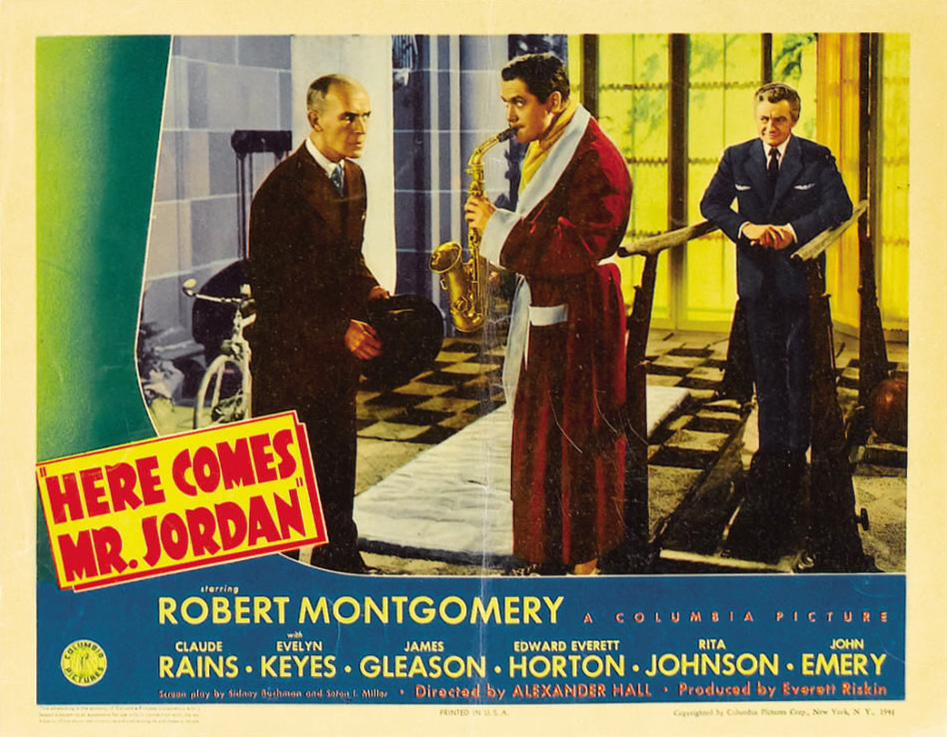
Here comes Robert Montgomery in "Here Comes Mr. Jordan"

Here Comes Mr. Jordan (1941) is an American fantasy romantic comedy directed by Alexander Hall and starring Robert Montgomery, Claude Rains, and Evelyn Keyes. The screenplay was written by Sidney Buchman and Seton I. Segall and the cinematography was by Joseph Walker (It Happened One Night, It's a Wonderful Life).

Boxer and amateur pilot Joe Pendleton (Montgomery) while flying to his next bout in New York City. A severed control cable cause him to crash his plane. An overly conscientious Angel 7013 (Edward Everett Horton) retrieves his soul concluding that he couldn't survive the crash. Upon further examination, Angel 7013's superior Mr. Jordan (Raines) determined that Joe should have lived another 50 years. 

To make amends, Mr. Jordan has Joe's soul enter the body of a crooked banker named Bruce Farnsworth who was murdered by his wife and his secretary. 

Can Joe find happiness and resume his boxing career in the body of another man?


Alexander Hall (1894 - 1968) was an American film director. He was working on the stage at age four and continued acting. As an adult, he worked in silent film before becoming interested in film production. Hall worked as a film editor and assistant director until 1932. His first directed film was Sinners in the Sun. In 1937, he signed a contract with Columbia Pictures and worked there almost exclusively. He gained a reputation for directing sophisticated comedies. Some of the films he directed include Little Miss Marker (1934), My Sister Eileen (1942), They All Kissed the Bride (1942), Down to Earth (1947), and The Great Lover (1949). 

Robert Montgomery (1904 - 1981) was an actor, director, and producer. Montgomery began his career on the stage but was soon signed by M-G-M becoming one of that studio's most popular leading men. The actor was adept at both dramas and comedies. Montgomery was twice nominated for the Best Actor Academy Award. In 1937, he was nominated for his performance as a murderous Irish handyman in Night Must Fall, and for his comedic performance in Here Comes Mr. Jordan (1942). While at M-G-M, he worked with all of the great leading ladies of the day including Norma Shearer, Joan Crawford, Ann Harding, and Greta Garbo. Before the United States entered World War II, Montgomery joined the American Field Services in London and drove ambulances in France. When the United States entered the war, he joined the Navy. He starred opposite Carole Lombard in Mr. & Mrs. Smith, They Were Expendable (1945), and two film noir classics The Lady in the Lake (1947) and Ride the Pink Horse (1947). From 1950 to 1957, he hosted the Emmy Award-winning series Robert Montgomery Presents. In 1955 he won a Tony Award for his direction of the play The Desperate Hours. He was also the father of actress Elizabeth Montgomery.

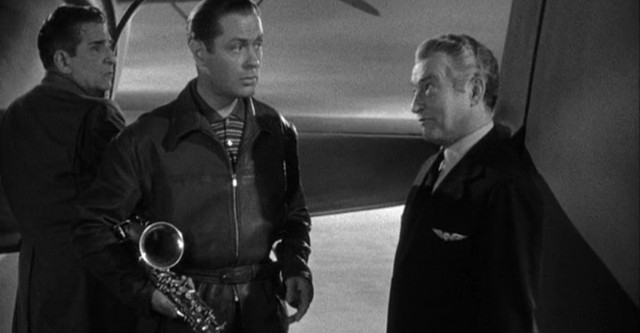
Edward Everett Horton, Robert Montgomery, and Claude Rains


Claude Rains (1889 - 1967) was a British actor whose career lasted almost seven decades. He was one of the most highly regarded character actors during Hollywood's classical period. He appeared in a number of classic films including The Adventures of Robin Hood (1938), Mr. Smith Goes to Washington (1939), The Wolf Man (1941), Casablanca (1942), and King's Row (1942). Later in his career, he starred in Lawrence of Arabia (1962), and The Greatest Story Ever Told (1965). He starred in four films with Bette Davis including Now, Voyager (1942), and Mr. Skeffington (1944). Rains was a four-time Best Supporting Actor Academy Award nominee. Many of his contemporaries consider him one of the greatest actors of the 20th century.


To watch the film on YouTube, click on the link below.


Here Comes Mr. Jordan trivia
  • The film was originally meant to be a vehicle for Cary Grant.
  • It won two Academy Awards for Best Writing, Original Story, and Best Writing Screenplay. The film was nominated for five other Academy Awards including Best Director and Best Actor and Best Supporting Actor nods for Robert Montgomery and James Gleason.
  • Columbia Pictures Studio Chief Harry Cohn was reluctant to finance the picture, thinking it wasn't the type of story that would be popular with the public.
  • Montgomery was loaned out from his home studio, M-G-M.
  • The movie was remade as Heaven Can Wait (1978) starring Warren Beatty.


To join the discussion on May 2, 2022, at 6:30 p.m. Central Time, click here. When you RSVP, you will receive an invitation and Zoom link to the discussion.


Discussion questions:
  1. Was Robert Montgomery convincing as a New York City boxer?
  2. Did this film remind you of any others you've seen?
  3. If you saw Warren Beatty in Heaven Can Wait, how does it compare to the original?
  4. The film is filled with great character actors; did one character actor stand out to you?

John Emery, Rita Johnson, Robert Montgomery, Evelyn Keyes, Claude Rains


Related Posts Plugin for WordPress, Blogger...