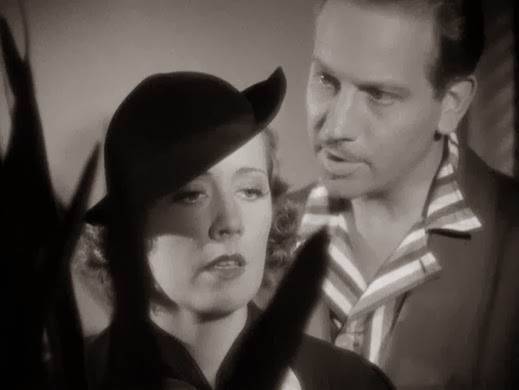
Showing posts with label Irene Dunne. Show all posts

Tuesday, February 17, 2026

Spency Tracy and Irene Dunne star in “A Guy Named Joe”

A Guy Named Joe (1943) is an American romantic drama directed by Victor Fleming and starring Spencer Tracy, Irene Dunne, and Van Johnson in a breakout performance. Also in the cast are Lionel Barrymore, Ward Bond, James Gleason, Barry Nelson, Don Defore, and Esther Williams.

During the height of World War II, Pete Sandidge (Spencer Tracy) is a reckless but talented B-25 bomber pilot stationed in England. Despite the pleas of his devoted girlfriend, Women Airforce Service Pilot (WASP) Dorinda Durston (Irene Dunne), Pete continues to take unnecessary risks in the air. His luck eventually runs out during a perilous mission when he sacrifices himself to destroy a German aircraft carrier. Pete dies in the crash, leaving a devastated Dorinda behind to mourn the man she couldn’t convince to fly safely.

Pete awakens in a celestial “pilot’s heaven,” where he meets his “General”—a high-ranking officer who explains that deceased pilots have a new mission: to act as unseen guardians and mentors to the next generation of fliers. Pete is assigned to guide Ted Randall (Van Johnson), a young, green pilot who reminds Pete of his own younger, impulsive self. As Pete whispers advice and maneuvers into Ted’s subconscious, the novice pilot blossoms into an ace, but the situation becomes complicated when Ted is reassigned to the Pacific and falls deeply in love with a still-grieving Dorinda.

The film reaches its emotional climax as Pete must overcome his own ghostly jealousy to help Dorinda find happiness again. Realizing that his final duty is to let her go, Pete uses his spiritual influence to guide Dorinda through a dangerous solo bombing mission, ensuring her safety and giving her the closure she needs to embrace a future with Ted. Pete finally accepts his place in the afterlife, understanding that his legacy lives on through the lives he saved and the love he fostered, embodying the soldier’s creed that no one truly dies as long as their spirit guides those who follow.


Victor Fleming (1889 – 1949) was a quintessential “man’s man” of Hollywood’s Golden Age, a former auto racer and cameraman whose rugged, masculine energy translated into a reputation for being a master of large-scale, high-stakes productions. Known for his ability to handle difficult personalities and complex sets, he achieved the unprecedented feat of directing the two most iconic films of 1939: the whimsical fantasy The Wizard of Oz and the sprawling historical epic Gone with the Wind, for which he won the Academy Award for Best Director. Though he was often viewed as a “studio craftsman” rather than a stylistic auteur, Fleming possessed a unique talent for extracting legendary performances from stars like Clark Gable and Vivien Leigh, ultimately shaping the visual language of American escapism before his sudden death in 1949.

Spencer Tracy (1900–1967) was a titan of Hollywood’s Golden Age, revered by his peers as the “actor’s actor” for a naturalistic, understated style that made him one of the screen’s greatest realists. Born in Milwaukee, Wisconsin, Tracy rose from the Broadway stage to become a dominant force at MGM, where he became the first person to win back-to-back Academy Awards for Best Actor for his roles in Captains Courageous (1937) and Boys Town (1938). Though his off-screen life was often marked by a private battle with alcoholism and a complex, decades-long romantic partnership with actress Katharine Hepburn, his professional consistency was unmatched, earning him a total of nine Oscar nominations over a career that spanned nearly four decades. He delivered his final performance in Guess Who's Coming to Dinner (1967), passing away just weeks after filming concluded and leaving behind a legacy as one of the most versatile and enduring figures in cinematic history.

Irene Dunne (1898–1990) was often called the “First Lady of Hollywood,” a title earned through her unparalleled versatility and a reputation for being one of the most gracious and professional stars in the industry. Born in Louisville, Kentucky, she transitioned from a successful career in musical theater and opera to film, where she became one of the few actresses to excel equally in heavy melodramas, sophisticated screwball comedies, and lavish musicals. Over her two-decade career, she earned five Academy Award nominations for Best Actress for diverse roles in films such as Cimarron (1931), The Awful Truth (1937), and I Remember Mama (1948), yet she never won the elusive trophy. A woman of deep Catholic faith and a happy, 40-year marriage to dentist Francis Griffin, Dunne retired from the screen in 1952 at the height of her powers to focus on philanthropy and international diplomacy, passing away at her home in Los Angeles at the age of 91.

Van Johnson (1916–2008) was the quintessential “boy next door’ of the WWII era, whose sunny personality, athletic build, and shock of red hair made him one of MGM's biggest stars and a premier idol for the “bobby-soxer” generation. Born in Newport, Rhode Island, he worked his way from Broadway choruses to Hollywood, where his career nearly ended before it truly began due to a near-fatal car accident during the filming of A Guy Named Joe (1943). The accident left him with a metal plate in his forehead and rendered him unfit for military service, ironically allowing him to become the screen’s most ubiquitous soldier while real-life actors were away at war. Known for his “all-American” reliability in hits like Thirty Seconds Over Tokyo (1944) and the gritty Battleground (1949), Johnson successfully navigated the transition to musicals and television in later years, maintaining a busy career on stage and screen until his death at the age of 92.

Ward Bond, Irene Dunne, and Spencer Tracy

A Guy Named Joe trivia

  • The Saved Career of Van Johnson - The film was nearly recast when Van Johnson was involved in a horrific car accident during production. He suffered a skull fracture so severe that the studio wanted to replace him to stay on schedule. However, stars Spencer Tracy and Irene Dunne refused to let that happen. They insisted on a production hiatus until Johnson was healthy enough to return, effectively saving his career and turning him into a major star.
  • A “Spiritual” Connection to Steven Spielberg - If the plot sounds familiar, it’s because Steven Spielberg remade the film in 1989 as Always. Spielberg was a lifelong fan of the original and even watched it multiple times during the production of Jaws for inspiration. In his version, he swapped the WWII planes for firefighting planes and cast Audrey Hepburn in her final film role as the “celestial” guide (the role originally played by Lionel Barrymore).
  • The Real-Life Tragedy of the “P-38” - During the filming of the aerial sequences, a real-life tragedy occurred that mirrored the film's somber themes. A P-38 Lightning pilot, Major James P. Murphy, was involved in a deadly crash while performing stunts for the movie. This somber reality hung over the set, reinforcing the film’s status as a tribute to the very real dangers faced by Allied pilots.
  • Patriotic Title Origins - The title A Guy Named Joe comes from a common piece of American military slang from the era. It was based on the sentiment that any “average Joe” could be a hero. In fact, General Claire Chennault, leader of the “Flying Tigers,” once remarked that “A guy named Joe” was the backbone of the American air effort, a quote that served as the primary inspiration for the movie’s name and its focus on the common soldier.

Click HERE watch the movie online.

Click HERE to join the online discussion on February 23, 2026, at 6:30 p.m. Central Time. Once you RSVP, you will receive an invitation with a link to the discussion on Zoom.


Spencer Tracy, Irene Dunne, and Van Johnson

Discussion questions

  1. The Morality of the “Invisible Guide” - Pete’s role in the afterlife is to “whisper” guidance to young pilots, but he often struggles with his own personal feelings, especially regarding Ted’s pursuit of Dorinda. Does Pete’s interference in the lives of the living represent a selfless act of mentorship, or does it cross an ethical line by manipulating the free will of those he left behind?
  2. Propaganda vs. Grief - Released in 1943, the film served as a morale booster for a nation in the midst of heavy casualties. How does the film’s depiction of “Heaven” as a military bureaucracy serve the needs of a wartime audience? Does the idea that “no one truly dies” provide a genuine comfort, or does it risk trivializing the finality of the soldiers’ sacrifice?
  3. The “Reckless Hero” Archetype - At the beginning of the film, Pete is criticized for his individualism and “hot-dogging” in the air. By the end, he is teaching Ted the importance of discipline and teamwork. How does this shift reflect the military’s real-world transition from the “lone wolf” pilots of WWI to the highly coordinated, bureaucratic air power required for success in WWII?
  4. Dorinda’s Agency and the Ending - In the film’s climax, Pete “allows” Dorinda to take on a dangerous mission to find her own closure. Some viewers argue that Pete is still the one in control, even in death. Does the ending empower Dorinda as a pilot and a woman, or does it reinforce the idea that her life and safety are ultimately guided by the men—living or dead—in her life?

Wednesday, November 27, 2024

Irene Dunne and Cary Grant discover “The Awful Truth”

 In 1937, Irene Dunne was at the height of her career. The year before, Dunne received a Best Actress Academy Award nomination for Theodora Goes Wild, a comedy role she was reluctant to take. That picture was a critical success for Dunne and a huge box office hit for Columbia Pictures. So it wasn’t surprising that the next picture she would make for the studio would be another comedy.


From Stage To Screen
The Awful Truth was based on a play by Arthur Richman and brought to the screen with the aid of screenwriter Vina Delmar and Theodora Goes Wild screenwriter, Sidney Buchman, who went uncredited. Teamed with Dunne for the first time was Cary Grant. Grant quickly became a top leading man in Hollywood, but his pairing with Dunne was inspired and their on-screen chemistry delighted movie-going audiences. B.R. Crisler writing in his New York Times review said, “Miss Dunne and Mr. Grant, as the couple...have fun with their roles, and the pleasure seems to be shared, on the whole, by the [Radio City] Music Hall audience.”

What Is The Awful Truth?
The plot revolves around the marital woes of Lucy (Dunne) and Jerry (Grant) Warriner. Each becomes suspicious of the others’ marital fidelity, which eventually leads them to divorce court. After the divorce, Lucy and Jerry are consumed with foiling each other’s new romantic interests. Is the awful truth the fact that Lucy and Jerry are still in love?

Get Me Out Of This Picture
Irene Dunne and Cary Grant
Like Dunne in the previous year’s Theodora Goes Wild, Grant wasn’t too happy working on this film. Director Leo McCarey’s working style didn’t sit well with Grant and he tried to get out of the movie, even going so far as requesting he swap roles with supporting player Ralph Bellamy! McCarey liked to get spontaneous performances out of his cast, which meant a lot of on-set improvising, which Grant found unsettling. Eventually, things worked out for all concerned. Ironically, this is the movie that catapulted Grant to superstar status and is responsible for the Grant movie persona beloved by generations of moviegoers.

Comedy Triumph
For Dunne, The Awful Truth was a delightful experience. She loved working with both McCarey (who became a personal friend) and Grant. Professionally, it was another triumph. Once again, the critics raved about her and the film. And once again she was nominated for Best Actress by the Motion Picture Academy. If there was any doubt about Dunne’s comedy chops, they were all dispelled when the film was first released on October 21, 1937. Dunne and Grant would go on to star in two other popular films: the comedy My Favorite Wife (1940) and the melodrama Penny Serenade (1941).

Award Winner
The Awful Truth was nominated for six Academy Awards, including Best Picture, Best Director, Best Screenplay, and Best Supporting Actor. McCarey won the only Oscar for his direction and ensured his place in motion picture history.

Lasting Legacy
In 2000, the American Film Institute listed The Awful Truth at #68 on its list of 100 Years…100 Laughs. In 2002, the AFI listed it at #77 on the 100 Years…100 Passions list.

Leo McCarey (1898 – 1969) was an American film director, screenwriter, and producer. McCarey is perhaps most famous for his critically acclaimed and commercially popular comedies like Duck Soup (1933), The Ruggles of Red Gap (1935), and The Awful Truth (1937). Other popular films directed by McCarey include Going My Way (1944), The Bells of St. Mary’s (1945), and Good Sam (1948). McCarey won two Best Director Oscars for The Awful Truth and Going My Way.

Irene Dunne (1898 –1990) was an American actress and singer who was one of the most popular movie stars during Hollywood’s Golden Age. She is probably best remembered for her comedic roles, though she first became famous playing in melodramas like Back Street (1932) and Magnificent Obsession (1935). In fact, Dunne was so popular as a star of melodramas that she was dubbed “The Queen of the Weepies” by the press. Her comedic breakout performance was in Theodora Goes Wild (1936), earning her an Academy Award nomination for Best Actress. She would go on to make other comedy classics like The Awful Truth (1937) where she earned another Best Actress nod, and My Favorite Wife (1940). Dunne and Grant were one of the most popular screen teams in movie history. All three of their films were critical and box office successes. Dunne earned five Academy Award nominations for Best Actress but never won a competitive Oscar. The fact that the Motion Picture Academy never awarded her an Honorary Academy Award for her work is a travesty.

Cary Grant (1904 – 1986) was an English-born American actor who became one of film history's most popular leading men. Grant started his career in vaudeville before heading to Hollywood. He became a superstar in the late 1930s in a series of screwball comedies including The Awful Truth (1937) with Irene Dunne. He was a memorable C. K. Dexter Haven in The Philadelphia Story (1940) opposite Katharine Hepburn and James Stewart. He received two Best Actor nominations for Penny Serenade (1941) and None but the Lonely Hearts (1944). Other classic Grant films include Gunga Din (1939), Only Angels Have Wings (1939), and Arsenic and Old Lace (1944). He made four popular films with Alfred Hitchcock: Suspicion (1941), Notorious (1946), To Catch a Thief (1955), and North by Northwest (1959). He was awarded an Honorary Oscar at the 42nd Academy Awards in 1970.

Click HERE to watch the film on the Internet Archive.

Click HERE to join the online discussion on December 9, 2024, at 6:30 p.m. Central Time. Once you RSVP, you will receive an invitation with a like to join the discussion on Zoom.

Discussion questions

  1. Did either character, Jerry or Lucy break their marriage vows?
  2. Do you think there was a serious message about marriage underneath all the comedy?
  3. What did you think of Irene Dunne and Cary Grant together as a team?
  4. Ralph Bellamy made a career out of being the other man. What did you think of his performance?
  5. Did you have a favorite scene or piece of dialogue?

Tuesday, February 6, 2024

Irene Dunne and Charles Boyer in “Love Affair”

Love Affair (1939) is the original romance directed by Leo McCarey (The Awful Truth) starring Irene Dunne and Charles Boyer.

French painter Michel Marnet (Boyer) and American singer Terry McKay (Dunne) meet aboard a transatlantic ocean liner. Both are engaged, but they are attracted to each other and spend considerable time together. They quickly become the talk of the ship so the two try to be more discreet by eating alone and avoiding being seen together. The ship stops in Madeira where they visit with Michel’s grandmother Janou (Maria Ouspenskaya). His grandmother loves Terry and she wants Michel to settle down and marry her.

When they arrive in New York City, Michel and Terry agree to meet at the top of the Empire State Building in six months. Six months is the amount of time Michel needs to decide if he can drop the playboy life and support a relationship with Terry.

Remade with Cary Grant and Deborah Kerr as An Affair to Remember (1957) and although charming in its own right, it has nothing on the original, which is rarely seen. The film was nominated for six Academy Awards including Best Actress (Dunne), Best Supporting Actress (Ouspenskaya), and Best Writing, Original Screenplay (Mildred Cam and McCarey).

The film was nominated for six Academy Awards, including Best Picture, Best Actress, and Best Supporting Actress.

Irene Dunne and Charles Boyer


Leo McCarey (1898 – 1969) was American film director, screenwriter, and producer. McCarey is perhaps most famous for his critically acclaimed and commercially popular comedies like Duck Soup (1933), The Ruggles of Red Gap (1935), and The Awful Truth (1937). Other popular films directed by McCarey include Going My Way (1944), The Bells of St. Mary’s (1945), and Good Sam (1948). McCarey won two Best Director Oscars for The Awful Truth and Going My Way.

Irene Dunne (1898 –1990) was an American actress and singer who was one of the most popular movie stars during Hollywood’s Golden Age. She is probably best remembered for her comedic roles, though she first became famous playing in melodramas like Back Street (1932) and Magnificent Obsession (1935). In fact, Dunne was so popular as a star of melodramas that she was dubbed “The Queen of the Weepies” by the press. Her comedic breakout performance was in Theodora Goes Wild (1936) which earned her an Academy Award nomination for Best Actress. She would go on to make other comedy classics like The Awful Truth (1937) where she earned another Best Actress nod, and My Favorite Wife (1940). Dunne and Grant were one of the most popular screen teams in movie history. All three of their films were critical and box office successes. Dunne earned a total of five Academy Award nominations for Best Actress but never won a competitive Oscar. The fact that the Motion Picture Academy never awarded her an Honorary Academy Award for her body of work is a travesty.

Charles Boyer (1899 - 1978) was a French-American stage and film actor. Boyer was nominated for the Best Actor Academy Award four times. He became a major movie star in the late 1930s in films like The Garden of Allah (1936), Algiers (1938), and Love Affair (1939). He starred as the evil husband of Ingrid Bergman in Gaslight (1944). Boyer starred opposite most of the top female stars of the period including Claudette Colbert, Marlene Dietrich, Irene Dunne, Jean Arthur, Greta Garbo, Bette Davis, Joan Fontaine, Katharine Hepburn, and Olivia de Havilland. As he grew older, Boyer played supporting roles in film and also starred on Broadway in Kind Sir (1953 - 1954) and The Marriage-Go-Round (1958 - 1960).

Charles Boyer and Irene Dunne


Love Affair trivia

  • The film popularized pink champagne and the champagne cocktail.
  • This is the favorite film of both Dunne and Boyer who were good friends in real life.
  • Due to the popularity of the Dunne and Boyer pairing, they made two more films together: If Tomorrow Comes (1939) and Together Again (1944).
  • Irene Dunne says to Charles Boyer, “Going my way?” Five years later, Leo McCarey would direct the classic Going My Way. Dunne and Boyer had no association with that Best Picture winner.
  • McCarey remade this film in 1957 as An Affair to Remember starring Cary Grant and Deborah Kerr.


Click HERE to watch the film on YouTube.


Click HERE to join the online discussion on February 12, 2024, at 6:30 p.m. Central Time. Once you RSVP, you will receive an invitation and a link to join the discussion on Zoom.


Discussion questions

  1. Did you think that Dunne and Boyer had on-screen chemistry?
  2. Irene Dunne was nominated for Best Actress for her performance (losing to Vivien Leigh in Gone With the Wind). Do you think she gave an Oscar-worthy performance?
  3. If you were Dunne’s character, would you have kept your accident a secret? Why do you think she did?
  4. If you’ve seen An Affair to Remember, do you prefer that version over the original?
  5. Did you have a favorite scene or piece of dialogue?
  6. In his review of the film in The New York Times, Frank S. Nugent said, “A less capable director, with a less competent cast, must have erred one way or the other—either on the side of treacle or on that of whimsy. Mr. McCarey has balanced his ingredients skillfully and has merged them, as is clear in retrospect, into a glowing and memorable picture.” Do you agree with this assessment?


Friday, December 11, 2020

Irene Dunne recalls her marriage to Cary Grant in “Penny Serenade”

Penny Serenade (1941) is an American melodrama directed by George Stevens and starring Irene Dunne and Cary Grant. The film is based on a story by Martha Cheavens that appeared in McCall’s magazine.

Dunne and Grant at the beach in Penny Serenade

Dunne and Grant star as a couple on the brink of divorce after a tragic event in their lives. While preparing to leave her husband, Julie Adams (Dunne) listens to old records that take her back to the early days of her relationship with Roger (Grant). Balancing laughter with tragedy, director Stevens (A Place in the Sun, Giant, Shane) strikes all the right notes with this sentimental classic. 

The excellent supporting cast includes Beulah Bondi and Edgar Buchanan. Grant earned his first Academy Award nomination for Best Actor in a truly moving performance.

P.S. You may need tissues while watching!


George Stevens (1904 – 1975) was an American film director and producer. He was nominated for five Best Director Academy Awards, winning one for Giant (1956). Stevens got his start in the movies as a cameraman working on many Laurel and Hardy films. Stevens directed many of the top stars of Hollywood’s Golden Age, including Barbara Stanwyck, Katharine Hepburn, Ronald Colman, Ginger Rogers, James Stewart, Jean Arthur, Carole Lombard, Fred Astaire, Joel McCrea, Alan Ladd, Spencer Tracy, and Elizabeth Taylor. Other popular films directed by Stevens include Annie Oakley (1935), Gunga Din (1939), Woman of the Year (1942), The More the Merrier (1943), I Remember Mama (1948), Shane (1953), and The Diary of Anne Frank (1959).

Irene Dunne (1898 –1990) was an American actress and singer who was one of the most popular movie stars during Hollywood’s Golden Age. She is probably best remembered for her comedic roles, though she first became famous playing in melodramas like Back Street (1932) and Magnificent Obsession (1935). In fact, Dunne was so popular as a star of melodramas that she was dubbed “The Queen of the Weepies” by the press. Her comedic breakout performance was in Theodora Goes Wild (1936), which earned her an Academy Award nomination for Best Actress. She would go on to make other comedy classics like The Awful Truth (1937), where she earned another Best Actress nod, and My Favorite Wife (1940). Dunne and Grant were one of the most popular screen teams in movie history. All three of their films were critical and box office successes. Dunne earned a total of five Academy Award nominations for Best Actress but never won a competitive Oscar. The fact that the Motion Picture Academy never awarded her an Honorary Academy Award for her body of work is a travesty to me.

Cary Grant (1904 – 1986) was an English-born American actor who became one of the most popular leading men in film history. Grant started his career in vaudeville before heading to Hollywood. He became a superstar in the late 1930s in a series of screwball comedies, including The Awful Truth (1937) with Irene Dunne. He was a memorable C. K. Dexter Haven in The Philadelphia Story (1940) opposite Katharine Hepburn and James Stewart. He received two Best Actor nominations: Penny Serenade (1941) and None but the Lonely Hearts (1944). Other classic Grant films include Gunga Din (1939), Only Angels Have Wings (1939), and Arsenic and Old Lace (1944). He made four popular films with Alfred Hitchcock: Suspicion (1941), Notorious (1946), To Catch a Thief (1955), and North by Northwest (1959). He was presented with an Honorary Oscar at the 42nd Academy Awards in 1970.


Penny Serenade trivia

  • Irene Dunne said this was one of her favorite films because it reminded her of her adopted daughter.
  • This was the third and final film that Dunne and Grant made together.
  • Dunne and Grant share the same bed, which was against the Production Code.
  • This was the first of Grant’s two Best Actor nominations; the other was for None but the Lonely Heart (1944).
  • To get around the laws restricting the time infants could be on camera, director Stevens hired two sets of identical twins.

Director Stevens hired identical twins to get around the laws restricting the 
time infants could spend on camera.


To watch the film on YouTube, click on the link below.


To join us on Zoom for a discussion on December 15, at 6:30 p.m. Central Time, click the link for details and invitation. When you RSVP, you will receive an email and a link to the discussion.


Questions for discussion:

  1. Were Grant and Dunne believable as first-time parents?
  2. What do you think about how the adoption process was portrayed?
  3. Did you like the film’s narrative flashbacks?
  4. What did you think of the character roles played by Beulah Bondi (Miss Oliver) and Edgar Buchanan (Applejack Carney)?


Sunday, December 16, 2018

Screening of "Penny Serenade" December 17 at Daystar Center

Penny Serenade (1941)
Where: Daystar Center, 1550 S. State Street, Room 102
When: December 17, 2018
Time: 6:45 p.m
Hosted by Stephen Reginald

Penny Serenade (1941) stars Irene Dunne and Cary Grant as a couple on the brink of divorce after a tragic event in their lives. While preparing to leave her husband, Julie Adams (Dunne) listens to some old records that take her back to the early days of her relationship with her husband Roger (Grant). Balancing laughter with tragedy, director George Stevens (A Place in the Sun, Giant, Shane) strikes all the right notes with this sentimental classic. The excellent supporting cast includes Beulah Bondi and Edgar Buchanan. Grant earned his first Academy Award nomination for Best Actor in a truly moving performance.

P.S. Bring tissues!


General Admission: $5, Students and Senior Citizens: $3

Have some Joe and Enjoy the Show!
Before the movie, grab a cup of coffee from Overflow Coffee Bar, located within the Daystar Center. You can bring food and beverages into room 102.

Join the Chicago Film club; join the discussion
Twice a month we screen classic films and have a brief discussion afterward. For more information, including how to join (it’s free), click here. The Venue 1550 is easily accessible by the CTA. Please visit Transit Chicago for more information on transportation options.

Stephen Reginald is a freelance writer and editor. He has worked at various positions within the publishing industry for over 25 years. Most recently he was executive editor for McGraw-Hill’s The Learning Group Division. A long-time amateur student of film, Reginald hosts “Chicago Film Club,” a monthly movie event held in the South Loop, for the past two years. Reginald has also taught several adult education film classes at Facets Film School, Chicago.

Monday, August 27, 2018

Screening of "Theodora Goes Wild" at Daystar Center September 8

Theodora Goes Wild (1936)
Where: Daystar Center, 1550 S. State Street, Room 102
When: September 1, 2018
Time: 6:45 p.m
Hosted by Stephen Reginald

Imagine you’re a small-town girl from New England, raised by two maiden aunts. Imagine you’re a Sunday school teacher and the church organist. Imagine that you can barely sneeze without the entire community knowing about it. Then imagine that in the midst of all this, you’ve written a racy best-selling novel that has taken the world by storm under a pseudonym. How do you manage to live your life while keeping the truth from everyone you know? That’s the plot of Theodora Goes Wild, one of the great screwball comedies of the 1930s.


Irene Dunne and Melvyn Douglas

Backstory: Star Irene Dunne had carved out a successful movie career as a dramatic actress. She was reluctant to do comedy, afraid that a flop in a comedy could possibly ruin her career.

To avoid doing the movie, Dunne stayed in Europe on vacation  for an extra month! Unfortunately, for Dunne, she had a contract deal with Columbia Pictures and if she didn’t come back to do the movie, she would have been put on suspension.

Dunne need not have worried. When Theodora Goes Wild was released, it was an immediate box office and critical hit. Dunne received her second Best Actress nomination (she earned a total of five) and she became a screwball comedy icon. In an interview with film historian James Harvey, Dunne said, “That film [Theodora Goes Wild]…was the biggest surprise of my life. I still don’t see how it was so successful…”

General admission $5, students and seniors $3.


Douglas and Dunne on location for Theodora Goes Wild
Join the Chicago Film club; join the discussion
Twice a month we screen classic films and have a brief discussion afterward. For more information, including how to join (it’s free), click here. The Venue 1550 is easily accessible by the CTA. Please visit Transit Chicago for more information on transportation options.

Stephen Reginald is a freelance writer and editor. He has worked at various positions within the publishing industry for over 25 years. Most recently he was executive editor for McGraw-Hill’s The Learning Group Division. A long-time amateur student of film, Reginald hosts “Chicago Film Club,” a monthly movie event held in the South Loop, for the past two years. Reginald has also taught several adult education film classes at Facets Film School, Chicago.

Saturday, September 24, 2016

Great films of 1939: "Love Affair" October 1 at the Daystar Center

Great films of 1939: Love Affair
Where: The Venue 1550 at the Daystar Center, 1550 S. State Street, Chicago, IL
When: October 1, 2016
Time: 6:45 p.m.
Hosted by Stephen Reginald

Love Affair (1939) is the original romance directed by Leo McCarey (The Awful Truth) starring Irene Dunne and Charles Boyer.

French painter Michel Marnet (Boyer) and American singer Terry McKay (Dunne) meet aboard a transatlantic ocean liner. Both are engaged, but they are attracted to each other and spend considerable time together. They quickly become the talk of the ship so the two try to be more discreet by eating alone and avoiding being seen together. The ship stops in Madeira where they visit with Michel’s grandmother Janou (Maria Ouspenskaya). His grandmother loves Terry and she wants Michel to settle down and marry her.


When they arrive in New York City, Michel and Terry agree to meet at the top of the Empire State Building in six months. Six months is the amount of time Michel needs to decide if he can drop the playboy life and support a relationship with Terry.

Remade with Cary Grant and Deborah Kerr as An Affair to Remember (1957) and although charming in its own right, it has nothing on the original, which is rarely seen. The film was nominated for six Academy Awards including Best Actress (Dunne), Best Supporting Actress (Ouspenskaya), and Best Writing, Original Screenplay (Mildred Cam and McCarey).

Nominated for six Academy Awards, including Best Picture, Best Actress, and Best Supporting Actress.


Have some Joe and Enjoy the Show!
Before the movie, grab a cup of coffee from Overflow Coffee Bar, located within the Daystar Center. You can bring food and beverages into the auditorium; we even have small tables set up next to some of the seats. General Admission: $5 Students and Senior Citizens: $3.

Join the Chicago Film club; join the discussion
Twice a month we screen classic films and have a brief discussion afterward. For more information, including how to join (it’s free), click here. The Venue 1550 is easily accessible by the CTA. Please visit Transit Chicago for more information on transportation options.


Stephen Reginald is a freelance writer and editor. He has worked at various positions within the publishing industry for over 25 years. Most recently he was executive editor for McGraw-Hill’s The Learning Group Division. A long-time amateur student of film, Reginald hosts “Chicago Film Club,” a monthly movie event held in the South Loop, for the past two years. Reginald has also taught several adult education film classes at Facets Film School, Chicago.


Daystar Center located at 1550 S. State St. works through a grassroots network of collaborations and partnerships with individuals and other nonprofit organizations. Through this web, they’re able to provide educational, cultural, and civic activities that enrich and empower their clients, guests, and community members. To learn more about classes and events offered at the Daystar Center, please visit their Web site.

Saturday, December 20, 2014

Classic Movie Man’s Favorite Christmas Movies: 2014 Edition

It’s Christmastime again. And it’s time for some more classic Christmas films to enjoy during the holidays. Some of these films you might not associate with Christmas, but all feature the holiday prominently. Make some hot chocolate, light up the fireplace and get cozy on the couch or your favorite chair to watch some great classic movies!


Lady for a Day—1933 This early Frank Capra classic (released a year before It Happened One Night) is about Apple Annie (May Robson), a poor woman who sells fruit on the streets of New York City to support her daughter’s education in a Spanish convent school. Her daughter is coming to visit her mother, who she thinks is a society lady. Annie needs a Christmas miracle to keep up the charade when her daughter arrives with her fiancé Carlos and his father, Count Romero. Will Annie’s street friends and gambler Dave the Dude (Warren William) come to her aid? What do you think? It’s great classic entertainment from one of Hollywood’s great masters.

Backstory: Capra wanted Robert Montgomery (it was written with Montgomery in mind), James Cagney or William Powell to star as Dave the Dude and Marie Dressler to star as Annie, but their respective studios wouldn’t loan them out.

The Thin Man—1934 The first of the classic films featuring Nick and Nora Charles (William Powell and Myrna Loy) includes several scenes during the Christmas holiday. Nick, a former detective and Nora, his rich wife, solve murders for the fun of it. The film combines comedy, mystery, and slapstick (check out Myrna Loy’s terrific pratfall at the beginning of the movie). The Thin Man basically invented the comedy murder-mystery genre. It’s fast and furious, featuring some of the best dialogue of all time. Nora utters my favorite: “Waiter, will you serve the nuts? I mean, will you serve the guests the nuts?”

Backstory: The very efficient W. S. Van Dyke reportedly shot the film in only two weeks. The Thin Man was the first of six movies featuring the sleuthing Nick and Nora Charles, all starring Powell and Loy.

Bright Eyes—1934 This was the first film developed for Shirley Temple. Temple is Shirley Blake who lives with her mother Mary, (Lois Wilson) a maid in the house of the Smythe family. When she becomes an orphan on Christmas morning, Shirley’s future is uncertain. Her bachelor godfather and pilot, James “Loop” Merritt (James Dunn) would like to adopt the orphan, but wheelchair-bound Uncle Ned Smythe (Charles Sellon) wants Shirley to live with him. His snooty relatives, Anita and J. Wellington Smythe and their obnoxious daughter Joy (Jane Withers) reluctantly agree to his wishes, hoping to stay in his good graces financially. This is the film that features the song “On The Good Ship Lollipop,” a tune forever identified with Temple. Bright Eyes established Temple as a top box office star. Temple would continue to be a major fan favorite throughout the 1930s.

Backstory: Temple won a special juvenile Academy Award in 1935, the first year it was presented, for her work in Bright Eyes and Little Miss Marker. Shirley’s dog, Rags (Terry) was the same dog that played Totto in The Wizard of Oz.

Love Affair—1939 One of the great films from that amazing year stars Irene Dunne as singer Terry McKay and Charles Boyer as painter and playboy Michel Marnet. The two, both engaged to other people, meet on a trans-Atlantic liner and fall in love. Terry and Michel decide to meet at the top of the Empire State Building (the closest place to heaven) six months later. When the date arrives, Terry is hit by a car crossing the street and is badly injured. It is uncertain if she will ever be able to walk. Not wanting to gain Michel’s sympathy or be a burden, Terry refuses to contact him and tell him the reason she didn’t’ show up. The two accidentally meet at a theater, but it isn’t obvious to Michel that Terry cannot walk. Michel visits Terry on Christmas, gifting her with his mother’s shawl, something Terry had admired when she met the old woman who is now deceased. Michel finds out about Terry’s injury, but decides it doesn’t matter; they will be together whatever the diagnosis.

Backstory: Love Affair was nominated for six Academy Awards, including Best Picture and Best Actress (Dunne). The film was remade twice: An Affair to Remember (1957) starring Cary Grant and Deborah Kerr and Love Affair (1994), starring Warren Beatty and Annette Benning.


My Reputation—1946 Barbara Stanwyck plays Jessica Drummond, a young widow and mother of two sons from Chicago’s North Shore. Jess is mourning the loss of her husband as well as attempting to navigate the demands of being an upper class society woman. Her mother, Mary (Lucille Watson) is no help at all. She’s shocked when her daughter refuses to dress in black and makes Jess feel guilty for not following her example—Mary, a widow herself has been wearing black for decades. Fortunately for Jess, she has a great friend in Gina Abbott (Eve Arden) whom she confides in. Gina invites Jess to spend a week at Lake Tahoe with her husband. While skiing she meets Major Scott Landis (George Brent) who takes an immediate interest in her. Jess likes Scott and enjoys his company, but is reluctant to get too involved. The plot thickens when a friend of Jess’s mother sees her enter Scott’s apartment. It doesn’t take long for the society gang to spread rumors about Jess and her reputation, now seemingly tarnished. When Jess’s boys Kim (Scotty Beckett) and Keith (Bobby Cooper) come home from a Christmas party after hearing the gossip about their mother, things take an interesting turn. Stanwyck gives a subtle and sensitive performance as Jess and is ably supported by Brent and the rest of the cast. My Reputation is so well done and it’s a wonderful film to watch during the holidays.

Backstory: Made in 1944, the movie wasn’t released until 1946. The movie premiered in England to the Armed Forces. My Reputation was the first movie since the production code—enforced in 1934—to feature a double bed in a married couple’s bedroom.


In the Good Old Summertime—1949 Don’t let the title fool you! This musical remake of the Ernst Lubitsch classic, The Shop Around the Corner has several critical scenes that take place during the Christmas holidays and features the song “Merry Christmas.” Veronica Fisher (Judy Garland) and Andrew Larking (Van Johnson) are battling coworkers in a music store owned by Otto Oberkugen (S.Z. Sakall). Unbeknownst to Veronica and Andrew is the fact that they are each other’s secret pen pal. Garland is absolutely charming as Veronica and Johnson is perfect as Andrew. The supporting cast is a film buff’s delight that features the talents of Sakall, Spring Byington, Clinton Sundberg, and Buster Keaton, making his first film at M-G-M since being fired from the studio in 1933.

Backstory: Judy Garland replaced June Alyson who had to drop out of the movie due to pregnancy. Liza Minnelli made her film debut as the child of Veronica and Andrew in the closing shot.

Room for One More—1952 This heartwarming family film was a favorite of my family, especially around Christmastime. The movie stars Cary Grant and Betsy Drake (who were married at the time) as George “Poppy” and Anna Rose, a middle-class family who foster children who eventually become permanent members of their family. Anna is the softy of the two, or so it seems. The Roses have three children of their own, but after visiting an orphanage, Anna feels compelled to help at least one child. Poppy who is reluctant and grumpy about his wife’s willingness to bring strange children into their home, eventually warms up to the idea. Room for One More is a wonderfully entertaining film that demonstrates the importance of family, love, forgiveness, and reconciliation.

Backstory: The words “under God” are missing from the Pledge of Allegiance the schoolchildren recite because they weren’t added until 1954.

What do you think these of these choices? I would love to hear from you. Merry Christmas!

There are so many great classic movies to watch during the holidays. The above are just a small sampling. For a list of some other classic Christmas movies, click on the links below.

Classic Movie Man's Favorite Christmas Movies: 2010 Edition
Classic Movie Man's Favorite Christmas Movies: 2011 Edition

Wednesday, November 26, 2014

Book Review: And the Winner Really Is by Ken Grout

Available at Amazon
And the Winner Really Is: The Definitive Ranking of the Greatest Actors and Actresses in Oscar History by Ken Grout. Mixing statistics, motion picture history, and some common sense, Grout has come up with an interesting formula to determine who is the real Oscar champ.

Grout’s book considers all Academy Award winning actors and actresses as well as those nominees who never actually won the award (you see, using Grout’s system, you earn points for each nomination). That’s why Irene Dunne (nominated five times, but never a winner) ranks higher on the list than Clark Gable (nominated 3 times with one win).

To deal with ties, Grout came up with some steps. Here are four that helped crown the champions: Number of Career Wins, Number of Career Nominations, Career Performances in Best Picture Winners, and Career Performances in Best Picture Nominees.

Fan favorites like Cary Grant (two nominations and no wins—honorary Oscars don’t count) and Maureen O’Hara (no nominations, one honorary Oscar) don’t make the list at all. The book also includes the top “Never-Won’s.” According to Grout’s research, “There are twenty-four individuals in Oscar history who have been nominated for at least four competitive acting Oscars,” but haven’t won. Who do you think tops this list? Hint: It’s a man. In fact number two is also a man and a good friend and professional rival of number one.

Sisters Joan Fontaine and Olivia de Havilland have three Best Actress Oscars between them.

Grout charts the dominance of Bette Davis from the late 1940s to the late 1960s. He also adds some fun stats like who are the greatest families in Academy Award history. Spoiler alert: It’s the Fondas: Jane, Henry, and Peter. What Oscar winner is also a champion at the box office?

If you love the Oscars and the movies, you’ll have a ton of fun with And the Winner Really Is. It’s already found a place in my group of movie reference books. I know I’ll be referring to it for years to come.

And the Winner Really Is is available for purchase from Lemonyyellow Books and Amazon.


Saturday, January 4, 2014

The Chicago Film Club screens “The Awful Truth” January 14, 2014

Irene Dunne and Cary Grant in The Awful Truth
The Chicago Film Club will present The Awful Truth starring Irene Dunne and Cary Grant at The Venue 1550 at the Daystar Center, 1550 S. State St., January 14, 2014. Show time is 6:30 p.m., followed by a brief discussion.


In 1937, Irene Dunne was at the height of her career. The year before, Dunne received a Best Actress Academy Award nomination for Theodora Goes Wild, a comedy role she was reluctant to take. Not only was that picture a critical success for Dunne, but a huge box office hit for Columbia Pictures. So it wasn’t a surprise that the next picture she would make for the studio would be another comedy.

The Awful Truth open at Radio City Music Hall
in November 1937.
From Stage To Screen
The Awful Truth was based on a play by Arthur Richman and brought to the screen with the aid of screenwriter Vina Delmar and Theodora Goes Wild screenwriter, Sidney Buchman, who went uncredited. Teamed with Dunne for the first time was Cary Grant. Grant was quickly becoming a top leading man in Hollywood, but his pairing with Dunne was inspired and their on-screen chemistry delighted movie-going audiences. B.R. Crisler writing in his New York Times review said, “Miss Dunne and Mr. Grant, as the couple...have fun with their roles, and the pleasure seems to be shared, on the whole, by the [Radio City] Music Hall audience.”

What Is The Awful Truth?
The plot revolves around the marital woes of Lucy (Dunne) and Jerry (Grant) Warriner. Each becomes suspicious of the other, which eventually leads them to divorce court. After the divorce, Lucy and Jerry are consumed with foiling each other’s new romantic interests. Is the awful truth the fact that Lucy and Jerry are still in love?

Dunne and Grant go to court over their dog, Mr. Smith.
Get Me Out Of This Picture
Like Dunne in the previous year’s Theodora Goes Wild, Grant wasn’t too happy working on this film.
Director Leo McCarey’s working style didn’t sit well with Grant and he tried to get out of the movie, even going so far as requesting he swap roles with supporting player Ralph Bellamy! McCarey liked to get spontaneous performances out of his cast, which meant a lot of on-set improvising, which Grant found unsettling. Eventually things worked out for all concerned. Ironically, this is the movie that catapulted Grant to superstar status and is responsible for the Grant movie persona.

Comedy Triumph
For Dunne, The Awful Truth was a delightful experience. She loved working with both McCarey (who became a personal friend) and Grant. Professionally, it was another triumph. Once again, the critics raved about her and the film. And once again she was nominated for Best Actress by the Motion Picture Academy. If there was any doubt about Dunne’s comedy chops, they were all dispelled when the film was first released on October 21, 1937. Dunne and Grant would go on to star in two other popular films: the comedy My Favorite Wife (1940) and the melodrama Penny Serenade (1941).

Award Winner
The Awful Truth was nominated for six Academy Awards, including Best Picture, Best Director, Best Screenplay, and Best Supporting Actor. McCarey won the only Oscar for his direction.

Lasting Legacy
In 2000, the American Film Institute listed The Awful Truth at #68 on its list of 100 Years…100 Laughs. In
2002, the AFI listed it at #77 on the 100 Years…100 Passions list.

Backstory: Mr. Smith, the Warriner’s dog in The Awful Truth, was more famous as Asta, the pet of Nick and Nora Charles (William Powell and Myrna Loy) from The Thin Man movies. This talented pet’s real name was Skippy.

Come early and enjoy delicious food and beverages at Overflow Coffee Bar. Mention the Film Club and get 50% off a beverage with the purchase of any food item. Stay on top of all the Chicago Film Club screenings by joining their Meetup page. It’s free to join!


Daystar Center located at 1550 S. State St. works through a grassroots network of collaborations and partnerships with individuals and other nonprofit organizations. Through this web, they’re able to provide educational, cultural, and civic activities that enrich and empower their clients, guests, and community members. To learn more about classes and events offered at the Daystar Center, please visit their Web site.


Sunday, October 27, 2013

Chicago Film Club Screens “Theodora Goes Wild” November 19

The novel that scandalized Lynnfield!
Small town girl
Imagine you’re a small-town girl from New England, raised by two maiden aunts. Imagine you’re a Sunday school teacher and the church organist. Imagine that you can barely sneeze without the entire community knowing about it. Then imagine that in the midst of all this, you’ve written a racy best-selling novel that has taken the world by storm under a pseudonym. How do you manage to live your life while keeping the truth from everyone you know?

The Sinner is a Sensation
That’s the plot of Theodora Goes Wild starring Irene Dunne. With the publication of The Sinner by Caroline Adams (Theodora), the Lynnfield Literary Guild is up in arms. The local paper has serialized the scandalous novel and the guild wants it banned. And it’s up to Theodora to tell Jed Waterbury, (Thomas Mitchell) editor of the local paper, of the guild’s intentions.

Theodora (Dunne in foreground) with town gossip
Rebecca Perry (left) and her two aunts (right)
Let down your hair, woman
On a trip to New York City to meet with her publisher, Theodora runs into an artist named Michael Grant
(Melvyn Douglas), who thinks that Theodora needs to let her hair down. Grant, however, has stayed in a loveless marriage to appease his politically ambitious father. Theodora may need to let her hair down, but is Mr. Grant the right person to be telling her so?

A new career high
With Theodora Goes Wild, Dunne entered a new phase in her already successful career. Starring in her first comedy, after years of specializing in weepy melodramas, she was a revelation. With this one role, Dunne established herself as one of the silver screen’s great female comedians. Her turn as Theodora Lynn earned her a second Best Actress nomination, alongside fellow Hoosier, Carole Lombard, nominated that same year for My Man Godfrey. Louise Rainer who won for her performance in The Great Ziegfeld shut out both actresses.


A serious moment between Theodora
and Michael Grant (Melvyn Douglas)
Theodora Goes Wild will be screened as part of the Chicago Film Club’s “Screwball Comedy and the Feminine Mystique” film series on November 19, 2013 at 6:30 p.m. at the Daystar Center, 1550 S. State St. For information on the Film Club, click here. For information on purchasing tickets in advance and parking, click here. On street parking is available, but if you want to park in the Daystar parking lot, you need to buy your parking ticket in advance. Tickets will be available at the door for $5, $3 for students and senior citizens.


Related Posts Plugin for WordPress, Blogger...