Showing posts with label Jean Arthur. Show all posts

Tuesday, January 9, 2024

Edward Arnold shows Jean Arthur some “Easy Living”

Easy Living (1937) is an American screwball comedy film directed by Mitchell Leisen and starring Jean Arthur, Edward Arnold, and Ray Milland. The screenplay was written by Preston Sturges from a story by Vera Caspary (Laura). The supporting cast includes William Demarest, Franklin Pangborn, Luis Alberni, and Robert Greig.

On her way to work, Mary Smith (Arthur) is hit with a sable coat while riding in a double-decker bus. The coat was thrown off of the New York City penthouse by J.B. Ball (Arnold) during an argument with his wife. Little does Mary know how that sable coat will change her life, especially after she meets J.B. Ball Jr. (Milland), not knowing who he is.


Edward Arnold, Jean Arthur, and Ray Milland

Mitchell Leisen (1898 – 1972) was an American director who was one of Paramount Pictures most successful directors during the 1930s and 1940s. He directed Olivia de Havilland to her first Best Actress Oscar in To Each His Own (1946). He also directed Ginger Rogers in Lady in the Dark (1944), as wekk as the Christmas classic Remember the Night  (1940) starring Barbara Stanwyck and Fred MacMurray. Leisen’s last big movie success was the comedy The Mating Season (1951) starring Gene Tierney, John Lund, and Thelma Ritter in an Oscar-nominated performance.

Jean Arthur (1900 – 1991) was an American stage and film actress whose career spanned three decades. Arthur got her start in silent films but became a major star with the advent of sound. Her unique speaking voice made her a natural for comedy. She came to prominence with major roles in a series of films directed by Frank Capra: Mr. Deeds Goes to Town (1936), You Can’t Take it With You (1938), and Mr. Smith Goes to Washington (1939). Other popular films Arthur starred in included Only Angels Have Wings (1939), The Talk of the Town (1942), The More the Merrier (1943). For her work in The More the Merrier, she was nominated for an Academy Award for Best Actress, her only Academy Award nomination. Arthur’s last film role was in the western classic Shane (1953). After retiring from acting, she taught drama at Vassar College where one of her students was Meryl Streep.

Edward Arnold (1890 – 1956) was an American film and stage actor. Arnold started acting on the legitimate stage before finding work in film in 1916. He returned to the stage in 1919 and didn’t appear in film again until Okay America! (1932). In the early years of his film career, he played leading man roles but as he got older, he appeared in character roles and was never without work. He often worked on more than one picture at once. Some popular films that Arnold starred in include The Toast of New York (1937), You Can’t Take it With You (1938), Mr. Smith Goes to Washington (1939), and Meet John Doe (1941).

Ray Milland (1907 – 1986) was a Welsh-American movie star and film director. He won a Best Actor Oscar for portraying an alcoholic writer in Billy Wilder’s The Lost Weekend (1945). Milland played bit parts at M-G-M and Paramount. While at Paramount, he was loaned to Universal to for a lead in the Deanna Durbin movie Three Smart Girls (1936). The success of the film led to him being cast in leading roles. He became one of Paramount’s biggest stars, remaining there for almost 20 years. Other films starring Milland include The Major and the Minor (1942), Reap the Wild Wind (1942) where he had top billing over John Wayne, the horror classic The Uninvited (1944), The Big Clock (1948), and Dial M for Murder (1954). Later in his career, he starred as Ryan O’Neal’s father in Love Story (1970).


Jean Arthur at the automat.

Easy Living trivia

  • The furs and jewelry used in the film were real. Guards were posted during the shooting to ensure that none of the valuables were stolen.
  • The $58,000 sable coat in 1937, would cost more than $1.18M today.
  • This was the first film that Preston Sturges worked on at Paramount.
  • Jean Arthur was almost seven years older than Ray Milland.


Click here to watch this film on YouTube.


Click here to join the online discussion on January 15, 2024, at 6:30 p.m.  Central Time. Once you RSVP, you will receive an invitation and a link to join the discussion on Zoom.


Discussion questions

  1. What did you think of the character of J. B. Ball played by Edward Arnold?
  2. Was Jean Arthur believable as a working-class young woman caught up in a scandal?
  3. Were Ray Milland and Jean Arthur believable as a couple?
  4. What did you think of the automat scene?
  5. Did you have a favorite scene, piece of dialogue, or character actor?
  6. How would you rank this screwball comedy? Is it in your top ten?

Monday, August 28, 2023

Cary Grant, Jean Arthur, and Ronald Colman are "The Talk of the Town"

The Talk of the Town (1942) is an American comedy-drama film directed by George Stevens and starring Cary Grant, Jean Arthur, and Ronald Colman. The supporting cast features Edgar Buchanan, Glenda Farrell, Lloyd Bridges, Leonid Kinskey, and Rex Ingram. The screenplay was written by Irwin Shaw and Sidney Buchman.

Leopold Dilg (Grant), a mill worker and political activist, is accused of arson and murder. He is accused of setting fire to the woolen mill and killing the foreman, Clyde Bracken (Tom Tyler). Dilg escapes from jail and hides out in a cottage owned by former schoolmate Nora Shelley (Arthur). He’s had a crush on her for years. In the meantime, a professor, Michael Lightcap (Colman) plans to stay at the cottage to write a book. The professor comes a day early while Dilg is in the house. Nora hides Dilg in the attic and pretends that he’s the gardener when he is discovered by Lightcap.

Nora convinces the professor that she should be his secretary and cook in a way to help keep Dilg safe. Will this plan work? Will Dilg prove to be guilty or innocent? And what about the professor?


George Stevens (1904 – 1975) was an American film director and producer. He was nominated for five Best Director Academy Awards, winning one for Giant (1956). Stevens got his start in the movies as a cameraman working on many Laurel and Hardy films. Stevens directed many of the top stars of Hollywood’s Golden age including Barbara Stanwyck, Katharine Hepburn, Ronald Colman, Ginger Rogers, James Stewart, Jean Arthur, Carole Lombard, Fed Astaire, Joel McCrea, Alan Ladd, Spencer Tracy, and Elizabeth Taylor. Other popular films directed by Stevens include Annie Oakley (1935), Gunga Din (1939), Woman of the Year (1942), The More the Merrier (1943), I Remember Mama (1948), Shane (1953), and The Diary of Anne Frank (1959).

Cary Grant (1904 – 1986) was an English-born American actor who became one of the most popular leading men in film history. Grant started his career in vaudeville before heading to Hollywood. He became a superstar in the late 1930s in a series of screwball comedies including The Awful Truth (1937) with Irene Dunne. He was a memorable C. K. Dexter Haven in The Philadelphia Story (1940) opposite Katharine Hepburn and James Stewart. He received two Best Actor nominations: Penny Serenade (1941) and None but the Lonely Hearts (1944). Other classic Grant films include Gunga Din (1939), Only Angels Have Wings (1939), and Arsenic and Old Lace (1944). He made four popular films with Alfred Hitchcock: Suspicion (1941), Notorious (1946), To Catch a Thief (1955), and North by Northwest (1959). He was presented with an Honorary Oscar at the 42nd Academy Awards in 1970.

Jean Arthur (1900 – 1991) was an American stage and film actress whose career spanned three decades. Arthur got her start in silent films but became a major star with the advent of sound. Her unique speaking voice made her a natural for comedy. She came to prominence by having major roles in a series of films directed by Frank Capra: Mr. Deeds Goes to Town (1936), You Can’t Take it With You (1938), and Mr. Smith Goes to Washington (1939). Other popular films Arthur starred in included Only Angels Have Wings (1939), The Talk of the Town (1942), and The More the Merrier (1943). For her work in The More the Merrier, she was nominated for an Academy Award for Best Actress; it was her only Academy Award nomination. Arthur’s last film role was in the western classic Shane (1953). After retiring from acting, she taught drama at Vassar College where one of her students was Meryl Streep.

Ronald Colman (1891 – 1958) was an English-born actor whose career started in the theatre. In 1923, Colman appeared opposite Lillian Gish in the silent film The White Sister. He was a hit with the public and starred in over 20 silent films in America. Due to his wonderfully trained stage voice, Colman made the transition to talking pictures with ease. Some of his sound films include Clive of India (1935), A Tale of Two Cities (1935), Lost Horizon (1937), The Prisoner of Zenda (1937), The Talk of the Town (1942), and Random Harvest (1942). Colman was nominated three times for the Best Actor Academy Award. He finally won for his performance in A Double Life (1947).

The Talk of the Town trivia

  • Ronald Colman’s character is supposed to have just turned 40 in the film but he was 51 years old when the movie was filmed.
  • Jean Arthur was 41 when she made this film but she only admitted to being 30-something.
  • Claire Trevor was reportedly supposed to play a second female lead but that never materialized.
  • Cary Grant was 38 at the time of filming.
  • This was the first time that Colman was billed below a male star since his days in silent films.
  • Grant and Colman made about $100,000 each while Arthur who was in the doghouse with Columbia Studio head Harry Cohn was only paid $50,000. Arthur was constantly at odds with Cohn for turning down roles he thought she should take.


George Stevens, Cary Grant, Jean Arthur, and Ronald Colman

To watch the film on YouTube click here.


To join the discussion on September 4, 2023, at 6:30 p.m. Central Time, click here. Once you RSVP, you will receive an invitation with a link to join the discussion on Zoom.


Discussion questions

  1. The film is described as a comedy-drama. Do you think that’s the right classification for this film? Is it more comedy or more drama in your opinion?
  2. Through the characters of Dilg and Lightcap, we get a good contrast between the letter and the spirit of the law. Did you find yourself siding with Dilg or Lightcap during their discussions?
  3. Even though Colman is billed after Cary Grant, he has the more substantive role—even Grant thought so.
  4. What do you think? Who had the bigger role?
  5. Were you surprised/disappointed with the man Jean Arthur’s character chose at the end? Do you think she made the right choice? Why or why not? 

Monday, January 9, 2023

Edward G. Robinson and Jean Arthur wonder why "The Whole Town’s Talking"

The Whole Town’s Talking (1935) is an American comedy film directed by John Ford and starring Edward G. Robinson and Jean Arthur. The screenplay was written by Jo Swerling and Robert Riskin and based on a story by W. R. Burnett (Little Caesar, High Sierra).

Arthur Ferguson Jones (Robinson) is a mild-mannered advertising clerk who has a crush on Wilhemina Clark (Arthur) who barely knows he’s alive.

Jones looks precisely like the notorious bank robber “Killer Mannion” and is arrested by the police. When his true identity is confirmed, they let him go with a “passport,” a letter that says he’s not Mannion.

Mannion devises a plan to use his lookalike, making Jones the fall guy for a crime he has planned.

Will Mannion get away with his crime with Jones holding the bag?

Jean Arthur and Edward G. Robinson

John Ford (1894 - 1973) was an American film director who won a record four Academy Awards, more than any other director in history. He is perhaps best known for his western films, but ironically the Academy Awards he won weren’t for classic westerns like Stagecoach (1939) and The Searchers (1956). Ford got his start in silent film, first as an actor, then as a writer-director. He directed many silent films including the epic The Iron Horse (1924). Once the sound era arrived, Ford was one of its first pioneers. He hit his stride in the 1930s with films like The Lost Patrol (1934), The Whole Town’s Talking (1935), and The Informer (1935), which brought Ford his first Academy Award for Best Director. Other popular Ford films include The Hurricane (1937), Wee Willie Winkie (1937), Young Mr. Lincoln (1939), Drums Along the Mohawk (1939), and The Grapes of Wrath (1940) the last three all starring Henry Fonda. He also had a long collaborative relationship with John Wayne. Wayne starred in many classic Ford films including She Wore a Yellow Ribbon (1949), The Quiet Man (1952), The Searchers, and The Man Who Shot Liberty Valance (1962).

Edward G. Robinson (1893 – 1973) was an American actor on the stage and screen. Robinson is a true star from Hollywood’s Golden Age where he starred in the gangster classic Little Caesar (1931), Kid Galahad (1937), Confessions of a Nazi Spy (1939), The Sea Wolf (1941), Double Indemnity (1944), and Key Largo (1948). Robinson was awarded an Honorary Academy Award in 1973 but was never nominated for a competitive Oscar.

Jean Arthur (1900 – 1991) was an American stage and film actress whose career spanned three decades. Arthur got her start in silent films but became a major star with the advent of sound. Her unique speaking voice made her a natural for comedy. She came to prominence by having major roles in a series of films directed by Frank Capra: Mr. Deeds Goes to Town (1936), You Can’t Take it With You (1938), and Mr. Smith Goes to Washington (1939). Other popular films Arthur starred in included Only Angels Have Wings (1939), The Talk of the Town (1942), and The More the Merrier (1943). For her work in The More the Merrier, she was nominated for an Academy Award for Best Actress; it was her only Academy Award nomination. Arthur’s last film role was in the classic western Shane (1953). After retiring from acting, she taught drama at Vassar College where one of her students was Meryl Streep.


The Whole Town's Talking trivia

  • The Production Code didn't allow references to drugs or drug addiction but the reference to a character in the movie being "coked up" seems to have slipped by the censors.
  • The $250.00 per week that Jones gets to write the article about Mannion translates to almost $5000.00 today.
  • Mannion is never given a first name. He's always referred to as Killer Mannion or just Mannion.
  • The movie inspired the Bollywood movie Duplicate (1998).


To watch the film on YouTube, click the link below.


To join the discussion on January 16, 2023, at 6:30 p.m. Central Time, click here. Once you RSVP, you will receive an invitation and a link to the discussion on Zoom.


Discussion questions

  1. Did you enjoy Edward G. Robinson in a comedy role?
  2. Was Robinson successful in playing two different characters?
  3. Were you surprised to know that John Ford directed this comedy?
  4. What did you think of Jean Arthur's performance? Did she and Robinson work well together?
  5. Did anything surprise you?


Tuesday, August 3, 2021

Gary Cooper and Jean Arthur star in “Mr. Deeds Goes to Town”

Mr. Deeds Goes to Town (1936) is an American comedy directed by Frank Capra and starring Gary Cooper and Jean Arthur. The screenplay was by frequent Capra collaborator, Robert Riskin. The screenplay was based on a short story Opera Hat by Clarence Budington Kelland. The short story was serialized in The American Magazine.


The film features an impressive supporting cast that includes George Bancroft, Lionel Stander, Douglass Dumbrille, Raymond Walburn, Ruth Donnelly, and Charles Lane, a veteran of many Capra films.

The plot concerns one Longfellow Deeds (Cooper), co-owner of a business, greeting card poet, and tuba-playing musician. Deeds lives in the peaceful town of Mandrake Falls, Vermont, during the Great Depression. Due to the accidental death of his uncle Martin Semple, Deeds inherits 20 million dollars. Semple’s shady lawyer John Cedar (Dumbrille) tries to control Deeds’s fortune by scheming to give him power of attorney.

Enter Louise “Babe” Bennett (Arthur), star reporter for a New York City newspaper. She gains Deeds’s confidence by masquerading herself as a poor worker named Mary Dawson. By doing this, Babe writes a series of popular articles on Deeds, portraying him as a simple-minded hick who just happened to inherit 20 million dollars. She gives him the nickname “Cinderella Man” and a legend is born.


Mr. Deeds Goes to Town trivia:

  • Gary Cooper was always Frank Capra’s choice to play Longfellow Deeds, but Carole Lombard had originally signed on to play Babe. Lombard dropped out when she was offered the female lead in My Man Godfrey (1936).
  • This was one of Capra’s most financially successful films.
  • The verb doodle was introduced in the movie. Screenwriter Robert Riskin coined the word for the movie.
  • This was the first film in which Frank Capra’s name appears above the title. The Name above the Title was the name of Capra’s autobiography published in 1997.
  • Capra won his second Best Director Academy Award; he won a total of three for Best Director.
  • To watch the movie on YouTube, click on the link below.


Why watch this film?

  • This was the director’s first film with Gary Cooper and Jean Arthur, two of the director’s favorites.
  • Arthur’s on-screen persona is perfected in this film. After Deeds, she was one of the biggest female stars in Hollywood.
  • Capra’s talent as a director is on full display and illustrates why he is one of the most awarded directors of Hollywood’s Golden Age.
  • Graham Greene thought that the film was Capra’s finest to date.


To join the discussion on August 9, 2021, at 6:30 p.m. On August 9, 2021, click here. Once you RSVP, you will receive an invitation with a zoom link to the discussion.

Gary Cooper and Jean Arthur

Discussion questions:

  1. What genre would you categorize this film? Comedy-drama, screwball comedy, romantic comedy? Something else?
  2. Where do you think this ranks among Capra’s films? Top-ten, top-five?
  3. What did you think of Gary Cooper as Longfellow Deeds? Can you see another actor in the role?
  4. This was Jean Arthur’s breakout role. What do you think of her performance? Would it have been a different movie with Carole Lombard in the role?
  5. Some critics thought the film was likable but not too important as films go. What do you think about that assessment?


Friday, January 1, 2021

Jean Arthur, Joel McCrea, and Charles Coburn believe “The More the Merrier”

The More the Merrier (1943) is an American romantic comedy directed by George Stevens and starring Jean Arthur, Joel McCrea, and Charles Coburn. This was director Steven’s last feature film before he joined the Army as chief of the combat photographic unit. It was also the last comedy he ever directed.

Jean Arthur, Charles Coburn, and Joel McCrea

The housing shortage in Washington D. C. during World War II brings Connie Milligan (Arthur) an engaged-to-be-married young woman, Sergeant Joe Carter (McCrea), and Benjamin Dingle a retired millionaire (Coburn) together in Connie’s apartment. Connie reluctantly rented a room in her apartment to Dingle, only to have him sublet it to Joe. Connie is very organized and businesslike in the way she starts her day, much to the dismay of Joe and Dingle who never seem to be on schedule.

Eight women to every man

Connie and Joe are both attracted to each other from the start, but Connie tries to ignore her feelings and remind herself that she’s engaged to Charles J. Pendergast (Richard Gaines), a Washington bureaucrat. Will Connie choose security with Pendergast or the uncertainty of life with Sergeant Joe Carter?

The New York Times critic Bosley Crowther called the film “as warm and refreshing a ray of sunshine as we’ve had in a very late spring.”


George Stevens (1904 – 1975) was an American film director and producer. He was nominated for five Best Director Academy Awards, winning one for Giant (1956). Stevens got his start in the movies as a cameraman working on many Laurel and Hardy films. Stevens directed many of the top stars of Hollywood’s Golden age including Barbara Stanwyck, Katharine Hepburn, Ronald Colman, Ginger Rogers, James Stewart, Jean Arthur, Carole Lombard, Fed Astaire, Joel McCrea, Alan Ladd, Spencer Tracy, and Elizabeth Taylor. Other popular films directed by Stevens include Annie Oakley (1935), Gunga Din (1939), Woman of the Year (1942), The More the Merrier (1943), I Remember Mama (1948), Shane (1953), and The Diary of Anne Frank (1959).

Jean Arthur (1900 – 1991) was an American stage and film actress whose career spanned three decades. Arthur got her start in silent films but became a major star with the advent of sound. Her unique speaking voice made her a natural for comedy. She came to prominence having major roles in a series of films directed by Frank Capra: Mr. Deeds Goes to Town (1936), You Can’t Take it With You (1938), and Mr. Smith Goes to Washington (1939). Other popular films Arthur starred in included Only Angels Have Wings (1939), The Talk of the Town (1942), The More the Merrier (1943). For her work in The More the Merrier, she was nominated for an Academy Award for Best Actress; it was her only Academy Award nomination. Arthur’s last film role was in the western classic Shane (1953). After retiring from acting, she taught drama at Vassar College where one of her students was Meryl Streep.

McCrea and Arthur

Joel McCrea (1905 – 1990) was an American movie star who appeared in over 100 films. During his almost-five-decades career, McCrea worked with some of the top directors in Hollywood including Alfred Hitchcock (Foreign Correspondent 1940), Preston Sturges (Sullivan’s Travels 1941, The Palm Beach Story 1942), and George Stevens (The More the Merrier 1943). McCrea worked opposite some of the top leading actresses of the day including Miriam Hopkins, Irene Dunne, Veronica Lake, Claudette Colbert, and Barbara Stanwyck with whom he made six films. He was the first actor to play Dr. Kildare in the film Internes Can’t Take Money (1937) costarring Stanwyck. McCrea married actress Frances Dee in 1933. The two were married until McCrea’s death in 1990.

Charles Coburn (1877 – 1961) was an Academy-Award-winning character actor. Coburn was one of the most popular character actors in film during the 1940s. He was nominated for three Best Support Actor Academy Awards for The Devil and Miss Jones (1941), for The More the Merrier (1943)—won, and The Green Years (1946). Other classic films featuring Coburn include The Lady Eve (1941), Kings Row (1942), The Constant Nymph (1943), Monkey Business (1952), and Gentlemen Prefer Blondes (1953).


The More the Merrier trivia:

  • It was the last picture under a three-picture deal that Stevens had with Columbia Studios; the other two were Penny Serenade (1941) and The Talk of the Town (1942).
  • The film was nominated for six Academy Awards including Best Picture, Best Actress, and Best Director; Coburn won an Academy Award for Best Supporting Actor.
  • Jean Arthur was on the outs with Columbia Pictures for turning down roles. To placate the studio, she paid Garson Kanin to write something for her, paying him out of her own pocket.
  • Joel McCrea originally didn’t think he was right for the film and suggested Cary Grant for the lead; ironically, Grant starred in the remake, Walk, Don’t Run (1966) in the Charles Coburn role.


To watch the film on YouTube, click on the link below.


To join the discussion on Zoom on January 5, 2021, at 6 p.m. Central Time, click here. Once you RSVP to the discussion, you’ll get an invitation to the Zoom meeting.


Questions for discussion:

  1. Many critics consider the film one of the best romantic comedies of all time. What’s your opinion?
  2. How does Jean Arthur’s performance in Too Many Husbands compare with her performance in The More the Merrier?
  3. Why do you think Joel McCrea thought he wasn’t right for the role?
  4. Did the film remind you of any other romantic comedies?
  5. The scene on the stoop with Arthur and McCrea is considered a classic. Do you agree?


Saturday, December 26, 2020

Jean Arthur has “Too Many Husbands”

Too Many Husbands (1940) is a screwball comedy directed by Wesley Ruggles and starring Jean Arthur, Fred MacMurray, and Melvyn Douglas. The screenplay was written by Claude Binyon (True Confession 1938), based on a play by W. Somerset Maugham.

Melvyn Douglas, Jean Arthur, and Fred MacMurray

Vicky Lowndes’s (Arthur) first husband, Bill Cardew (MacMurray) went missing in a boating accident and is presumed dead. During her bereavement, Bill’s best friend and business partner Henry Lowndes (Douglas) comforts Vicky. Within six months of Bill’s death, Vicky and Henry marry. Six months later, Bill shows up, after being rescued from an uninhabited island where he had survived after his accident at sea. Vicky has a tough choice to make; which husband does she want to spend the rest of her life with?

Cimarron (1931) was the only western to win the Best Picture Oscar until Dances with Wolves (1990)

Wesley Ruggles (1889 – 1972) was an American film director. He directed over 50 films including Cimarron (1931), No Man of Her Own (1932)—the only film to star Clark Gable and Carole Lombard, I’m No Angel (1933). The Gilded Lily (1935), I Met Him in Paris (1937), and You Belong to Me (1941). Ruggles got his start as an actor in 1915 where he appeared in several silent films. Two years later, his interests turned to directing. He was a top producer and director at Paramount throughout the 1930s and early 1940s. His career declined after directing and producing London Town (1946), considered one of the biggest flops in the history of British cinema. It was the last motion picture he directed. He was the younger brother of actor Charlie Ruggles.


Jean Arthur (1900 – 1991) was an American stage and film actress whose career spanned three decades. Arthur got her start in silent films but became a major star with the advent of sound. Her unique speaking voice made her a natural for comedy. She came to prominence having major roles in a series of films directed by Frank Capra: Mr. Deeds Goes to Town (1936), You Can’t Take it With You (1938), and Mr. Smith Goes to Washington (1939). Other popular films Arthur starred in included Only Angels Have Wings (1939), The Talk of the Town (1942), The More the Merrier (1943). Arthur’s last film role was in the western classic Shane (1953). After retiring from acting, she taught drama at Vassar College where one of her students was Meryl Streep.

Fred MacMurray (1908 – 1991) was an American film actor who appeared in more than 100 movies and had a successful career on television as well. MacMurray signed a contract with Paramount Pictures in 1934 and was a major leading man by 1935. He co-starred with the studio's top leading actresses including Carole Lombard, Claudette Colbert, Paulette Goddard, and Madeleine Carroll. By 1943, MacMurray was the highest-paid actor in Hollywood and the fourth-highest-paid person in the United States. Probably his most famous role is as insurance agent Walter Neff in Double Indemnity (1944) co-starring Barbara Stanwyck and Edward G. Robinson. During the late 1950s and 1960s, MacMurray gained new fame as the star of films produced by Walt Disney including The Shaggy Dog (1959), The Absent-Minded Professor (1961), Son of Flubber (1963), and Charley and the Angel (1973).

Melvyn Douglas (1901 – 1981) was an American actor. Douglas was a popular leading man during the 1930s working with some of Hollywood’s most famous leading ladies including Greta Garbo, Claudette Colbert, Joan Crawford, Claudette Colbert, Marlene Dietrich, Myrna Loy, and Merle Oberon. He won two Best Supporting Actor Academy Awards late in his career for Hud (1963) and Being There (1979). Douglas’s last film role was in Ghost Story (1981) co-starring Douglas Fairbanks Jr. and Fred Astair.


Too Many Husbands trivia:

  • Two endings were filmed, one having her end up with her first husband and the other having her stay with the second.
  • The film was screened with both endings and sent out questionnaires to see which ending audiences preferred.
  • Released just months before My Favorite Wife, both films were popular with audiences and critics.
  • The film was remade as “Three for the Show (1955) starring Betty Grable, Jack Lemmon, and Gower Champion.


To watch the movie on YouTube, click on the link below.


To join our discussion of this film on Zoom, December 29, 2020, at 6:30 p.m. click here. Once you RSVP to the Meetup, you’ll receive an email with Zoom login information.


Questions for discussion:

  1. What was your overall impression of the movie?
  2. Did anything surprise you?
  3. If you’ve seen My Favorite Wife, how are the movies similar and how are they different?
  4. Did you have a favorite husband? Who do you think Vicky would be happiest with and why?
  5. Was the film’s ending satisfying or a letdown?


Saturday, April 1, 2017

10 Things You May Not Know About Charles Coburn

Charles Coburn (1877 – 1961) was one of the most beloved character actors, during Hollywood’s Golden Age, appearing in some of the most beloved films of 1940s and 1950s. Coburn started his career as a “program boy” and worked his way up to manager of a theater in Savannah, Georgia by the age of 17.

1. Coburn was born in Macon, Georgia.

2. He made his Broadway debut in 1901.

3. In 1906 he married Ivah Wills and they had six children; she died in 1937.

4. Primarily a stage actor, Coburn didn’t make a film until he was in his mid-50s.

5. He received two Academy Award nominations for Best Supporting actor in films starring Jean Arthur: The Devil and Miss Jones (1941) and The More The Merrier (1943); he won for the latter.

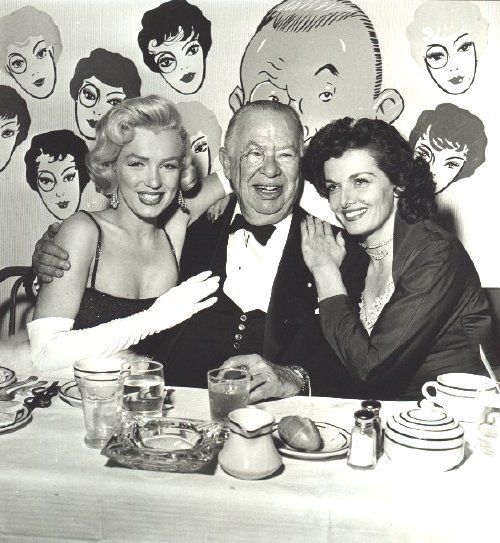
Marilyn Monroe and Jane Russell cozy up to Charles Coburn during the filming of  Gentleman Prefer Blondes.

6. Mostly known for his comedy roles, Coburn played dramatic roles in film classics like In Name Only (1939), Kings Row (1942), and The Constant Nymph (1943).

7. Coburn was so well spoken—he and his first wife organized the Coburn Shakespeare Players—that many people thought he was British.

8. Contrary to conventions of the time, Coburn often received star billing alongside his younger costars.

9. Coburn received his third (and last) Academy Award nomination for the enormously popular The Green Years (1946); he was nominated for Best Supporting Actor in spite of receiving top billing.

10. He played Barbara Stanwyck’s father in two films: The Lady Eve (1941) and B.F.’s Daughter (1948).

Charles Coburn multitasks: smoking and riding

Monday, March 20, 2017

Screening of “The More the Merrier” at Daystar Center April 4

Classic Movie Man Favorites Series: The More the Merrier
Where: Daystar Center, 1550 S. State Street
When: April 4, 2017
Time: 6:30 p.m.
Hosted by Stephen Reginald

The More the Merrier (1943) is one of the great romantic comedies released during the height of World War II.

Due to the housing shortage in Washington, D.C., retired millionaire Benjamin Dingle rents a room from the ultra patriotic Connie Milligan (Jean Arthur). After spending some time with Connie, Dingle decides that she needs to be married to a “clean-cut” young man in the person of Joe Carter (Joel McCrea), so Dingle rents half of his room to Joe. This causes all kinds of problems. Problem number one, Connie is engaged to a Washington bureaucrat Charles J. Pendergast (Richard Gaines). Problem number two, she’s living with two single men!

When the press uncovers their “scandalous” habitation, it’s up to Mr. Dingle to set things straight. The trio of Arthur, McCrea, and Coburn are a real treat. Not only do they handle the dialogue with great skill, but they delight us with their amazing physical comedy as well.

The More the Merrier was nominated for six Academy Awards including Best Picture, Best Actress (Jean Arthur), Best Director (George Stevens), and Best Supporting Actor (Charles Coburn). Coburn was the only winner for his engagingly comic performance.

Jean Arthur, Charles Coburn, and Joel McCrea in close quarters in The More the Merrier

This film is part of the “Classic Movie Man's Favorite” series.

Have some Joe and Enjoy the Show!
You can bring food and beverages into the auditorium; we even have small tables set up next to some of the seats. General Admission: $5 Students and Senior Citizens: $3.

Join the Chicago Film club; join the discussion
Twice a month we screen classic films and have a brief discussion afterward. For more information, including how to join (it’s free), click here. The Venue 1550 is easily accessible by the CTA. Please visit Transit Chicago for more information on transportation options.


Stephen Reginald is a freelance writer and editor. He has worked at various positions within the publishing industry for over 25 years. Most recently he was executive editor for McGraw-Hill’s The Learning Group Division. A long-time amateur student of film, Reginald hosts “Chicago Film Club,” a monthly movie event held in the South Loop, for the past two years. Reginald has also taught several adult education film classes at Facets Film School, Chicago.

Tuesday, February 16, 2016

Preston Sturges series: Screening of “Easy Living” February 23 at Daystar Center

Preston Sturges series: Easy Living
Where: The Venue 1550 at the Daystar Center, 1550 S. State Street, Chicago, IL
When: February 23, 2016
Time: 6:30 p.m.
Hosted by Stephen Reginald

Easy Living (1937) is a classic screwball comedy with a screenplay by Preston Sturges and direction
by Mitchell Leisen. Jean Arthur stars as a poor working girl whose life is turned upside down when a sable coat, thrown from the penthouse apartment of financier J.B. Bull (Edward Arnold), lands on her head, ruining her hat. Bull lets Mary keep the coat, leading gossipers to assume that she is his mistress.

The plot begins when J.B. Bull finds out that his wife (Mary Nash) has purchased a $58,000 (almost a million dollars today!) sable coat without letting him know about it. In frustration, Bull throws the coat off of his terrace. The coat floats down and lands on the head of Mary Smith (Arthur) while she is riding to work on a double-decker bus with an open roof. Startled and confused, Mary goes door to door looking for the coat’s owner. While she is doing this she runs into Bull who lets her keep the coat (she has no idea it’s sable)) and offers to buy her a new hat on his way to the office. The hat shop proprietor, Van Buren (Franklin Pangborn) starts the rumor that Mary is Bull’s mistress. The rumor is passed along to Mr. Louis (Luis Alberni) the owner of the Luis Hotel, which is about to be foreclosed on by Bull.

Before you know it, Mr. Louis is offering Mary a suite in his hotel as a way to promote it. Meanwhile, Mary is completely oblivious to the ramifications of her new circumstances. She’s even ignorant of the fact that she’s been dating Bull’s son, John Ball Jr. (Ray Milland). Things get more complicated and hilarious with each passing moment.

Easy Living is the second screenplay written by Sturges that starred Arnold and Arthur. Diamond Jim featuring both stars was penned by Sturges two years earlier.


Have some Joe and Enjoy the Show!
Before the movie, grab a cup of coffee from Overflow Coffee Bar, located within the Daystar Center. You can bring food and beverages into the auditorium; we even have small tables set up next to some of the seats. General Admission: $5 Students and Senior Citizens: $3.

Join the Chicago Film club; join the discussion
Twice a month we screen classic films and have a brief discussion afterward. For more information, including how to join (it’s free), click here. The Venue 1550 is easily accessible by the CTA. Please visit Transit Chicago for more information on transportation options.

Stephen Reginald is a freelance writer and editor. He has worked at various positions within the publishing industry for over 25 years. Most recently he was executive editor for McGraw-Hill’s The Learning Group Division. A long-time amateur student of film, Reginald hosts “Chicago Film Club,” a monthly movie event held in the South Loop, for the past two years. Reginald has also taught several adult education film classes at Facets Film School, Chicago.


Daystar Center located at 1550 S. State St. works through a grassroots network of collaborations and partnerships with individuals and other nonprofit organizations. Through this web, they’re able to provide educational, cultural, and civic activities that enrich and empower their clients, guests, and community members. To learn more about classes and events offered at the Daystar Center, please visit their Web site.


Saturday, October 24, 2009

Howard Hawks and "His Girl Friday"

Howard Hawks is one of the greatest American movie directors of all time. Adept at all film genres, Hawks excelled at fast-paced screwball comedies like Twentieth Century, Bringing up Baby, and His Girl Friday.

His Girl Friday was a reworking of the Ben Hecht Charles MacArthur classic The Front Page. By making Hildy Johnson a woman and the ex-wife of editor Walter Burns, Hawks thought the dialogue was funnier and added a dimension that The Front Page lacked. This was a pretty risky decision at the time, since The Front Page was considered a classic not to be messed with.

Hawks's risk paid off and the casting of Cary Grant as Walter Burns and Rosalind Russell as Hildy Johnson was inspired. In Grant's capable hands, Walter Burns is a more complex character than he was in the original. In The Front Page, Burns is a total cad. He wants to lure Hildy back to the newspaper business for completely selfish motives. In His Girl Friday, Walter wants Hildy back at the paper because she's a great reporter, but also because he's still in love with her. Russell's Hildy is the perfect Hawksian heroine: self-assured, smart, and independent. It's hard to believe that Russell was the eighth choice to play Hildy Johnson. Jean Arthur, Katherine Hepburn, Claudette Colbert, Irene Dunne, Margaret Sullivan, and Ginger Rogers all turned the role down. Hawks wanted Carole Lombard, who he directed to stardom in Twentieth Century, but she was too expensive, working as an independent actress. Joan Crawford was even considered for the role.

Russell was so put off by being eighth on the list (ninth if you count Crawford) that the first time she met Hawks, she showed up with wet hair. She soon discovered that Hawks wanted her to succeed in the role and after a few rough patches early in the shooting, she quickly gained confidence, going toe-to-toe with the more experienced Grant (His Girl Friday was his third film with Hawks).

As the story goes, Hildy quits the paper to marry dependable, but dull, insurance salesman Bruce Baldwin (Ralph Bellamy). Tired of being a "newspaperman," Hildy says she wants a normal life of domesticity, but Walter suspects she's fooling herself, so he plots to lure her back to the paper and into his arms.

Hawks was never one for depicting domestic married life on the screen, preferring to portray the chase and the buildup to marriage, and no one  showcased the chase better than Hawks. Since Hawks admired smart, funny women, his heroines are never given short shrift on film. From camera angles to screen time, Grant and Russell are treated equally. One of the reasons Hawks's films still seem so fresh and contemporary is due to his strong female characterizations.

Howard Hawks directed some of the greatest films of all time and His Girl Friday is one of his best.

His Girl Friday opened at Radio City Music Hall on January 11, 1940.


Related Posts Plugin for WordPress, Blogger...