Showing posts with label Academy Awards. Show all posts

Monday, February 24, 2025

William Powell and Carole Lombard in “My Man Godfrey”.

My Man Godfrey (1936) is an American screwball comedy directed by Gregory La Cava and starring William Powell and Carole Lombard. The film is based on a short novel, 1101 Park Avenue by Eric S. Hatch. My Man Godfrey is considered one of the best screwball comedies of all time. In 1999, the film was deemed “culturally significant” by the United States Library of Congress and selected for preservation in the National Film Registry.

Carole Lombard and William Powell

During the Great Depression, two socialite sisters, Cornelia and Irene Bullock (Gail Patrick and Carole Lombard respectively) are competing in a charity scavenger hunt and need to find a “forgotten man.” They come across a man living in a New York City dump, but Cornelia gets to him first. She offers Godfrey Smith (William Powell) $5 if he will come play along and help her win the scavenger hunt. Godfrey finds Cornelia’s attitude annoying and backs her up into an ash pile. Irene who has been watching the whole episode ends up speaking with Godfrey who finds her to be kind, but a little bit crazy, and decides to help her. Irene drives the two of them to the Waldorf-Ritz Hotel where she presents Godfrey as her forgotten man. Irene wins the scavenger hunt and is so grateful that she offers Godfrey a job as a butler in her family’s home. Little does Godfrey realize that the Bullock family is quite eccentric and hasn’t been able to keep a butler for more than a few days. 

Gregory La Cava (1892 – 1952) was an American film director best known for several landmark films from the 1930s including My Man Godfrey and Stage Door (1937). La Cava was born in Pennsylvania and studied at the Art Institute of Chicago. La Cava directed many of the top stars during his heyday including Irene Dunne, Helen Hayes, Constance Bennett, Charles Boyer, Claudette Colbert, Joel McCrea, Melvin Douglas, and Katharine Hepburn. LaCava directed Ginger Rogers in three films in three years: Stage DoorFifth Avenue Girl (1939), and Primrose Path (1940).

William Powell (1892 – 1984) was an American actor who was most famous for the Thin Man series in which he co-starred with Myrna Loy. Loy and Powell made 14 films together. Powell was nominated for the Academy Award for Best Actor three times: The Thin Man (1934), My Many Godfrey (1936), and Life With Father (1947). Powell was under contract to Paramount, Warner Bros., and Metro-Goldwyn-Mayer where he had his greatest success. Some of Powell’s popular films include Manhattan Melodrama (1934), The Great Ziegfeld (1936), Libeled Lady (1936), The Last of Mrs. Cheney (1937), Love Crazy (1941), Life with Father (1947), The Senator Was Indiscreet (1947), Dancing in the Dark (1949), How to Marry a Millionaire (1953), and Mister Roberts (1955).

Clark Gable and Carole Lombard on their wedding day

Carole Lombard (1908 – 1942) was an American film actress who gained great fame starring in screwball comedies. So popular was she as a comedic actress that Life magazine dubbed her “The Screwball Girl.” He got her start in silent films as a child and progressed to more important roles when a car accident almost ended her career. Glass from the car’s windshield cut up her face leaving her with a small scar. She eventually hit the big time in 1934 with her breakout performance in Twentieth Century co-starring John Barrymore. The film directed by Howard Hawks (a distant cousin of Lombard’s) lead to better roles and eventually superstardom. In Lombard’s short career, she appeared in several iconic films including My Man GodfreyNothing Sacred (1937), Mr. & Mrs. Smith (1941) directed by Alfred Hitchcock, and To Be or Not to Be (1942). At the height of her career, Lombard died in a plane crash while returning from a bond tour. At the time of her death, she was married to Clark Gable. Together they were one of Hollywood’s original power couples.

The excellent supporting cast includes Alice Brady, Gail Patrick, Jean Dixon, Eugene Pallette, Alan Mowbray, Mischa Auer, and Franklin Pangborn. 

My Man Godfrey trivia:

  • It was the first movie to be nominated in all four acting categories.
  • Marion Davies, Constance Bennett, and Miriam Hopkins were all considered for the role of Irene.
  • William Powell and Carole Lombard were once husband and wife and had been divorced for three years when they made the film.
  • Jane Wyman has an uncredited role standing in the crowd at the Waldorf-Ritz Hotel.
  • Gail Patrick (Cornelia) played Irene’s (Lombard) older sister, but in reality, she was almost three years younger.

Click HERE to watch the film on YouTube.


Click HERE to join the online discussion on March 3, 2025, at 6:30 p.m. Central Time. Once you RSVP, you will receive an email with an invitation and a link to join the discussion on Zoom.

Questions for discussion:

  1. Is there a serious message amidst all the comedy? If yes, what is it?
  2. What do you think motivated Godfrey to get back on his feet?
  3. Did you have a favorite supporting character?
  4. Did Lombard and Powell have believable screen chemistry?
  5. Why do you think the film has remained a classic 85 years after its initial release?

Saturday, June 5, 2021

Joseph Cotton falls for “The Farmer’s Daughter,” Loretta Young

The Farmer’s Daughter (1947) is an American film comedy directed by H. C. Potter and starring Loretta Young, Joseph Cotten, and Ethel Barrymore. The supporting cast includes Charles Bickford, Harry Davenport, Lex Barker, Keith Andes, Thurston Hall, and James Arness.

Katie Holstrom (Young), a Swedish-American leaves home to go to nursing school. On her way to Capitol City, she is taken advantage of by barn painter Adolph Petree (Rys Williams). He steals her money and leaves her stranded at a motel 60 miles from Capitol City. Humiliated and afraid to tell her parents about her situation, she takes a job as a maid for Agatha Morley (Barrymore) and her son, U. S. Representative Glenn Morely (Cotten). Agatha is the head of a powerful political family which is of interest to Katie.

Impressed by Katie’s work ethic and ability to charm everyone including the crusty butler Joseph Clancy (Bickford). Another bonus, her coffee is much better than Clancy’s which must be taken with alcohol to blunt its bitter taste. Glenn Morley takes notice of Katie’s good qualities and courts her much to the delight of his mother.

When Katie learns that the Morleys are backing Anders J. Finley (Art Baker) for Congress, Katie shows her disapproval by asking him pointed questions of Finley at a town hall meeting introducing him as a candidate. So impressed with Katie’s questioning, the opposition party asks Katie to run for Congress. She accepts their invitation and quits her job with the Morleys.

Will Katie be able to handle the rough and tumble ways of American politics? Will she be taken seriously as a viable candidate and will Glenn stand by her no matter what troubles lie ahead?


H. C. Potter (1904 - 1977) was an American theatrical producer and director, and a director of motion pictures. Potter graduated from Yale University in 1926 and was part of the Yale Dramatic Association. He founded a theater group, the Hampton Players based in Southampton, Long Island. He eventually made his way to Hollywood where he eventually became a film director. Some of his popular films include The Shopworn Angel (1938) starring Margaret Sullivan and James Stewart, The Story of Vernon and Irene Castle (1939) starring Fred Astaire and Ginger Rogers, Mr. Lucky (1943) starring Cary Grant and Laraine Day, and Mr. Blandings Builds His Dream House (1948) starring Cary Grant, Myrna Loy, and Melvyn Douglas.

Loretta Young (1913 - 2000) was an American actress who can trace her start to the days of silent films where she performed as a child actress. Young made the transition to talking pictures as an adult with almost immediate success. As an adult starred opposite some of Hollywood’s most popular leading men including James Cagney, Clark Gable, Tyrone Power, Gary Cooper, and Cary Grant. Young made many films during the pre-code era including Platinum Blonde (1931), Taxi! (1932), They Call It Sin (1932), Employee’s Entrance (1933), and Midnight Mary (1933). Darryl Zanuck signed Young to a contract at Twentieth Century-Fox and paired her with Tyrone Power, the studio’s top male star in several hit films including Love is News (1937), Cafe Metopole (1937), and Second Honeymoon (1937). Unsatisfied with the roles Zanuck was providing her with, Young left the studio and became a freelance artist. On her own, Young starred opposite Alan Ladd in two films, starred alongside Gary Cooper in Along Came Jones (1945), The Stranger (1946), The Bishop’s Wife (1947) with Cary Grant and David Niven, and Rachel and the Stranger (1947) top-billed over William Holden and Robert Mitchum. After her film career was winding down, Young became a huge star on television when the medium was in its early stages.

Joseph Cotten (1905 - 1994) was an American film, stage, radio, and television actor. Cotten achieved fame on Broadway in the original stage productions of The Philadelphia Story and Sabrina Fair.  He became famous worldwide after appearing in Citizen Kane (1941) and The Magnificent Ambersons (1942). As one of the most popular leading men of the 1940s, Cotten starred in Shadow of a Doubt (1943), Gaslight (1943), Duel in the Sun (1946), and The Third Man (1949). Cotten alternated between work on stage and film into the late-1950s. Cotten also appeared on television guest-starring on The Name of the Game, Cimarron Strip, and Ironside. Cotten’s last film role was in 1981.

Ethel Barrymore (1879 - 1959) was an American stage and film actress and part of the famous Barrymore family of actors. Her equally famous brothers were Lionel and John Barrymore. Barrymore got her start on the stage and she was among its brightest stars for many years. Barrymore also had a successful career on the other side of the Atlantic in London where she starred in Peter the Great. She achieved one of her biggest Broadway successes in W. Somerset Maugham’s comedy, The Constant Wife (1926). Barrymore was a popular character actress in film during the 1940s. She won the Academy Award for Best Supporting Actress for her performance in None but the Lonely Heart (1944) opposite Cary Grant who played her son. Other film roles include The Spiral Staircase (1946), The Paradine Case (1947), and Pinky (1949).

Joseph Cotten and Loretta Young
The Farmer’s Daughter trivia

  • The film was intended as a vehicle for Ingrid Bergman but she declined the role. Dorothy McGuire and Sonja Henie were possible replacements.
  • Glenn Morley’s (Joseph Cotten) political party was never mentioned.
  • Loretta Young’s Oscar win is considered one of the biggest upsets in Academy history. It was the first comedy performance to win since Claudette Colbert won for It Happened One Night (1934).
  • Rosalind Russell (one of Young’s real-life best friends) was the odds-on favorite to win the Academy Award that year for her performance in Mourning Becomes Electra (1947).
  • This was James Arness’s movie debut and Lex Barker’s first credited screen appearance.
  • Anna Q. Nilsson who played Young’s mother was a major star during the silent era.


Why watch this film?

  • It’s a delightful film featuring a winner performance from Loretta Young.
  • The production is so polished and beautiful, showing off the old studio system at its height.
  • In life and politics, nothing has really changed.
  • Interesting characterizations from Ethel Barrymore and Charles Bickford


To join the discussion on June 8, 2021, at 6:30 p.m. Central Time click here. Once you RSVP, you’ll receive an invitation with a Zoom link.


To watch this film on YouTube, click on the link below.


Discussion questions:
  1. What did you think of Young’s performance? Was it Oscar-worthy?
  2. Did Young and Cotten have good screen chemistry?
  3. What did you think of the political backdrop? Not much has changed, has it?
  4. Did you have a favorite scene, character, or piece of dialogue?
  5. Did this film remind you of any others that you may have seen?
  6. Was Young’s hairstyle the real inspiration for Princess Leia’s in Star Wars?

Wednesday, January 9, 2019

“Roma”: The most overhyped movie of 2018?

Roma written and directed by Alfonso Cuaron (Gravity) has received almost universal acclaim and is considered a front-runner for the Best Picture Academy Award this year. Set in 1970 and 1971 and filmed in black and white, it’s a semi-autobiographical telling of Cuaron’s life growing up in Mexico City. The film centers on the life of Cleo, a live-in housekeeper to a middle-class family.

Cleo works in the household of Sofia, her husband Antonio, a doctor, their four children, and Sofia’s mother Teresa. Cleo is beloved by the children in the household where the marriage between Sofia and Antonio is deteriorating.

During her time off, Cleo and her boyfriend Fermin rent a room instead of seeing a movie with fellow live-in maid Adela and her boyfriend. In their rented room, Fermin shows off his martial arts skills using a curtain rod (naked, which is totally gratuitous). It’s an odd scene, but a clue that all is not right with Fermin and this relationship.


What happens next is a series of (inevitable) events that make the film seem more like a documentary than a drama. There is no attempt at character development. Cleo, as a character is likeable enough, but we never really get to know her outside of her tasks as a maid and nanny.

Technically the film has also been heralded, especially the black and white cinematography. Why this is the case I’m not sure. Roma’s cinematography seems rather pedestrian and ordinary to me. Perhaps the folks praising the cinematography have never seen a decent black and white film before. Or maybe I’ve been corrupted by the dynamic black and white cinematography of the likes of James Wong Howe, Greg Toland, Joseph LaShelle, and Nicholas Musuraca—they’re all worth Googling if you’ve never heard of them.

But the film’s biggest crime, in my opinion, is that it’s boring. I forced myself to sit through the entire 135 minutes. I kept hoping that something would happen to reward my endurance, but I was disappointed.

Roma is the type of film that critics love, but that few people would pay money to see. The film distributed by Netflix had a brief release so it could qualify for the Oscars. It’s been available on Netflix for several months.


Screenplay by Alfonso Cuaron; Directed by Alfonso Cuaron; Produced by Alfonso Cuaron, Gabriela Rodriguez, Nicolas Celis for Participant Media and Esperanto Filmoj; Distributed by Netflix.

Yalitza Aparicio as Cleodegaria “Cleo” Gutiérrez, one of the family’s maids
Marina de Tavira as Sofia, the mother of the family
Fernando Grediaga as Antonio, Sofia’s absent husband
Jorge Antonio Guerrero as Fermín, Cleo’s lover
Marco Graf as Pepe
Daniela Demesa as Sofi
Diego Cortina Autrey as Toño
Carlos Peralta as Paco
Nancy García as Adela, Cleo’s friend and one of the family’s maids
Verónica García as Teresa, Sofia’s mother
José Manuel Guerrero Mendoza as Ramón, Adela’s lover
Latin Lover as Professor Zovek


Saturday, April 1, 2017

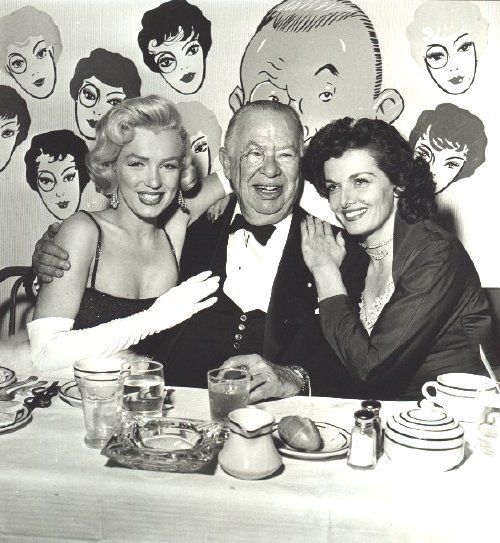
10 Things You May Not Know About Charles Coburn

Charles Coburn (1877 – 1961) was one of the most beloved character actors, during Hollywood’s Golden Age, appearing in some of the most beloved films of 1940s and 1950s. Coburn started his career as a “program boy” and worked his way up to manager of a theater in Savannah, Georgia by the age of 17.

1. Coburn was born in Macon, Georgia.

2. He made his Broadway debut in 1901.

3. In 1906 he married Ivah Wills and they had six children; she died in 1937.

4. Primarily a stage actor, Coburn didn’t make a film until he was in his mid-50s.

5. He received two Academy Award nominations for Best Supporting actor in films starring Jean Arthur: The Devil and Miss Jones (1941) and The More The Merrier (1943); he won for the latter.

Marilyn Monroe and Jane Russell cozy up to Charles Coburn during the filming of  Gentleman Prefer Blondes.

6. Mostly known for his comedy roles, Coburn played dramatic roles in film classics like In Name Only (1939), Kings Row (1942), and The Constant Nymph (1943).

7. Coburn was so well spoken—he and his first wife organized the Coburn Shakespeare Players—that many people thought he was British.

8. Contrary to conventions of the time, Coburn often received star billing alongside his younger costars.

9. Coburn received his third (and last) Academy Award nomination for the enormously popular The Green Years (1946); he was nominated for Best Supporting Actor in spite of receiving top billing.

10. He played Barbara Stanwyck’s father in two films: The Lady Eve (1941) and B.F.’s Daughter (1948).

Charles Coburn multitasks: smoking and riding

Friday, April 26, 2013

“Mildred Pierce”: 4th Film in “High Heels and Fedoras” series at Daystar Center May 14, 2013


Tuesday, May 14, 2013
6:30 p.m.
The Venue 1550 at the Daystar Center
1550 S. State Street


Mildred Pierce was a critical and financial hit when released in 1945. It resurrected the career of screen legend, Joan Crawford, who many had written off as a has-been. The movie was a showcase for some new talent too, but it was Crawford’s film and she commands the screen in every scene she’s in.

The straightforward narrative in the James M. Cain novel was changed for the film version. Mildred’s story is told in flashback, a popular film noir convention that works really well and adds to the movie’s texture. The film itself is put together very nicely with the Warner Brothers A-Team pulling out all the stops. Cinematographer Ernest “Ernie” Haller’s black and white photography is beautifully atmospheric. The angles, the contrasts, are seamless and help advance the story without getting in the way. The score by Max Steiner is lush without being overwhelming, at least not overwhelming as far as Steiner scores go (They’re all kind of overwhelming, actually). Legendary makeup artist Perc Westore makes Crawford’s transition from waitress/working mom into successful/sophisticated businesswomen seem natural and believable. Much of Crawford’s look in this film, and for the rest of the decade, is due in great part to the costuming of Milo Anderson. Last but not least, director Michael Curtiz assembled all the pieces together to form a perfect whole, but Curtiz wasn’t at all set on working with Crawford.

Zachary Scott, Joan Crawford, and Ann Blyth

According to Crawford, Curtiz wanted Barbara Stanwyck to play Mildred. He didn’t want to work with a “difficult” has-been. In order to change Curtiz’s mind, Crawford submitted to a screen test. This was unheard of for an established star, but so determined was Crawford to snag the role that she consented. Crawford’s screen test impressed Curtiz enough that he agreed to direct her. And for Crawford, a new career was born at Warners.

Mildred Pierce was nominated for six Academy Awards, including Best Picture and Best Actress. Crawford’s Best Actress Award was the only win, put it propelled her back to the top of the heap, giving fellow Warner contract-player, Bette Davis a run for her money. Ironically, Davis’s career was on a downward arch while Crawford was starring in some critical and commercially successful melodramas. After Mildred Pierce, Crawford starred in Humoresque (1946), Possessed (1947), Daisy Kenyon (1947), and Flamingo Road (1949). Possessed brought her a second Best Actress nomination.

Mildred Pierce isn’t considered a true film noir movie, by some critics. But it sure feels like film noir to this movie fan.

To purchase tickets for the May 14 screening, click here. Tickets are $5 per person general admission $3 for students and seniors. Tickets may also be purchased at the door. To stay on top of film events like this, join the Chicago Film Club Meetup.


To download a flyer to post in your building or office, click here.


The Venue 1550 is located at 1550 S. State St. in the Daystar Center. The Daystar Center offers a variety of educational, artistic and cultural activities, including classes for children that teach practical life skills like social aptitude, creativity and cultural awareness in fun ways; classes for adults that give space for self-reflection and improvement; room rentals for many different-sized groups in several multipurpose rooms. For more information, call 312.674.0001 or visit their Web site.


Wednesday, March 21, 2012

“Casablanca” celebrates 70th Anniversary with special screenings tonight in Chicago


Casablanca had its world premier in New York City on November 26. 1942. The film was a critical and popular success, eventually winning three Academy Awards, including Best Picture. That was 70 years ago. Tonight in Chicago and in cities around the U.S., the classic will have special screenings featuring a digitally remastered and restored print. We’ll be going to ShowPlace ICON at Roosevelt Collection tonight at 7 p.m. and report back on the experience. Casablanca is also being screened at several other theatres in Chicagoland, including AMC East 21, Regal Webster Place 11, and Regal City North Stadium 14 & RPX. For ticketing and other information, click here.

Casablanca stars Humphrey Bogart, Ingrid Bergman, and Paul Henried. So many lines from the film have become part of the American lexicon, including “Here’s looking at you kid” and “I’m shocked, shocked to find that gambling is going on in here!”. That last quote is used by just about every politician on both sides of the aisle, when referring to something obviously bad or corrupt.

For an interesting history on the film, click here.

Saturday, January 14, 2012

Joe DiMaggio and Marilyn Monroe Marry Today: January 14,1954

Marilyn Monroe and Joe DiMaggio on their wedding day
Joe DiMaggio and Marilyn Monroe married today in 1954. The marriage only lasted 247 days, but the two remained friends until Monroe’s death in 1962. When they met, DiMaggio was an American baseball legend and Monroe was a movie starlet about to become a major film star. DiMaggio, retired from baseball, wanted Monroe, who was 12 years his junior (Joe was 37 and Monroe was 25 when they first met), to retire from films and be his stay-at-home wife.

Tumultuous Relationship
Both DiMaggio and Monroe had a tumultuous relationship that may have included physical abuse. Had the two met in 1957 instead of 1952, things might have been different. Monroe wanted a movie career desperately and she wasn’t about to give it all up when things were finally going her way. At the end of their marriage, Monroe was in demand by top directors like Billy Wilder who directed her in The Seven Year Itch (1955).

The Second Time Around
After the two divorced, Monroe married playwright Arthur Miller in 1956. From all accounts, their union was far from a successful one. After Monroe divorced Miller in 1961, she and DiMaggio became friends and rumors abounded that the two would remarry. Both had changed. DiMaggio had mellowed and dealt with his anger and Monroe was thinking of settling down and having a family. For all his faults, DiMaggio truly loved Monroe. Monroe knew that of all the people in her life, she could always count on DiMaggio. When DiMaggio secured Monroe’s release from the Payne Whitney Psychiatric Clinic on February 10, 1961, rumors of remarriage intensified . At the 33rd Academy Awards, host Bob Hope dedicated the Oscar-nominated song “The Second Time Around” to DiMaggio and Monroe. In August of 1962, it looked as if the two might in fact remarry. But this was not to be. Monroe was found dead on August 5, 1962. She was 36 years old.

File:YankeesRetired5.svg
The Yankees retired DiMaggio's Number 5 in 1952.
DiMaggio made all of Monroe’s funeral arrangements and for years had flowers sent to her grave on a weekly basis. DiMaggio never spoke about his relationship with Monroe publicly; he never exploited her name in any way. Although he was linked with other women romantically years after Monroe’s death, he never remarried. DiMaggio died on March 9, 1999. He was 84 years old.

Sunday, December 13, 2009

Alfred Hitchcock's “To Catch a Thief”


Alfred Hitchcock, Cary Grant, and Grace Kelly too!
To Catch a Thief  filmed on location on the French Riviera, is a picture-postcard treat of a movie. The Alfred Hitchcock classic pairs Cary Grant as a reformed jewel thief, John “The Cat” Robie and Grace Kelly as Francie Stevens, a vacationing American heiress.

When a series of jewel robberies occur, all similar in style to the methods of the so-called reformed Mr. Robie, the Riviera is abuzz with detectives, insurance investigators, and the international press. All of this intrigue and excitement is fascinating to Francie who thinks Robie is up to his old tricks again. Rather than finding his behavior repulsive, Francie instead is attracted to the enigmatic and sophisticated Mr. Robie.

Academy Award Winner

Filled with all the things you've come to expect from Hitchcock--elegant surroundings, witty, sophisticated dialogue, and glamorous costumes--To Catch a Thief doesn't disappoint. Nominated for three Academy Awards (winning for Best Color Cinematography), this 1955 suspense classic is one fun ride.

A reluctant leading man
After completing the film Dream Wife, costarring Deborah Kerr, in 1953, Grant announced his retirement from films. The story goes that Grant thought that he was getting too old to play romantic leads. Additionally, he found himself competing with method actors like Marlon Brando and Montgomery Clift; Grant thought his style of acting was on its way out. Fortunately, Hitchcock convinced Grant that To Catch a Thief was the perfect role for a "comeback," plus there was the added bonus of costarring with Grace Kelly, a young actress Grant liked and admired.

Woman chases man
Even though Grant continued starring in films until 1966, his screen persona changed slightly. Instead of being the aggressive leading man, pursuing beautiful women, beginning with To Catch a Thief, it was younger women who were constantly chasing the older Grant, a plot device he found much more believable.


Related Posts Plugin for WordPress, Blogger...