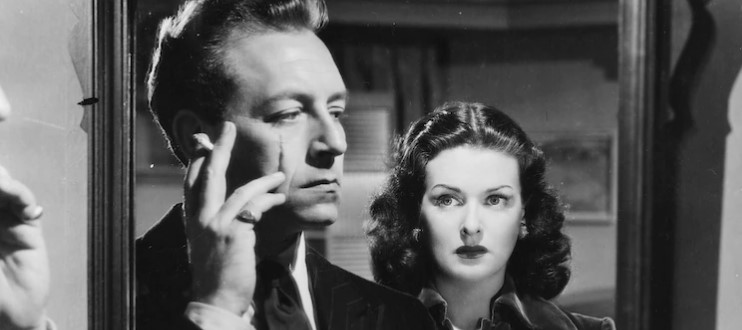
Showing posts with label Paul Henreid. Show all posts

Tuesday, December 12, 2023

Humphrey Bogart, Ingrid Bergman, and Paul Henreid have a date with fate in “Casablanca”

Casablanca, the 1942 classic directed by Michael Curtiz and starring Humphrey Bogart, Ingrid Bergman, and Paul Henreid is the third film to be shown in this continuing monthly series. Winner of three Academy Awards, including Best Picture, Casablanca has become part of the American consciousness, its dialogue (“Here's looking at you kid.”) part of our lexicon.


Just another movie?

What started as just another movie during Hollywood’s golden age became an instant classic. It made  Bogart a credible leading man and pushed him out of the shadows of fellow contract players James Cagney, George Raft, and Edward G. Robinson. In only her fourth American film, Bergman became a superstar and one of the most popular movie actresses of the 1940s. For Hungarian-born director Curtiz, Casablanca was his only Best Director win in a career that spanned more than four decades.


Michael Curtiz (1886 -1962) was a Hungarian-American film director who worked during Hollywood’s Golden age, directing some of the best loved classics from that era including The Adventures of Robin Hood (1938) Casablanca (1942), and Mildred Pierce (1945). He directed James Cagney and Joan Crawford to Best Actor/Actress Oscar wins; he put Doris Day and John Garfield on the screen for the first time, making them major movie stars in the process. He’s also responsible for the pairing of Errol Flynn and Olivia de Havilland, one of Hollywood’s most famous screen teams. Other films directed by Curtiz include Angels with Dirty Faces (1938), The Sea Wolf (1941), Yankee Doodle Dandy (1942),  Life with Father (1947), and White Christmas (1954).

Humphrey Bogart (1899 – 1957) was an American film and stage actor. He is one of the most famous and popular movie stars of Hollywood’s Golden Age. Nicknamed Bogie, the actor toiled in supporting roles in both A and B pictures for a decade before his breakout role as Roy Earle in High Sierra (1941). Many more film roles followed including The Maltese Falcon (1941), Casablanca (1942), Key Largo (1948), and The Treasure of the Sierra Madre (1948). His career continued with good roles in films like In a Lonely Place (1950), The Caine Mutiny (1954), and Sabrina (1954) co-starring William Holden and Audrey Hepburn. Bogart died from cancer in 1957.

Ingrid Bergman (1915 – 1982) was a Swedish actress who became an international star upon her Hollywood debut in Intermezzo (1939). Few actresses were as popular as Bergman during the 1940s. In fact, she was the number two box office draw (after Bing Crosby) in 1946. She starred opposite Humphrey Bogart in Casablanca (1942), For Whom the Bell Tolls (1943) opposite Gary Cooper, Gaslight (1944) for which she won the Best Actress Academy Award. She starred opposite newcomer Gregory Peck in Spellbound (1945) which was her first collaboration with director Alfred Hitchcock. Bergman would go on to win another Best Actress Academy Award for Anastasia (1956) and a Best Supporting Actress Academy Award for Murder on the Orient Express (1974).

Paul Henreid (1909 - 1992) was an Austrian-British-American actor, producer, writer, and director. Henreid is probably best known for two films released in 1942: Casablanca and Now, Voyager. Henreid was under contract with Warner Bros. where he was a popular leading man starring opposite the studio's top actresses including Bette Davis, Ida Lupino, and Eleanor Parker. After he left Warner Bros. Henreid made a series of adventure films. He later directed films and television shows like Alfred Hitchcock PresentsMaverick, and The Big Valley.


Casablanca trivia

  • Many of the actors playing Nazis were German Jews who escaped Nazi Germany.
  • The tears in the eyes of the extras singing “La Marseillaise” were real; many of them had escaped Nazi occupied Europe.
  • Stars Humphrey Bogart, Ingrid Bergman, and Paul Henreid didn’t want to make Casablanca. Bogart and Bergman were unhappy with a script that wasn’t completed before filming, and Henreid who had a big success starring opposite Bette Davis in Now, Voyager (1942) didn’t want to be the second male lead.
  • Bergman was desperate to play Maria in For Whom the Bell Tolls (1943). Bergman got the role and a Best Actress nod. Bergman thought this would be the role that moviegoers would remember her for. Even though the film was a bigger box office hit than Casablanca, it hasn’t the reputation of that classic.
  • The movie was filmed entirely on the Warner Bros. sound stages and backlot.

Click HERE to watch the film on YouTube.


Click HERE to join the discussion on December 18, 2023, 6:30 p.m. Central Time. Once you RSVP, you will receive an invitation and a link to join the discussion on Zoom.


Discussion questions

  1. What is the basic plot of Casablanca? What is the central conflict? How is this conflict established?
  2. What is the tone of the film? How is that tone established? What are some of the major themes of this film?
  3. What role does music play? How do the attitudes of jazz fit into Rick’s club, and what we know about his character?
  4. How are the characters framed in the film? What “tricks” does the director use to introduce characters, reveal their motives, or present their conflicts? How is this explored through lighting and camera angles?
  5. What make this film timeless?


Monday, February 20, 2023

Margaret Lockwood and Rex Harrison take the "Night Train to Munich"

Night Train to Munich (1940) is a British-American war thriller directed by Carol Reed and starring Margaret Lockwood and Rex Harrison.

When German forces take over Czechoslovakia in 1939, Axel Bomasch (James Harcourt) is flown to Britain for his own protection. His daughter, Anna (Lockwood) is arrested and sent to a concentration camp. At the concentration camp, she meets a fellow prisoner, Karl Marsen (Paul (von) Henried who befriends her. The two escape from the concentration camp, but Marsen is really a Gestapo agent assigned to befriend Anna and find out where her father is.

Dickie Randall (Harrison), a British intelligence officer attempts to rescue Anna and her father from the Nazis. Will his efforts be successful or will Anna and her father be turned over to the Gestapo?

Rex Harrison and Margaret Lockwood


Carol Reed (1906 – 1976) was an English film director. He directed several classic films including The Fallen Idol (1948), The Third Man (1949), and Oliver! (1968). Reed worked in a theatrical company in his teens. He eventually entered the film business in the UK where he worked his way up to the position of assistant director. He got his big break as a director with The Stars Look Down (1940) based on a novel by A. J. Cronin and starring Michael Redgrave. Other British films followed including Night Train to Munich (1940) starring Margaret Lockwood and Rex Harrison, Kipps (1941) with Redgrave again, and The Young Mr. Pitt (1942) starring Robert Donat.

Margaret Lockwood and Paul Henreid


Margaret Lockwood (1916 – 1990) was an English actress who began her career on the stage but gained fame as one of Britain’s most popular movie stars during the 1930s and 1940s. She had a starring role in Bank Holiday (1938), directed by Carol Reed. The movie was a huge success and made Lockwood a star. Next up would be The Lady Vanishes (1938), which brought her to the attention of Hollywood. Lockwood didn’t take to Hollywood and soon returned to England where she made a series of popular costume dramas including The Wicked Lady (1945) co-starring James Mason.

Rex Harrison (1908 - 1990) was an English stage and screen actor. He won a Best Actor Academy Award for his role as Professor Henry Higgins in My Fair Lady (1964). He created the role of Higgins on Broadway in 1957. Harrison established himself as a film star in England in the 1930s but he also found success in Hollywood in films like Anna and the King of Siam (1946), The Ghost and Mrs. Muir (1947), Cleopatra (1963), Doctor Dolittle (1967). He was knighted by Queen Elizabeth II in 1989.

Paul Henreid (1909 - 1992) was an Austrian-British-American actor, producer, writer, and director. Henreid is probably best known for two films released in 1942: Casablanca and Now, Voyager. Henreid was under contract with Warner Bros. where he was a popular leading man starring opposite the studio's top actresses including Bette Davis, Ida Lupino, and Eleanor Parker. After he left Warner Bros. Henreid made a series of adventure films. He later directed films and television shows like Alfred Hitchcock PresentsMaverick, and The Big Valley.

Night Train to Munich trivia

  • This was the last of seven films that Lockwood made with director Reed.
  • Paul Henreid was billed as Paul von Henreid, his real name.
  • The film debut of Hugh Griffith (uncredited) as a sailor.
  • The film is considered the first to have an actor depicting Adolph Hitler (Billy Russell).
  • In some publicity for the film, it was referred to as a sequel of The Lady Vanishes (1938).


To watch the movie on YouTube, click on the link below.


To join the discussion on February 27, 2023, at 6 p.m. Central Time, click here. Once you RSVP, you will receive an invitation and a link to join the discussion on Zoom.


Discussion questions

  1. This film is often compared to The Lady Vanishes (1938). Do you see the comparison?
  2. The movie was released a year before the United States entered World War II. Do the events in this movie seem realistic, based on your knowledge of the war?
  3. What did you think of the performances of Margaret Lockwood and Rex Harrison? Did they have on-screen chemistry?
  4. Did you recognize Charters and Caldicott from The Lady Vanishes?
  5. Was the ending believable and/or satisfying?

Tuesday, June 7, 2022

Paul Henreid and Joan Bennett in "Hollow Triumph"

Hollow Triumph (1948) is an American film noir directed by Steve Sekely and starring Paul Henreid and Joan Bennett. The screenplay was by Daniel Fuchs and based on the novel Hollow Triumph (1946). The cinematography is by John Alton. Henreid also produced the film for the newly formed Eagle-Lion Films.

John Muller (Henreid) just released from prison plans a holdup at an illegal casino. Things go wrong so he takes a job in an office to hide out for a while. 

By accident, Muller runs into Dr. Swangron (John Qualen), a dentist who mistook him for Dr. Bartok. The dentist's office is in the same building as Dr. Bartok. When Muller discovers that he really does look like Dr. Bartok, except for a facial scar, he hatches a plan to impersonate him. Along the way, he falls in love with Dr. Bartok's secretary Evelyn Hahn (Bennett).

Will Muller be successful in impersonating Bartok and start a new life with Evelyn or will his past catch up with him?

Paul Henreid and Joan Bennett


Steve Sekely (1899 - 1979) was a Hungarian film director who directed films in Hungarian, German, and English. He mostly directed B movies in the United States and Europe. His most famous film is the science fiction classic The Day of the Triffids (1962) starring Howard Keel.

Paul Henreid (1909 - 1992) was an Austrian-British-American actor, producer, writer, and director. Henreid is probably best known for two films released in 1942: Casablanca and Now, Voyager. Henreid was under contract with Warner Bros. where he was a popular leading man starring opposite the studio's top actresses including Bette Davis, Ida Lupino, and Eleanor Parker. After he left Warner Bros. Henreid made a series of adventure films. He later directed films and television shows like Alfred Hitchcock Presents, Maverick, and The Big Valley.

Paul Henreid and Joan Bennett


Joan Bennett (1910–1990) began her film career during the early sound era. A natural blonde, Bennett dyed her hair as a plot device in the film Trade Winds (1938). As a brunette, Bennett projected a sultry persona that had her compared to the brunette beauty, Hedy Lamarr. During this period she starred in two costume epics. She played Princess Maria Theresa in The Man in the Iron Mask (1939) and Grand Duchess Zona of Lichtenburg in The Son of Monte Cristo (1940). Bennett was one of two finalists for the role of Scarlett O’Hara in Gone with the Wind (1939), along with Paulette Goddard. She had a very successful collaboration with the director Fritz Lang. With Lang, she starred in the classics Man Hunt (1940), The Woman in the Window (1944), and Scarlet Street (1945). Bennett acted on stage and on television where she became a pop culture icon playing Elizabeth Collins Stoddard on the gothic soap opera Dark Shadows (1966-1971).

John Qualen and Paul Henreid

Hollow Triumph trivia
  • Steve Sekely was removed as director early in production; Paul Henreid took over as director but Sekely retained director credit due to his contract.
  • Paul Henreid produced the film so he could play a bad guy.
  • Jack Webb's film debut.
  • Gasoline was 25.5 cents per gallon.

To watch the film on YouTube, click on the link below.


Discussion questions:
  1. What did you think of the film's premise?
  2. Was Paul Henreid believable in two roles?
  3. Joan Bennett wasn't a femme fatale in this film noir but was she effective in her role?
  4. Were there any character actor performances that were memorable?
  5. Did this film remind you of any other films you've seen?
  6. Was the ending a surprise? Was it what you expected?

To join the discussion on June 13, 2022, at 6:30 p.m. Central Time. To join the discussion, click here. Once you RSVP, you'll receive an invitation and link to join the discussion on Zoom.

Saturday, November 11, 2017

Field Trip: “Casablanca” November 12 at River East 21


Join the Chicago Film Club, on Sunday November 12 at 2:00 p.m., as we enjoy viewing the 1942 classic, Casablanca on the big screen at the AMC River East 21, 322 East Illinois, Chicago, IL. If you’ve never seen the movie starring Humphrey Bogart, Ingrid Bergman, and Paul Henreid on the big screen, you’re in for a treat.
You may buy tickets day of screening or order them in advance. Click the link to order. 

Casablanca on the big screen
Date: November 12 at River East 21
Time: 2:00 p.m.

I'll be holding a red "Meetup" sign by the concessions at theater level


Set against the backdrop of World War II, Humphrey Bogart stars as Rick Blaine, the owner of a nightclub in Vichy-controlled Casablanca, whose life changes forever when his lost love, Ilsa (Ingrid Bergman), walks into his club and back into his life. Also starring Paul Henreid and Claude Rains.

Thursday, May 5, 2016

2016 #TCMFF: The Festival Begins

The air temperature during this year’s Turner Classic Movies Film Festival may have been cool, but there was plenty of warmth in the air when classic movie fans gathered at the Hollywood Roosevelt Hotel Thursday afternoon. Meeting fellow movie bloggers and other social media friends was like a high school reunion. And just like a high school reunion, we all picked up where we left off at last year’s fest.

While we were all catching up at the Roosevelt Hotel, we had the pleasure of meeting Monika Henreid, actor Paul Henreid’s daughter. I spent a few pleasant moments chatting with her and sharing one of my favorites of her father’s films, Devotion (1946). Monika is preparing a documentary about her famous dad, Paul Henreid…Beyond Victor Laszlo. The 90-minute documentary and companion book are set for a 2017 release.

Thursday’s film choices were easy ones for me: A Tree Grows in Brooklyn (1945) and Brief Encounter (1945). It’s been over 25 years since I saw A Tree Grows in Brooklyn and I’d never seen Brief Encounter before.

A Tree Grows in Brooklyn, Elia Kazan’s first directorial effort, was beautifully restored. Ted Donaldson who played Neely in the film introduced it. His recollections of the film’s production and the other cast members was enlightening and entertaining. He also told a funny story about Joan Blondell who he had a crush on.

Brief Encounter was completely new to me, although I was familiar with its reputation as one of the great films to come out of Britain during the 1940s. Beautifully directed by David Lean, Brief Encounter was a simple love story set in Britain as WWII was winding down. It has wonderful performances from Celia Johnson (a Best Actress nominee) and Trevor Howard. I was glad I finally saw it and on the big screen too!

Last year the festival was almost a month earlier and it was hot! This year, figuring it would be the same, I packed mostly shorts and t-shirts. I even brought a bathing suit to go swimming. The temperature barely reached the 50s and this Chicago boy was freezing most of the time. I ended up wearing the jeans and hoodie I wore to the airport the entire time. It was the same hoodie I brought last year, that I only wore in the theaters which seemed to get colder the longer the movie ran. Tip: If you go to the festival, bring a sweater or a hoodie because the theaters do get chilly. This year I watched several movies with my hood on.

Jean Arthur, Joel McCrea and Charles Coburn in The More The Merrier

I had a good idea what I wanted to see this year, but Monday morning’s screenings were all good. I wanted to see The More the Merrier (1943), Shanghai Express (1932), and Love Me Or Leave Me (1955), all starting at roughly the same time. But I had a strategy. Check back later to see if my strategy worked!

Tuesday, April 24, 2012

“Play it Again, Sam”: Screen classic “Casablanca” has an encore screening this Thursday


Humphrey Bogart and Ingrid Bergman in Cassablanca
Due to the success of last month’s one-night-only screening of Casablanca, Turner Classic Movies and Warner Brothers have added another special showing this Thursday, April 26, 2012, at theaters around Chicago.

TCM and Warner Brothers are celebrating the 70th anniversary of the 1943 Best Picture Academy Award winner. Released in 1942, Casablanca stars Humphrey Bogart, Ingrid Bergman, and Paul Henreid. Produced during the height of World War II, the film has endured, making it one of the most beloved American films ever made. The themes of love, loyalty, and self-determination still resonate.

Although Humphey Bogart never uttered the line “Play it again, Sam,” (He actually said, “Play it, Sam”) the film is jam-packed with memorable lines—“This is the beginning of a beautiful friendship”—that have become part of the American lexicon.
The film has been completely restored. If you’ve seen the movie before, you’ll be amazed at what this new restoration reveals. Viewers will experience the classic in a whole new way.

For information on locations and showings near you, click here.


Wednesday, March 21, 2012

“Casablanca” celebrates 70th Anniversary with special screenings tonight in Chicago


Casablanca had its world premier in New York City on November 26. 1942. The film was a critical and popular success, eventually winning three Academy Awards, including Best Picture. That was 70 years ago. Tonight in Chicago and in cities around the U.S., the classic will have special screenings featuring a digitally remastered and restored print. We’ll be going to ShowPlace ICON at Roosevelt Collection tonight at 7 p.m. and report back on the experience. Casablanca is also being screened at several other theatres in Chicagoland, including AMC East 21, Regal Webster Place 11, and Regal City North Stadium 14 & RPX. For ticketing and other information, click here.

Casablanca stars Humphrey Bogart, Ingrid Bergman, and Paul Henried. So many lines from the film have become part of the American lexicon, including “Here’s looking at you kid” and “I’m shocked, shocked to find that gambling is going on in here!”. That last quote is used by just about every politician on both sides of the aisle, when referring to something obviously bad or corrupt.

For an interesting history on the film, click here.

Thursday, August 18, 2011

Classic Movie Man’s Guilty Pleasure: “Devotion”

In 1943, Warner Brothers set out to film an account of the Brontë siblings, focusing mainly on the lives of authors Charlotte (Jane Eyre) and Emily (Wuthering Heights). In the 1930s and 1940s, the studio produced many successful historical biographies. Film versions of both Wuthering Heights (1939) and Jane Erye (1943), produced by rival studios, hit box office gold, so wouldn’t a movie on the lives of the authors and real-life sisters be a hit too?  That was part of the thinking behind Devotion, a production that seemed to be doomed from the beginning, but succeeds in spite of itself.

Lupino and DeHavilland Set To Star
Before production started, Warner Brothers had hoped that movie star sisters Joan Fontaine and Olivia DeHavilland would play Emily and Charlotte respectively. Fontaine wasn’t available, so Warner Brothers replaced her with Ida Lupino, who was already under contract to the studio, as was DeHavilland. Nancy Coleman played youngest sister Anne, and Arthur Kennedy played Branwell, the only boy in the Brontë brood. The cast was rounded out with Paul Henried as the Reverend Arthur Nicholls, Sydney Greenstreet as William Makepeace Thackery, and Montagu Love, in his last film role, as Rev. Brontë, patriarch and widowed father of four gifted and complex children.

From left to right: Olivia DeHavilland, Ida Lupino, Nancy Coleman
Top Production
The studio employed some of its top talent for the film’s production. Curtis Bernhardt (Possessed, 1947) was tapped as the director. Oscar-winner, Ernest “Ernie” Haller (Gone With The Wind, 1939) was assigned the cinematography duties, and Perc Westmore was on hand for makeup. The lush score was composed by Erich Wolfgand Korngold who won an Academy Award for scoring The Adventures of Robin Hood (1938).

Don't Know Much About History
One of the major criticisms of the film is that it plays fast and loose with the facts, although Hollywood biographies of the period were hardly known for their absolute accuracy. As is often noted, the Brontë sisters were not famous for their attractiveness, but Lupino, DeHavilland, and Coleman are all quite beautiful in the movie. But come on, it’s Hollywood where there are no plain Janes.

For poor girls, they sure have some great clothes!
Poor, But Nicely Dressed
The Brontë’s weren’t wealthy by any stretch; in fact, they were quite poor. Jane Erye’s Lowood school was partly based on the four older sisters’ experiences at the Clergy Daughter’s School at Cowan Bridge, where the eldest Brontë daughters, Maria and Elizabeth became ill and died. Charlotte and Emily returned to Howarth, England, and were homeschooled by their father. The movie version hints at their lower economic circumstances, but the sisters Brontë are always beautifully, if simply, dressed and coiffed.

In the film, older sister Charlotte, as portrayed by DeHavilland, is somewhat self-centered and a bit snobby compared with Lupino’s more cerebral and serious portrayal of Emily. As the youngest sister Anne, Coleman doesn’t have much to go on. Her character has minimal screen time and no real story line to follow. Kennedy’s Branwell is a tortured self-destructive soul. The real Branwell struggled with drugs and alcohol, so Kennedy’s portrayal does seem close to the truth.

Lupino and Paul Henried starred together
in In Our Time (1944)
A Faithful Setter Dog?
As melodrama, Devotion is quite satisfying. Lupino and DeHavilland obviously took their roles seriously and give excellent performances, as does Kennedy. Henried is fine as Nichols, although some critics at the time didn’t find him at his best. Bosley Crowther in his New York Times review said, “Paul Henreid plays Arthur Nicholls with the air of a faithful setter dog.” In the broader context of his review, that was actually a compliment, since Crowther didn’t like the film overall. But Crowther and many other critics couldn’t get past the liberties the screenwriters took with the facts.

A Love That Never Was
In the film, Emily and Charlotte are both in love with Nicholls; however, there is no evidence that Emily was involved with her father’s curate or even had any feelings for him. Charlotte eventually married Nicholls, but she refused his first proposal and some Brontë historians believe Charlotte, although fond of Nichols, was never really in love with him. In the film Charlotte is infatuated with Professor Heger while studying in Brussels. Again there is no evidence that any romance took place. Events are out of order, which bothered purists like Crowther, but for lovers of classic film, Devotion is fun to watch.

DeHavilland starred with John Lund in Too Each His Own,
at Paramount after she successfully sued Warner Brothers.
Loving Lupino and DeHavilland
I love Lupino’s brooding, wistful Emily. When she shows Nicholls the moors and the house in the distance that she calls Wuthering Heights, with Korngold’s score at full tilt, it’s wonderful. Emily’s dream sequences are artfully done, too. The dark mysterious man on horseback haunting Emily looks quite spectacular on the screen. DeHavilland’s snobby and bossy Charlotte can be obnoxious, but she’s far from unlikable. When she professes her love for Profesor Heger, she’s convincing and sincere. Who cares if it didn’t really happen? It’s effective filmmaking.

Three Years on the Shelf
When the film wrapped, Warner Brothers held back its release. There are a few stories explaining their decision. Some say the studio delayed the release because they felt a costume drama wouldn’t play well during the height of World War II. The studios were sensitive about showing too much opulence on the screen during the war years, but rival Twentieth Century Fox released Jane Eyre in 1943 to great reviews and good business. The other, and more intriguing explanation, involves DeHavilland and her lawsuit against the studio. During the studio era, stars signed long-term contracts, typically for a period of seven years. Under that system, actors were paid a weekly salary and expected to perform in movies assigned them. If a star refused a role, they were put on suspension without pay until production of the film they refused to star in was completed. In addition to not paying the star’s salary, studios added time spent on suspension to their contracts, potentially extending them almost indefinitely. DeHavilland was fighting this practice in court.

Banned From the Premier
The story goes that so angry was the studio with DeHavilland that they refused to promote her career during the litigation. Whether or not their anger would go so far as to shelve a big-budget movie like Devotion to make a point, seems over the top. However, movie moguls from the period could be vindictive and spiteful. When the film was finally released, DeHavilland was under contract to Paramount. Warner Brothers wouldn’t let her attend the premier. Even worse, they gave her third billing behind Henried, which would never have happened had she been in the good graces of the brothers Warner. Considering how hot DeHavilland’s career was after she left Warner Brothers, it would have made sense, from a business perspective, to have let her participate in the film’s publicity. Hard to tell if we’ll ever really know the story behind Devotion’s delayed release, but it’s fun speculating.


The Classic Movie Man’s Verdict
Devotion may not be an accurate portrayal of the lives of the most famous of the Brontë sisters, but as film entertainment, it’s a lot of fun. Lupino, DeHavilland, Henried, and the rest of the cast are such pros, they make you care about their characters. Would it have been a better film if they spent more time on historical accuracy? Perhaps, but did audiences complain that both the 1939 version of Wuthering Heights and the 1943 version of Jane Eyre left out major plot points and characters? Hardly. That’s one of the reasons Devotion remains one of my favorite guilty movie pleasures.

What do you think? Is there a classic movie that you love, but the critics hate? Please feel free to share your favorite guilty movie pleasures here.

Monday, September 14, 2009

Bogart, Bergman, and Henreid...none wanted to be in "Casablanca"

Today, Casablanca is one of the best-loved movies of all time, so it's hard to believe that its three main stars didn't want to be in it.

Bergman, still relatively new to Hollywood, had her sights set on the role of Marie in Ernest Hemingway's For Whom the Bell Tolls.  Gary Cooper and Vera Zorina had been cast, which disappointed Bergman who had been author Hemingway's choice to play Maria. For Bergman, filming Casablanca was an ordeal to get through as quickly and pleasantly as possible. Although she had no real conflicts with Bogart, Bergman didn't sense any real camaraderie with her chain-smoking costar. Another problem for Bergman and the other actors was that the script wasn't completed when filming started. No one knew what was happening, which caused Bergman some anxiety. She didn't know which actor she would end up with in the end. She assumed it would be Bogart because he had the male lead, but we all know how that turned out.

Zorina dropped out of For Whom the Bell Tolls, so Bergman eventually got the role she wanted, the one she thought was the role of a lifetime.  For Whom the Bell Tolls was a big hit and one of the biggest productions of 1942, and Bergman received an Academy Award nomination for Best Actress for her performance, but it hasn't weathered the years nearly as well as Casablanca. For years, the popularity of Casablanca alluded Bergman until she finally viewed the film objectively for herself. She realized that it really was a great film and audiences had been right to praise it as such

Henreid started out his career in America as Paul Von Henreid, appearing in Goodbye Mr. Chips and several other films under his given name. By 1940, he was being billed as Paul Henreid and earnestly pursuing a career in Hollywood as a leading man. When he was offered the role of Victor Lazlo, Henreid thought playing the second male lead would do nothing for his career, especially after all the buzz from his costarring performance opposite Bette Davis in Now Voyager. It was Davis, a close friend of Henreid's, that convinced him to take the role. Davis told him there was more to the role than what was written in the script and it would be good for his career. Henreid finally agreed with Davis, but only after the studio promised him star billing equal to that of Bogart and Bergman. Davis's advice was confirmed after the film's release and Henreid went on to play male leads opposite some of Hollywood's most popular leading ladies.

Bogart's reasons are not as clear as Bergman's and Henreid's, but from all accounts, Including Bergman's, he wasn't thrilled with the idea of playing Rick. Bogart, who was just emerging as a major star in his own right, could not have anticipated the impact Casablanca would have on his career. Almost overnight, he became a romantic lead, something that had seemed impossible with his far-from-handsome face and years spent playing second leads and gangsters killed in the second reel. It didn't hurt that he had Bergman, arguably one of the screen's great beauties, convincingly acting as if she really loved him. After Casablanca, Bogart went on to become one of the biggest movie stars of all time. He is ranked number one male movie star of all time by the American Film Institute, topping fan favorites Cary Grant, James Stewart, Henry Fonda, and Spencer Tracy.

Only during the golden age of Hollywood could a film, regarded as just another movie that its contract players had to endure, remain so popular over 65 years after its initial release.

Sunday, August 30, 2009

"Casablanca" An American Film Classic


An American film classic

Casablanca, the 1942 classic directed by Michael Curtiz and starring Humphrey Bogart, Ingrid Bergman, and Paul Henreid is the third film to be shown in this continuing monthly series. Winner or three Academy Awards, including Best Picture, Casablanca has become part of the American consciousness, its dialogue ("Here's looking at you kid.") part of our lexicon.

Just another movie?

What started out as just another movie during Hollywood's golden age, turned into an instant classic. It made  Bogart a credible leading man, and pushed him out of the shadows of fellow contract players James Cagney, George Raft, and Edward G. Robinson. Bergman in only her fourth American film, became a superstar and one of the most popular movie actresses of the 1940s. For Hungarian-born director Curtiz, Casablanca was his only Best Director win in a career that spanned more than four decades.

Click here to see the original movie trailer.


Related Posts Plugin for WordPress, Blogger...