Showing posts with label Rosalind Russell. Show all posts

Tuesday, February 10, 2026

Norma Shearer, Joan Crawford, and Rosalind Russell are “The Women”

The Women (1939), directed by George Cukor, is a biting, high-society comedy-drama unique for its entirely female cast—not a single man appears on screen. However, their influence looms over every scene. The story centers on Mary Haines (Norma Shearer), a virtuous and refined socialite living in a gossipy Manhattan circle. Her world is upended when she discovers, through the malicious whispers of her “friends,” that her husband is having an affair with a ruthless perfume salesgirl named Crystal Allen (Joan Crawford). As the news spreads through the beauty salons and fitting rooms of Park Avenue, Mary is forced to confront the fragility of her marriage and the vultures circling her social standing.

Driven by the sharp-tongued provocations of the ultimate frenemy, Sylvia Fowler (Rosalind Russell), Mary eventually retreats to a dude ranch in Reno to seek a divorce, a common destination for society women of the era looking for a “quick fix” to their marital woes. While there, she is surrounded by a colorful cast of fellow divorcees, each representing a different facet of womanhood—from the cynical multiple-divorcee Countess de Lave (Mary Boland), to the world-weary Peggy Day (Joan Fontaine). The film brilliantly balances slapstick comedy and sophisticated satire, using the shared experience of heartbreak and betrayal to examine the bonds and rivalries between women.

As Mary navigates her new identity as a single woman, the film evolves into a masterful study of poise versus pride. She must decide whether to stoop to the manipulative tactics of her rivals or maintain her dignity in a world that thrives on scandal.

The cast of The Women

George Cukor (1899–1983) was a titan of Hollywood’s Golden Age, celebrated for his sophisticated wit, impeccable style, and a rare ability to elicit career-defining performances from his actors. Often labeled a “woman's director”—a reductive title he both embraced and transcended—he became the go-to filmmaker for the industry’s greatest leading ladies, including Katharine Hepburn, Joan Crawford, and Judy Garland. His filmography is a masterclass in literary and stage adaptations, ranging from the sparkling social comedy of The Philadelphia Story (1940) and Adam’s Rib (1949) to the grand musical tragedy of A Star Is Born (1954). Though he famously lost his position as the director of Gone with the Wind due to creative clashes, Cukor’s legacy remained untarnished, eventually culminating in a Best Director Oscar for My Fair Lady (1964). Known for his “invisible” directorial hand, he prioritized the emotional truth of a scene over visual gimmicks, cementing his status as one of cinema’s most literate and enduring storytellers.

Norma Shearer (1902–1983), hailed as the “First Lady of MGM,” was a powerhouse of the studio system who transformed herself from a determined Canadian immigrant into one of the most influential actresses in Hollywood history. A five-time Academy Award nominee, she won the Oscar for The Divorcee (1930), a landmark Pre-Code film that established her as a symbol of the “New Woman”—sophisticated, sexually liberated, and fiercely independent. As the wife of MGM’s legendary production chief Irving Thalberg, Shearer commanded the studio’s most prestigious projects, ranging from opulent period dramas like Marie Antoinette (1938) to the sharp-tongued social satire like The Women (1939). Renowned for her meticulous work ethic and ability to control her own screen image, she retired at the height of her fame in 1942, leaving behind a legacy as the quintessential star of cinema’s Golden Age.

Joan Crawford (1904–1977) was a titan of Hollywood resilience, evolving from a Depression-era “Jazz Age” flapper into a quintessential dramatic star over a career that spanned five decades. Born Lucille LeSueur, she ascended the ranks at MGM through sheer force of will, famously cultivating a direct relationship with her fans that made her one of the most bankable stars of the 1930s. Her performance in The Women (1939) as the predatory Crystal Allen showcased her capacity for cold, calculating villainy, a sharp contrast to the hardworking “shopgirl” roles that had made her a hero to audiences. After being labeled “box office poison” in the late 30s, she staged one of the greatest comebacks in cinema history, winning an Academy Award for Mildred Pierce (1945) at Warner Bros. Known for her striking features, including her expressive eyes and architectural bone structure, Crawford’s legacy is defined by her absolute commitment to the art of stardom and her ability to constantly reinvent her image to suit the changing tides of the film industry.

Rosalind Russell (1907–1976) was a singular force in Hollywood, a performer who redefined the “leading lady” by proving that a woman could be both impossibly chic and hilariously eccentric. Originally groomed by MGM as a sophisticated dramatic lead, she found her true calling in comedy when she shed her vanity to play the meddling, gossip-hungry Sylvia Fowler in The Women (1939), famously using exaggerated physical comedy to steal scenes from a powerhouse ensemble. This success led to her definitive performance as Hildy Johnson in His Girl Friday (1940), where her “machine-gun” delivery of overlapping dialogue set the gold standard for the screwball comedy genre and established her as the screen’s premier “career woman.” Over a prolific career that earned her four Academy Award nominations and a legendary late-career triumph as the title character in Auntie Mame (1958), Russell remained a trailblazer who championed intelligence and wit as the ultimate form of glamour.


The Women trivia

  • A Manless World: True to its title, the film features an entirely female cast. Not a single man appears on screen or is even heard—even the background extras, the portraits on the walls, and the household pets were female. The only “male” in the entire film is a brief image of Douglas Fairbanks Jr. on the back of a magazine.
  • The Battle for Billing: Rosalind Russell was so determined to get top billing alongside superstars Norma Shearer and Joan Crawford that she famously called in “sick” for several days. She refused to return to work until the studio relented and placed her name above the title, albeit in slightly smaller type than the other two leads.
  • A “Jungle Red” Injury: During the famous “catfight” scene at the Reno ranch, the physical comedy turned real. No stunt doubles were used, and in the heat of the moment, Rosalind Russell actually bit Paulette Goddard, leaving a permanent scar on Goddard's arm. Despite the injury, the two remained lifelong friends.
  • Technicolor Surprise: Although the film was shot in black and white, it features a jarring and lavish six-minute fashion show filmed in three-strip Technicolor. This sequence showcased the gowns of legendary costume designer Adrian and was included specifically to appeal to the female audience’s interest in high fashion.


Click HERE to watch the movie online.

Click HERE to join the online discussion on February 16, 2026, at 6:30 p.m. Central Time. Once you RSVP, you will receive an invitation with a link to join the discussion on Zoom.


The showdown between Crawford and Shearer

Discussion questions

  1. The Absence of Men: Although no men appear on screen, the entire plot revolves around their actions, whims, and financial support. Does the “manless” cast highlight the independence of these women, or does it ironically emphasize how much their identities and security are tethered to men?
  2. Female Solidarity vs. Sabotage: The film features a wide spectrum of female relationships, from the unwavering loyalty of the “plain” friends to the predatory behavior of Crystal Allen and the gossiping of Sylvia Fowler. Is the film ultimately a celebration of sisterhood, or is it a cynical critique of how women compete with one another?
  3. The Evolution of Mary Haines: Mary begins the film as a passive, “noble” wife who is told to ignore her husband’s infidelity to keep her dignity. By the final act, she adopts a more aggressive, “jungle red” strategy. Does the film suggest that Mary has “grown up” by learning to fight dirty, or has she lost her moral superiority by joining the “vultures?”
  4. Class and the “Service” Economy: Throughout the film, the secrets of the upper class are facilitated and exposed by service workers—manicurists, maids, and salesgirls. How does the film use these working-class characters to comment on the hypocrisy and fragility of the high-society women they serve?


Sunday, September 24, 2023

Rosalind Russell and Hayley Mills match wits in “The Trouble with Angels”

The Trouble with Angels (1966) is an American comedy film directed by Ida Lupino and starring Rosalind Russell and Hayley Mills. The strong supporting cast includes Binnie Barnes, Mary Wickes, Marge Redmond, Gypsy Rose Lee, Camilla Sparv, and June Harding in her film debut.

The film is set at the fictional St. Francis Academy, a Catholic boarding school for girls in Pennsylvania. The school is operated by nuns and headed by The Mother Superior (Russell). When two students arrive, Mary Clancy (Mills) and Rachel Devery (Harding), the Mother Superior and the rest of the nuns at St. Francis have their hands full.

Mary has a will or iron but so does Mother Superior. Who will come out on top in the battle of wills?

June Harding, Hayley Mills, and Rosalind Russell


Ida Lupino (1918 – 1995) was an English-American actress, director, and producer. She appeared in over 50 films and was one of Warner Bros.’s biggest contract players during the 1940s starring in High Sierra (1941), The Sea Wolf (1941), and The Man I Love (1947). After she left Warner Bros., Lupino formed her own production company, producing, writing, and directing films that tackled subjects the big studios wouldn’t touch. During the 1950s, Lupino was the only female director working in Hollywood. She directed several small independent films but really made a name for herself directing for television. Lupino directed episodes of The Twilight Zone (starred in one too), The RiflemanBonanzaGilligan’s IslandIt Takes a ThiefFamily Affair, and Columbo. In 1966, she directed her one-and-only big-budget studio picture, The Trouble with Angels starring Rosalind Russell and Haley Mills.

Rosalind Russell (1907 - 1976) was an American film and stage actress. She was nominated for four Best Actress Academy Awards throughout her career. She won five Golden Globe Awards and a Tony for Best Actress in a Musical for her performance as Ruth in Wonderful Town. Russell was a versatile actress who excelled at both comedy and drama. She was also one of the few actresses of her day to portray lawyers, judges, and psychiatrists. Some of her famous films include The Women (1939), My Sister Eileen (1942), Sister Kenny (1946), Picnic (1955), Auntie Mame (1958), Gypsy (1962), and The Trouble with Angels (1966).

Hayley Mills (1946 - ) is an English actress and at one time was one of the biggest child stars in the world. The daughter of actor John Mills and Mary Hayley Bell and younger sister of Juliet Mills, she got her start in films playing Gillie in Tiger Bay (1959). It was her performance in that film that brought her to the attention of Walt Disney and international stardom. Mills made her American movie debut in Pollyanna (1960), winning the Academy Juvenile Award in the process. Other films she made at Disney include The Parent Trap (1961), In Search of the Castaways (1962), Summer Magic (1963), and That Darn Cat! (1965).


Gypsy Rose Lee and Rosalind Russell

The Trouble with Angels trivia

  • The exterior shots of St. Francis Academy were or St. Mary’s Home, an orphanage in Ambler, Pennsylvania. All of the interior shots were done in a studio in California.
  • Mary Wickes didn’t know how to swim and she was supposed to take swimming lessons for the pool scene with Hayley Mills and June Harding. She didn’t. In some scenes they had to use a double which cost the production time and money.
  • Greta Garbo was offered one million dollars to play Mother Superior. Rosalind Russell was offered the role at a much lower salary.
  • Hayley Mills was nineteen at the time of filming and June Harding was twenty-eight.
  • This was Ida Lupino’s first studio directorial assignment and the last movie she directed. She finished her directing career working in television.
  • Mary Wickes would go on to play nuns in three move movies. She played the same character in Where Angels Go Trouble Follows! (1968), Sister Act (1992), and Sister Act 2: Back in the Habit (1993).
  • Jim Hutton plays Mr. Petrie and appears in two scenes but is uncredited.


To watch the movie on YouTube, click here.


To join the discussion on October 2, 2023, at 6:30 p.m., click here. Once you RSVP, you will receive an invitation with a link to join the discussion on Zoom.


Discussion questions

  1. The film is a comedy but it did have its serious moments. Do you think the film balanced the comedy with the drama?
  2. What did you think of Rosalind Russell’s performance as Mother Superior? Was she a convincing nun?
  3. Were Hayley Mills and June Harding convincing as high school girls? Did they have on-screen chemistry?
  4. There were several great character actors playing nuns in the film. Did you have a favorite nun?
  5. Some critics thought that Mary’s decision to become a nun at the end didn’t make sense. Do you agree?
  6. Did anything about the film surprise you?


Tuesday, September 12, 2023

William Holden romances Kim Novak in “Picnic”

Picnic (1955) is an American drama film directed by Joshua Logan and starring William Holden, Kim Novak, and Rosalind Russell. The film is based on the Broadway play of the same name by William Inge. The movie features Susan Strasberg, Cliff Robertson, Betty Field, Arthur O’Connell, and Reta Shaw.

Hal Carter (Holden) arrives by freight train in a small Kansas town on Labor Day morning to visit a fraternity friend, Alan Benson (Robertson). While staying with Helen Potts (Verna Felton), he meets Alan’s girlfriend Madge Owens (Novak), Madge’s younger sister Millie, and their mother Flo (Field). Alan promises Hal a job at his family’s grain elevator operations.

Things don't go well at the Labor Day picnic for Hal. An intoxicated Rosemary Sydney (Russell) forces herself on Hal and creates a scene that makes him look bad in front of Alan and the picnic crowd. Hal flees the party and is followed by Madge. Will Madge trade rich boy Alan for an uncertain life with Hal?


Joshua Logan (1908 – 1988) was an American theater and film director, playwright, and screenwriter. He was also an actor. He shared a Pulitzer Prize for co-writing the musical South Pacific. During his college years, he was involved with the University Players (an intercollegiate summer stock company) with James Stewart, Henry Fonda, and Margaret Sullavan. During the late-1930s, Logan went to Hollywood where he wrote some of the dialogue for The Garden of Allah (1936), History is Made at Night (1937), and Suez (1938). Logan’s film directing career included Picnic (1955) and Fanny (1961), both were film adaptations of Broadway plays that he directed for the theater. He also directed Bus Stop (1956), Sayonara (1957), Tall Story (1960), Camelot (1967), and Paint Your Wagon (1969).

William Holden (1918 - 1981) was an American actor and major movie star. He was one of the most bankable stars of the 1950s. Holden starred in some of the most popular and beloved films, including Sunset Boulevard, Sabrina, Picnic (1955), The Bridge on the River Kwai (1957), and Stalag 17, for which he won the Academy Award for Best Actor. Holden became a star with his first role in Golden Boy (1939). He had lead roles in other popular films like Our Town (1940), and I Wanted Wings (1941). World War II interrupted his career. Holden was a first lieutenant in the United States Army Air Force. After the war, he made some popular but forgettable films. It wasn’t after he collaborated with director Wilder on Sunset Boulevard that Holden’s popularity and stature in Hollywood grew to superstar status.

Kim Novak (1933 - ) is an American film and television actress. She retired in 1991. Novak was one of the last “studio-created” stars during a time when the studio system was in decline. Born Marilyn Pauline Novak in Chicago, her name was changed to Kim after she signed a long-term contract with Columbia Pictures in 1954. By the next year, Novak was a major star working opposite the likes of Frank Sinatra and William Holden. Some of her significant films include Picnic (1955), The Man with the Golden Arm (1955), The Eddy Duchin Story (1956), Pal Joey (1957), and Bell, Book and Candle (1958). Perhaps her most celebrated film is her dual role in Vertigo (1958) co-starring James Stewart and directed by Alfred Hitchcock. In 2012, the British Film Institute’s Sight & Sound critic’s poll voted Vertigo as the best film of all time. After retiring from film, Novak has devoted herself to painting and has exhibited her work publicly.

Rosalind Russell and Arthur O'Connelll


Rosalind Russell (1907 - 1976) was an American film and stage actress. She was nominated for four Best Actress Academy Awards throughout her career. She won five Golden Globe Awards and a Tony for Best Actress in a Musical for her performance as Ruth in Wonderful Town. Russell was a versatile actress who excelled at both comedy and drama. She was also one of the few actresses of her day to portray lawyers, judges, and psychiatrists. Some of her famous films include The Women (1939), My Sister Eileen (1942), Sister Kenny (1946), Picnic (1955), Auntie Mame (1958), Gypsy (1962), and The Trouble with Angels (1966).

Picnic trivia

  • William Holden almost turned down the film role, thinking at 37, he was too old.
  • Holden didn’t want to do the dance scene with Kim Novak. “I just don’t know how to dance,” he told co-star Cliff Robertson. To get over his fear, he did the scene intoxicated. Holden danced in only three other movies: Dear Ruth (1947), Sunset Boulevard (1950), and Sabrina (1954).
  • Columbia Pictures wanted to promote Rosalind Russell for an Academy Award for Best Supporting Actress. Russell refused because she didn’t want to be considered a supporting actress.
  • Arthur O’Connell, Reta Shaw, and Elizabeth Wilson recreated their Broadway roles for the film version.
  • Kim Novak’s hair was dyed a reddish auburn color, rather than her usual platinum-blonde look, to give her a more innocent and youthful look.

To watch the film on YouTube, click here.


To join the discussion on September 18, 2023, at 6 p.m. Central Time, click here. Once you RSVP, you will receive an invitation along with a link to join the discussion on Zoom.

Discussion questions

1.      1. William Holden thought he was too old for the role of Hal Carter. Do you agree?

2. This film made Kim Novak a superstar. Was she believable as Madge Owens?

3. Do you think Rosalind Russell would have won a Best Supporting Actress Oscar if she allowed Columbia Pictures to campaign on her behalf? What did you think of her performance as Rosemary?

4. The film’s supporting cast is impressive; do you have a favorite?

5. Was the film relatable?

6. Do you think Hal and Made have a chance at happiness?

7. Does the film hold up in 2023 or is it a relic of its time?

Wednesday, September 8, 2021

Rosalind Russell and Cary Grant in “His Girl Friday”

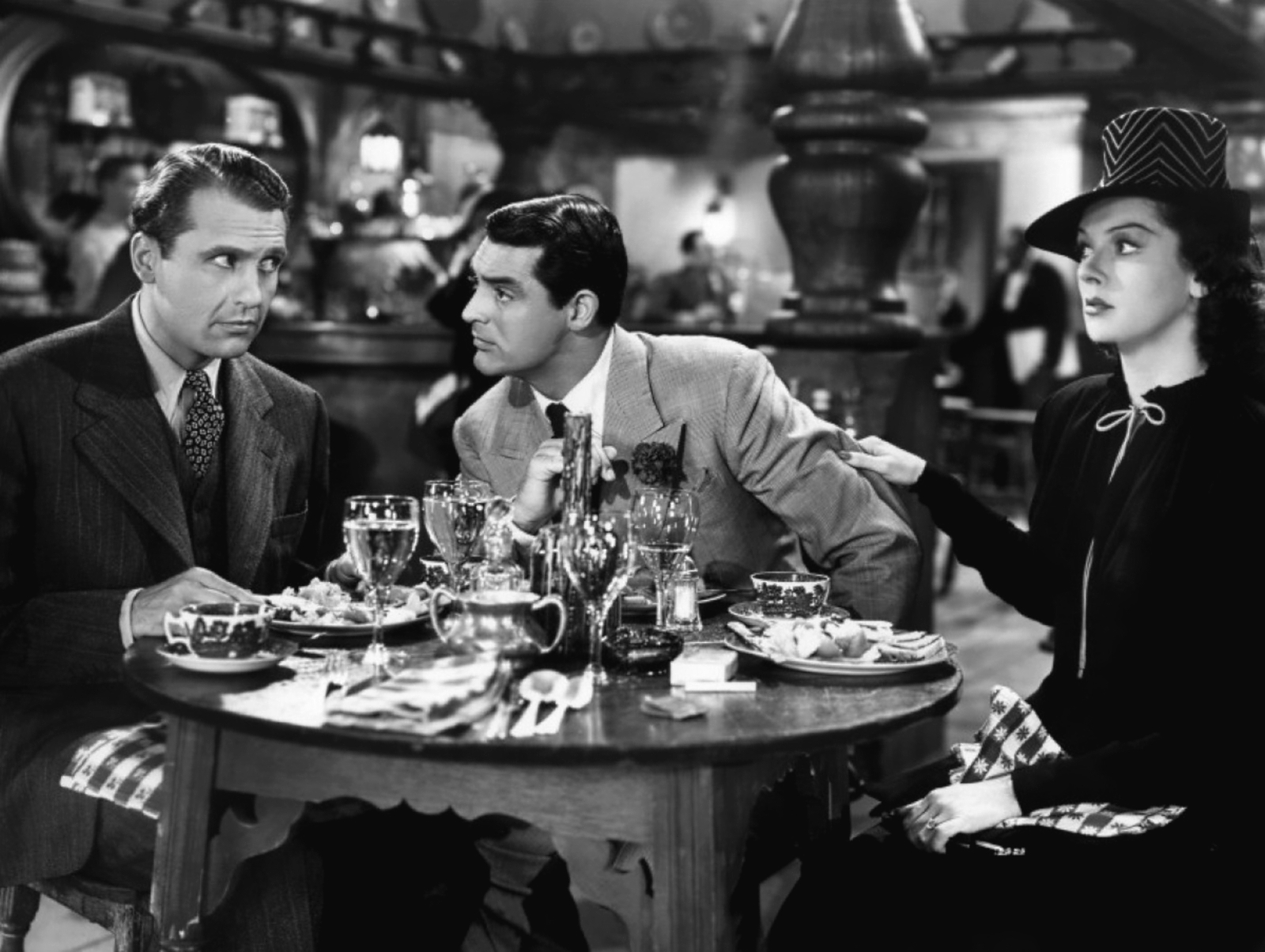
His Girl Friday (1940) is an American screwball comedy directed by Howard Hawks and starring Cary Grant and Rosalind Russell. Based on the play The Front Page (1928) by Ben Hecht and Charles MacArthur, Hawks decided to turn Hildy Johnson, played by a man in the original, into a woman, changing the dynamics of the story and according to many critics, an improvement. The supporting cast includes Ralph Bellamy, Gene Lockhart, Porter Hall, Roscoe Karns, John Qualen, Helen Mack, and Alma Kruger.

Hildy Johnson (Russell) has left newspaper journalism behind to marry insurance salesman Bruce Baldwin (Bellamy), much to the dismay of her former editor and ex-husband Walter Burns (Grant). Walter does his level best to convince Hildy that she return to her career and to him! What ensues is one of the smartest, fast-talking screwball comedies ever made.


Cary Grant, Ralph Bellamy, and Rosalind Russell


Howard Hawks (1896 - 1977) was an American director, producer, and screenwriter. He is considered one of the great directors from the classic Hollywood era. Hawks excelled in directing films in all genres. His films were famous for featuring strong women characters. These tough-talking “Hawksian women” helped to define the director’s work. Some of Hawks’ popular films include Scarface (1932) Bringing Up Baby (1938), Only Angels Have Wings (1939), His Girl Friday (1940), To Have and Have Not (1944), The Big Sleep (1946), Red River (1948), and Gentlemen Prefer Blondes (1953). Gary Cooper won a Best Actor Academy Award for his performance in Sergeant York (1941) under Hawks’ direction.

Cary Grant (1904 - 1986) was an English-born American actor who became one of the most popular leading men in film history. Grant started his career in vaudeville before heading to Hollywood. He became a superstar in the late 1930s in a series of screwball comedies including The Awful Truth (1937) with Irene Dunne. He was a memorable C. K. Dexter Haven in The Philadelphia Story (1940) opposite Katharine Hepburn and James Stewart. He received two Best Actor nominations for Penny Serenade (1941) and None but the Lonely Hearts (1944). Other classic Grant films include Gunga Din (1939), Only Angels Have Wings (1939), and Arsenic and Old Lace (1944). He made four popular films with Alfred Hitchcock: Suspicion (1941), Notorious (1946), To Catch a Thief (1955), and North by Northwest (1959). He was presented with an Honorary Oscar at the 42nd Academy Awards in 1970.

Rosalind Russell (1907 - 1976) was an American film and stage actress. She was nominated for four Best Actress Academy Awards throughout her career. She won five Golden Globe Awards and a Tony for Best Actress in a Musical for her performance as Ruth in Wonderful Town. Russell was a versatile actress who excelled at both comedy and drama. She was also one of the few actresses of her day to portray lawyers, judges, and psychiatrists. Some of her famous films include The Women (1939), My Sister Eileen (1942), Sister Kenny (1946), Picnic (1955), Auntie Mame (1958), Gypsy (1962), and The Trouble with Angels (1966).


To watch this film on YouTube, click on the link below.


Why watch this film?
  • It is considered one of the best screwball comedies of all time.
  • The overlapping dialogue throughout the film was unique when released and copied ever since.
  • Rosalind Russell had one of the best roles of her career as Hildy Johnson.
  • It showcases Cary Grant’s ease at playing comedy like no one else could.
  • The cast features a supporting cast of some of the best and most popular character actors of the day.

To join the discussion on September 13, 2021, at 6:30 p.m., click here. Once you RSVP, you will receive an invitation and link to the discussion on Zoom.


His Girl Friday trivia
  • Rosalind Russell was literally the last choice to play Hildy Johnson?! Carole Lombard was the director’s first choice but deemed too expensive. Katharine Hepburn, Claudette Colbert, Margaret Sullivan, Ginger Rogers, Jean Arthur, and Irene Dunne were all offered the role but turned it down. Supposedly, even Joan Crawford was considered.
  • Russell hired a writer to help her ad-lib some of her dialog to better compete with Grant who was ad-libbing like crazy.
  • The film contains several inside jokes that audiences in 1940 would have picked up on immediately.
  • Russell was loaned to Columbia from M-G-M where she had just completed The Women (1939).
  • The film was selected for preservation by the Library of Congress in 1993.
  • It premiered at Radio City Music Hall before it went into wide release where it was universally praised by the critics and public.


Discussion questions:
  1. What did you think of the relationship between Walter (Grant) and Hildy (Russell)?
  2. Did the character of Hildy Johnson surprise you in any way?
  3. Did you have a favorite line or interaction between Hildy and Walter?
  4. What about the character actors? Any favorites?
  5. The film moves at break-neck speed; were you able to keep up with it?
  6. Did anything surprise you about the film?
  7. Was the ending satisfying? Was it what you expected?

Sunday, July 10, 2016

Great films of 1939: "The Women" July 23 at the Daystar Center

Great films of 1939: The Women
Where: The Venue 1550 at the Daystar Center, 1550 S. State Street, Chicago, IL
When: July 23, 2016
Time: 6:45 p.m.
Hosted by Stephen Reginald

The Women (1939) features an all-star female cast directed by George Cukor in the film version of Clare Boothe's Broadway play. Set among the pampered Park Avenue set played by Rosalind Russell, Joan Fontaine, Paulette Goddard, Mary Boland and Norma Shearer. Joan Crawford plays the manipulative Crystal Allen out to steal Mary Haine's (Shearer) husband so she can live on Park Avenue too. The film has the added dynamic of the real-life professional rivalry between stars Crawford and Shearer.

Director George Cukor (center) with cast of The Women
The Women has been remade as a musical in 1956 and updated in 2008, but neither version holds a candle to the original.

In 2007, the film was voted to the National Film Registry for preservation.


Part of the “Great movies of 1939” series. Discover some of the greatest movies from Hollywood’s most famous year.


Have some Joe and Enjoy the Show!
Before the movie, grab a cup of coffee from Overflow Coffee Bar, located within the Daystar Center. You can bring food and beverages into the auditorium; we even have small tables set up next to some of the seats. General Admission: $5 Students and Senior Citizens: $3.

Join the Chicago Film club; join the discussion
Twice a month we screen classic films and have a brief discussion afterward. For more information, including how to join (it’s free), click here. The Venue 1550 is easily accessible by the CTA. Please visit Transit Chicago for more information on transportation options.


Stephen Reginald is a freelance writer and editor. He has worked at various positions within the publishing industry for over 25 years. Most recently he was executive editor for McGraw-Hill’s The Learning Group Division. A long-time amateur student of film, Reginald hosts “Chicago Film Club,” a monthly movie event held in the South Loop, for the past two years. Reginald has also taught several adult education film classes at Facets Film School, Chicago.


Daystar Center located at 1550 S. State St. works through a grassroots network of collaborations and partnerships with individuals and other nonprofit organizations. Through this web, they’re able to provide educational, cultural, and civic activities that enrich and empower their clients, guests, and community members. To learn more about classes and events offered at the Daystar Center, please visit their Web site.

Saturday, October 20, 2012

Classic screwball comedy “His Girl Friday” coming to “The Venue 1550” November 8


The comedy classic His Girl Friday (1940 ) will be screened at “The Venue 1550” at the Daystar Center, 1550 S. State St., November 8, 2012 at 7 p.m. Tickets are $7 per person and can be purchased at the door or online. This event will be hosted by Stephen Reginald, Classic Movie Man.

His Girl Friday, directed by Howard Hawks and starring Cary Grant and Rosalind Russell is an adaptation of the Ben Hecht and Charles MacArthur classic Broadway smash, The Front Page. Grant plays Walter Burns, a Chicago newspaper managing editor and Russell is Hildy Johnson an ex-reporter for the same paper and Burns’s ex-wife. On the eve of her marriage to a new man, Burns tries to convince Hildy to come back to the paper and him. Considered one of the greatest classic screwball comedies of all time, His Girl Friday is filled with non-stop one liners and the fastest dialogue ever recorded on film.

Backstory
Carole Lombard was first choice
to play Hildy Johnson
Howard Hawks originally planned to do a straight remake of The Front Page. During a read-through of the script during auditions, Hawks had his secretary read Hildy Johnson’s lines. Hawks, always a champion of strong women, liked the sound of Johnson’s lines coming out of the mouth of a female. The script was changed to make Hildy the ex-wife of Walter Burns and many think His Girl Friday is better than the film on which it is based.

Casting Call
Hawks had Cary Grant in mind for Walter Burns from the start, but the casting of Hildy Johnson proved problematic. Hawks originally wanted Carole Lombard, who he directed in Twentieth Century (1934). Lombard, one of the biggest stars in Hollywood, was too expensive. Supposedly the role of Hildy was offered to Katherine Hepburn, Claudette Colbert, Margaret Sullivan, Ginger Rogers, and Irene Dunne. All turned the role down. Joan Crawford, coming off her success in The Women, (1939) was even considered. Hawks finally settled on Rosalind Russell. Hawks encouraged ad-libbing on the set, so Russell hired a writer to punch up her dialogue because she thought Grant had all the good lines.


Ralph Bellamy, Cary Grant, and Rosalind Russell
His Girl Friday was #19 on American Film Institute’s 100 Years…100 Laughs and has been selected for preservation in the United States National Film Registry.


Join the Film Club
Come watch this classic in the comfort of “The Venue 1550.” Overflow Coffee Bar will be open so you can grab a drink or snack to be enjoyed during the movie.


Saturday, October 24, 2009

Howard Hawks and "His Girl Friday"

Howard Hawks is one of the greatest American movie directors of all time. Adept at all film genres, Hawks excelled at fast-paced screwball comedies like Twentieth Century, Bringing up Baby, and His Girl Friday.

His Girl Friday was a reworking of the Ben Hecht Charles MacArthur classic The Front Page. By making Hildy Johnson a woman and the ex-wife of editor Walter Burns, Hawks thought the dialogue was funnier and added a dimension that The Front Page lacked. This was a pretty risky decision at the time, since The Front Page was considered a classic not to be messed with.

Hawks's risk paid off and the casting of Cary Grant as Walter Burns and Rosalind Russell as Hildy Johnson was inspired. In Grant's capable hands, Walter Burns is a more complex character than he was in the original. In The Front Page, Burns is a total cad. He wants to lure Hildy back to the newspaper business for completely selfish motives. In His Girl Friday, Walter wants Hildy back at the paper because she's a great reporter, but also because he's still in love with her. Russell's Hildy is the perfect Hawksian heroine: self-assured, smart, and independent. It's hard to believe that Russell was the eighth choice to play Hildy Johnson. Jean Arthur, Katherine Hepburn, Claudette Colbert, Irene Dunne, Margaret Sullivan, and Ginger Rogers all turned the role down. Hawks wanted Carole Lombard, who he directed to stardom in Twentieth Century, but she was too expensive, working as an independent actress. Joan Crawford was even considered for the role.

Russell was so put off by being eighth on the list (ninth if you count Crawford) that the first time she met Hawks, she showed up with wet hair. She soon discovered that Hawks wanted her to succeed in the role and after a few rough patches early in the shooting, she quickly gained confidence, going toe-to-toe with the more experienced Grant (His Girl Friday was his third film with Hawks).

As the story goes, Hildy quits the paper to marry dependable, but dull, insurance salesman Bruce Baldwin (Ralph Bellamy). Tired of being a "newspaperman," Hildy says she wants a normal life of domesticity, but Walter suspects she's fooling herself, so he plots to lure her back to the paper and into his arms.

Hawks was never one for depicting domestic married life on the screen, preferring to portray the chase and the buildup to marriage, and no one  showcased the chase better than Hawks. Since Hawks admired smart, funny women, his heroines are never given short shrift on film. From camera angles to screen time, Grant and Russell are treated equally. One of the reasons Hawks's films still seem so fresh and contemporary is due to his strong female characterizations.

Howard Hawks directed some of the greatest films of all time and His Girl Friday is one of his best.

His Girl Friday opened at Radio City Music Hall on January 11, 1940.


Related Posts Plugin for WordPress, Blogger...