Showing posts with label Otto Preminger. Show all posts

Tuesday, June 3, 2025

James Stewart, Lee Remick, and Ben Gazzara head the cast in “Anatomy of a Murder”

Anatomy of a Murder (1959) is an American courtroom drama directed by Otto Preminger and starring James Stewart, Lee Remick, Ben Gazzara, Arthur O’Connell, Eve Arden, and Kathryn Grant. The supporting cast includes George C. Scott, Orson Bean, and Murray Hamilton. The musical score is by Duke Ellington.

Lawyer Paul Biegler (Stewart), a former district attorney, is contacted by Laura Manion (Remick) to defend her husband, US Army Lieutenant Frederick “Manny” Manion. Manny was arrested for murdering innkeeper Bernard “Barney” Quill. Manny doesn’t deny murdering Quill, but he said he did so because he raped his wife.

Biegler, a small-town lawyer in the Upper Peninsula of Michigan, uses all his knowledge of the law to defend Manny. Will his folksy lawyer strategy get Manny acquitted, or will the sophisticated prosecuting attorney, Claude Dancer (Scott), get Manny convicted of murder?

Otto Preminger (1905 -1986) was an American film director who made more than 35 feature films during a five-decade career. Born in the Austro-Hungarian Empire into a Jewish family. Preminger was drawn to acting from an early age and became the apprentice of famed stage director Max Reinhardt. In 1935, he was recruited by Twentieth Century-Fox to apprentice as a director at the studio. After a rocky start, Preminger established himself as an A-list director after Rouben Mamoulian was fired from Laura (1944). The film noir classic made major stars of Gene Tierney and Dana Andrews and is considered one of the best film noirs of all time. While under contract to Fox, Preminger directed Fallen Angel (1945), Centennial Summer (1946), Forever Amber (1947), and Daisy Kenyon (1947). After he left Fox, Preminger became a maverick, constantly clashing with members of the Production Code. He released two films without the approval of the Production Code: The Moon is Blue (1953) and The Man with the Golden Arm (1955). Both films were financial successes and helped bring an end to the Code entirely. Later successes for Preminger include Anatomy of a Murder (1959) and Exodus (1960).

James Stewart (1908 - 1997) was an American actor whose career spanned almost five decades and 80 films. Stewart often portrayed the ideal of the average American who was decent and honest. Stewart signed a seven-year contract with Metro-Goldwyn-Mayer, where he appeared in a variety of supporting roles in B and A pictures. It wasn’t until he was loaned out to Columbia Pictures to costar in Frank Capra’s You Can’t Take It With You (1938) that his home studio began to take notice. Still, his best roles were on loan to other studios, including Mr. Smith Goes to Washington (1939) at Columbia again and Destry Rides Again (1939) at Universal. M-G-M eventually cast him in The Philadelphia Story (1940) where he won the Academy Award for Best Actor, which cemented his reputation as a leading man and star. From there, he went on to make The Shop Around the Corner (1940) and The Mortal Storm (1940). After serving in the United States Army from 1941 - 1945, Stewart returned to Hollywood where he continued as a popular leading man. During the 1950s, Steward made two films with director Alfred Hitchcock, which are considered two of the director’s best films: Rear Window (1954) and Vertigo (1958). Vertigo was voted the greatest film ever made by Sight & Sound in 2012.

Lee Remick (1935 – 1991) was an American actress and singer. She made her film debut in A Face in the Crowd (1957) directed by Elia Kazan. She quickly established herself as a Major leading actress in films like Wild River (1960), Days of Wine and Roses (1962), which earned her a Best Actress Oscar nomination, No Way to Treat a Lady (1968), The Detective (1968), The Omen (1976), and The Europeans (1979). Remick also received a Best Actress Tony nomination for her lead performance in Wait Until Dark (1966), a role that Audrey Hepburn would portray in the screen version in 1967.She received Golden Globe Awards for her television work. She won a BAFTA TV Award for Best Actress for her performance in Jennie: Lady Churchill (1974).

Ben Gazzara (1930 – 2012) was an American actor, director, appearing on stage, film, and television. His big break came with his starring role as Brick in Cat on a Hot Tin Roof (1955 -1956). This led to a successful film career starting with Anatomy of a Murder (1959). He starred on television in Run for Your Life (1965 -1968). Gazzara was a frequent collaborator of John Cassavetes, working with him on the films Husbands (1970) and The Killing of a Chinese Bookie (1976). Some of his movies include The Bridge at Remagen (1969), Voyage of the Damned (1976), and Saint Jack (1979).


Anatomy of a Murder trivia

  • The film pushed the boundaries of the Production Code by using words like “bitch,” “contraception,” and “rape,” words not heard in American films before.
  • James Stewart’s father found the film offensive and took out an ad in his local paper advising people not to see it.
  • Much of the movie was filmed on location in Marquette County, Michigan.
  • Lana Turner turned down the role of Laura, leaving the door open for Remick, Preminger’s first choice.
  • James Stewart received his last Oscar-nominated performance. It was George C. Scott’s first Academy Award nomination.
  • The film was banned in Chicago upon its initial release.


Ben Gazzara and James Stewart

Click HERE to watch the movie on the Internet Movie Archive.

Click HERE to join the discussion on June 9, 2025, at 6:30 p.m. Central Time. Once you RSVP, you will receive an invitation with a link to join the discussion on Zoom.


Lee Remick, Eve Arden, and James Stewart

Discussion questions

  1. This film was shocking for its frankness when dealing with a subject like rape and murder. Did you find anything about the film shocking or surprising?
  2. Three actors from the film were nominated for Academy Awards: James Stewart, Best Actor; Arthur O’Connell, Best Supporting Actor; and George C. Scott, also for Best Supporting Actor. Did you think their performances were worthy of the nominations?
  3. What did you think of the jazz score by Duke Ellington? Do you think it worked with the movie?
  4. What did you make of the Lee Remick character? Do you think she was telling the truth about her relationship with Barney?
  5. Did the Michigan location add to the film’s authenticity?
  6. Would you recommend this film to a friend?

Tuesday, May 6, 2025

Dana Andrews and Gene Tierney find out “Where the Sidewalk Ends”

Where the Sidewalk Ends (1950) is an American film noir directed and produced by Otto Preminger and starring Dana Andrews and Gene Tierney. The screenplay was written by Ben Hecht, and the cinematography was by Joseph LaShelle.

Mark Dixon (Andrews) is a tough New York City cop who was demoted due to excessive force in the line of duty. During a routine investigation with a witness to a crime (a possible murder), things go terribly wrong. When Dixon questions Ken Paine (Craig Stevens), a drunk Paine becomes angry and starts a fight. Defending himself, Dixon punches Paine who falls and hits his head, killing him instantly. In a panic, because of his recent demotion and fearing his career would be over if he told his superiors, Dixon disposes of Paine’s body. 

Paine’s estranged wife, model Morgan Taylor (Tierney), is brought in for questioning because she too was a possible witness to the murder. Morgan’s husband used her as “bait” to lure a Texas tycoon to a floating crap game at mobster Tommy Scalise’s (Gary Merrill) apartment. The tycoon ends up dead and it looks like Scalise was trying to pin it on Paine. When circumstantial evidence gets Morgan’s father (Tom Tully) arrested for the murder of his son-in-law, Dixon finds himself with a moral dilemma, complicated by his attraction to Morgan.

Will Dixon come clean and face the consequences, or will he let Morgan’s father take the fall?


Otto Preminger (1905 -1986) was an American film director who made more than 35 feature films during a five-decade career. Born in Austro-Hungarian into a Jewish family. Preminger was drawn to acting from an early age and became the apprentice of famed stage director Max Reinhardt. In 1935, he was recruited by Twentieth Century-Fox to apprentice as a director at the studio. After a rocky start, Preminger established himself as an A-list director after Rouben Mamoulian was fired from Laura (1944). The film noir classic made major stars of Gene Tierney and Dana Andrews and is considered one of the best film noirs of all time. While under contract to Fox, Preminger directed Fallen Angel (1945), Centennial Summer (1946), Forever Amber (1947), and Daisy Kenyon (1947). After he left Fox, Preminger became a maverick, constantly clashing with members of the Production Code. He released two films without the approval of the Production Code: The Moon is Blue (1953) and The Man with the Golden Arm (1955). Both films were financial successes and helped bring an end to the Code entirely. Later successes for Preminger include Anatomy of a Murder (1959) and Exodus (1960).


Dana Andrews (1909 – 1992) was an American stage, film, and television actor. During the 1940s, Andrews was a major star and leading man, starring in Laura (1944), State Fair (1945), A Walk in the Sun (1945), The Best Years of Our Lives (1946), Canyon Passage (1946), Boomerang! (1947), and Daisy Kenyon (1947), the latter co-starring Joan Crawford and Henry Fonda. During the 1950s, film roles were harder to come by, but he had success in Elephant Walk (1954) co-starring Elizabeth Taylor and Peter Finch, While the City Sleeps (1956), and Curse of the Demon (1957). In 1958, he replaced Henry Fonda on Broadway in Two for the Seesaw. Andrews worked a lot on television, guest-starring on shows like The Twilight ZoneCheckmateThe Barbara Stanwyck ShowBen Casey, The Love BoatIronside, and Falcon Crest. He also starred in the daytime soap opera Bright Promise (1969 - 1971).


Gene Tierney (1920 – 1991) was an American actress. Tierney got her start on the stage where she played the ingenue lead in The Male Animal. She was spotted by 20th Century-Fox Studio head Darryl F. Zanuck and he offered her a movie contract. Zanuck said that Tierney was the most beautiful woman in the movies. Tierney proved that she could carry a film not completely based on her beauty in films like Laura (1944) and Leave Her To Heaven (1945) for which she was nominated for her first and only Best Actress Academy Award. Other important films include The Razor’s Edge (1946), Dragonwyck (1946), The Ghost and Mrs. Muir (1947), The Iron Curtain (1948), Whirlpool (1949), and The Mating Season (1951). In the late 1940s, she struggled with mental illness which negatively affected her career. After 1955’s The Left Hand of God, Tierney was off the screen until Advice & Consent (1962). She appeared in two films after that, but her career in film effectively ended in 1964 after a guest appearance in The Pleasure Seekers.


Where the Sidewalk Ends trivia:
  • This was the last film that director Otto Preminger directed under contract to 20th Century-Fox.
  • It reunited Dana Andrews, Gene Tierney, cinematographer Joseph LaShelle, and Preminger, who all worked on the classic film noir Laura (1944). 
  • Andrews and Tierney starred in five films together; this was their last.
  • Designer Oleg Cassini, who was married to Gene Tierney at the time, has a small role as a fashion designer in the film. While the two were married, Cassini designed many of the film costumes for Tierney.
  • Craig Stevens, who played Ken Paine went on to fame on the small screen in the television series Peter Gunn.
  • Otto Preminger made more films with Dana Andrews than any other actor; the two made five films together.

Why watch this film?
The film has a reputation as one of the first, if not the first, of the “bad cop” films. Dana Andrews delivers a great multi-layered performance as Dixon. Otto Preminger was a master of the film noir genre, and this is one of his best.
It’s the last time Andrews and Gene Tierney appeared together on film.


Click HERE to join the online discussion on May 12, 2025, at 6:30 p.m. Central Time. Once you RSVP, you will receive an invitation with a link to join the discussion on Zoom.

Click HERE to watch the movie on YouTube.


Discussion questions:
  1. What did you make of  Dixon’s character? Were you rooting for or against him?
  2. How do you think the director handled the subject matter? Was it believable?
  3. Did anything in the film surprise you?
  4. The film had some amazing character actors. Did you have a favorite?
  5. Was the chemistry between Andrews and Tierney believable?
  6. Did the film end the way you expected it to? Did you find it satisfying?

Wednesday, November 20, 2024

Joan Crawford, Dana Andrews, and Henry Fonda in Otto Preminger's Production of “Daisy Kenyon”

Daisy Kenyon (1947), based on the best-selling novel by Elizabeth Janeway, is one of many films referred to as “women’s pictures” during Hollywood’s Golden Age. In many ways, it fits that genre perfectly, especially with Joan Crawford—“an old hand at being emotionally confused” according to The New York Times review—playing the title role. However, in director Otto Preminger’s hands, it’s so much more, with the male protagonists, Henry Fonda and Dana Andrews, also grabbing the spotlight.

Andrews plays prominent attorney, Dan O’Mara who is married to Lucile (Ruth Warrick). They have two daughters Rosamund (Peggy Ann Garner) and Marie (Connie Marshall). O’Mara leads a double life: On the one hand, he’s a family man, and on the other, he’s a philandering husband carrying on an affair with Daisy (Crawford), a single career woman. The relationship is a strained one primarily because O’Mara refuses to divorce his wife and marry Daisy. Daisy is torn between her love for Dan and her desire for a relationship that doesn’t need to be kept secret. To complicate matters further, Daisy meets World War II veteran, Peter Lapham (Fonda). Not as exciting a character as Dan, but a safe one.

Who will Daisy choose? 


Otto Preminger (1905 -1986) was an American film director who made more than 35 feature films during a five-decade career. Born in Austro-Hungarian into a Jewish family. Preminger was drawn to acting from an early age and became the apprentice of famed stage director Max Reinhardt. In 1935, he was recruited by Twentieth Century-Fox to apprentice as a director at the studio. After a rocky start, Preminger established himself as an A-list director after Rouben Mamoulian was fired from Laura (1944). The film noir classic made major stars of Gene Tierney and Dana Andrews and is considered one of the best film noirs of all time. While under contract to Fox, Preminger directed Fallen Angel (1945), Centennial Summer (1946), Forever Amber (1947), and Daisy Kenyon (1947). After he left Fox, Preminger became a maverick, constantly clashing with members of the Production Code. He released two films without the approval of the Production Code: The Moon is Blue (1953) and The Man with the Golden Arm (1955). Both films were financial successes and helped bring an end to the Code entirely. Later successes for Preminger include Anatomy of a Murder (1959) and Exodus (1960).

Crawford at the top of the triangle.


Joan Crawford (190? – 1977) was an American actress. A former dancer, Crawford was signed to a movie contract by M-G-M in 1925. She started out in small parts in silent films, sometimes doubling for established star Norma Shearer. Crawford was an amazing self-promoter and by the 1930s, her popularity rivaled Shearer and Greta Garbo. She was famous for playing shop girls who somehow made it big. During the height of the Depression, women flocked to her films. But by the late 1930s, her popularity was beginning to wane. She left M-G-M and was absent from the screen for almost two years. She signed with Warner Bros. and made a successful comeback in Mildred Pierce (1945). The film was a hit with audiences and critics alike and won Crawford her one-and-only Academy Award for Best Actress. She went on the star in Humoresque (1946) with John Garfield, Possessed (1947) with Van Heflin, and Flamingo Road (1949).

Dana Andrews (1909 – 1992) was an American stage, film, and television actor. During the 1940s, Andrews was a major star and leading man starring in Laura (1944), State Fair (1945), A Walk in the Sun (1945), The Best Years of Our Lives (1946), Canyon Passage (1946), Boomerang! (1947), and Daisy Kenyon (1947), the latter co-starring Joan Crawford and Henry Fonda. During the 1950s, film roles were harder to come by, but he had success in Elephant Walk (1954) co-starring Elizabeth Taylor and Peter Finch, While the City Sleeps (1956), and Curse of the Demon (1957). In 1958 he replaced Henry Fonda on Broadway in Two for the Seesaw. Andrews worked a lot on television guest-starring on shows like The Twilight ZoneCheckmateThe Barbara Stanwyck ShowBen Casey, The Love BoatIronside, and Falcon Crest. He also starred in the daytime soap opera Bright Promise (1969 - 1971).

Trouble in the O’Mara household


Henry Fonda (1905 –1982) was an American stage and film actor. Fonda came to Hollywood in 1935 and became a star overnight. Early starring roles include Jezebel (1938), Jesse James (1939), Young Mr. Lincoln (1939), and The Grapes of Wrath (1940) for which he received his first Best Actor nomination for playing Tom Joad. Fonda played opposite Barbara Stanwyck in The Lady Eve (1942), My Darling Clementine (1946), and Mister Roberts (1955). In 1981 he finally won the Best Actor Oscar for his role as Norman Thayer Jr. in On Golden Pond.

Daisy Kenyon trivia

  • Joan Crawford requested both Henry Fonda and Dana Andrews as her co-stars.
  • Fond and Andrews didn’t want to make the film but had to it to fulfill their contracts.
  • During an interview during the 1970s, Otto Preminger said he had no recollection of Daisy Kenyon.
  • Crawford was borrowed from Warner Bros. for her role as Daisy.
  • Andrews had already worked with Preminger on Laura (1944) and Fallen Angel (1945).
  • John Garfield appears as an extra sitting at the bar in the Stork Club.
  • Columnist Walter Winchel, writer Damon Runyon, and New York Post columnist Leonard Lyons all have cameos as themselves.

Dan O’Mara at the Stock Club with Leonard Lyons and check out
John Garfield drinking far left!


Click HERE to watch the film on the Internet Archive.


Click HERE to join the online discussion on November 25, 2024, at 6:30 p.m. Central Time. Once you RSVP, you will receive an email with a link to join the discussion on Zoom.


Discussion questions

  1. When the film was released on DVD, the film company classified it as a film noir. Do you think this film fits that genre? How would you classify it?
  2. Did you find the relationships between the three stars believable? 
  3. Do you think Daisy made the right choice?
  4. Were you surprised by anything?
  5. Was the ending satisfying?


Tuesday, August 13, 2024

Dana Andrews and Gene Tierney lead the cast in "Laura"

Laura (1944) is set among New York City’s upper crust, with Detective Mark McPherson (Dana Andrews) investigating the murder of beautiful advertising executive Laura Hunt (Gene Tierney). The suspects are some of her closest friends and associates including fiancé (Vincent Price), aunt (Judith Anderson), and mentor (Clifton Webb).


When production on Laura  started, no one believed that the end product would be worth seeing. From the beginning the project was problematic. Arguments between studio boss Darryl Zanuck and the original director, Rouben Mamoulian ended in Mamoulian being fired. Zanuck then assigned Otto Preminger, already the film’s producer, to be its director too. The only problem: Preminger had limited experience as a movie director. 


Under Preminger’s supervision, what began as a fairly ordinary murder mystery, turned out to be a critical and box office success. Tierney in the title role became a superstar and was forever identified with the beautiful, enigmatic Laura Hunt. Andrews, as Detective Mark McPherson, established himself as a major star and popular leading man. Webb, who hadn’t made a movie since the early days of talking pictures, earned an Academy Award nomination as Best Supporting Actor for his role as Waldo Lydecker. Thomas M. Pryor, in his October 12, 1944 New York Times review called Laura “a top-drawer mystery.”

With some of the sharpest and wittiest dialogue ever recorded on film, Laura set the standard for 1940s film noir. Andrews’s portrayal of McPherson became a prototype for what would become known as the hard-boiled detective, influencing a generation of movie actors. Pryor from the Times put it this way: “Mr. Andrews is fast proving himself to be a solidly persuasive performer, a sort of younger-edition Spencer Tracy.”

The musical score by David Raksin is one of the most hauntingly beautiful movie themes ever recorded and will forever be associated with the enigmatic Tierney.


Laura trivia

  • Vincent Price thought this was the best movie he ever made.
  • David Raskin's famous film score wasn't nominated for an Academy Award.
  • Jennifer Jones and Hedy Lamarr were both offered the role of Laura but turned it down.
  • Gene Tierney, knowing that she wasn't the first choice was reluctant to take the part.
  • Dorothy Adams, memorable as Laura's maid Bessie didn't receive screen credit.
  • Joseph LaShelle won an Academy Award for his black and white cinematography.


Click HERE to watch the film on Internet Archive. You can play the film on your laptop or phone. If you have an HDMI cable, you can hook it up to your TV.

Click HERE to join the discussion on August 19, 2024, at 6:30 p.m. Central Time. Once you RSVP, you will receive an invitation with a link to join the discussion on Zoom.

Discussion questions
  1. Laura is considered one of the top films noir of all time. Do you think it deserves that reputation?
  2. Some critics upon the film's release thought that Gene Tierney was miscast. Do you agree with that assessment?
  3. Did David Raskin's score help the movie narrative?
  4. The film is filled with great performances; did one performance stand out to you?
  5. Where you surprised by the plot twists?
  6. Do you think Waldo Lydecker was in love with Laura?


Tuesday, March 8, 2022

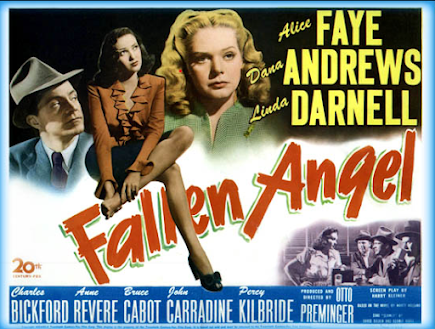
Alice Faye, Dana Andrews, and Linda Darnell star in "Fallen Angel"

Fallen Angel (1945) is an American film noir directed by Otto Preminger and starring Alice Faye, Dana Andrews, and Linda Darnell.

Andrews stars as a grifter hoping to swindle two rich sisters (Faye and Anne Revere) while romancing Stella (Darnell) a diner waitress.


This was director Otto Preminger’s follow-up to Laura released the year before. The cinematography was by Joseph La Shalle, who won an Academy Award for his work on Laura. Also on board for Fallen Angel was David Raksin, who wrote the film score. He composed the music for Laura, one of the most famous film scores in movie history. Last, but not least, Andrews who played Mark McPherson opposite Gene Tierney in Laura, has the male lead in Fallen Angel. Andrews made five films with Preminger, more than any other leading man.

Faye, the musical queen on the Fox lot, was looking to move into dramatic roles. She loved Laura and wanted to star in a similar mystery. As already noted, she got a lot of the same talent that was involved with that film noir classic. When Faye saw the finished film, she felt that the movie emphasized Darnell’s role to the detriment of her own. She was so distressed that she walked out on her contract. Studio boss Darryl Zanuck begged her to come back, promising her roles in prestige films in the planning stages like The Razor’s Edge, but Faye was done. She didn’t return to the big screen until 1962’s State Fair.

Darnell was signed to a contract at 20th Century Fox at age 15. Because she looked older than her age, she worked as a leading lady from the outset, with the studio claiming she was 19. Her role in Fallen Angel helped turn her into a popular pin-up during World War II. In 1944, Look magazine named her one of the four most beautiful women in Hollywood, along with Hedy Lamarr, Ingrid Bergman, and Fox colleague, Gene Tierney.

Interested in classic film? Consider joining the Chicago Film Club. It’s free to join and you’ll be made aware of future discussions and classic movie screenings in Chicago.

To watch the movie on YouTube, click the link below.


To join the discussion on March 14, 2022, at 6:30 p.m. Central Time click here. Once you RSVP, you'll receive an invitation and a link to the discussion on Zoom.

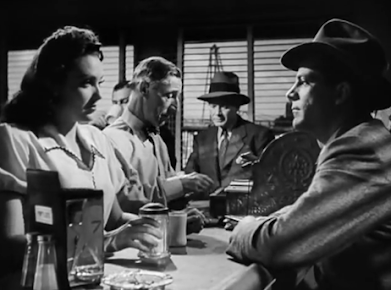
Linda Darnell, Percy Kilbride, Charles Bickford, and Dana Andrews


Fallen Angel trivia

  • Linda Darnell spent a week at the Fox commissary to prepare for her role as a waitress.
  • Alice Faye rejected over 30 scripts before choosing the one for Fallen Angel. She hoped it would be another Laura. After seeing a rough cut of the film, Faye felt that her best scenes were cut and Darnell's role was promoted above hers. She was so upset by this that she walked out on her contract and supposedly tossed her dressing room keys to the guard at the studio gate as she drove off the lot.
  • This was the second of five films Dana Andrews made with director Otto Preminger. Preminger worked with Andrews more than any other leading man.
  • Preminger assembled most of the same crew as the ones that worked on Laura the year before.

Discussion questions

  1. Alice Faye was disappointed with how her performance came off in this film. Do you think she was rash in her judgment?
  2. Would you consider this film a classic example of film noir?
  3. Did you have any sympathy for the Dana Andrews character?
  4. What about Lind Darnell? Was her character all bad or did you find yourself sympathizing with her?
  5. Do you think the film had a theme? If so, what was it?


Thursday, July 15, 2021

Frank Sinatra is “The Man with the Golden Arm”

The Man with the Golden Arm (1955) is an American film drama directed by Otto Preminger and starring Frank Sinatra, Eleanor Parker, and Kim Novak. It is based on the novel of the same name by Nelson Algren, although not a completely faithful adaptation. The movie features a jazz-inspired film score composed, arranged, and conducted by Elmer Bernstein.

The movie centers around Frankie Machine (Sinatra), a former card dealer, recently released from a drug rehab center who tries to start his life over as a musician specializing in the drums. When he returns to his old dilapidated neighborhood on the North Side of Chicago, all the old demons start to pull at him including his clinging wife Zosh (Parker) who may or may not be an invalid, Zero Schwiefka (Robert Strauss) his former boss running illegal card games, and “Nifty Louie” Fomorowski (Darren McGavin) his former drug-dealer who is trying to hook him on drugs once again.

To complicate Frankie’s life further, he runs into an old flame, Molly Novotny (Novak). Molly and Frankie have strong feelings for one another but Frankie feels obligated to take care of Zosh.

Will Frankie break free from all the things dragging him back to his old life of drugs and desperation or is he doomed to a life of addiction and hopelessness?


Otto Preminger (1905 -1986) was an American film director who made more than 35 feature films during a five-decade career. Born in Austro-Hungarian into a Jewish family. Preminger was drawn to acting from an early age and became the apprentice of famed stage director Max Reinhardt. In 1935, he was recruited by Twentieth Century-Fox to apprentice as a director at the studio. After a rocky start, Preminger established himself as an A-list director after Rouben Mamoulian was fired from Laura (1944). The film noir classic made stars of Gene Tierney and Dana Andrews and is considered one of the best film noirs of all time. While under contract to Fox, Preminger directed Fallen Angel (1945), Centennial Summer (1946), Forever Amber (1947), and Daisy Kenyon (1947), the latter starring Joan Crawford, Dana Andrews, and Henry Fonda. After he left Fox, Preminger became a maverick, constantly clashing with members of the Production Code. He released two films without the approval of the Production Code: The Moon is Blue (1953) and The Man with the Golden Arm (1955). Both films were financial successes and helped bring an end to the Code entirely. Later successes for Preminger include Anatomy of a Murder (1959) and Exodus (1960).

Frank Sinatra (1915 - 1998) was an American singer and actor. He is considered one of the greatest musical talents of the 20th century. Sinatra began his career singing with the big bandleaders of the swing era before his film career. He had his first leading film role in Higher and Higher and Step Lively (both 1944) at RKO. In 1945, he starred opposite Gene Kelly and Kathryn Grayson in Anchors Aweigh. The movie was a major hit and Sinatra co-starred again with Kelly in Take Me Out to the Ball Game and On the Town ( both 1949). His movie career slumped in the early 1950s and it looked like his career was over. In 1953, Sinatra won the role of Maggio in From Here to Eternity co-starring Burt Lancaster, Montgomery Clift, Deborah Kerr, and Donna Reed. He won the Academy Award for Best Supporting Actor and his movie career was back on track. More hit films followed including Guys and Dolls, The Tender Trap, and Not as a Stranger (all 1955). Perhaps his most famous film that year was The Man with the Golden Arm. For his performance in that film, he received an Academy Award nomination for Best Actor. Sinatra’s film and recording career continued into the 1980s. Other notable films include High Society (1956), The Manchurian Candidate (1962), Come Blow Your Horn (1963), The Detective (1968), and The First Deadly Sin (1980).

Frank Sinatra and Darren McGavin


Eleanor Parker (1922 - 2013) was an American actress in film and a three-time Best Actress Academy Award nominee. She signed a long-term contract with Warner Bros. in 1941. For the next few years she played minor roles in some important films, but her first big role came in Between Two Worlds (1944) opposite John Garfield and Paul Henreid. She was again cast alongside Garfield in Pride of the Marines (1945) and that film made her a star. Some of the films she made after that were not as successful and Parker was more careful choosing film roles, often refusing parts and being put on suspension. Warners cast her (after much lobbying from Parker) in Caged (1950), a film about a woman’s prison. The film was a hit and her performance earned Parker her first Best Actress Academy Award nomination. For her performance, she won the Volpi Cup for Best Actress at the Venice Film Festival. After leaving Warners, Parker freelanced for a while with limited success. In 1953, she signed a long-term contract with M-G-M. At her new studio, she co-starred with Clark Gable, Robert Taylor (they made three films together), and Glenn Ford. One of her most celebrated roles was as opera singer Marjorie Lawrence in Interrupted Melody (1955) which earned her third Oscar nomination. In the mid-50s, Parker was one of the most popular female stars in the movies. With all her accomplishments during her prime, she will most likely be remembered for her role as Baroness Elsa Schraeder in The Sound of Music (1965), one of the most popular and successful films of all time.

Kim Novak (1933 - ) is an American film and television actress. She retired in 1991. Novak was one of the last “studio-created” stars during a time when the studio system was in decline. Born Marilyn Pauline Novak in Chicago, her name was changed to Kim after she signed a long-term contract with Columbia Pictures in 1954. By the next year, Novak was a major star working opposite the likes of Frank Sinatra and William Holden. Some of her major films include Picnic (1955), The Man with the Golden Arm (1955), The Eddy Duchin Story (1956), Pal Joey (1957), Bell, Book and Candle (1958). Perhaps her most celebrated film is her dual role in Vertigo (1958) co-starring James Stewart and directed by Alfred Hitchcock. In 2012, the British Film Institute’s Sight & Sound critic’s poll voted Vertigo as the best film of all time. After retiring from film, Novak has devoted herself to painting and has exhibited her work publicly.


The Man with the Golden Arm trivia

  • Marlon Brando was offered the role of Frankie Machine.
  • The movie poster is considered one of the best of all time; it was voted #14 out of 25 by Premiere.
  • Otto Preminger paid Columbia Pictures $100,000 to borrow Kim Novak who was only paid $1,000 a week.
  • The entire movie was filmed on a soundstage with a few shots on the RKO backlot.
  • Some cross-promotion from the director, the poster for his film Carmen Jones (1954) is featured on a building during the opening scene.

To watch the film on YouTube, click the link below.


Why watch this film?
  • It was the first movie to discuss drug addiction.
  • The depiction of this subject matter and the film’s release without a Production Code seal contributed to the demise of the Code.
  • This was an important film that Frank Sinatra was desperate to do.
  • It features Kim Novak in one of her early film roles.
  • The first film co-starring Sinatra and Eleanor Parker. They later starred together in Frank Capra’s A Hole in the Head (1959), a much lighter film.
  • The film is an early example of director Otto Preminger working without the backing of a studio.

To join the discussion on July 19, 2021, at 6:30 p.m., click here. Once you RSVP, you’ll receive an invitation and link to the discussion on Zoom.


Discussion questions:
  1. Noir or not?
  2. What did you think of Sinatra’s performance?
  3. Does the film hold up in 2021?
  4. Eleanor Parker and Kim Novak played the two female leads. Did you find them convincing in their roles?
  5. Did anything in the film surprise you?
  6. The film is set in Chicago. Did the film’s setting evoke the city? Did it matter?

Friday, March 26, 2021

William Holden is a prisoner in “Stalag 17”

Stalag 17 (1953) is an American comedy-drama directed by Billy Wilder set in a German prisoner of war camp during World War II. The film is based on the Broadway play of the same name written by Donald Bevan and Edmund Trzcinski. Bevan and Trzcinski based the play on their experiences as prisoners in Stalag 17B in Austria. The film stars William Holden, Don Taylor, and Otto Preminger.

The camp has prisoners from several nations including many Americans. At the beginning of the film, two Americans try to escape through a tunnel but are shot by guards waiting for them. It becomes obvious to the other prisoners that there is a traitor in their midst. The men suspect that J. J. Sefton (Holden), a man who trades with the Germans for food, blankets, and other luxuries is the one betraying their plans to the Germans. Things get more complicated when another prisoner, Lieutenant Jame Dunbar (Taylor) arrives at the camp. 

After being beaten by the other prisoners who suspect he is the traitor, Sefton sets out to discover who the real culprit is.

William Holden

Billy Wilder (1906 - 2002) was an Austrian-born American film director, screenwriter, and producer. He won six Academy Awards for his writing and direction and was nominated twenty-one times over a career that spanned five decades. Wilder started his career as a writer, penning the screenplays for Ninotchka (1939), Ball of Fire (1942), Double Indemnity (1945), The Lost Weekend (1946), Sunset Boulevard  (1951), Sabrina (1955), Some Like it Hot (1960), and The Apartment (1961). As a director, he won Academy Awards for directing The Lost Weekend (1946) and The Apartment (1961). Wilder directed fourteen different actors in Oscar-nominated roles. He is considered one of the most versatile directors from Hollywood’s Classical period.

William Holden (1918 - 1981) was an American actor and major movie star. He was one of the most bankable stars of the 1950s. Holden starred in some of the most popular and beloved films of all time including Sunset Boulevard, Sabrina, Picnic (1955), The Bridge on the River Kwai (1957), and Stalag 17 for which he won the Academy Award for Best Actor. Holden became a star with his very first role in Golden Boy (1939). He had lead roles in other popular films like Our Town (1940), and  I Wanted Wings (1941). World War II interrupted his career. Holden was a first lieutenant in the United States Army Air Force. After the war, he made some popular but forgettable films. It wasn’t after he collaborated with director Wilder on Sunset Boulevard that Holden’s popularity and stature in Hollywood grew to superstar status.


Others in the cast include Don Taylor, best know for playing Elizabeth Taylor’s husband in Father of the Bride (1950) and its sequel Father’s Little Dividend (1951), and producer-director Otto Preminger. Preminger directed many popular films including Laura (1944), Forever Amber (1947), The Man with the Golden Arm (1955), and Anatomy of a Murder (1959).

Robert Strauss (Stanislas “Animal” Kuzawa) and Harvey Lembeck (Harry Shapiro) played the same characters in the original Broadway production.


Stalag 17 trivia

  • William Holden didn’t think he deserved to win the Academy Award for Best Actor over Burt Lancaster and/or Montgomery Clift who were nominated for Best Actor the same year.
  • Holden thought the character of Sefton was too selfish and wanted Wilder to make him more likable. Wilder refused.
  • Charlton Heston and Kirk Douglas were originally considered for the role of Sefton. 
  • The film was shot in chronological order.


To watch the movie on YouTube click on the link below.


To join the discussion on March 30, 2021, at 6:30 p.m. Central Time, click here. Once you RSVP, you will receive an email with an invitation and link to the meeting on Zoom.


Questions for discussion:

  1. Did you like William Holden’s character? 
  2. How realistic do you think the film was?
  3. Did you have any suspects as to who the informer was before it was revealed?
  4. Were you surprised to see Otto Preminger in an acting role?


Why watch Stalag 17?

  • It is a fictionalization of real-life events during World War II.
  • Director Billy Wilder is considered one of the best writer-directors from Hollywood’s Golden Age.
  • To see William Holden’s Oscar-winning performance and see how it holds up today.
  • It’s a rare opportunity to see producer-director Otto Preminger in front of the camera instead of behind it.
  • The film is an example of what the studio system was capable of producing.

Thursday, January 23, 2020

“Fallen Angel” to screen at PianoForte February 3

Fallen Angel (1945) starring Alice Faye, Dana Andrews, and Linda Darnell will screen on February 3 at PianoForte, 1335 S. Michigan Ave. 2nd Floor. Admission is $5.

Andrews stars as a grifter hoping to swindle two rich sisters (Faye and Anne Revere) while romancing Stella (Darnell) a diner waitress.

Anne Revere and Alice Faye
This was director Otto Preminger’s follow-up to Laura released the year before. The cinematography was by Joseph LaShalle, who won an Academy Award for his work on Laura. Also on board for Fallen Angel was David Raksin, who wrote the film score. He composed the music for Laura, one of the most famous film scores in movie history. Last, but not least, Andrews who played Mark McPherson opposite Gene Tierney in Laura, has the male lead in Fallen Angel. Andrews made five films with Preminger, more than any other leading man.

Faye, the musical queen on the Fox lot, was looking to move into dramatic roles. She loved Laura and wanted to star in a similar mystery. As already noted, she got a lot of the same talent that was involved with that film noir classic. When Faye saw the finished film, she felt that the movie emphasized Darnell’s role to the detriment of her own. She was so distressed that she walked out on her contract. Studio boss Darryl Zanuck begged her to come back, promising her roles in prestige films in the planning stages like The Razor’s Edge, but Faye was done. She didn’t return to the big screen until 1962’s State Fair.

Dana Andrews, Percy Kilbride, and Linda Darnell
Darnell was signed to a contract at 20th Century Fox at age 15. Because she looked older than her age, she worked as a leading lady from the outset, with the studio claiming she was 19. Her role in Fallen Angel helped turn her into a popular pin-up during World War II. In 1944, Look magazine named her one of the four most beautiful women in Hollywood, along with Hedy Lamarr, Ingrid Bergman, and Fox colleague, Gene Tierney.

Interested in classic film? Consider joining the Chicago Film Club. It’s free to join and you’ll be made aware of classic movies screened in Chicago.

For a complete schedule of films and information on PianoForte, click the link here.

Friday, April 6, 2018

Chicago Film Club spring and summer film schedule set

The Chicago Film Club is getting underway with a collection of great classic movie melodramas and classic comedies.

The series kicks off with Daisy Kenyon (1947) featuring the dream cast of Joan Crawford, Dana Andrews, and Henry Fonda. Based on the Elizabeth Janeway best-selling novel, the movie features a love triangle between the three stars, with Crawford at the top of the triangle. Will she choose the rich, married New York City lawyer (Andrews) or the World War II veteran (Fonda)? Directed by the legendary Otto Preminger, Daisy Kenyon stands out as one of the best melodramas of the 1940s.


Joan Crawford and Dana Andrews in Daisy Kenyon

Backstory: Preminger admired Crawford’s hard work in bringing her character to life. He also loved working with Andrews and Fonda, two actors the director said were incapable of overacting (Preminger worked with Andrews more than any other male actor). He also appreciated that all three stars arrived on time and knew their lines.

All movies below will be presented at The Daystar Center, 1550 S. State Street. We will be meeting in room 102. For more information on the Chicago Film Club, click here. It’s free to join and it’s a lot of fun. Just read our reviews!

Here’s the complete schedule.

Daisy Kenyon—April 14 6:45 p.m.
Hands Across the Table—May 12 6:45 p.m.
A Letter to Three Wives—May 29 6:30 p.m.
It Started with Eve—June 9 6:45 p.m.
East Side, West Side—June 19 6:30 p.m

Hands Across the Table

A Letter to Three Wives
It Started with Eve

East Side, West Side


Wednesday, November 15, 2017

Screening of "Where the Sidewalk Ends" at Daystar Center November 18

“Noirvember” Series: Where the Sidewalk Ends (1950)
Where: Daystar Center, 1550 S. State Street
When: November 18, 2017
Time: 6:45 p.m.
Hosted by Stephen Reginald

Where the Sidewalk Ends (1950) reunites the star’s of Laura (1944), Dana Andrews and Gene Tierney in another classic film noir directed by Otto Preminger. The plot concerns a rogue cop, Mark Dixon (Andrews) who goes a little too far when pursuing some crooks and hoodlums. When he accidentally kills one of the suspects involved with gangster Steve Scalise (Gary Merrill), Dixon’s life begins to spiral out of control. Things become even more complicated when Dixon begins to fall in love with Morgan Taylor-Paine (Tierney) the widow of the suspect he killed. Will Dixon be able to solve the case without implicating himself? The film boast a superior supporting cast including, Karl Malden, Ruth Donnelly, and Craig Stevens.


Backstory: Dana Andrews and Gene Tierney made five movies together: Tobacco Road, Belle Starr (both 1941), Laura (1944), The Iron Curtain (1948), and Where the Sidewalk Ends (1950). Where the Sidewalk Ends was the last film that Otto Preminger made under his contract with Twentieth Century-Fox.


Have some Joe and Enjoy the Show!
You can bring food and beverages into the auditorium; we even have small tables set up next to some of the seats. General Admission: $5 Students and Senior Citizens: $3.

Join the Chicago Film club; join the discussion
Twice a month we screen classic films and have a brief discussion afterward. For more information, including how to join (it’s free), click here. The Venue 1550 is easily accessible by the CTA. Please visit Transit Chicago for more information on transportation options.

Stephen Reginald is a freelance writer and editor. He has worked at various positions within the publishing industry for over 25 years. Most recently he was executive editor for McGraw-Hill’s The Learning Group Division. A long-time amateur student of film, Reginald hosts “Chicago Film Club,” a monthly movie event held in the South Loop, for the past two years. Reginald has also taught several adult education film classes at Facets Film School, Chicago.

Thursday, January 26, 2017

10 Things You May Not Know About Dana Andrews

Dana Andrews (1909 – 1992) was a major movie star during the 1940s and 1950s. He had major roles in several classic films, including Laura, State Fair, A Walk in the Sun, and The Best Years of Our Lives. He starred on Broadway in Two for the Seesaw, replacing Henry Fonda. He guest starred on numerous television shows and headlined the daytime soap opera Bright Promise (1969 – 1971). For many years he struggled with alcoholism, which damaged his career during the 1950s. He eventually got sober and was active with the National Council on Alcoholism and Drug Dependence.

1. He was born Carver Dana Andrews in Mississippi, the third of 13 children.

2. He was a popular actor at the famed Pasadena Playhouse where he once carried a spear in a     production of Julius Caesar.

3.     He was under contract to both Samuel Goldwyn and Twentieth Century-Fox, an unusual arrangement during the days of the major Hollywood studios.

4.    Andrews appeared in five films with Gene Tierney: Tobacco Road, Belle Starr (both 1941), Laura (1944), The Iron Curtain (1948), and Where the Sidewalk Ends (1950).

Dana Andrews and Gene Tierney kiss in Laura.

5.     A trained opera singer, Andrews had his singing voice dubbed in the musical State Fair (1945), costarring Jeanne Crain.

6.    Speaking of Jeanne Crain, she and Andrews starred in four movies together: State Fair, Duel in the Jungle (1954), Madison Avenue (1961), and the cult classic Hot Rods to Hell (1967).

7.    He was director Otto Preminger’s favorite leading man. He made more films with Andrews than with any other actor: Laura, Fallen Angel (1945), Daisy Kenyon (1947), Where the Sidewalk Ends (1950), and In Harm’s Way (1965).

8.    The disaster movie parody Airplane! (1980) got most of its material from Zero Hour! (1957) Starring Andrews and Linda Darnell.

Linda Darnell (far left) and Dana Andrews (far right) try to land a commercial airliner in Zero Hour!

9.     Actor Steve Forrest, best know for his role as Lt. Hondo Harrelson in the television series S.W.A.T., is Andrews’s younger brother.

10.   He was never nominated for an Academy Award.


If you’re interested in learning more about Dana Andrews, I recommend you check out the biography Hollywood Enigma: Dana Andrews by Carl Rollyson.


Related Posts Plugin for WordPress, Blogger...