Showing posts with label George Sanders. Show all posts

Tuesday, February 3, 2026

Rex Harrison and Gene Tierney are “The Ghost and Mrs. Muir”

Set in the early 1900s, The Ghost and Mrs. Muir, directed by Joseph Mankiewicz, follows Lucy Muir (Gene Tierney), a headstrong young widow determined to escape her overbearing in-laws and forge an independent life. Against the advice of a skeptical real estate agent, she rents Gull Cottage, a secluded seaside home with a reputation for being haunted. Lucy is unfazed by the rumors, seeking the house’s salt-aired solitude to raise her young daughter (Natalie Wood), but she soon discovers that the stories of a restless spirit are very much true.

The cottage is “occupied” by the ghost of its former owner, Captain Daniel Gregg (Rex Harrison), a blustery and foul-mouthed sea captain who supposedly committed suicide. While he initially attempts to scare Lucy away with standard ghostly theatrics, he finds himself begrudgingly impressed by her lack of fear and her stubborn resolve. An unlikely truce forms between the living woman and the spectral sailor, evolving into a profound, intellectual companionship as they collaborate on writing his salty memoirs to save the cottage from financial ruin.

As their bond deepens, the film explores the poignant limitations of their relationship. Lucy must navigate the challenges of the physical world—including a charming but slick “earthly” author (George Sanders)—while the Captain remains a constant, invisible presence in her heart. It is a sophisticated and atmospheric blend of romance and fantasy, trading traditional scares for a melancholic reflection on loneliness, independence, and the idea that a soulmate might not necessarily belong to the world of the living.

Gene Tierney and Rex Harrison

Joseph Mankiewicz (1909 – 1993) was a cerebral and sophisticated force in Hollywood’s Golden Age, celebrated as a “literary” director who prioritized razor-sharp dialogue and complex character psychology over visual spectacle. After a successful tenure as a producer at MGM, he transitioned to directing and achieved the unprecedented feat of winning consecutive Academy Awards for both Screenplay and Direction for A Letter to Three Wives (1949) and All About Eve (1950). His work often explored the intricacies of social status and the art of performance, utilizing intricate flashback structures and witty, cynical narration that became his professional hallmark. Despite the turbulent production of the epic Cleopatra (1963), Mankiewicz’s legacy remains defined by his ability to translate the depth of the theater to the silver screen, cementing his status as one of cinema’s most eloquent storytellers.

Gene Tierney (1920–1991) was a captivating leading lady of the 1940s whose ethereal beauty and refined poise masked a formidable dramatic range. After rising to stardom at 20th Century-Fox, she became an immortal icon of film noir in the title role of Laura (1944) and earned an Academy Award nomination for her chilling portrayal of a possessive socialite in Leave Her to Heaven (1945). Despite her professional success, Tierney’s life was marked by immense personal tragedy, including her daughter’s disability and her own harrowing battle with bipolar disorder. By courageously sharing her experiences with mental illness and shock therapy in her autobiography Self-Portrait, she became a pioneering advocate for mental health awareness, ensuring her legacy was defined by both her cinematic elegance and her profound human resilience.

Natalie Wood and Gene Tierney

Sir Rex Harrison (1908–1990) was an acclaimed English actor of stage and screen, celebrated for his suave delivery and mastery of high comedy. Born Reginald Carey Harrison, he began his career at the Liverpool Playhouse in 1924 and achieved a major breakthrough in the 1936 West End play French Without Tears. Harrison became internationally iconic for his definitive portrayal of Professor Henry Higgins in My Fair Lady, a role that earned him a Tony Award for the 1956 Broadway production and the Academy Award for Best Actor for the 1964 film adaptation. Throughout his six-decade career, he delivered notable performances in films such as The Ghost and Mrs. Muir (1947), Cleopatra (1963), and Doctor Dolittle (1967), while continuing to perform on stage until just weeks before his death. Knighted by Queen Elizabeth II in 1989, Harrison remains one of the most distinguished figures of the Golden Age of cinema and theater.

Gene Tierney and Rex Harrison between takes on location

George Sanders (1906–1972) was a Russian-born British actor and singer renowned for his smooth, bass voice and his definitive portrayal of sophisticated, cynical, and often villainous characters. Throughout a prolific career spanning over 40 years, he became a fixture of Hollywood’s Golden Age, starring in classics such as Alfred Hitchcock’s Rebecca (1940) and Foreign Correspondent (1940), and the fantasy-romance The Ghost and Mrs. Muir (1947). His career reached its pinnacle with his performance as the acid-tongued theater critic Addison DeWitt in All About Eve (1950), a role that won him the Academy Award for Best Supporting Actor. Beyond his live-action work, Sanders is fondly remembered by younger generations as the voice of the malevolent tiger Shere Khan in Disney’s The Jungle Book (1967). Known off-screen for his wit and self-described persona as a “professional cad,” Sanders remained a distinguished and in-demand talent until he died in Spain in 1972.


Gene Tierney with Natalie Wood and Tierneys dog

Click HERE to watch the movie.

Click HERE to join the online discussion on February 9, 2026, at 6:30 p.m. Central Time.

The Ghost in Mrs. Muir trivia

  • Composer Bernard Herrmann considered his work for The Ghost and Mrs. Muir to be his personal favorite. Unlike his later tension-filled scores for Hitchcock (like Psycho), this music was lush and romantic, designed to bridge the gap between the living and the dead. He even reused some of its haunting themes for his only opera, Wuthering Heights.
  • Director Joseph L. Mankiewicz famously directed Rex Harrison to play the ghost of Captain Daniel Gregg as if he were actually alive. He instructed Harrison to speak his lines with a booming, physical presence rather than a traditional spectral or whispered voice. This choice emphasized that, to Lucy Muir, the Captain was a very real, vital force in her life.
  • The film’s popularity led to a 1960s sitcom of the same name. While the movie is a poignant, bittersweet romance, the TV show (starring Hope Lange and Edward Mulhare) leaned much further into comedy. Despite the tonal shift, the series was a hit and ran for two seasons, keeping the story of Gull Cottage in the public consciousness for a new generation.
  • A very young Natalie Wood appears in the film as Lucy Muir’s daughter, Anna. At just eight years old, Wood delivered a remarkably natural performance. It would be another eight years before her breakout role in Rebel Without a Cause (1955), but her work here showed the early promise of the legendary star she would become.


Discussion questions

  1. Lucy Muir’s move to Gull Cottage is her first act of rebellion against her in-laws. In what ways does her relationship with Captain Gregg help her find her own voice, and in what ways does it keep her tethered? Does she achieve true independence, or has she simply swapped the control of her living family for that of a ghost?
  2. The romance between Lucy and Daniel Gregg is entirely non-physical, built on shared secrets, intellectual collaboration, and mutual respect. How does the film use the supernatural to comment on the nature of companionship? Does the film suggest that a “soulmate” is defined by a connection of the mind and spirit rather than a physical presence?
  3. Compare the characters of Captain Gregg and Miles Fairley (the “real” suitor). Miles is charming and physically present but ultimately deceptive, while Daniel is gruff and invisible but honest. What is the film saying about the romanticized ideals we hold versus the disappointing realities of the people we encounter in the world?
  4. The final act of the film covers several decades of Lucy’s life. How does the passage of time—shown through the aging of Lucy and the growing up of her daughter—affect the audience's perception of the ghost? Is Captain Gregg's decision to “recede” from Lucy’s mind an act of love or a tragic necessity for her to live a human life?


Tuesday, September 3, 2024

Bette Davis learns "All About Eve" in Joseph L. Mankiewicz’s classic film

 All About Eve (1950) is an American drama written and directed by Joseph L. Mankiewicz and starring Bette Davis, Anne Baxter, George Sanders, and Celeste Holm. Other cast members include Gary Merrill, Hugh Marlow, Thelma Ritter, and Marilyn Monroe.

Broadway star Margo Channing (Davis) has recently turned 40 and is wondering how long she can sustain her career. Then one evening after Margo’s latest performance, her best friend Karen Richards (Holm) brings a seemingly helpless superfan named Eve Harrington (Baxter). Eve followed Margo’s career when she was on tour in San Francisco and now in New York City.

Karen introduces Eve to Margo’s friends, including Karen’s husband playwright Lloyd Richards (Marlowe). Slowly, Eve becomes part of Margo’s inner circle making Margo’s personal assistant Birdie (Ritter) suspicious. So cunning is Eve, that she replaces Birdie as Margo’s new assistant.

Other complications arise from Margo’s relationship with the director of her current play Bill Sampson (Merrill), 8 years her junior. Margo is insecure in their relationship due to their age difference and unbeknownst to her, Eve attempts to replace Margo in Bill’s affections.

How does this all end? Will Margo overcome her insecurities about her age, career, and relationship with Bill or will Eve stand in her way?

Anne Baxter and Bette Davis square off

Joseph L. Mankiewicz (1929 – 1972) was an American film director, screenwriter, and producer. Mankiewicz won Academy Awards for directing and writing A Letter to Three Wives (1949), and All About Eve (1950). He is the only director to win back-to-back Academy Awards for writing and directing. Other films directed by Mankiewicz include Dragonwyck (1946), The Ghost and Mrs. Muir (1947), Julius Caesar (1953), The Barefoot Contessa (1954), and Guys and Dolls (1955). He directed the 1963 crisis-plagued production of Cleopatra which negatively affected his career as a director.

Bette Davis (1908 – 1989) was an American actress whose stage and screen career spanned more than 50 years. Davis came to Hollywood in 1930 and within four years of her arrival, she was one of its biggest stars winning her first Best Actress Academy Award for her role in Dangerous (1935). Her starring role in Jezebel (1938) won her a second Best Actress Oscar. Davis would go on to star in many popular films during the 1940s including Dark Victory (1939), The Letter (1940), The Little Foxes (1941), and Now, Voyager (1942). In 1950 she starred as Margo Channing in All About Eve (1950), a role she is probably most identified with today. Other popular films include The Old Maid (1939), All This and Heaven Too (1940), Mr. Skeffington (1944), and The Corn is Green (1945).

Anne Baxter (1923 – 1985) won a Best Supporting Actress Oscar for her role as Sophie MacDonald in The Razor’s Edge (1946). She was signed to a contract with Twentieth Century-Fox in 1940. In 1948, Baxter starred in four movies, with Yellow Sky being her most prominent role to date. She went on to have a prolific career in film, television, and theater. She is probably best known for her Oscar-nominated performance as Eve Harrington in All About Eve. Frank Lloyd Wright was Baxter’s grandfather.

George Sanders (1906 – 1972) was a British film and stage actor who also had a fine singing voice. Hollywood was looking for a villain to star opposite a young Tyrone Power in Lloyd’s of London (1936) and Sanders more than fit the bill. His performance in that film would forever stamp him as a sophisticated bad guy. Before his acting career, he worked in the textile industry, which must have helped him with his role in The Strange Affair of Uncle Harry. In the 1960s, Sanders played Mr. Freeze in the Batman (1966) television series.

Celeste Holm (1917 – 2012) was an American stage, film, and television actress. She won a Best Supporting Actress award for her role in Gentleman’s Agreement (1947) and was nominated for her roles in Come to the Stable (1949) and All About Eve (1950). She originated the role of Ado Annie in the landmark stage musical Oklahoma! (1943).


All About Eve trivia

  • Claudette Colbert was the director’s first choice to play Margo Channing. In fact, Colbert was contracted to play the part but had to drop out due to a back injury she suffered during the filming of Three Came Home (1950).
  • Bette Davis and Gary Merrill fell in love during filming and were married a few weeks after the production wrapped.
  • The film holds the record for the most female Oscar-nominated performances: Anne Baxter and Bette Davis for Best Actress and Celeste Holm and Thelma Ritter for Best Supporting Actress.
  • Davis said this film saved her career after a series of unsuccessful films. She said Mankiewicz “…resurrected me from the dead.”
  • Producer Darryl F. Zanuck changed the working title Best Performance to All About Eve after reading one of Addison DeWitt’s lines in the opening narration of the script.
  • Zanuck wanted Jeanne Crain to play Eve, but she became pregnant and Anne Baxter was offered the role.


Click HERE to watch the film at the Internet Archive.


Click HERE to join the online discussion on September 9, 2024, at 6:30 p.m. Central Time. Once you RSVP, you will receive an invitation and a link to join the discussion on Zoom.


Discussion questions

  1. All About Eve’s reputation over the years has achieved legendary status. Do you think its reputation as a great film is well deserved?
  2. The film is filled with wonderful performances by a great cast. Did one performance stand out to you or were all of equal weight in your estimation?
  3. What do you think will become of Eve as she goes forward with her career? Will she always be under the thumb of Addison?
  4. Do you think that Margo and Bill will have a successful marriage? Why or why not?
  5. How well does the film hold up in the 21st century?
  6. Was there anything in the film that surprised you?
  7. If this movie were remade, who would you cast as Margo and Eve?


Tuesday, May 14, 2024

George Sanders and Lucille Ball are “Lured” into danger and intrigue

Lured (1947) is an American film noir directed by Douglas Sirk and starring George Sanders, Lucille Ball, Charles Coburn, and Boris Karloff. Lured is a remake of a French film directed by Robert Siodmak (The Killers, The Spiral Staircase). It was titled Personal Column in the United States.

Sandra Carpenter (Ball) is an American in London. She came to the U.K. with a show that closed. To make ends meet in the meantime, she works as a taxi dancer. One of her colleagues was a victim of the “Poet Killer” who lures women through newspaper ads in the personal columns. Sandra meets with the Scotland Yard Inspector Harley Temple (Coburn) about her fellow dancer’s disappearance. Temple, appealing to Sandra’s concern for her friend, convinces her to work with the Yard as an undercover agent. She will be used to lure the killer out in the open.

During her undercover work, Sandra comes in contact with Robert Fleming (Sanders), a stage producer who is attracted to her. Fleming shares his home with his business partner and friend Julian Wilde (Sir Cedric Hardwicke).

Sandra responds to several personal ads but none seem to be the “Poet Killer.” Will Sandra find the killer or will she become his latest victim?

Lucille Ball, Charles Coburn, and George Sanders


Douglas Sirk (1897 – 1987) was a German film director best known for his Hollywood melodramas of the 1950s. Sirk is identified with melodramas but he worked in many genres including comedies, westerns, film noir, and war films. Sirk came to Hollywood in 1937 because of his Jewish wife who was being persecuted by the Nazis. Sirk’s first American film was Hitler’s Madman (1943). Sirk hit his stride with a series of popular Technicolor melodramas’ including Magnificent Obession (1954), All That Heaven Allows (1955), Written on the Wind (1956), and Imitation of Life (1959).

George Sanders (1906 – 1972) was a British film and stage actor who also had a fine singing voice. Hollywood was looking for a villain to star opposite a young Tyrone Power in Lloyd’s of London (1936) and Sanders more than fit the bill. His performance in that film would forever stamp him as a sophisticated bad guy. Before his acting career, he worked in the textile industry, which must have helped him with his role in The Strange Affair of Uncle Harry. In the 1960s, Sanders played Mr. Freeze in the Batman (1966) television series.

Lucille Ball (1911 – 1989) was an American actress. Ball started her career as a model and later appeared in films while under contract to RKO Radio Pictures during the 1930s and 1940s. At RKO, she starred in B-pictures and had supporting roles in A-pictures like Stage Door (1937) co-starring Katharine Hepburn and Ginger Rogers. Ball left RKO for M-G-M in the mid-40s but major stardom eluded her. Ball had a hit radio show, My Favorite Husband. CBS wanted her to develop the show for television but Ball insisted on having her real-life husband Desi Arnaz co-star with her. The studio wanted her to star with her radio husband, Richard Denning, but Ball held out for Arnaz and I Love Lucy was born. During her television career, Ball was nominated for 13 Primetime Emmy Awards, winning five times. Ball’s reputation as one of the world’s great comedians has never been disputed.

Charles Coburn (1877 – 1961) was an Academy-Award-winning character actor. Coburn was one of the most popular character actors in film during the 1940s. He was nominated for three Best Support Actor Academy Awards for The Devil and Miss Jones (1941), for The More the Merrier (1943)—won, and The Green Years (1946). Other classic films featuring Coburn include The Lady Eve (1941), Kings Row (1942), The Constant Nymph (1943), Monkey Business (1952), and Gentlemen Prefer Blondes (1953).

Boris Karloff (1887 – 1969) was an English actor famous for playing Frankenstein’s monster in Frankenstein (1931). The film and its sequels Bride of Frankenstein (1935) and Son of Frankenstein (1939) established him as a horror movie icon. Karloff starred in many silent films before successfully transitioning to talkies. He also had success on Broadway, most notably with the original production of Arsenic and Old Lace (1941). Karloff also won a Grammy Award for his narration of Dr. Seuss’s How the Grinch Stole Christmas (1966).


Lured trivia

  • The title was changed to Personal Column during its initial release because the Production Code Administration thought the word lured sounded like lurid. Douglas Sirk thought the name change was confusing the theater goers and contributed to its failure at the box office.
  • Boris Karloff, George Zucco, and Sir Cedric Hardwicke all starred in classic Universal horror movies.
  • Alan Napier who played Alfred the Butler on the TV show Batman, which also had Neil Hamilton playing Neil Hamilton Commissioner Gordon, plays a police inspector named Gordon in Lured.
  • The voice of the blonde nightclub singer is that of Annette Warren. Warren dubbed the singing for Lucille Ball in Sorrowful Jones (1949) and Fancy Pants (1950). She was also the singing voice of Ava Gardner in Show Boat (1951). Warren is still with us as of this writing. She’s 101.
  • Charles Coburn and George Sanders were both Best Supporting Actor Academy Award winners.


Click HERE to watch the movie on YouTube.


Click HERE to join the discussion online on May 20, 2024 at 6:30 p.m. Central Time. Once you RSVP, you will receive an invitation and a link to join the discussion on Zoom.


Discussion questions

  1. Did Lured fell like a film noir to you? If yes, what characteristics did you find fit the genre?
  2. This was a serious role for Lucille Ball; what did you think of her performance?
  3. Was the plot of the film believable to you?
  4. This was an early film by director Douglas Sirk. Do you see any touches in this film that showed up later in his more popular movies?
  5. Did anything about this film surprise you?
  6. Was the ending satisfying and believable?


Lobby card with the “new” title


Tuesday, April 9, 2024

Joel McCrea and Laraine Day in Alfred Hitchcock’s “Foreign Correspondent”

Foreign Correspondent (1940) is an American spy thriller directed by Alfred Hitchcock and starring Joel McCrea, Laraine Day, Herbert Marshall, and George Sanders. The screenplay was written by Charles Bennett and Joan Harrison. The music was by Alfred Newman and the cinematography was by Rudolph Mate.

Before the outbreak of World War II, Mr. Powers (Harry Davenport), editor of the New York Morning Globe, sends crime reporter John Jones (McCrea) to report on the situation there.

While in the Netherlands, Jones attends an event sponsored by the Universal Peace Party led by Stephen Fisher (Marshall). When the keynote speaker Van Meer (Albert Basserman) becomes ill, he is replaced by Carol Fisher (Day), Stephen Fisher’s daughter. Earlier, Jones had insulted Carol but now finds her irresistible.

As Jones continues to delve into European politics, he becomes suspicious of the Universal Peace Party and Carol’s father.

Does the Universal Peace Party really stand for peace or do they have another agenda?


Alfred Hitchcock (1899 – 1980) was an English film director, producer, and screenwriter. He is one of the most influential filmmakers of the 20th century. Hitchcock directed over 50 feature films, many are classics that have been honored and studied for years. Some of Hitchcock’s classic films include The 39 Steps (1939), Rebecca (1940), Suspicion (1941), Shadow of a Doubt (1943), Notorious (1946), Rear Window (1954), Vertigo (1958), North by Northwest (1959), and Psycho (1960).

Joel McCrea (1905 – 1990) was an American movie star who appeared in over 100 films. During his almost-five-decades career, McCrea worked with some of the top directors in Hollywood including Alfred Hitchcock (Foreign Correspondent 1940), Preston Sturges (Sullivan’s Travels 1941, The Palm Beach Story 1942), and George Stevens (The More the Merrier 1943). McCrea worked opposite some of the top leading actresses of the day including Miriam Hopkins, Irene Dunne, Veronica Lake, Claudette Colbert, and Barbara Stanwyck with whom he made six films. He was the first actor to play Dr. Kildare in the film Internes Can’t Take Money (1937) costarring Stanwyck. McCrea married actress Frances Dee in 1933. The two were married until Joel died in 1990.

Laraine Day (1920 – 2007) was an American actress. Day appeared in films, stage, radio, and television. In 1939, she signed with M-G-M and starred as Nurse Mary Lamont in the popular film series Dr. Kildare. She made seven Dr. Kildare movies with Lew Ayres in the title role. In 1946, she signed a contract with RKO. Her contract stipulated that she would make one movie per year at $100,000. During the late 1940s, Day co-starred with John Wayne, Kirk Douglas, and Robert Mitchum. Some of Day’s films include Those Endearing Young Charms (1945), The Locket (1946), and Tycoon (1947) with John Wayne.


Foreign Correspondent trivia

  • Gary Cooper was offered the John Jones role but turned it down. He regretted it once he saw the film.
  • Alfred Hitchcock had two films up for Best Picture of 1940. This film and Rebecca.
  • Hitchcock had wanted Barbara Stanwyck or Joan Fontaine for the female lead.
  • The film was made before the U.S. had entered the war. The closing scenes of the movie were added when it became clear that the bombing of London was imminent.
  • An entire square was built on a ten-acre site for $200,000 (over $4M today).
  • A flight on the Clipper 314 cost $675.00 round trip which is roughly $12,000 in today’s dollars.
  • Laraine Day was 19 years old during production.
  • The film was a box-office hit but the film’s budget was so high that it didn’t make a profit for the filmmakers.


Joel McCrea, Laraine Day, and George Sanders

Click HERE to join the discussion on April 15, 2024, at 6:30 p.m. Central Time. Once you RSVP, you will receive an invitation and a link to join the discussion on Zoom.

Click HERE to watch the movie on YouTube.


Discussion questions

  1. Where do you think this film ranks with other Hitchcock movies?
  2. The film is famous for its elaborate set pieces. Were you impressed with the film’s recreation of Amsterdam?
  3. Joel McCrea was Hitchcock’s second choice for the lead. What did you think of his performance?
  4. Laraine Day was only 19 years old when she took on the role of Carol Fisher. What did you think of her performance?
  5. Were there any other performances that you enjoyed?


Sunday, May 14, 2023

George Sanders and Linda Darnell in Douglas Sirk's "Summer Storm"

Summer Storm (1944) is a romance melodrama directed by Douglas Sirk, starring George Sanders and Linda Darnell. The supporting cast includes Edward Everett Horton, Hugo Haas, and Anna Lee. The film is based on the novel The Hunting Party (1884) written by Anton Chekhov.

The film, told in flashback, tells the story of Judge Fedor Petroff (Saunders) and his infatuation with the beautiful Olga Kuzminichna Urbenin, (Darnell) in early-19th century Russia.

Before Petroff became acquainted with Olga, he was engaged to Nadena Kalenin (Lee), the daughter of a Russian book publisher. One day, Nadena discovers Petroff kissing Olga, and Nadena calls the wedding off, reluctantly because she still loves Petroff.

Petroff’s affair with Olga continues but things do not go well. Olga has her own ideas and she plots to improve her station in life and Petroff isn’t necessarily at the center.

Will Petroff be able to work out his feeling for Olga? Will Olga set her sights on another man who can give her financial security and social position?


Summer Storm trivia

  • This was director Douglas Sirk’s second American movie.
  • Sirk wrote the screenplay with “Michael O’Hara.” O’Hara is a pseudonym for Sirk.
  • Sirk had planned to film Anton Chekhov’s The Shooting Party before he fled Germany in 1937.
  • George Sanders was born in Russia in 1906; he left with his family in 1917 during the Russian Revolution.
  • Sanders did his own singing in the tavern scene.
  • Linda Darnell campaigned hard to get the role of Olga. This role changed the arch of her career; she went from a sweet, virginal girl next door to a major Hollywood sex symbol.

To watch the movie on YouTube, click on the link below.


To join the discussion on May 22, 2023, at 6:30 p.m. Central Time, click here. Once you RSVP, you’ll receive an invitation and a link to join the discussion on Zoom


Discussion questions

  1. Douglas Sirk is famous today for his Technicolor melodramas like Written on the Wind and All That Heaven Allows. Do you see any hints in Summer Storm that foreshadows Sirk’s later work in the 1950s?
  2. What did you think of George Sanders’s performance? Did it remind you of any of his other performances?
  3. What did you think of Linda Darnell’s performance? Darnell was only 21 when this film was released.
  4. Were there any performances that you thought were particularly good?
  5. Did the ending surprise you or was it what you expected?


George Sanders and Linda Darnell


Monday, May 23, 2022

Merle Oberon, George Sanders, and Laird Cregar in "The Lodger"

The Lodger (1944) is an American horror-suspense film directed by John Brahm and starring Merle Oberon, George Sanders, and Laird Cregar. The film is based on Jack the Ripper story and is a remake of Alfred Hitchcock's silent version, The Lodger: A Story of London Fog (1927). The screenplay was by Barre Lyndon, and the cinematography was by Lucien Ballard—who was married to Merle Oberon from 1945 to 1949. 

Ballard invented a light mounted by the side of the camera that provided direct light onto an actor’s face, which reduced skin blemishes and wrinkles. The device was named the “Obie” after Oberon, who had some facial scarring from a car accident.

Slade (Cregar) is a lodger in the home of a 19th-century London family. So is Kitty Langley (Oberon), a cabaret performer. Slade is attracted to Kitty and she to him. Will Kitty become Slade's next victim?

Laird Cregar

John Brahm (1893 - 1982) was a German film director who immigrated to the United States in 1937. Brahm found work as a director, first employed by Columbia Pictures and then 20th Century-Fox. Brahm's most famous films include The Lodger (1944), Hangover Square, and The Lockett (1946). Brahm also directed many television shows, including Alfred Hitchcock Presents and The Twilight Zone.

Merle Oberon (1911 - 1979) was a British actress who had roles in several popular films in Britain before coming to the United States to make films for Samuel Goldwyn. In 1935, she was nominated for the Academy Award for Best Actress for her role in The Dark Angel. In 1937, she was in a car accident that left her with facial scars. The accident almost ended her career but she was able to work in film and television until 1973. Oberon starred as Anne Boleyn opposite Charles Laughton in The Private Lives of Henry VIII (1933), which was her first big success. She starred opposite Lesley Howard in The Scarlet Pimpernel  (1934). Perhaps her most famous role is as Cathy in Wuthering Heights (1939) opposite Laurence Olivier. She also starred in These Three (1936), Beloved Enemy (1936), Lydia (1941), A Song to Remember (1945), Night Song (1947), and Berlin Express (1948).

Merle Oberon and George Sanders

George Sanders (1906 – 1972) was a British film and stage actor who also had a fine singing voice. Hollywood was looking for a villain to star opposite a young Tyrone Power in Lloyd’s of London (1936) and Sanders more than fit the bill. His performance in that film would forever stamp him as a sophisticated bad guy. Before his acting career, he worked in the textile industry, which must have helped him with his role in The Strange Affair of Uncle Harry. In the 1960s, Sanders played Mr. Freeze in the Batman (1966) television series.

Laird Cregar (1913 - 1944) was an American film and stage actor. Cregar came to Hollywood due to his success with the play Oscar Wilde in Los Angeles in 1940. Cregar signed a contract with 20th Century Fox and quickly became a popular character actor. Due to his large size (he weighed 300 pounds), he was often cast as the bad guy. In an effort to become a leading man in the movies, Cregar went on a crash diet during the productions of The Lodger and Hangover Square. To aid in his dieting, Cregar was prescribed amphetamines which had a negative effect on his system, causing abdominal problems. These problems lead to surgery and eventually a heart attack. He died shortly after at age 31.


The Lodger trivia
  • Merle Oberon fell in love with cinematographer Lucien Ballard during production. They were married the next year.
  • This film propelled Laird Cregar to stardom and the studio was in the process of finding similar properties for the actor.
  • One of the first films to have a point of view shot from the killer's perspective.
  • The film was completed in 1943 but not released until the next year.

To watch the film on YouTube, click on the link below.


To join the discussion on Monday, May 30, 2022, at 6:30 p.m. Central Time, click here. Once you RSVP, you will receive an invitation and link to join the discussion on Zoom. 


Discussion questions
  1. This film is related in style and plot to Hangover Square (1945), a film we discussed a few months ago, which also starred Laird Cregar and George Sanders and was also directed by John Brahm. Which film do you think is better?
  2. Did the film seem like a realistic depiction of the Jack the Ripper story?
  3. What did you think of Merle Oberon's performance as Kitty? Did she make a credible cabaret performer?
  4. This was a breakout film of sorts for Laird Cregar. What did you think of his performance?
  5. The film is often categorized as a horror film. Do you think that's the best category for this film? Do you have a better one?
  6. The Lodger was praised for the atmosphere created by the director and the production team? Were the critics correct in their assessment?


Tuesday, February 22, 2022

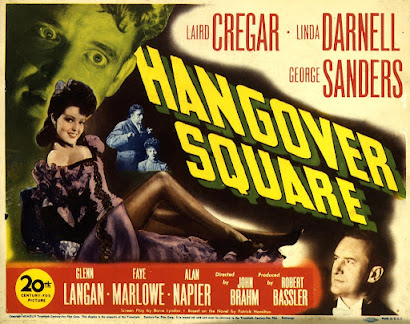
Laird Cregar, Linda Darnell, and George Sanders find themselves in "Hangover Square"

Hangover Square (1945) is an American period film noir directed by John Brahm and starring Laird Cregar, Linda Darnell, and George Sanders. Others in the cast include Glenn Langan, Faye Marlowe, and Alan Napier. The cinematography was by Joseph LaShelle (Laura, The Apartment) and the film score was by Bernard Herrmann (Citizen Kane, Psycho).

Composer George Harvey Bone (Cregar) has no memory of killing a shop owner and then setting his business on fire. It seems George goes into a trance when hears discordant sounds and loses all sense of time. He meets a music hall singer named Netta (Darnell) who uses George to write her songs for her act. When George finds out that Netta is engaged to Eddie Carstairs, he goes into a jealous rage, beating Carstairs and destroying any chance he had with Netta. With this rage and disappointment drive him to kill again?


John Brahm (1893 - 1982) was a German film director who immigrated to the United States in 1937. Brahm found work as a director, first employed by Columbia Pictures and then 20th Century-Fox. Brahm's most famous films include The Lodger (1944), Hangover Square, and The Lockett (1946). Brahm also directed a lot of television shows including Alfred Hitchcock Presents, and The Twilight Zone.

Laird Cregar (1913 - 1944) was an American film and stage actor. Cregar came to Hollywood due to his success with the play Oscar Wilde in Los Angeles in 1940. Cregar signed a contract with 20th Century-Fox and quickly became a popular character actor. Due to his large size (he weighed 300 pounds), he was often cast as the bad guy. In an effort to become a leading man in the movies, Cregar went on a crash diet during the productions of The Lodger and Hangover Square. To aid in his dieting, Cregar was prescribed amphetamines which had a negative effect on his system, causing abdominal problems. These problems lead to surgery and eventually a heart attack. He died shortly after at age 31.

Linda Darnell (1923 – 1965) was an American film actress. She signed a contract with 20th Century-Fox at age 15 and became a star almost overnight. She was immediately cast opposite Tyrone Power in Day-Time Wife (1939). She made two films with Power in 1940: Brigham Young and The Mark of Zorro. In 1941, she was again paired with Power in Blood and Sand, which also starred an up-and-coming Rita Hayworth. Darnell’s most famous role was that of Amber St. Clair in Forever Amber (1946), which turned out the be the biggest hit of the year. The role of Amber was the most sought-after female role since the casting of Scarlett O’Hara in Gone with the Wind (1939). Other important films she starred in include Unfaithfully Yours (1948), A Letter to Three Wives (1949), and No Way Out (1950). She died tragically at age 41 in a fire while visiting friends in Glenview, Illinois.

George Sanders (1906 – 1972) was a British film and stage actor who also had a fine singing voice. Hollywood was looking for a villain to star opposite a young Tyrone Power in Lloyd’s of London (1936) and Sanders more than fit the bill. His performance in that film would forever stamp him as a sophisticated bad guy. Before his acting career, he worked in the textile industry, which must have helped him with his role in The Strange Affair of Uncle Harry. In the 1960s, Sanders played Mr. Freeze in the Batman (1966) television series.

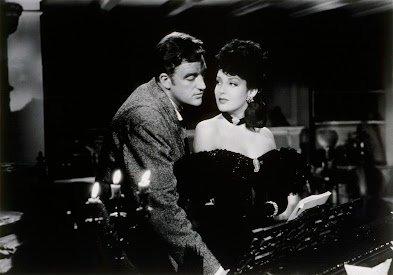
Laird Gregar and Linda Darnell


Hangover Square trivia

  • Stephen Sondheim saw the film as a 16-year-old and said that the film was the inspiration for his musical Sweeney Todd.
  • You can hear many musical cues in Herrmman's film score from other works including The Ghost and Mrs. Muir, Vertigo, and North by Northwest.
  • The film was released two months after Laird Cregar's death.
  • Cregar had originally rejected the role of Bone but changed his mind when fellow contract player Glenn Langan was announced as the lead.


To watch the film on YouTube, click on the link below.


To join the discussion on February 28, 2022, at 6:30 p.m. Central Time click here. Once you RSVP, you will receive an invitation and a link to the discussion on Zoom.

Discussion questions:

  1. What film genre would you categorize Hangover Square?
  2. Was Laird Cregar believable as a psychopath? Did you have any sympathy for his character?
  3. Would you consider Linda Darnell a turn-of-the-century femme fatale? Was she believable in her role?
  4. Did this film remind you of any other films you've seen?
  5. Were you surprised by anything in the film?


Tuesday, August 10, 2021

Walter Pidgeon is the subject of a “Man Hunt”

Man Hunt (1941) is an American political thriller directed by Fritz Lang and starring Walter Pidgeon and Joan Bennett. The film is based on the novel Rogue Male (1939) by Geoffrey Household. The screenplay was written by Dudley Nichols and Lamar Trotti. The cinematography was by Arthur C. Miller and the music was by Alfred Newman.

The film takes place in 1939 with renowned British big-game hunter Captain Alan Thorndike (Pidgeon) attempting to assassinate Adolph Hitler close to his residence near Berchtesgaden. Thorndike is captured at brought before Major Quive-Smith (George Sanders). Thorndike tells the major he wasn’t really going to kill Hitler but just wanted to see if he could just for sport. Through a strange course of events, Thorndike escapes the Nazis and goes on the run. He meets Jerry (Bennett) a young woman who hides him in her apartment. Jerry acts as a go-between for Thorndike and his diplomat brother, Lord Risborough (Frederick Worlock).

Will Thorndike be able to allude the Nazis and return to the sporting life he once knew?


Fritz Lang (1890 – 1976) was an Austrian-German-American director. Lang is the director of the silent film classic Metropolis (1927). After serving in World War I, Lang worked for a time as an actor in the theater and then worked as a writer at Decla Film in Berlin. Lang’s first talking picture was M (1931) a story about a child murderer. Due to his growing renown, Joseph Goebbels offered him the position of head of the German film studio UFA in 1933. Lang emigrated to Paris and then to the United States in 1936. Lang worked for all the major studios, making twenty-three feature films in the United States. Some of Lang’s films include Scarlet Street (1945), The Big Heat (1953), and While the City Sleeps (1956).

Walter Pidgeon (1897 - 1984) was a Canadian-American actor. During his long career, he was nominated for two Best Actor Academy Awards—Mrs. Miniver (1942) and Madame Curie (1943). Pidgeon worked on the stage before he entered films, making his Broadway debut in 1925. When he starting working in film, he starred in musicals. Once the interest in musicals declined, he began making a name for himself in dramas and comedies during the mid-1930s. His lead role in How Green Was My Valley restored his popularity. He was first paired with Greer Garson in Blossoms in the Dust (1941). They made a total of eight films together, making them one of the screens most popular acting teams. Some of their other films include Mrs. Miniver (1942), Mrs. Parkington (1944), Julia Misbehaves (1948), and That Forsyte Woman (1949). Pidgeon has success on his own in films like Week-End at the Waldorf (1945), The Bad and the Beautiful (1952), and the science fiction classic, Forbidden Planet (1956). One of Pidgeon’s last film roles was Funny Girl (1968) where he portrayed Florenz Ziegfeld.

Joan Bennett and Walter Pidgeon

Joan Bennett (1910–1990) began her film career during the early sound era. A natural blonde, Bennett dyed her hair as a plot device in the film Trade Winds (1938). As a brunette, Bennett projected a sultry persona that had her compared to the brunette beauty, Hedy Lamarr. During this period she starred in two costume epics. She played Princess Maria Theresa in The Man in the Iron Mask (1939) and Grand Duchess Zona of Lichtenburg in The Son of Monte Cristo (1940). Bennett was one of two finalists for the role of Scarlett O’Hara in Gone with the Wind (1939), along with Paulette Goddard. She had a very successful collaboration with the director Fritz Lang. With Lang, she starred in the classics Man Hunt (1940), The Woman in the Window (1944), and Scarlet Street (1945). Bennett acted on stage and on television where she became a pop culture icon playing Elizabeth Collins Stoddard on the gothic soap opera Dark Shadows (1966-1971).

George Sanders (1906 – 1972) was a British film and stage actor who also had a fine singing voice. Hollywood was looking for a villain to star opposite a young Tyrone Power in Lloyd’s of London (1936) and Sanders more than fit the bill. His performance in that film would forever stamp him as a sophisticated bad guy. Before his acting career, he worked in the textile industry, which must have helped him with his role in The Strange Affair of Uncle Harry. In the 1960s, Sanders played Mr. Freeze in the Batman (1966) television series.


Man Hunt trivia

  • The film was made before America entered World War II. It was considered propaganda, encouraging American involvement in the war.
  • Director John Ford was approached to direct but he turned the project down.
  • 20th Century-Fox built a replica of the London tube station with the aid of actual blueprints.
  • This was Roddy McDowall’s American film debut. He would go on to work with Walter Pidgeon that same year in How Green Was My Valley.


To watch the movie on YouTube, click below.


To join the discussion on August 16, 2021, at 6:30 p.m. Central Time, click here. Once you RSVP, you’ll receive an invitation and link to join the discussion on Zoom.

Why watch this film?

  • The director Fritz Lang is considered one of the great directors who emigrated from Europe to the United States.
  • It is the first of Lang’s four anti-Nazi films, which also include Hangmen also Die! (1943), Ministry of Fear (1944), and Cloak and Dagger (1946).
  • This was Lang’s first collaboration with Joan Bennett. Other Lang-directed films that Bennett starred in include The Woman in the Window (1944), Scarlet Street (1945), and Secret Beyond the Door (1947).


Discussion questions:

What did you think of Walther Pidgeon as the hero?

Before the film was released, the studio was concerned that it was promoting U.S. involvement in World War II. Did you see that promotion in the film?

Does the film remind you of other similar films you’ve seen?

What did you think of Joan Bennett’s performance? Did you think she and Pidgeon had good chemistry on screen? Does the romance work or would the film have been better without it?

Publicity photo of Bennett for Man Hunt


Thursday, February 25, 2021

“Rebecca” casts a long shadow over Laurence Olivier and Joan Fontaine

Rebecca (1940) is an American romantic thriller directed by Alfred Hitchcock—in his American directorial debut—and starring Laurence Olivier and Joan Fontaine. The screenplay was written by Robert E. Sherwood and long-time Hitchcock associate, Joan Harrison. The film score was written by Franz Waxman and the cinematography was by George Barnes who won an Academy Award for his work on this film.

The film was producer and filmmaker David O. Selznick‘s follow up to Gone with the Wind (1939). It would be impossible for Selznick to match that success in his long career, but Rebecca won Best Picture and a Best Actress Academy Award for Joan Fontaine. It was a critical and commercial success and one of the biggest hits of the year.

Laurence Olivier and Joan Fontaine

Alfred Hitchcock (1899 – 1980) was an English film director, producer, and screenwriter. He is one of the most influential filmmakers of the 20th century. Hitchcock directed over 50 feature films, many are classics that have been honored and studied for years. Some of Hitchcock’s classic films include The 39 Steps (1939), Rebecca (1940), Suspicion (1941), Shadow of a Doubt (1943), Notorious (1946), Rear Window (1954), Vertigo (1958), North by Northwest (1959), and Psycho (1960).

Laurence Olivier (1907 - 1989) was an English actor and director who was one of the most celebrated actors of the 20th century. Olivier attended drama school in London where he learned his craft. He made his West End debut in Noel Coward‘s Private Lives (1930). More successes followed and he eventually made his way to Hollywood. He had a huge success with his role as Heathcliff in Wuthering Heights (1939) and Rebecca the next year. Olivier‘s career in films also includes lead roles in Henry V (1944), Hamlet (1948), Richard III (1955), Spartacus (1960).

Joan Fontaine (1917 – 2013) was a British-American actress who starred in more than 45 films during Hollywood’s “Golden Age.” After secondary roles in Gunga Din (1939) and The Women (1939), her fortunes turned with her starring role in Alfred Hitchcock’s first American film, Rebecca (1940). She was nominated for Best Actress for her role in that film but lost to Ginger Rogers. The next year, she worked with Hitchcock again in Suspicion and this time won the Best Actress Oscar, beating out her older sister Olivia de Havilland. She received a third and final nomination for The Constant Nymph (1943). Other popular Fontaine films include This Above All (1942), From This Day Forward (1946), Ivy (1947), Letter from an Unknown Woman (1948), The Emperor Waltz (1948), and Ivanhoe (1952). After the late-1950s, she appeared less in films and more on stage and television. Fontaine and her sister are the only siblings to have won major acting Academy Awards.

Others in the cast include Judith Anderson as Mrs. Danvers and George Sanders as Jack Favell.


Rebecca trivia:

  • Loretta Young, Margaret Sullavan, Anne Baxter, and Vivien Leigh were among the over 20 actresses who screen-tested for the role of Mrs. de Winter.
  • Hitchcock instructed Judith Anderson to rarely blink her eyes.
  • This is the only film directed by Hitchcock to win Best Picture.
  • Olivier wanted his then girl-friend, Vivien Leigh, to costar in the film which made him treat Fontaine very badly during filming.
  • Hitchcock shot the film in black and white to keep with the dark atmosphere of the book.
  • The director and cinematographer, George Barnes shot the film in deep focus, one year before Citzen Kane (1941) which is often credited with inventing the technique.


To watch the film on YouTube, click on the link below.


To Join the discussion on March 2, 2021, at 6:30 p.m. click here. Once you RSVP, you will get an invitation and link to join the discussion on Zoom.


Questions for discussion:

  1. What genre do you think best describes this film?
  2. Joan Fontaine‘s character has no first name; what effect does it have on the film?
  3. How does the relationship between Max and his bride change after they arrive at Manderley?
  4. What role does Mrs. Danvers play in the film?
  5. What are some of the clues to Rebecca‘s true nature?


Related Posts Plugin for WordPress, Blogger...